

Saskia Shutt, Friend of a Friend

The content of this article is the opinion of the writer and was written for The Source
Meet Saskia, 2022’s first Friend of a Friend!
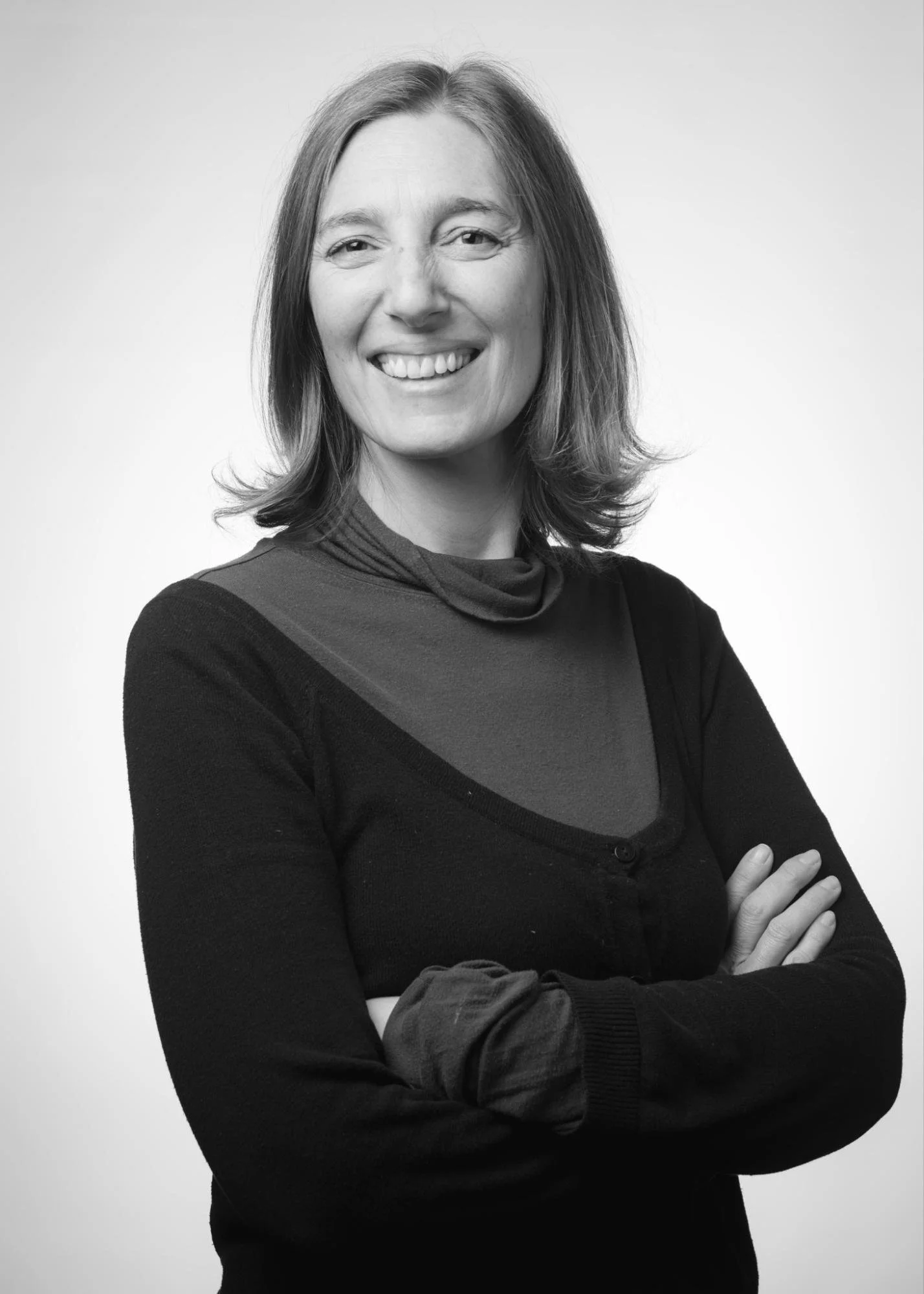
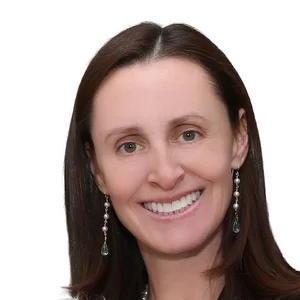
Saskia Shutt. Photo Credit: BorianneBe
Saskia Shutt is a jeweler and advocate, living and working in Brussels, Belgium. Saskia’s designs are beautiful and as you’ll see and hear, she is also the maker, creating handmade pieces in her studio.
Get to know Saskia more by joining EM and accessing its members-only platform, by tuning in to Christina Miller’s Living Room sessions or by visiting Saskia on Instagram or in Brussels. Saskia’s creativity (see her website, for examples), dedication to fairness and environmental integrity, as well as her thoughtful manner, collectively made me think she would be a wonderful interviewee.
Full disclosure for integrity’s sake: Saskia is a member of Ethical Metalsmiths, which is how I first met her. Scroll to hear more!
To see Saskia soldering and more, here’s a brief video by Jose Huedo for Bruzz:
CM: Where are you located right now?
SS: Brussels, Belgium [In the Centre Dansaert, a destination for creative businesses and design, in the heart of Brussels near La Grande Place.]
CM: Please tell us where you are, what beverage you are enjoying (if any), and one sentence about your day so far.
SS: I’m in my workshop, drinking (no, not beer) fresh ginger and honey tea, working on the last quarter of my bookkeeping and VAT [tax] (the part of my business I grudge).
CM: How did you first get involved in the jewelry world, or in the professional orbit in which you work now?
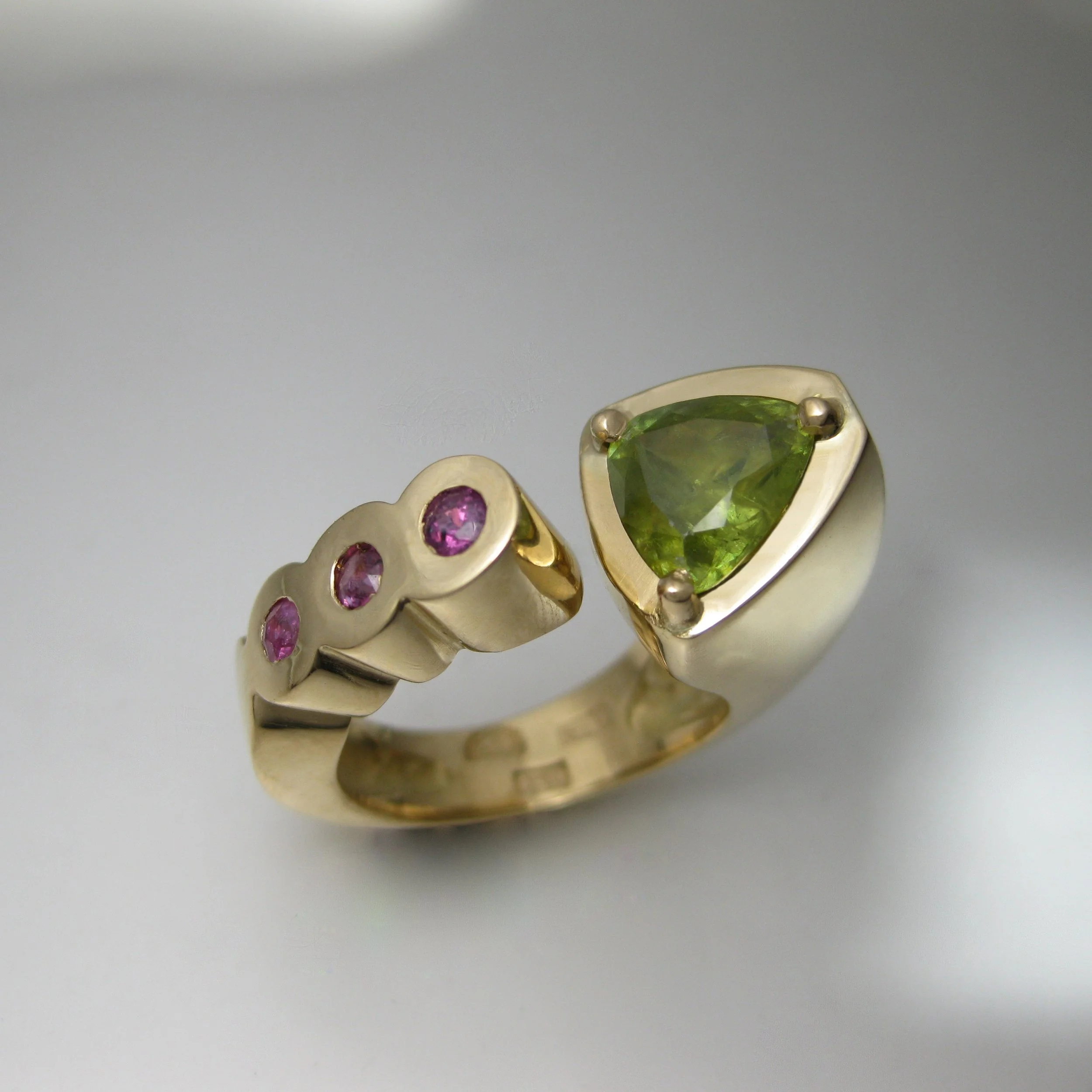
Ring in Fairmined Eco (mercury-free) Gold, made by hand by Saskia Shutt. Photo by Saskia Shutt
SS: I went to art school to become a graphic designer, but fell in love with precious metals and [studied] jewellery design and silversmithing. I received a Bachelor's Degree with honors from Duncan of Jordanstone College of Art at the University of Dundee in Scotland.
CM: Are you a smith or a maker? Do you routinely get your hands dirty/chapped/filed/scarred?
SS: I always go home with dirty hands and a smile on my face. I get a real satisfaction out of watching metal and loose gemstones “grow” into a beautiful piece of jewellery.
CM: How did you first start learning about issues of environmental impact, responsible sourcing and “green” practices in the jewelry world?
SS: Being a jeweller (24 years) has always been a struggle with my conscience. I love my work, but feel guilty about how the raw materials get to my workbench; I guess that is why, from the very start in 1999, I also advocated remodeling. The raw materials had already made their journey, to become a piece of jewellery, so the idea of taking it all apart and transforming it into something new, somehow gave me peace of mind… also the challenge of transforming a piece was always exciting. Although I still enjoy remodeling jobs, unfortunately for me, it is not enough of a sustainable and greener way forward… I’m glad I am also part of the Fairmined family.
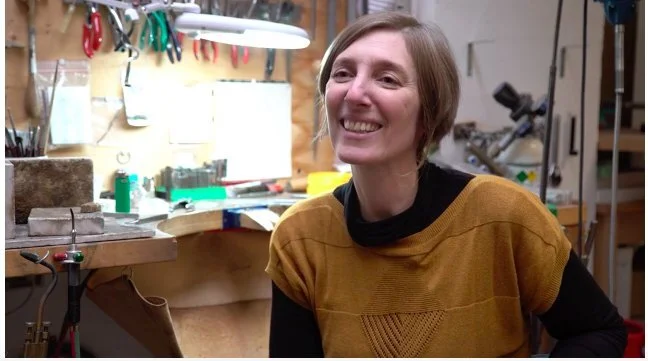
Screen shot from a 3-minute video; video by Jose Huedo for Bruzz International
CM: Do you have some go-to vendors or suppliers whom you find trustworthy? Do they share confirmable, vettable information about their own supply chains? (*Note: Readers, please always do your own due diligence and research when it comes to suppliers. All suggestions for sources and otherwise, come from the interviewee, rather than from EM as an organization.)
SS: Yes I do, like Moyo gems, which I buy from Nineteen48, Miadana gemstones, Fairtrade Gemstones and Capricorn Gems. I am also a Fairmined licensee.*
CM: Please list some things readers can do to make their bench, studio workspace or business more ethical, responsible or ‘green.’
SS:
Find environmentally-friendly alternatives for your toxic chemicals, it’s easier than you think
Jewellery workshops have recycled since the beginning of time, it’s only the reason which has changed…
Make sure everything water-related is strained through a filter at the end of the day (even washing your hands, do it in a bowl, so you can filter the water at the end of the day; every speck of precious metal recouped counts)
CM: Are there any good books you are reading now?
SS: The Rare Metals War (just got it, so really intrigued about what it will reveal) and I am halfway through Gold Laundering; interesting read, so I gave one to Iris Van der Veken [of the Responsible Jewellery Council], hope she found it interesting too!
CM: Is there a set-back you would like to share, along with a takeaway?
SS: I wouldn’t say set-back, but quite often being an ethical jeweller can be overwhelming regarding the terminology, where to start, who to consult… but being an EM member is inspirational, just knowing that I am not alone in my struggle to a better, greener and sustainable jewellery business is a great support. Talking to like-minded people is inspiring and enlightening.
CM: If you could change one thing about the jewelry industry, what would it be?
SS: The greed and ignorance of the corporate side at the start of our supply chain.
CM: How can we -- all of us, collectively -- make the world a more harmonious and just place?
SS: This is a huge question… I’d say together and one step at a time.
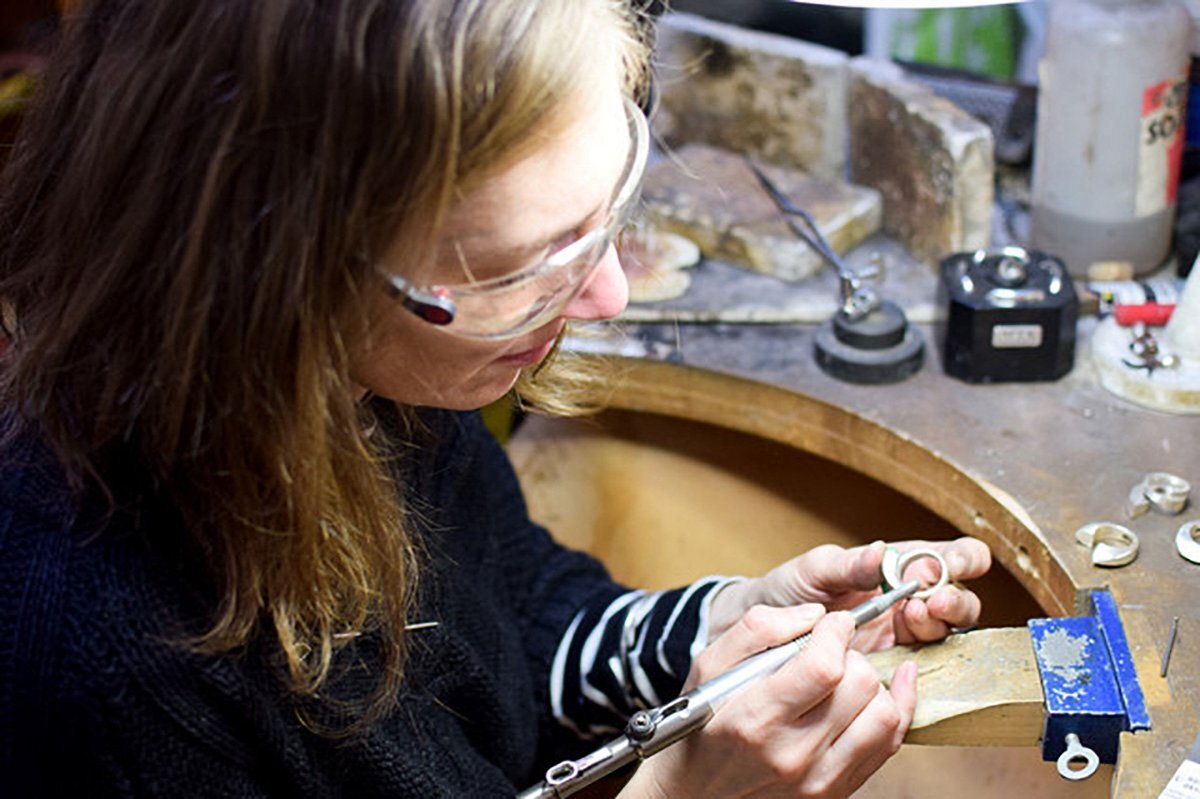
Saskia Shutt at the bench in Brussels, Belgium. Photo by Ambacht in de Kijker/La Vitrine de l'Artisan
CM: If you could shadow any jeweler or maker, alive or departed, while he/she/they worked in the studio, who would it be?
SS: There are many and all for different reasons, just depending on their skills. I once had the opportunity to chat to some of the jewellers from Garrards during a B2B trade show about 20 years ago. One kindly showed me a platinum and diamond studded bracelet he made for a private customer. Price tag +/= £750,000 [ in the US $1,011,000 or Euros 895,000]. He promptly put it on my wrist. It is the most expensive piece I have ever worn (even if it was only for a couple of minutes). To me, the beauty of the piece was not the materials it was made of, but the craftsmanship that went into the making of it.
CM: Are there any other artistic or creative people, past or present, you find yourself consistently thinking about for inspiration in your work?
SS: I am mostly inspired by the gemstones, to create my jewellery, or by the brief given to me by the client.
CM: What do you wish you knew then (when you were first starting out as a jeweler, maker, entrepreneur, artist..) that you know now?
SS: I wish I was more business savvy. I made more errors in promoting my jewelry; got caught out by pricing. You really need to know where you see your jewelry in the market; know your customer. It makes it easier choosing if you want to do B2B or B2C.

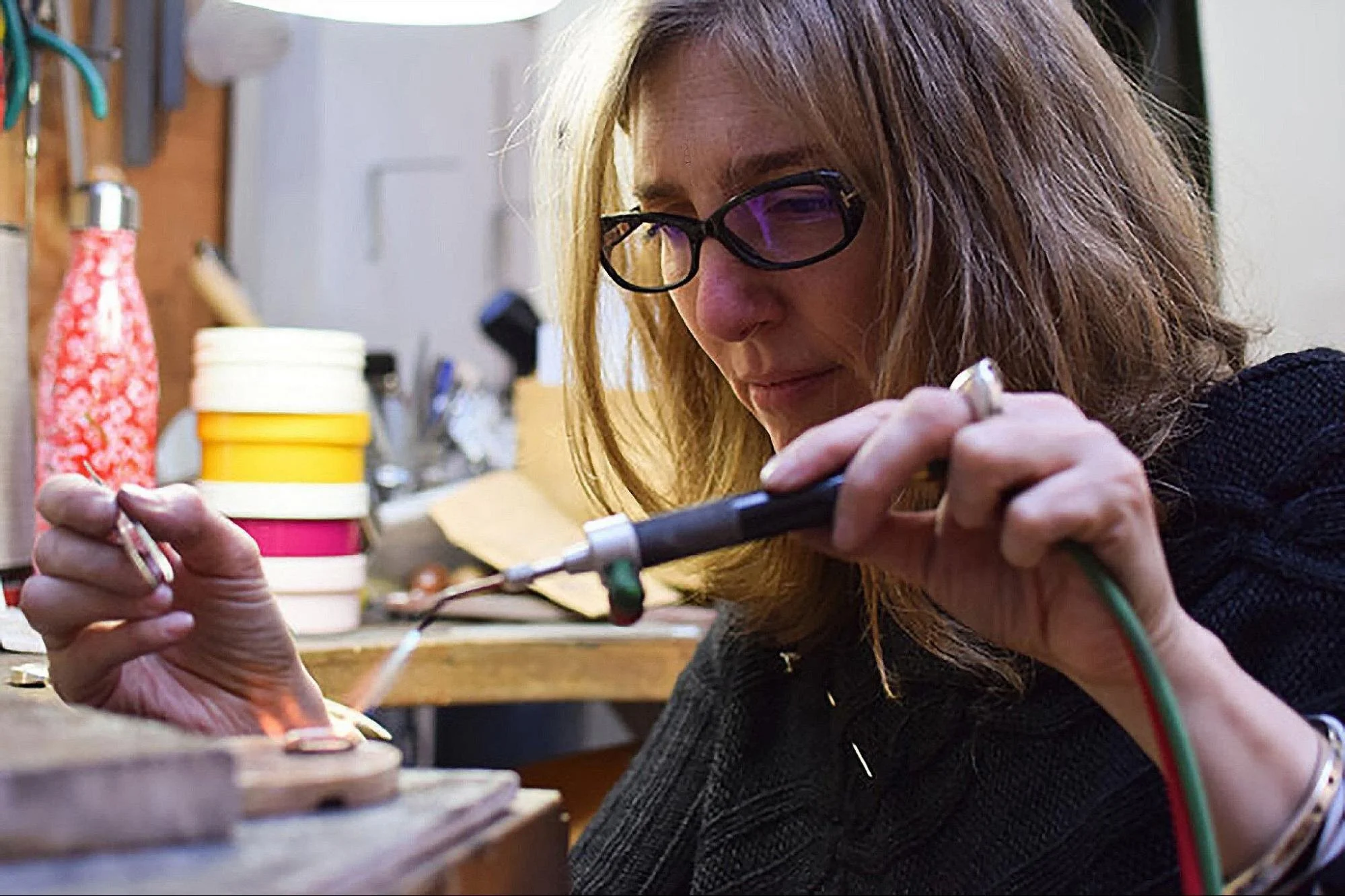
Handmade jewelry at work; Saskia Shutt at the bench in Brussels, Belgium. Photo by Ambacht in de Kijker/La Vitrine de l'Artisan

What do beekeeping and fish ponds have to do with diamond mining?