

Beekeeping and Fish Ponds as Secondary Income for Artisanal Miners

The content of this article reflects the views of the writer, and not necessarily those of Ethical Metalsmiths (dba Community for Ethical Jewelry). This article was written for The Source.
By Saskia Shutt
What do beekeeping and fish ponds have to do with diamond mining?
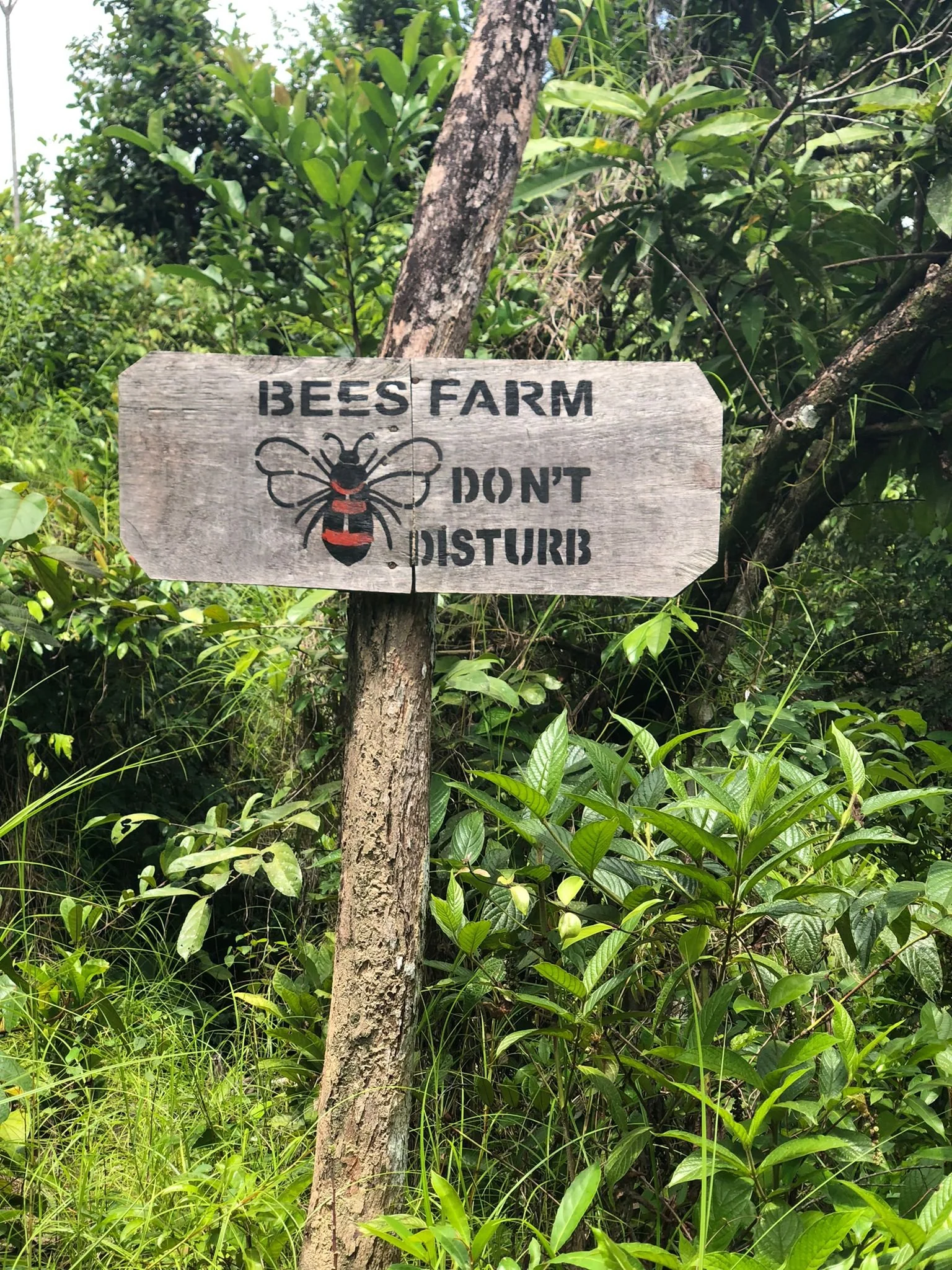
Visiting a Bee Keeping Farm. All Photography was prvided by the author, Saskia Shutt.
You may have read my previous article about my trip to Liberia. In June 2024, I was able to join Diamonds for Peace (DFP) on one of their bi-annual visits to the DFP diamond mining communities. We visited three diamond mining villages of Weasua, Gbarma and Camp Alfa.
We all know that diamond mining is not sustainable.
Eventually, there will be no more diamonds to mine in these communities — therefore, miners need to look to other forms of income for the future. In Liberia, by law, the communities who want to work with NGO’s must set up a cooperative. DFP works with three cooperatives. In Weasua 42 people set up WECMACOS (Weasua Clan Mining and Agricultural Cooperative Society), in Camp Alpha, 31 people set up PAMCOS (Pampaya Multi-Purpose Cooperative Society) and in Gbarma 24 people set up GBAMUCOSO (Gbarma Multi-purpose Cooperative Society).
Beekeeping
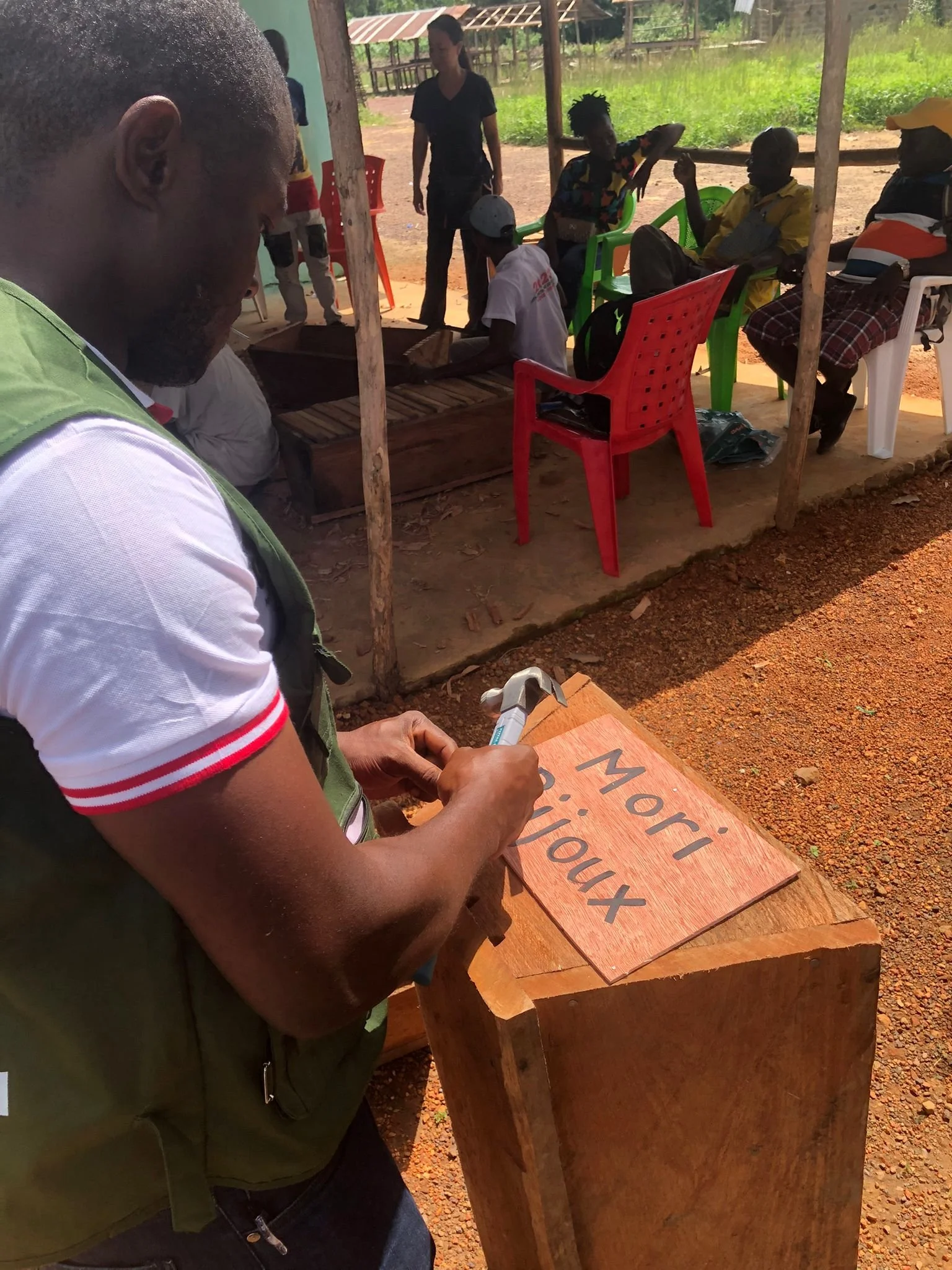
Beekeeping is one way to sustain mining communities when diamond yields dwindle — and in the meantime, it generates a second income to help lift people out of poverty. Beekeeping requires relatively basic materials: workers can use the wooden planks which come from various places in Liberia, like Monrovia, Tubmanberg, or Weasua, to create a simple structure of two gables, two side panels, a base and top bars. And the bees are free — a miner just needs to entice them into the hives to start building the honeycomb and producing honey. In Weasua, beekeeping is not the only business venture. WECMACOS cooperative also built fish ponds, which is managed and tended by one designated cooperative member. Both of these initiatives have their own successes — but unfortunately, they aren’t obstacle-free. Beekeeping and fish ponds are a necessity towards the empowerment of the miners.
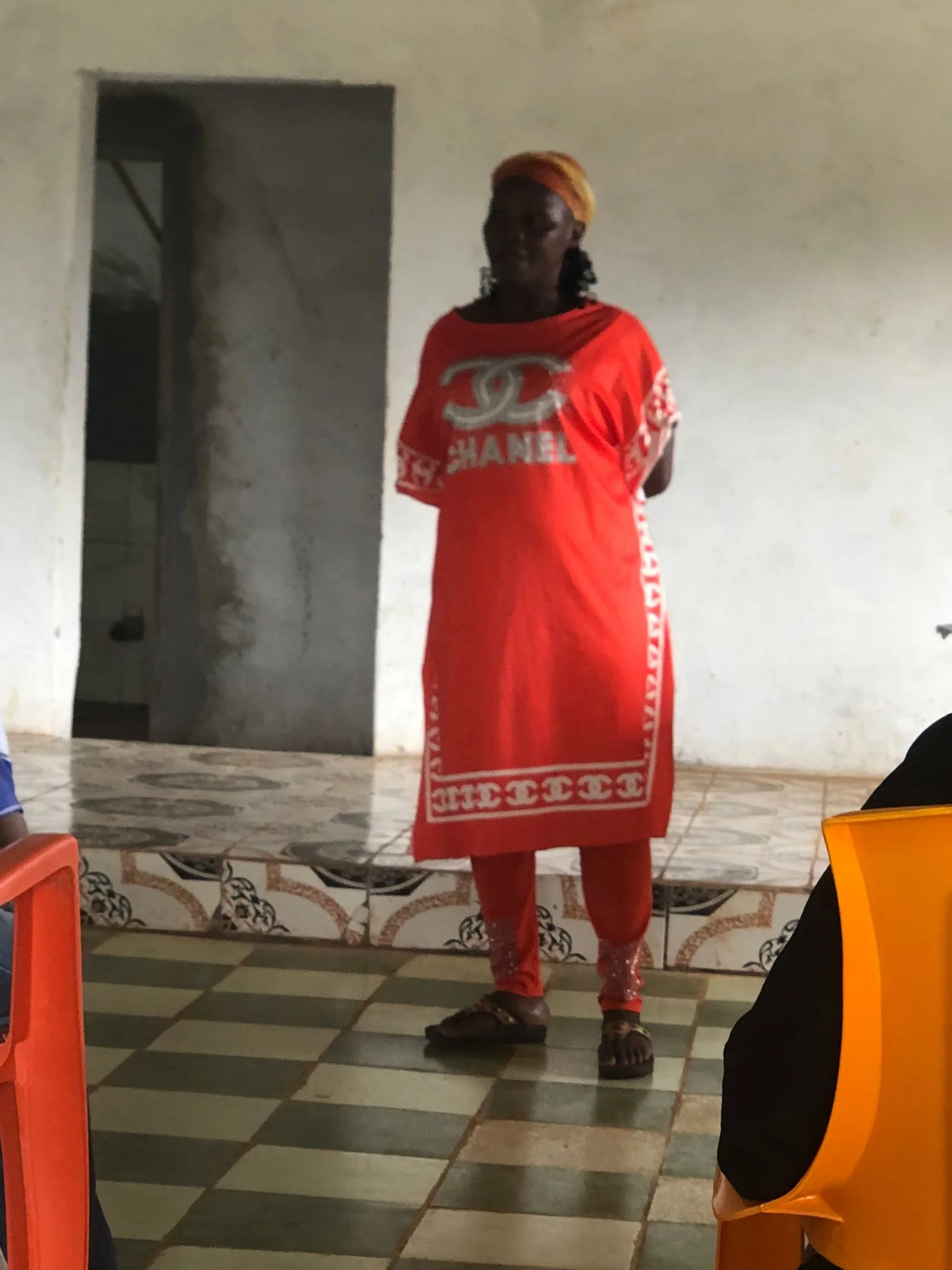
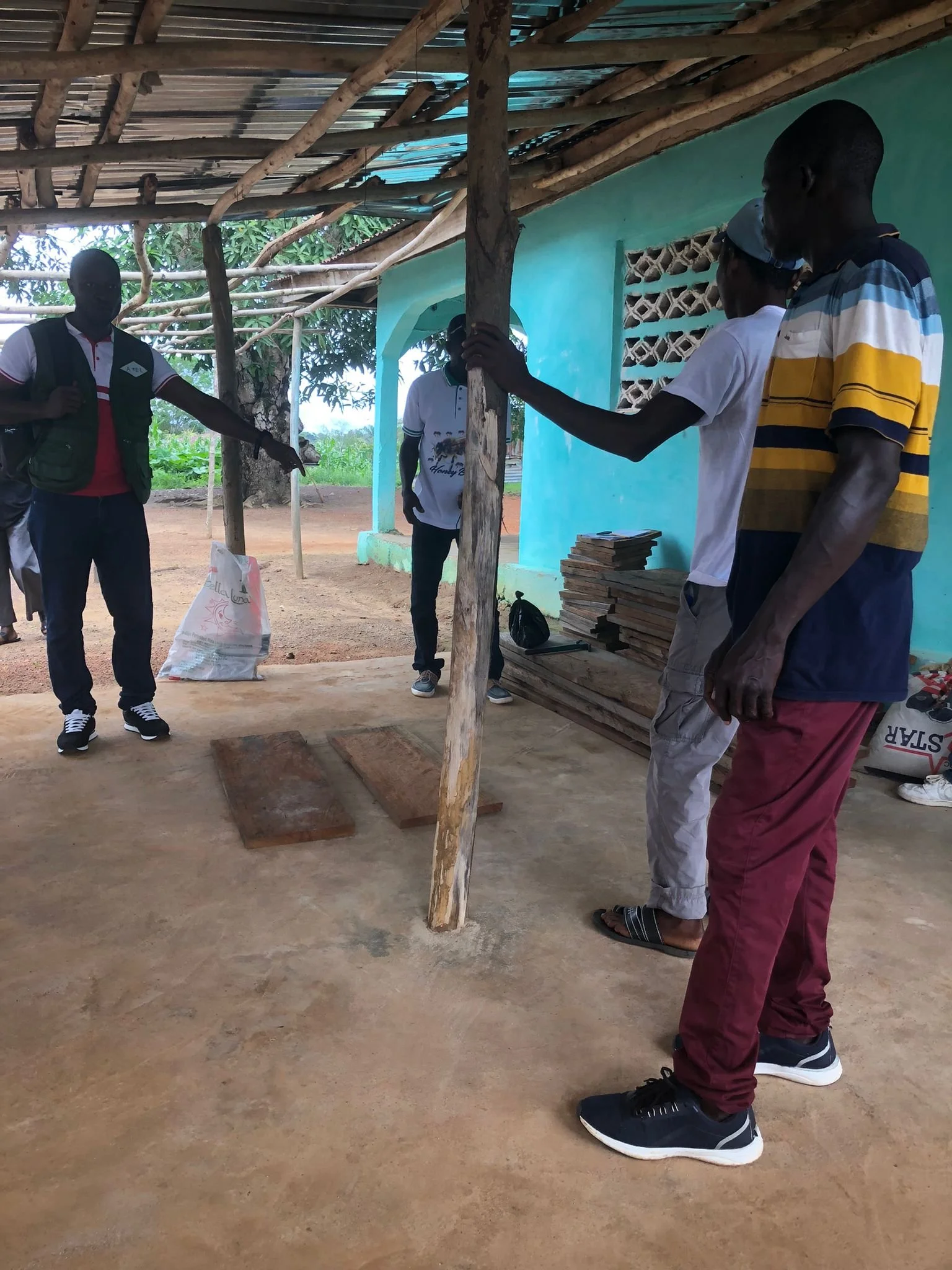
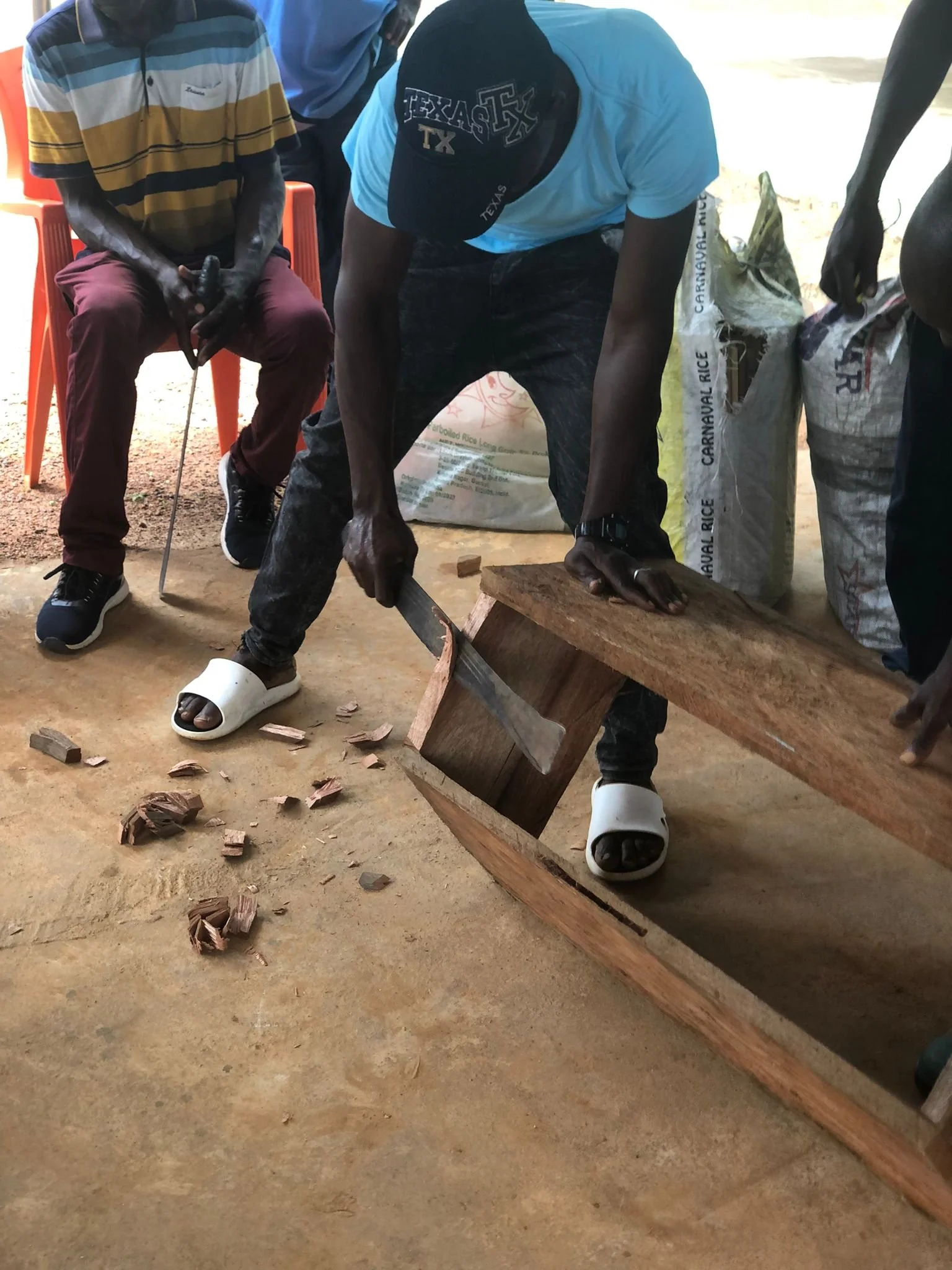
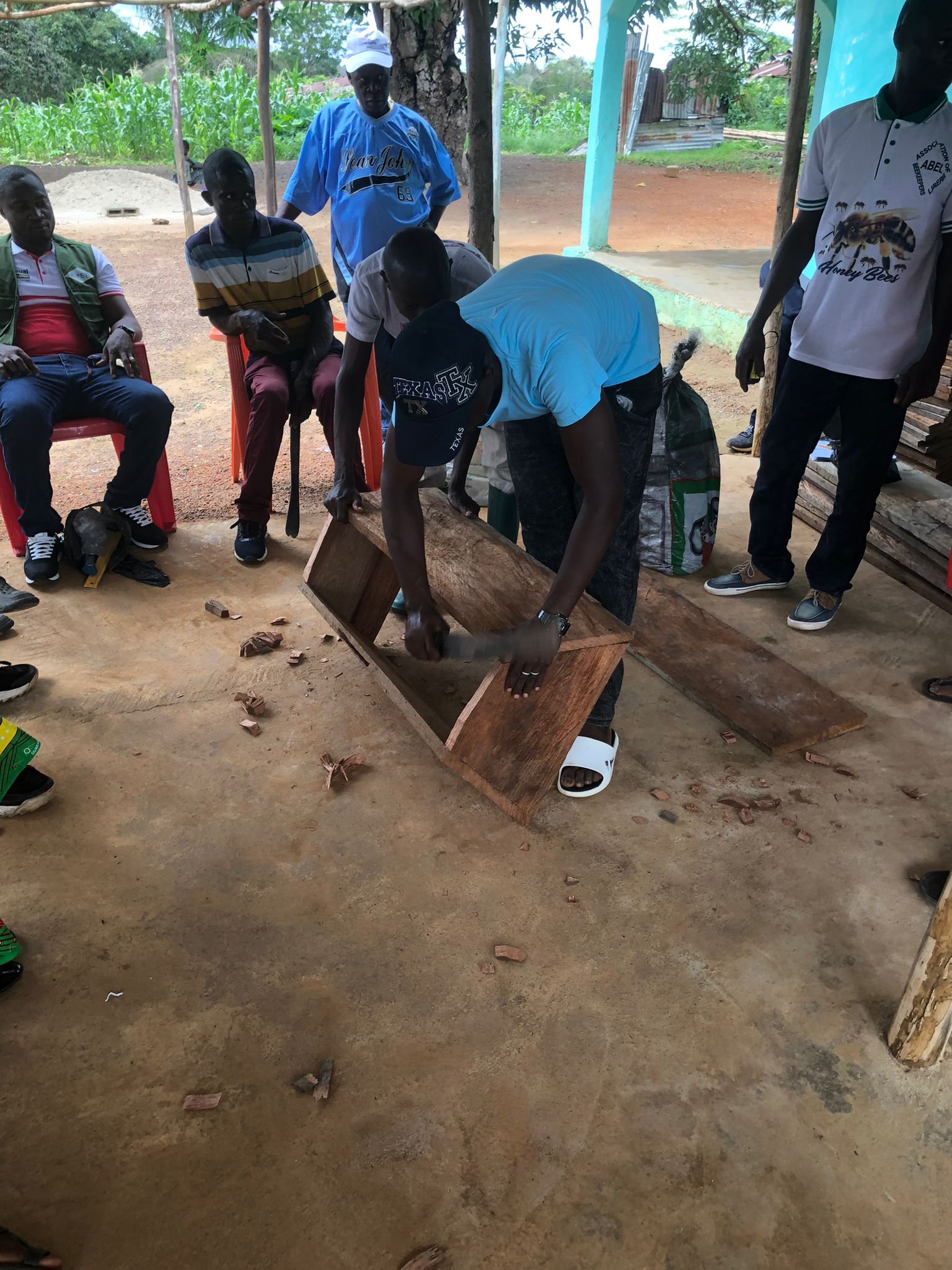
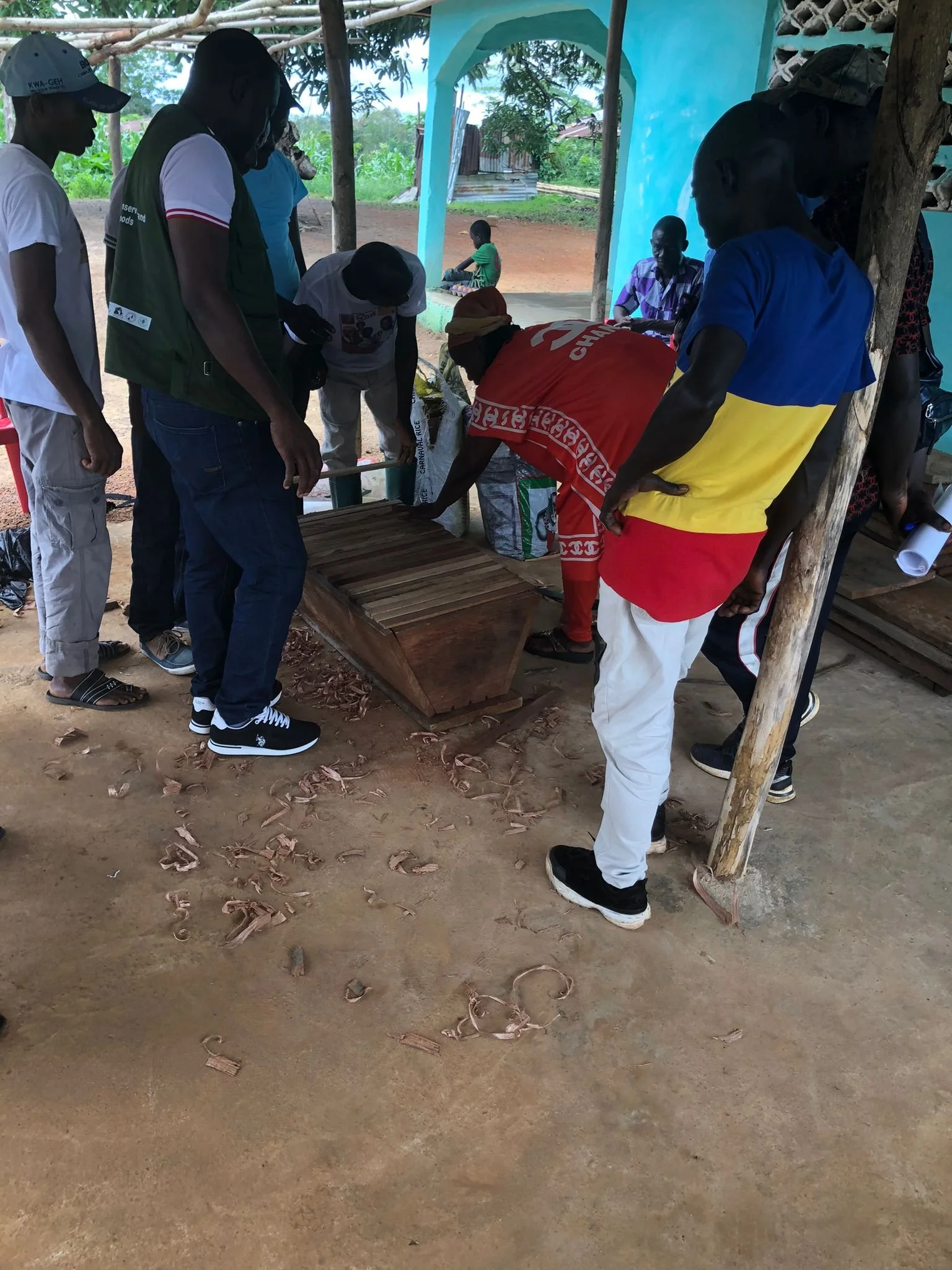
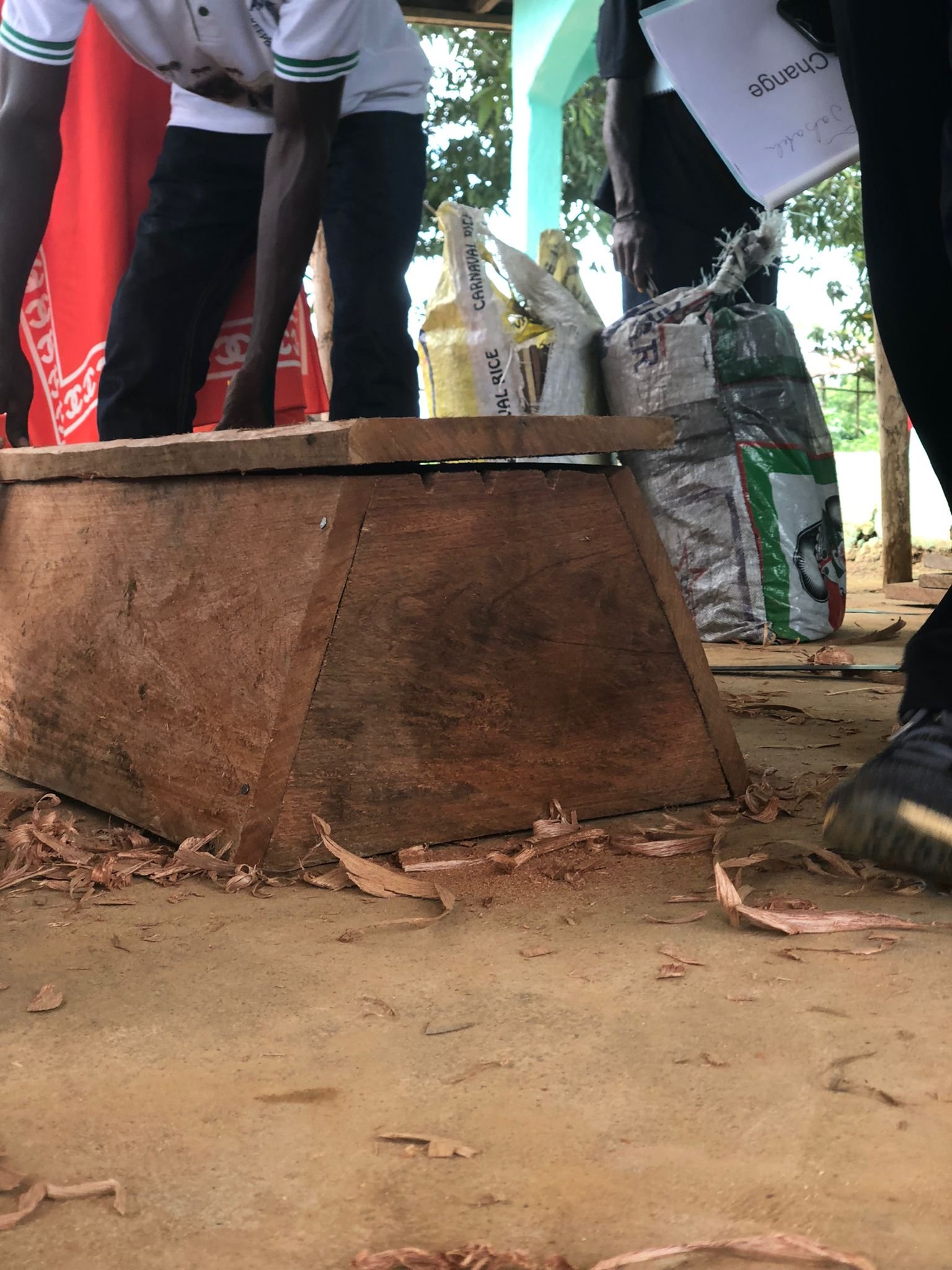
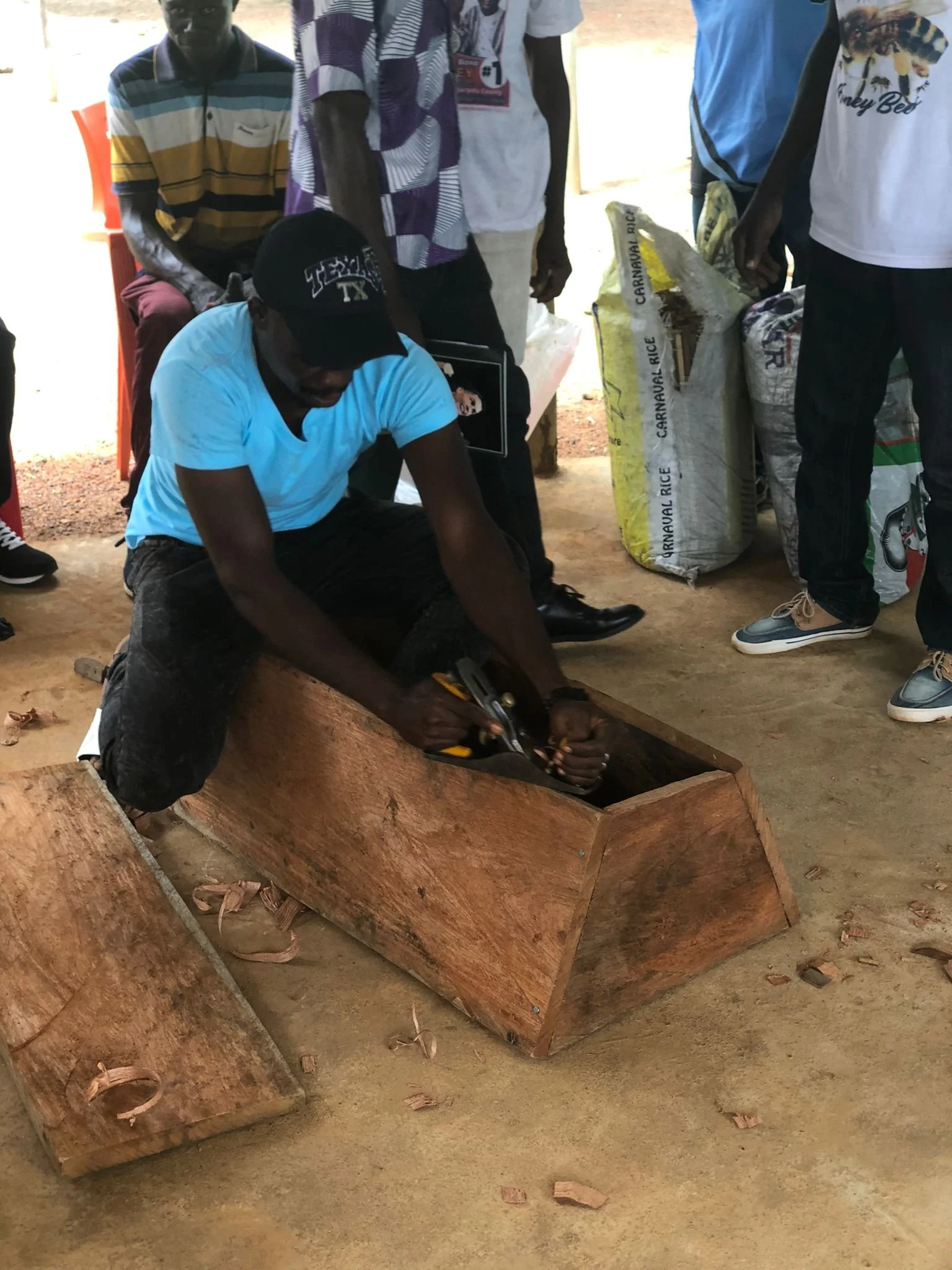
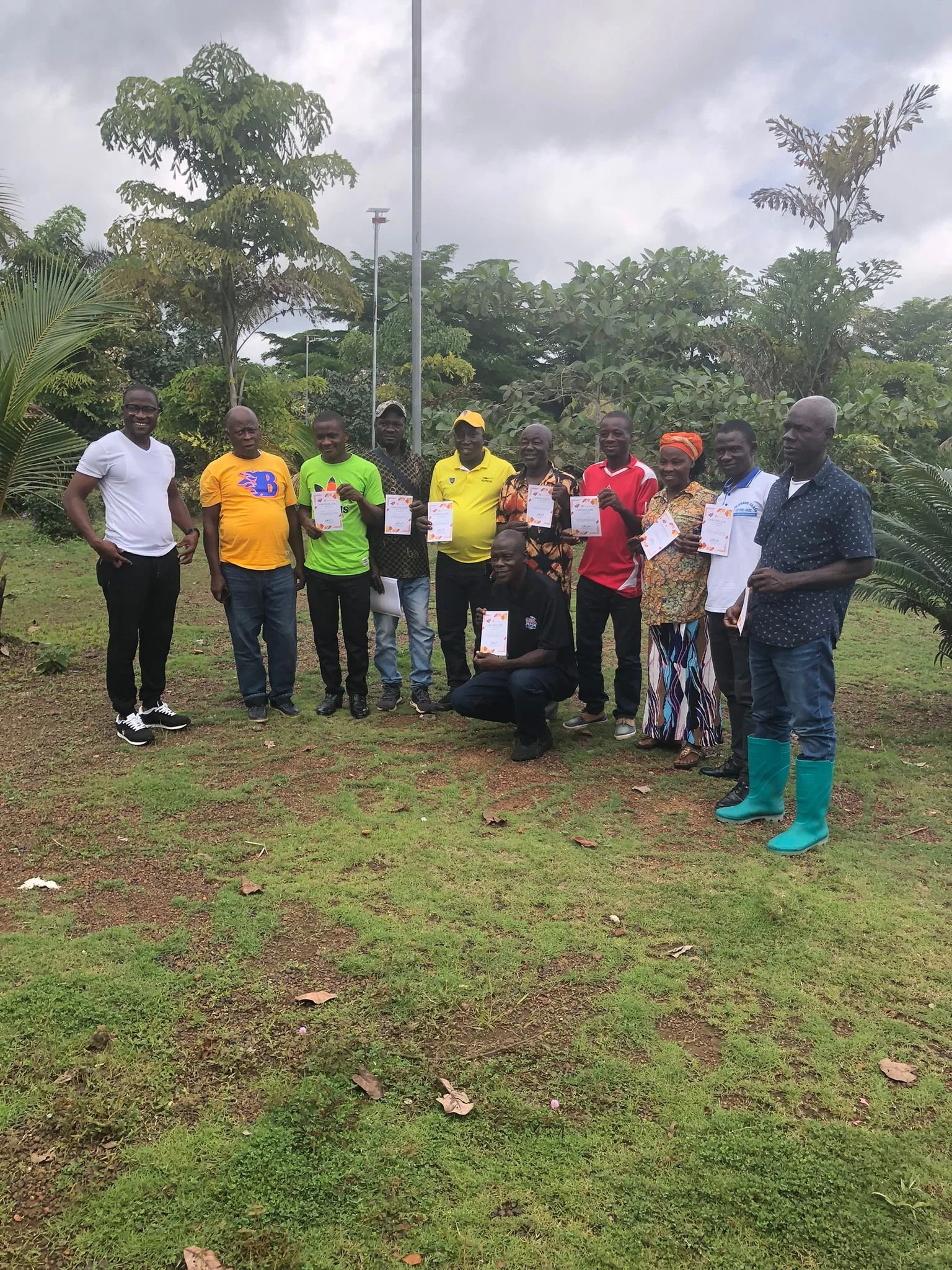
In rural North-East Liberia, Diamonds For Peace (DFP) works with three communities: Weasua, Camp Alpha, and Gbarma. Each community has to set up a cooperative. Organizing themselves into cooperatives is not only in line with the Liberian government’s policy, but also a prerequisite if the cooperatives want to be certified as fair trade or similar responsible business entities.
DFP started working in Weasua at the end of 2018, and hosted the first five-day beekeeping workshop for miners in Weasua in 2020. Some of the miners, like Victoria, started beekeeping at that time.
Victoria has three apiaries with more than 10 beehives in each and has already had a successful honey harvest. Selling the honey through the cooperative enables her to have a second income and supports the cooperative. She invested the money from beekeeping in agriculture, and then her mining project, with the money generated from agriculture.
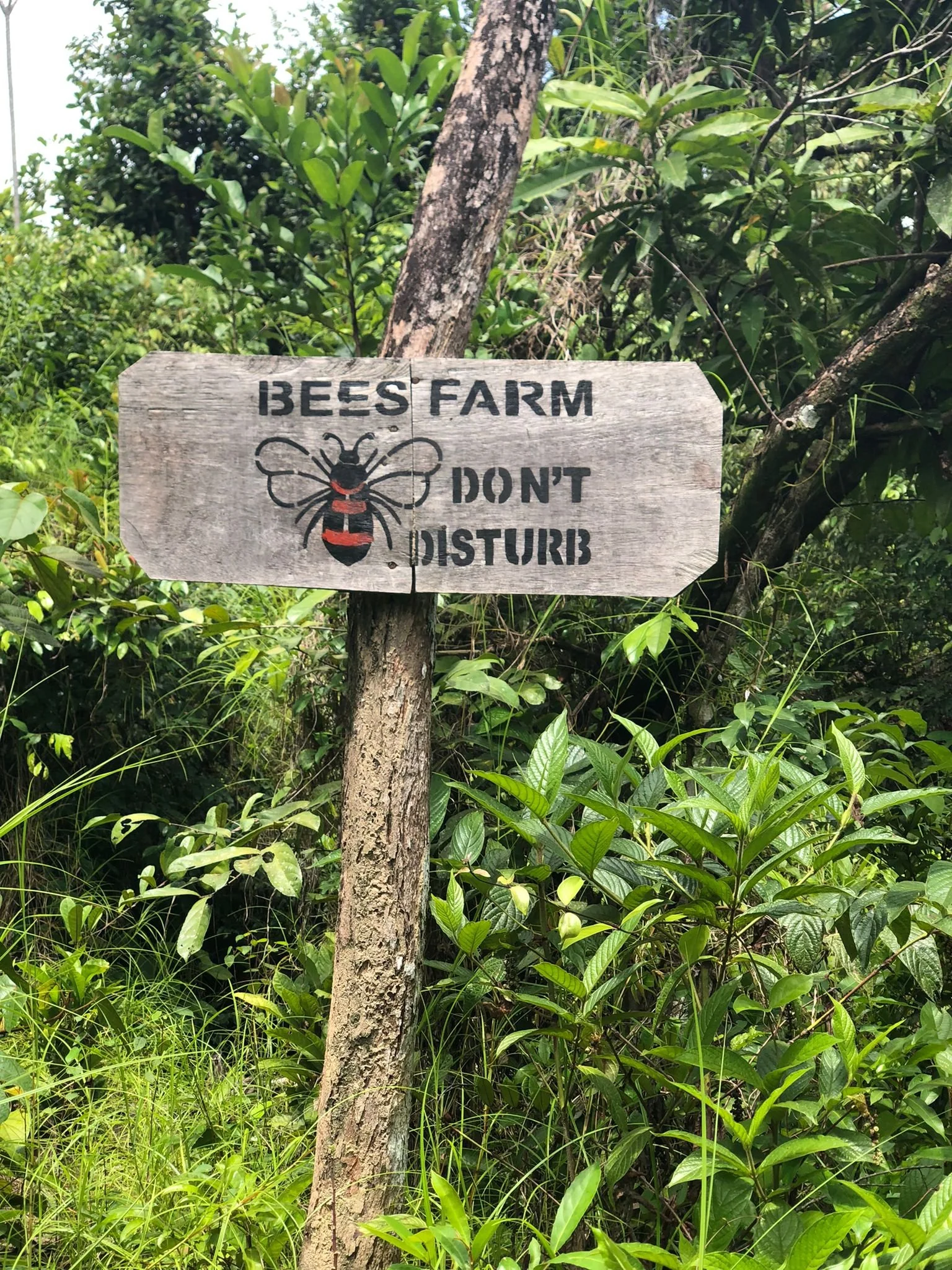
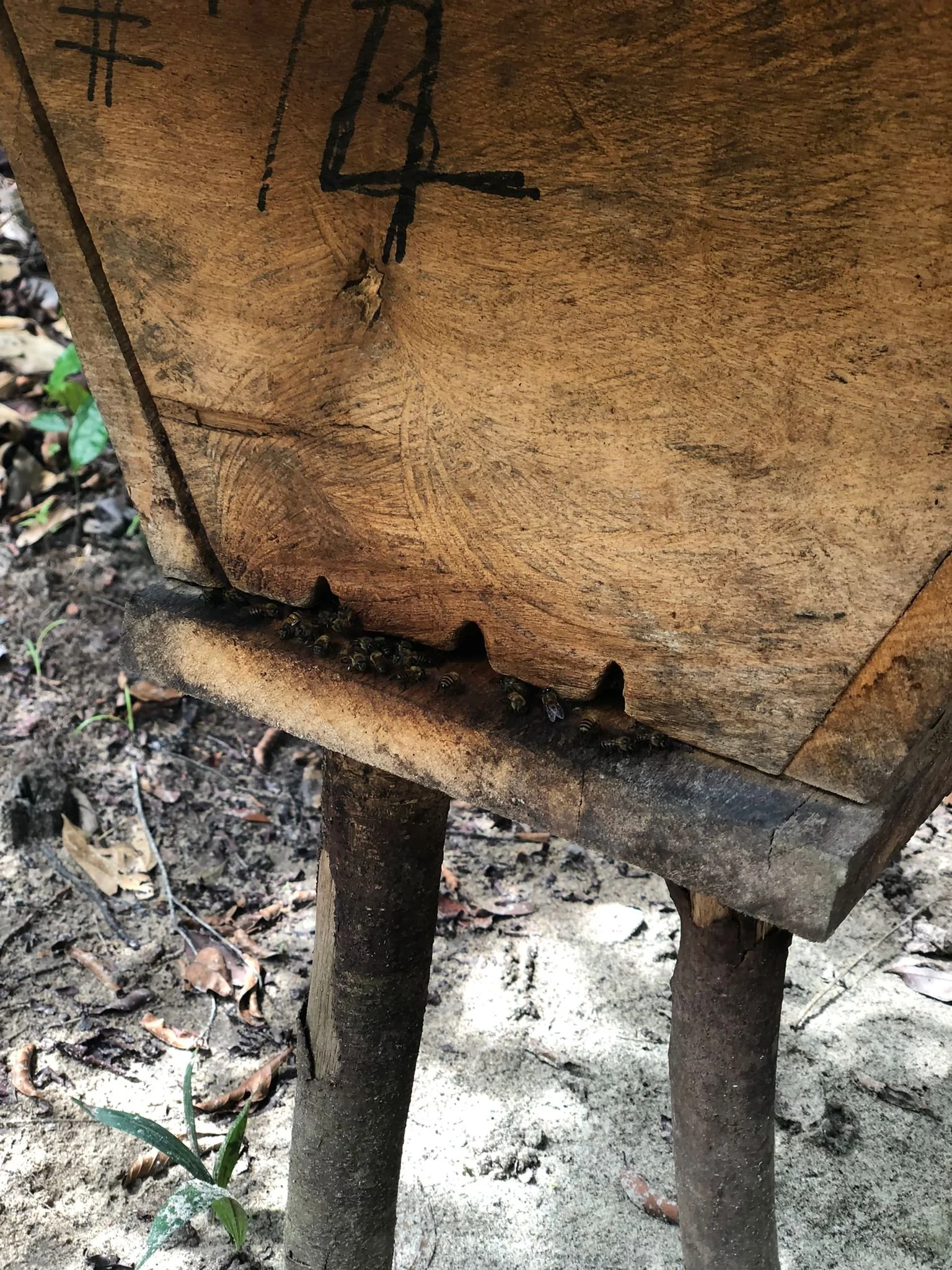
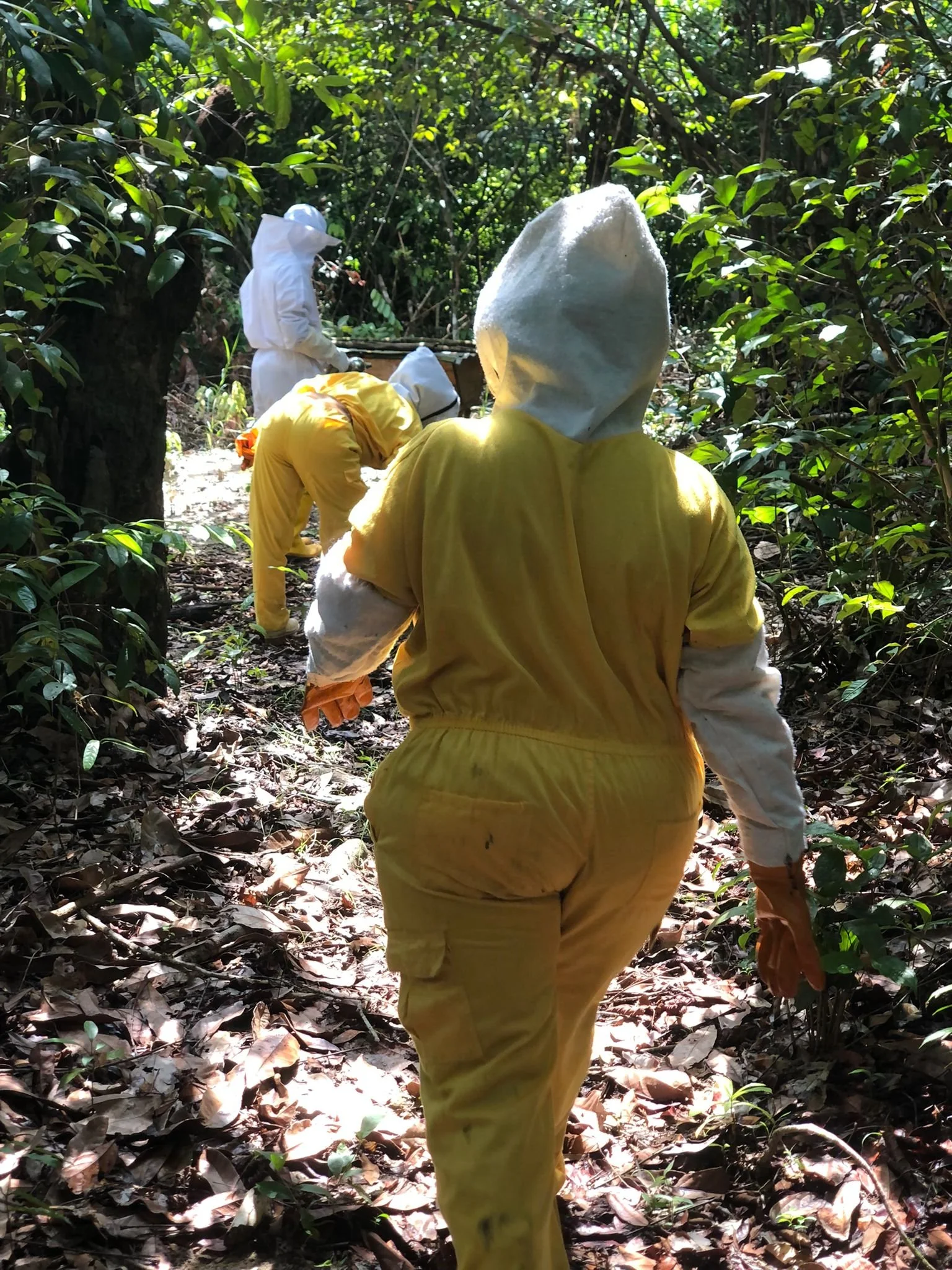
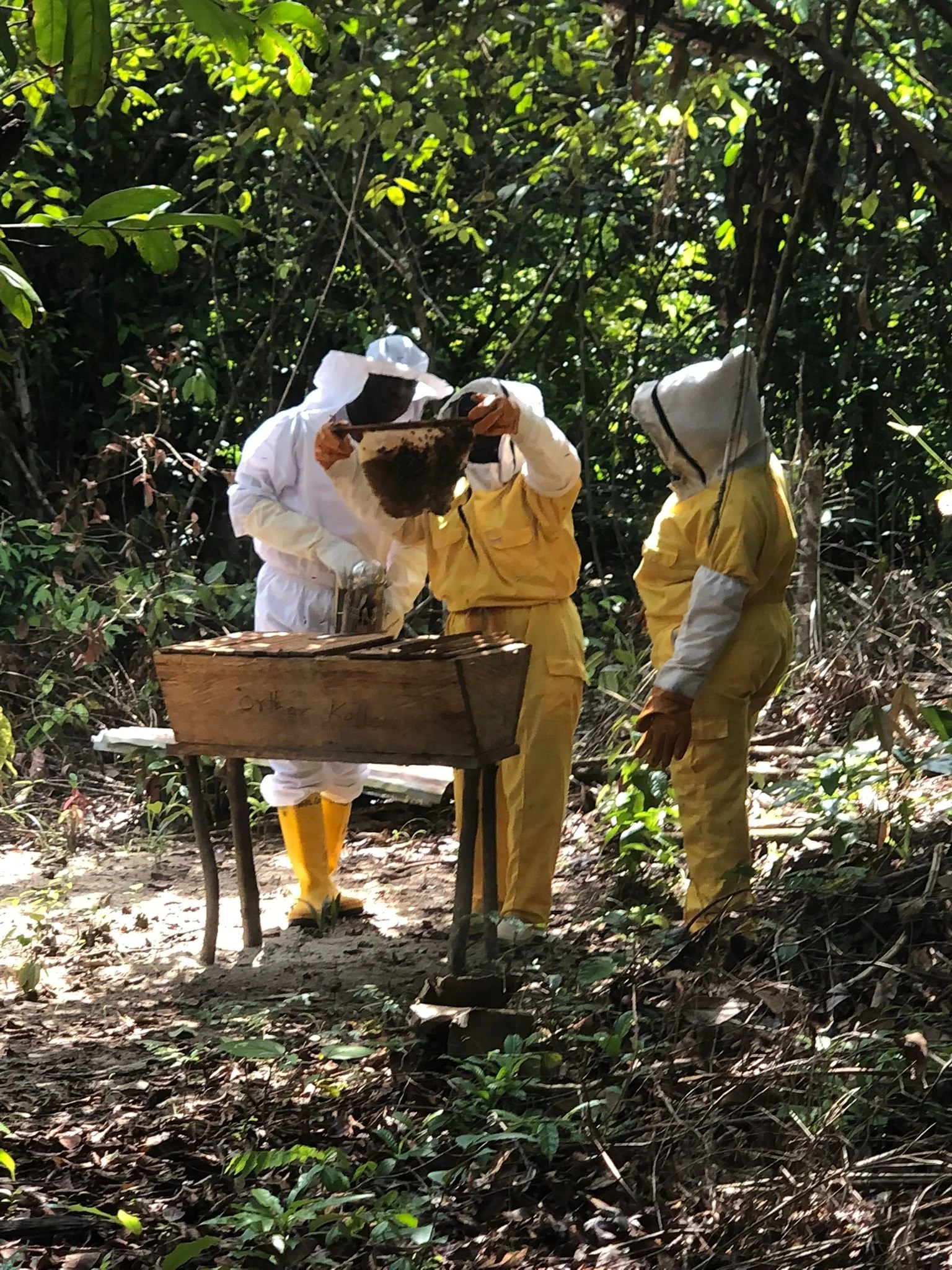
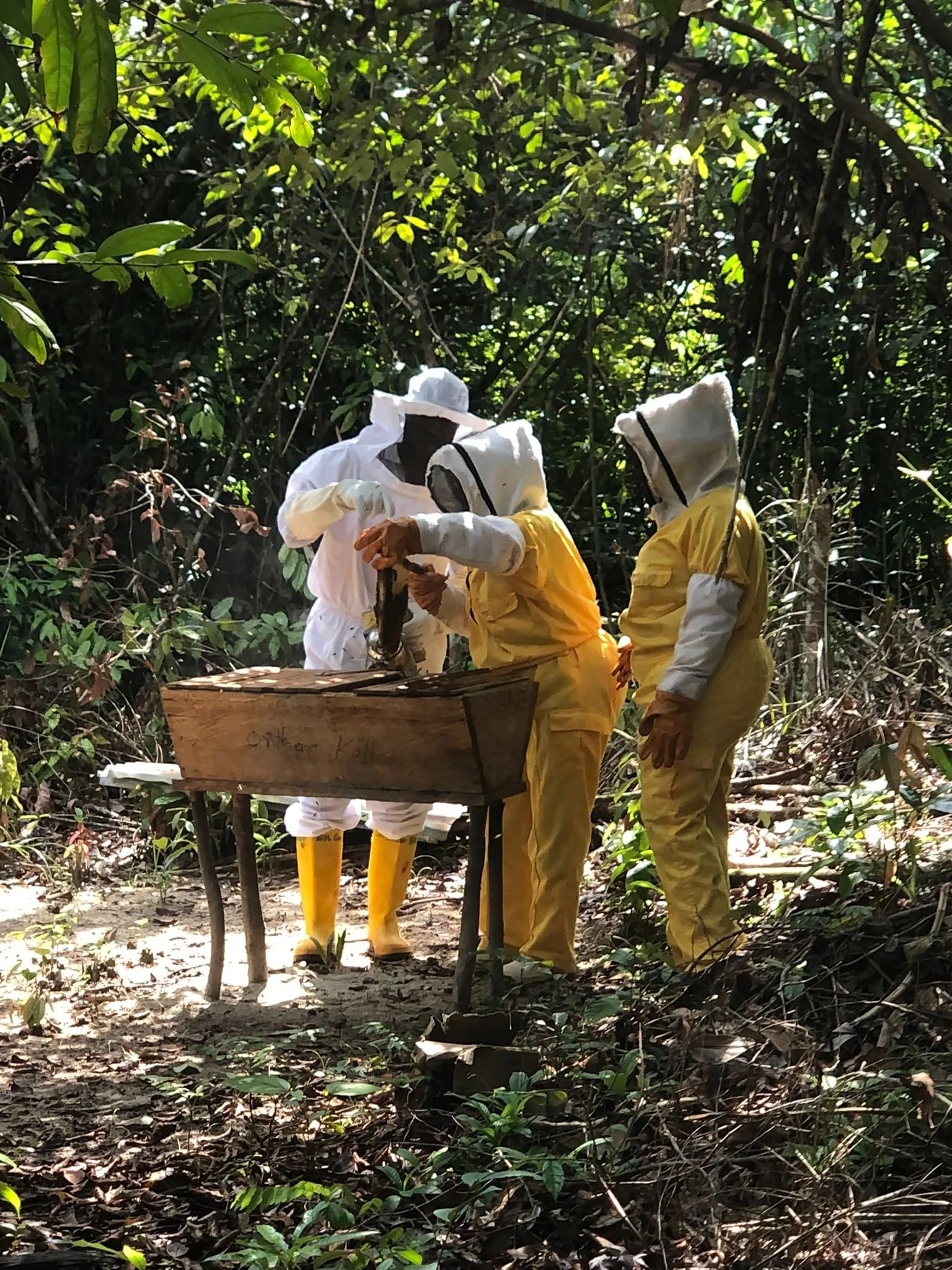
There is a very clear and simple policy by the cooperative; the hives, provided with support by DFP, belong to the cooperative and they are allocated to a miner to take care of the hives and bees, which the cooperative monitors. If the miner does not take care of the hives, then the cooperative can confiscate the hives and allocate them to another miner. If the cooperative fails at the monitoring, DFP can intervene.
The beekeepers expect that the hives will attract bees overnight and that they will be harvesting honey within a few months. Time and again, the beekeepers have been told by DFP staff member, Winston, who also went through certified beekeeping training, and Victoria, one of the Weasau miners who joined the pilot beekeeping scheme and now has 50 hives under her care, also transmits her beekeeping skills to her fellow miners and other cooperative members, that they need to be patient and that it could take up to a year or more before their first harvest, and that, only if they maintain the hive properly and regularly, will they reap the benefits. Patience is not something the miners have.. Those who maintain their motivation will harvest the benefits.
Although bees are low maintenance, they have natural enemies — among them ants, termites, hive beetles, lizards and snakes — all of which can get into the hives. This is why beekeepers need to check the hives a minimum of twice per week — and they should never do so alone, in case of a snake bite or even anaphylactic shock from bee stings.
Hives are installed 90 cm to 1 meter high above the ground using strong, slim trees, which can get eaten by termites, but are easily replaced, albeit very carefully so as not to disturb the bees and create a swarm.
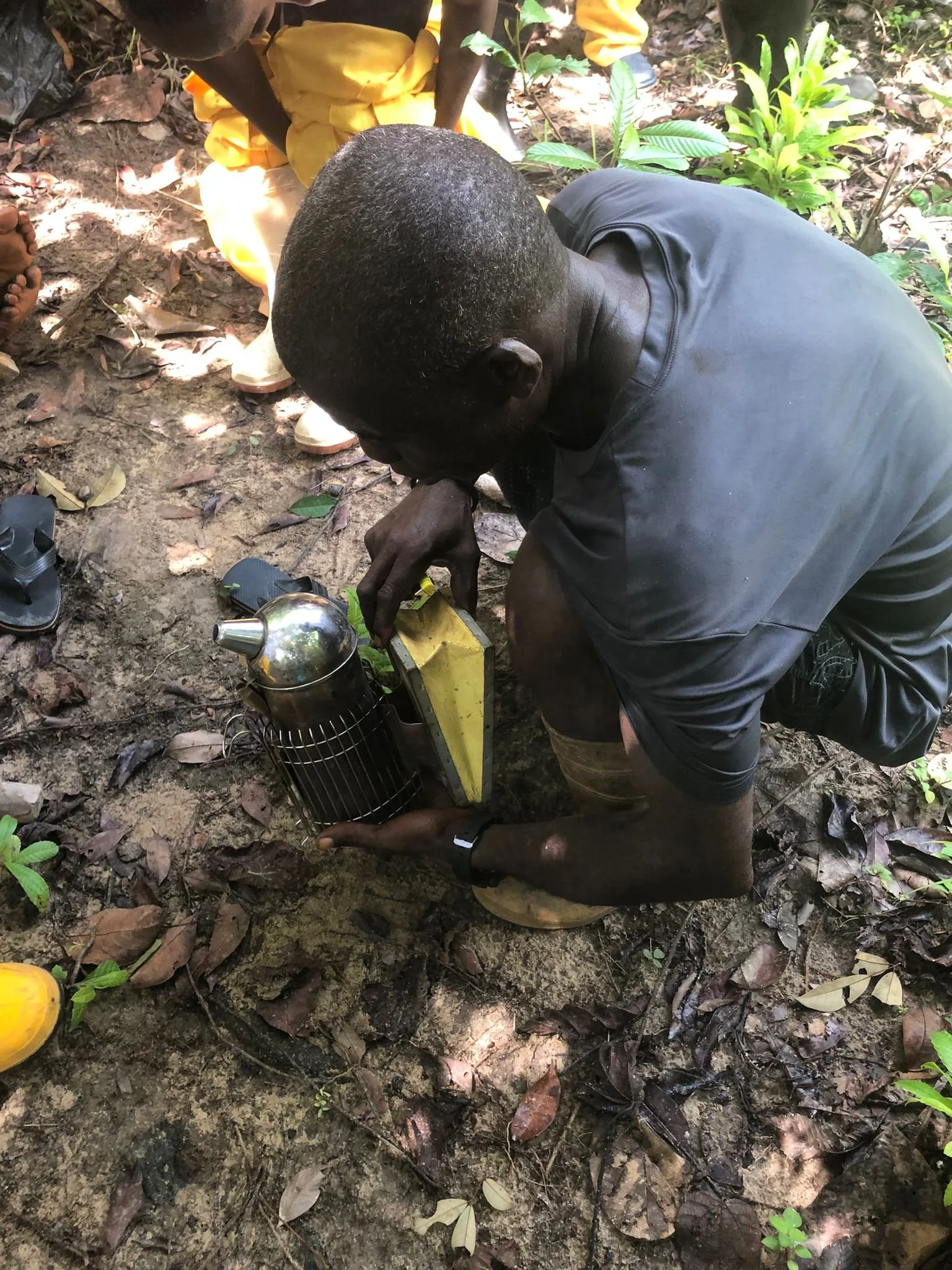
When a beekeeper is checking on a hive, the queen bee may send out an attack command to her worker bees. Fortunately, each beekeeper has protective equipment kept in the cooperative’s office. Additionally, a smoker is used to diffuse signals from the queen bee — which confuses worker bees and staves off an attack. This way, the beekeepers can carefully do their work cleaning the floor around the hive from debris, such as leaves, branches and ants, and also checking the honeycomb to see if it is healthy. Visiting the hive regularly will help them see and prevent many issues.
The Fish Ponds
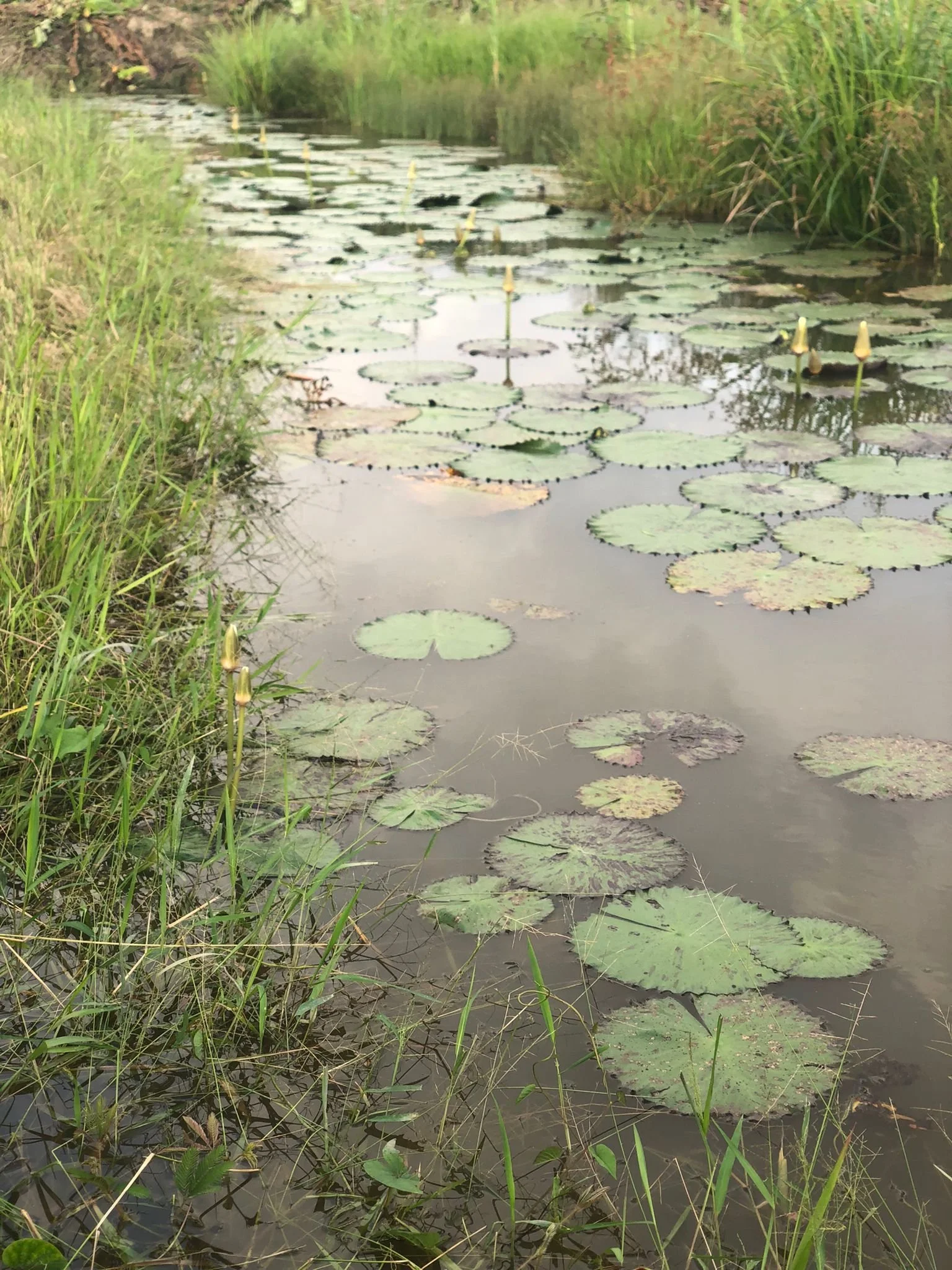
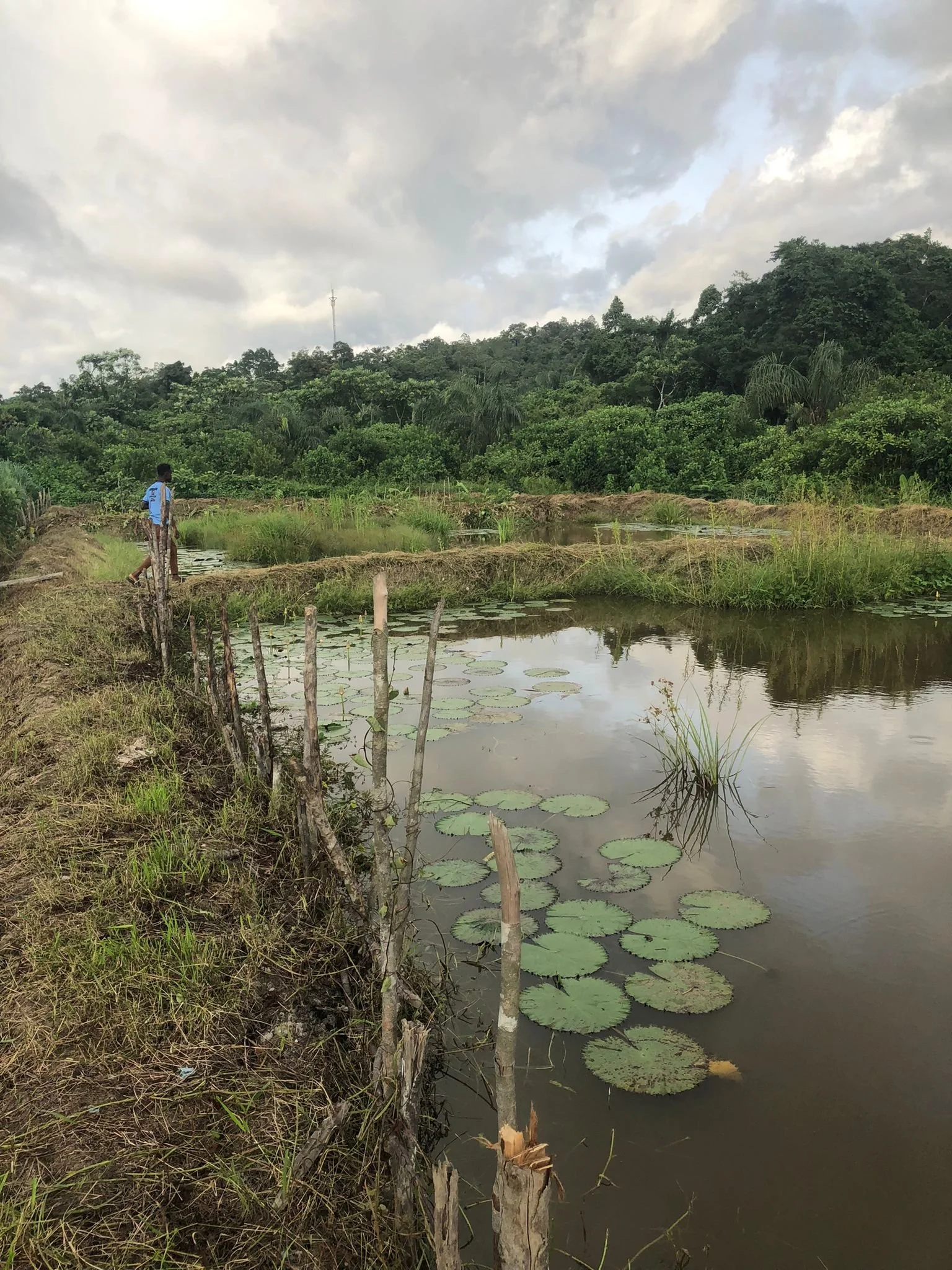
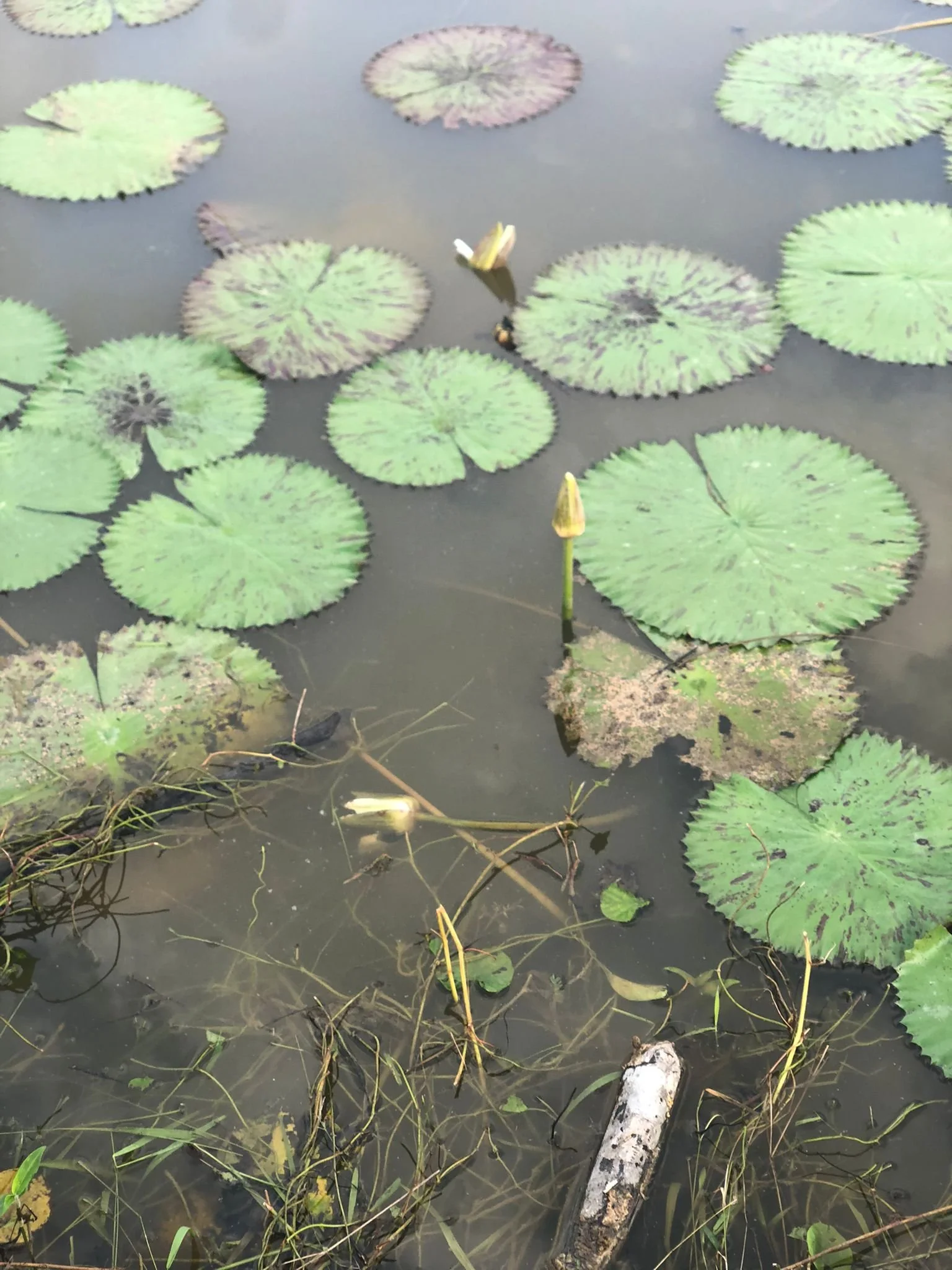
Alongside their work in beekeeping, the WECMACOS cooperative (Weasua Clan Mining and Agricultural Cooperative Society: 42 members) has also taken significant steps towards food security and economic resilience by constructing and maintaining fish ponds. On the outskirts of Weasua village, we visited three such ponds dedicated to fish farming. Fish plays a vital role in the Liberian diet, serving as both a key source of protein and a familiar comfort food. These were built, or rather dug, by some of the WECMACOS cooperative for the production of fish for their own distribution and to sell in the surrounding communities. Through this initiative, miners are not only able to provide for their families, but they can also earn additional income by selling surplus catch at local markets. These fish ponds belong to the cooperatives, but it is an allotted miner from the cooperative who maintains and looks after them.
Unfortunately, the moment the fish became fully grown, they were stolen, and the ponds reverted back to square one, with very small-sized fish, which they couldn’t sell until full-grown. These setbacks cause a vicious circle because the miners become disheartened and they stop tending to the ponds. The idea that all of that hard work did not pay off caused a lack of motivation to restart. However, there are still fish in the pond, so there is renewed hope to continue. When we were walking around the fish ponds, discussions arose about maybe fencing off the ponds to protect them better against theft. DFP hopes to convene with the WECMACOS cooperative members to discuss how to proceed with the protection of the ponds and see what measures could be put into place to protect the fish.
All Photography was provided by the author, Saskia Shutt.
“We are a small team of passionate jewelry industry professionals and writers. We’d appreciate your support to grow our team and continue to be able to provide the best responsible jewelry content for years to come!”
Editorial Sections


Chloe interviewed Jessica Hudson of The Nomad Jeweler on her latest collection that features ASM Colombian gold and Tahitian Kamoka pearls. Read the full article to learn more about Jessica’s story and why she chose to design with traceable artisanal gold and sustainable pearls.