

My Trip to the Fairmined Gold Mines in Peru

The content of this article reflects the views of the writer, and not necessarily those of Ethical Metalsmiths. This article was written for The Source
Guest Writer Saskia Shutt reports on her visit to three different Fairmined Gold mines in Peru. If you are considering incorporating Fairmined Gold into your jewelry collection, or if you’d like a recent update on Fairmined Gold from Peru, this is the article for you!
—Chloe Beaumont, Editor-in-Chief
Having seen firsthand the good ARM (Alliance for Responsible Mining) & Fairmined does for the mining communities, I believe that it can be used as a prime example for other small-scale mining communities, including the work ethos integrated in their way of working. At the Fairmined-certified CECOMIP and Oro Puno alluvial mines in Peru, miners remove the topsoil and bottom soil and store it for as long as the mine is in operation (5 to 20 years). After the mine has no more gold to give, they then replace the bottom and topsoil and plant local vegetation over the used mine.
I believe that as a Fairmined licensee, visiting the gold mines is a must. It is a rare opportunity to experience where the gold for my jewelry comes from.
I wanted to know how gold is mined and see for myself how the miners live and work and in what conditions. That is why I choose to make the trip 4500 meters above sea level, into the Andes in Peru.
I made a careful and thoughtful decision to work with Fairmed Gold, and considered a number of factors. Firstly, there is the social and environmental impact the Fairmined Certification has on the miners. Secondly, the transparent blockchain from mine to market.
Visit to three Fairmined Mines in Peru
This trip was a meeting point between miners and jewelers, both connected by the commitment to ethical and traceable gold.
Miners are continuously trained to improve their responsible mining techniques and to change their mindset for a positive impact on their surroundings.
CECOMIP
CECOMIP, a mine located in the Puno District, PERU has been Fairmined certified since 2016 and is an Artisanal Small-Scale Mining cooperation with 200 miners consisting of 63 women and 137 men.
It is an alluvial mine which means “open sky.” The miners dig in large areas to extract the gold from the earth. With high-power pressure hoses, the gold is separated from the sediment. The muddy water is caught in large pools, filtered into the next pool, cleaned and then recycled back into the process.
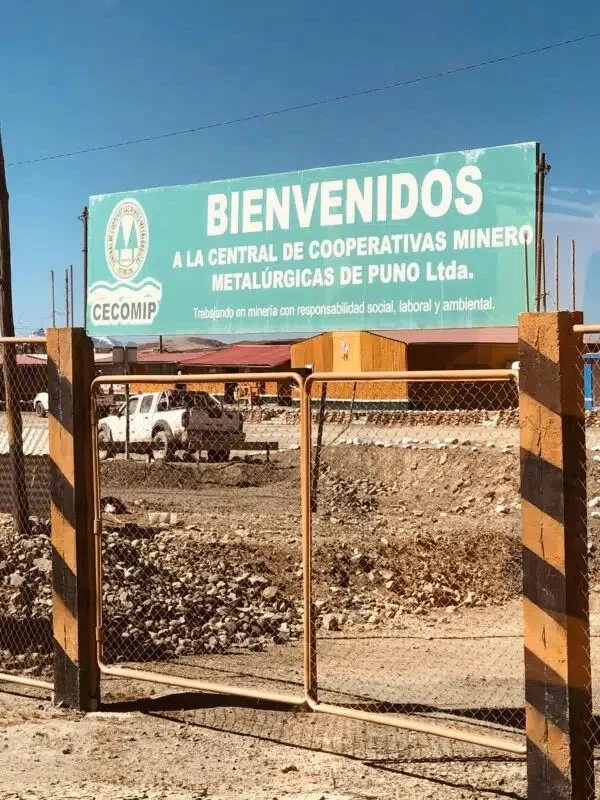
Entrance to the CECOMIP mine; Photo courtesy of Saskia Shutt
Watch this video to learn more about CECOMIP:
What is alluvial mining?

This large geometric hole is an alluvial mine for the extraction of Fairmined ecological gold where there is no use of toxic chemicals, such as mercury and cyanide. Photo courtesy of Saskia Shutt.
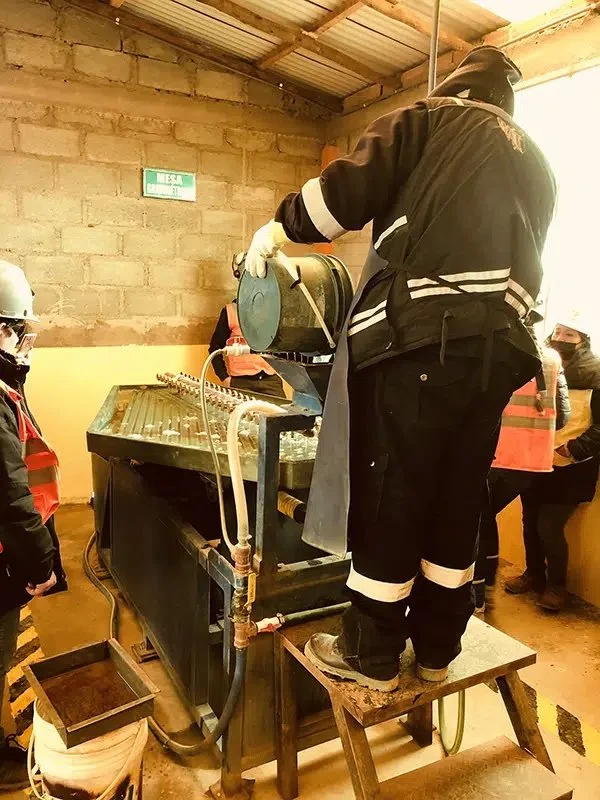

Women miners wash the coarse gold and separate it from the sediment by means of panning. The fine gold is separated from the sediment in the gravimetric table (by means of shaking). Photos courtesy of Saskia Shutt.
During the visit to Oro Puno the miners asked if the ARM (Alliance for Responsible Mining) could give them contacts in other countries, which they could visit to bring new technologies to improve their filtering pools. This clearly demonstrated a desire to keep improving their activities in a sustainable way.
Oro Puno

Separating gold from ore at Oro Puno. Photo courtesy of Saskia Shutt.
At Oro Puno, the separation method is the same as in CECOMIP, using enormous water cannons. Both mines are operating a circular work module.
All the water is caught in three large cascading pools. The water is filtered and cleaned, going from one pool to the next, and in the third pool, the clean water is reused again during the washing of the gold with high pressure hoses. The only time water is lost is through natural evaporation.
Img: The first stage of mining, the trucks emptying the earth in chutes, where the gold ore is separated from the earth by means of water cannons. The water cannons are in operation from 8am until 5pm everyday.
Oro Puno is the main mine I source my gold from to create the jewelry I make for my clients who choose Fairmined. They were the first mine to be Eco-certified in Peru. It is also a smaller organization. Eco-certified means that they no longer use mercury or other toxic chemicals to extract the gold. It also means that the mine invests in alternative ways to extract the gold by using ancient techniques such as panning and shaking-tables.
The Peruvian Government has stated that by 2023 gold mining by means of mercury will be illegal, and these chemicals will be banned as part of the gold mining process. In Colombia the use of mercury in the gold mining process has been banned since 2018.
Learn more about Oro Puno by watching the video below:
What happens to a disused mine?
Mines can be excavated up to15 years, sometimes even 20 years, or for as long as they are productive. The top soil and base soil are first removed and stored separately to allow for mining. Once the mine is finished and there is no more gold to excavate, the base soil and then the topsoil are put back and vegetation is planted over it to create a greenbelt. In short, it is a circular mining practice.
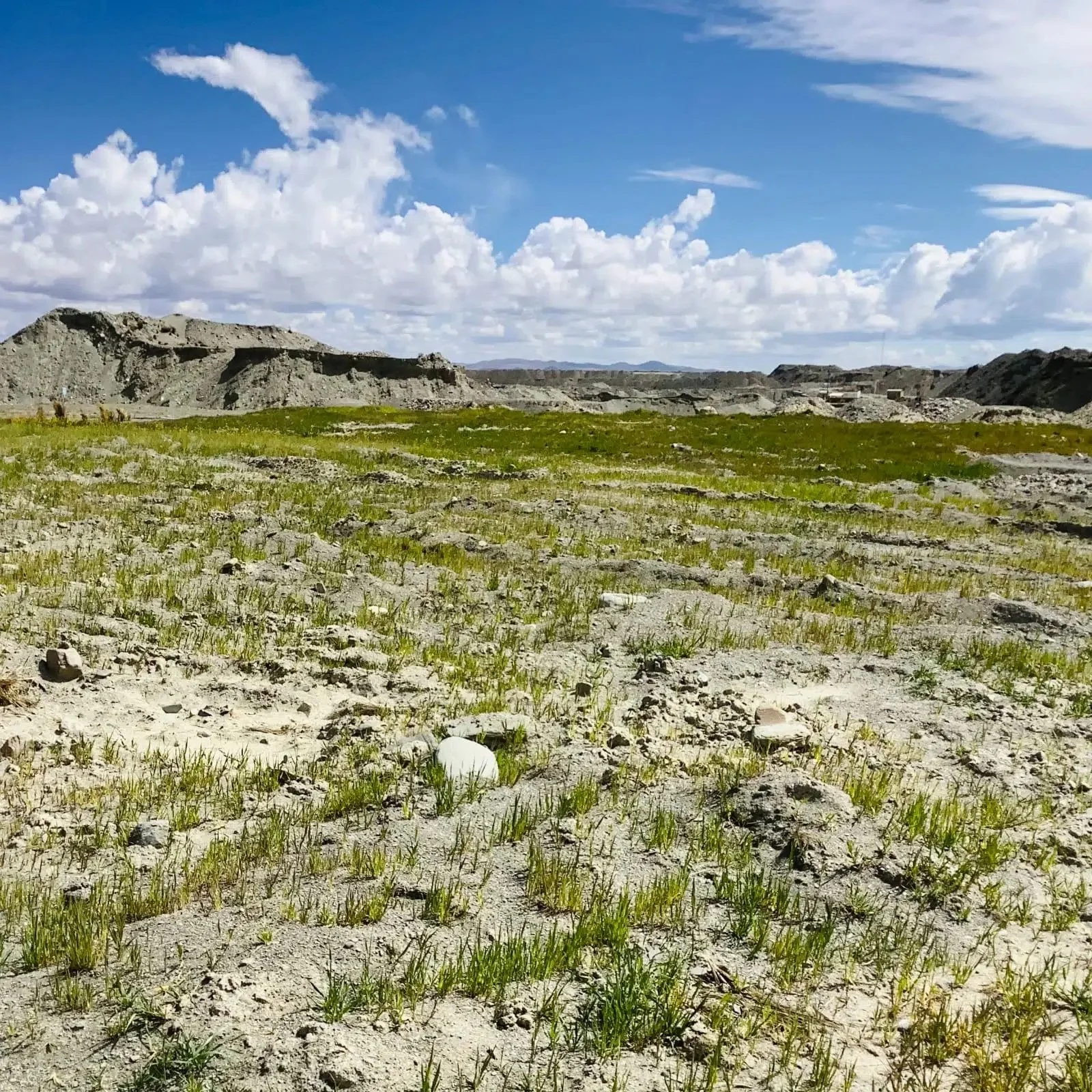
View of the greenbelt planted on a disused mine. Photo courtesy of Saskia Shutt.
Cruz Pata
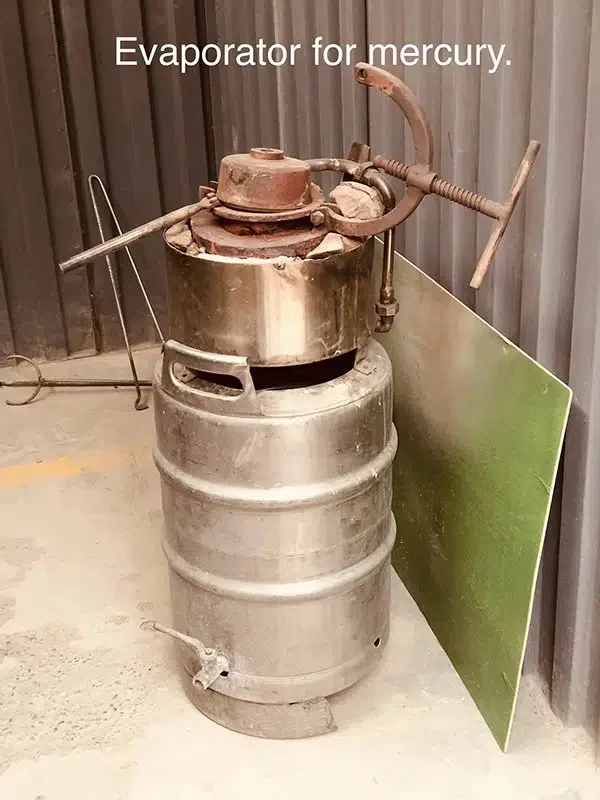
Contained mercury. Photo courtesy of Saskia Shutt.
Cruz Pata has a few differences from the aforementioned mines. It has only recently been certified Fairmined, and subsequently is still using a small amount of mercury in a safe and controlled environment*.
*Note: The mercury is handled by one engineer only, who wears protective gear, a face shield and mask, a special apron, and protective gloves. The mercury is contained in the evaporator, which is stored in a specially ventilated room where only authorized personnel are allowed.
Currently, Cruz Pata is in its testing phase to stop using mercury, which they have been working towards since 2022. The goal of the project, named “Zero Mercury,” is to end mercury use by the end of 2023. To formalize the process, Cruz Pata have to declare the process before the Peruvian government in their Environmental Management Instruments and this still takes time.
Cruz Pata is also a family run mine that employs 26 miners. Six brothers own this mine that they inherited from their father.
From Fairmined to Fairmined Ecological
Cruz Pata is taking its time to stop using mercury because they want to explore new ways to recover gold that will guarantee better recuperation rates. Currently, Cruz Pata only recuperates 40% of the gold present in the soil. To improve the recuperation amount they must improve the “lavado process” (washing stage).
The gravimetric table can’t really improve the recuperation rate because most of the losses happen before this stage (at the washing stage). Instead of investing money in the purchasing of a gravimetric table, the miners of Cruz Pata are studying their options first to see how they can improve their water management resources. They are sending samples to laboratories to receive more guidance, however this is a long process.
The image on the right is an evaporator for mercury. This is the last process needed to separate fine gold from the sediment. Most importantly, it is done in a controlled and secure environment.
From the moment a mine receives its Fairmined certification, they have three years to become ecological, if they don’t achieve this within that timespan, they lose their certification.
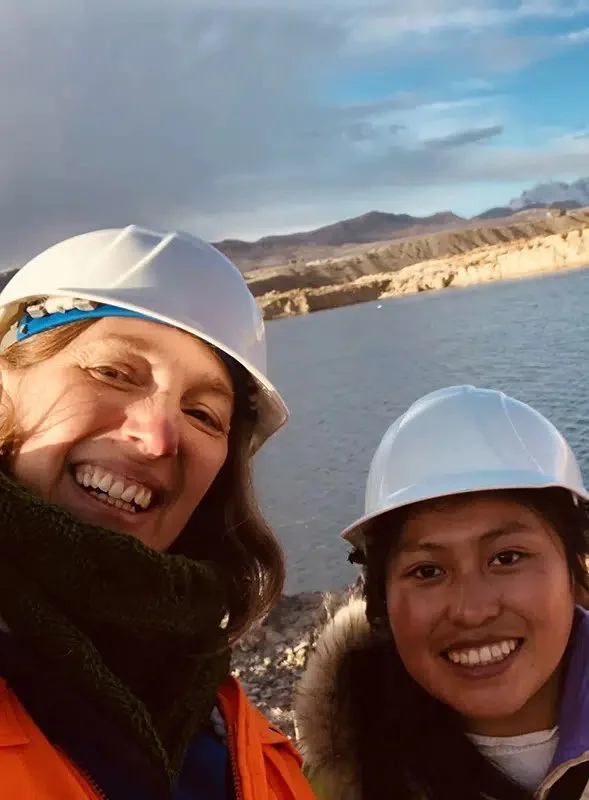
Saskia Shutt and Lissbeth, the mining engineer at Cruz Pata.
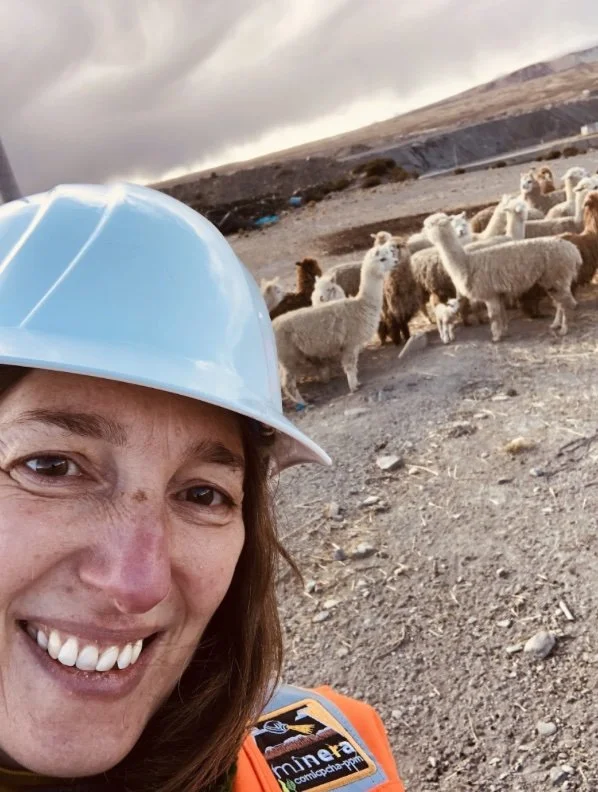
Saskia in front of Alpacas. Photos courtesy of Saskia Shutt.
To generate more income, the family who runs Cruz Pata began farming, which they had some knowledge of because their grandfather was a farmer. Behind Lisseth, the mining engineer at Cruz Pata, there is a large lake with rain water where they breed trout. It is a very popular fish in Peru and you will find it everywhere on the menu!
Alongside trout farming, they also breed alpacas for their wool. Alpaca wool is very expensive and difficult to get hold of in Peru, as it all goes for export to Europe and the US. Sadly, due to this, most Peruvians can’t afford the alpaca wool. But luckily for the Cruz Pata miners, it creates a great source for their second income, to help fund their mining business.
Watch the video below where miners explain what Cruz Pata was like before they got Fairmined Certified.
The Fairmined mining activity is performed by local miners who care about the development and wellbeing of the community. Becoming Fairmined Certified ensures their commitment to environmental preservation and the development of the community, while also creating a positive impact on human rights within the mining communities.
Ask for the origins of your gold… Every gram counts to make a positive impact!
“We are a small team of passionate jewelry industry professionals and writers. We’d appreciate your support to grow our team and continue to be able to provide the best responsible jewelry content for years to come!”
Editorial Sections



Chloe interviewed Jessica Hudson of The Nomad Jeweler on her latest collection that features ASM Colombian gold and Tahitian Kamoka pearls. Read the full article to learn more about Jessica’s story and why she chose to design with traceable artisanal gold and sustainable pearls.