

Mercury Free Mining with GOLDROP

The content of this article reflects the views of the writer, and not necessarily those of Ethical Metalsmiths. This article was written for The Source.
Guest author Alisa Thorp, owner of Mercurius Jewelry, interviewed Toby Pomeroy about the GOLDROP machine she saw at the Mercury Free Mining booth at AGTA Tucson earlier this year. The following article is an exciting and informative update on what the GOLDROP machine does and how it can positively impact artisanal and small-scale (ASM) gold mining communities. Note for transparency: Mercurius Jewelry has been a donor to Mercury Free Mining since 2020.
~ Chloe Beaumont, Editor-in-Chief of The Source
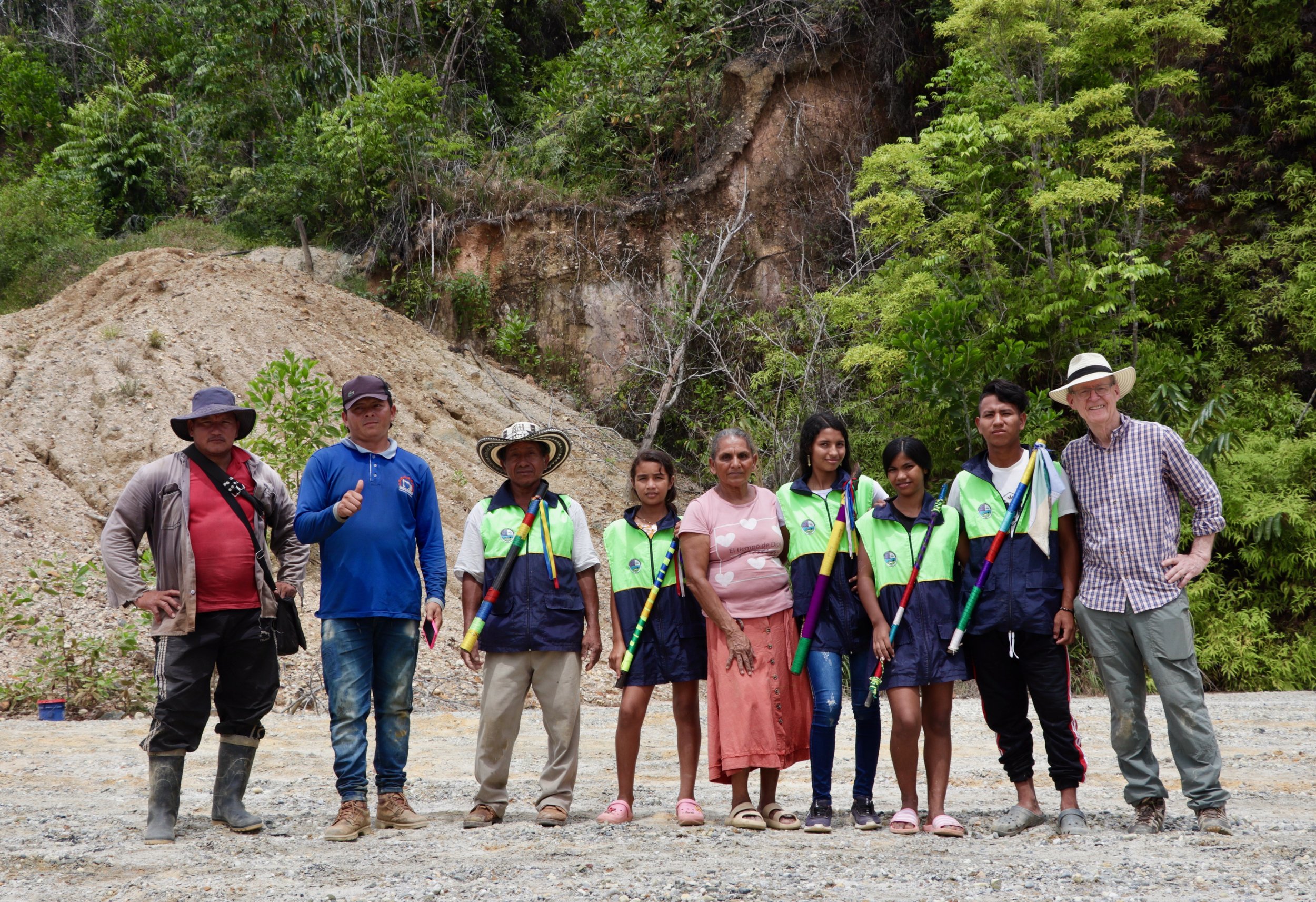
Guardia Indigena group, community Leader Deyanira, Toby Pomeroy and other miners. Photo courtesy of Toby Pomeroy.
The most exciting thing I saw in Tucson this year wasn’t a gem or mineral. It was a promising new piece of technology with the potential to make a positive global impact.
At the Mercury Free Mining (MFM) booth at AGTA, Toby Pomeroy and John Richmond
John Richmond showing David Thorp the GOLDROP machine at the Mercury Free Mining booth at AGTA Tucson 2023. Photos courtesy of Alisa Thorp.
At the Mercury Free Mining (MFM) booth at AGTA, Toby Pomeroy and John Richmond were demonstrating the GOLDROP Processor, a technology designed by Richmond, of Sluice Goose Industries, to separate gold from ore more effectively and safely than mercury.
Mercury has been used for centuries to increase the yield of gold extracted from the surrounding ore, yielding a higher profit for miners, but the human and environmental costs are steep. It “is a potent, permanent toxin that can poison the human body irreparably, causing neurological disorders, birth defects, and a multitude of other illnesses. Along with harm to miners and their communities, mercury enters into the atmosphere, and moves downstream from mining areas, through rivers, into the ocean, and into marine life. As an environmental contaminant, mercury is also exceedingly difficult to remove.”
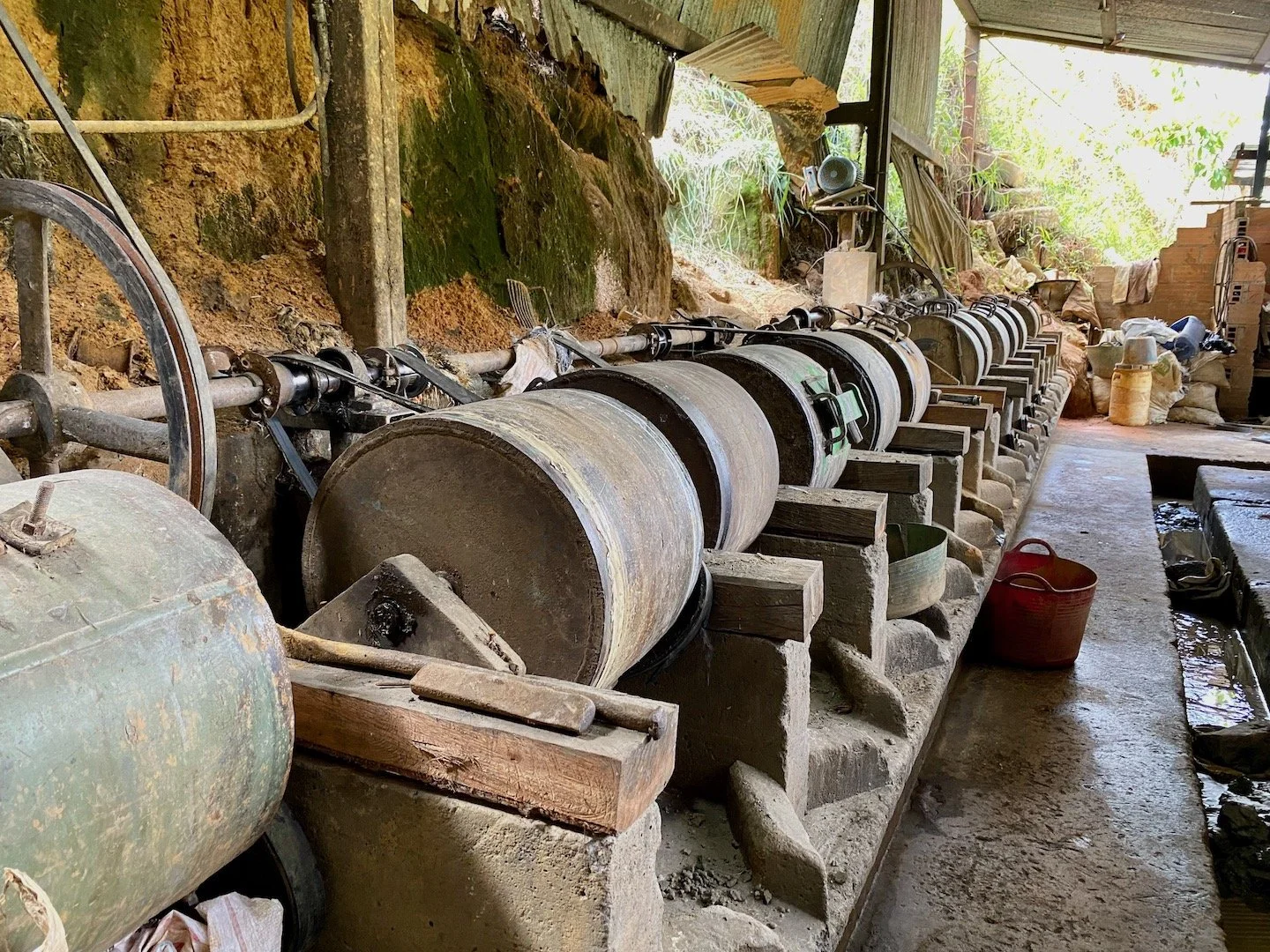
A line of whole ore amalgamation "cocos" that tumble gold ore, steel balls, and mercury to release the gold so it can be captured by mercury. Whole ore amalgamation is one of the most polluting practices in gold mining. Photo courtesy of Toby Pomeroy.
Unlike mercury’s chemical separation process, the GOLDROP uses elutriation technology, a process for separating particles based on their size, shape, and density. It flows gas or liquid in a direction opposite to the direction of sedimentation to achieve gold separation. After years of development, the GOLDROP had recently performed very well in laboratory tests and the MFM team was getting ready to take it into the field in Colombia to test onsite with gold miners.
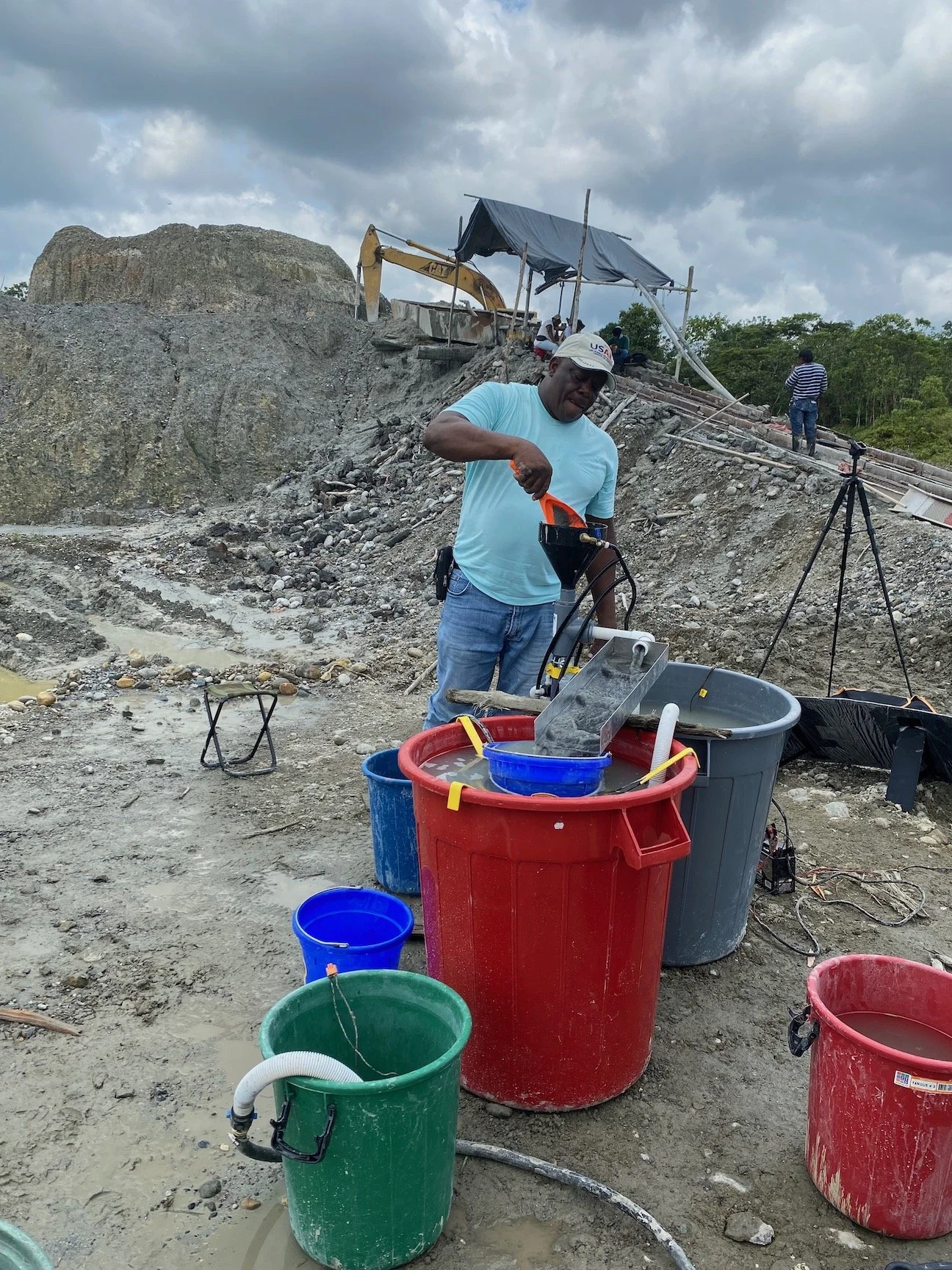
Mine owner Alexis using the GOLDROP in Chocó. Photo courtesy of Toby Pomeroy.
The dangers of mercury exposure are indisputable. As jewelers who carefully consider our gold sourcing we may wonder why, if miners are aware of the damaging effects of mercury, do they continue to risk its use?
Examining this issue requires removing the privileged lens of the industrialized world. Until there is another way to extract gold from ore that is as accessible, affordable, and efficient, abandoning the use of mercury is not a feasible option for miners around the world. We cannot demand source communities make this change without offering support to meet these milestones.
Ultimately, as Pomeroy told me in our discussion about the future of the GOLDROP - “the most important thing is that the miners choose it themselves, because they can make more money using it and it fits with their culture.”
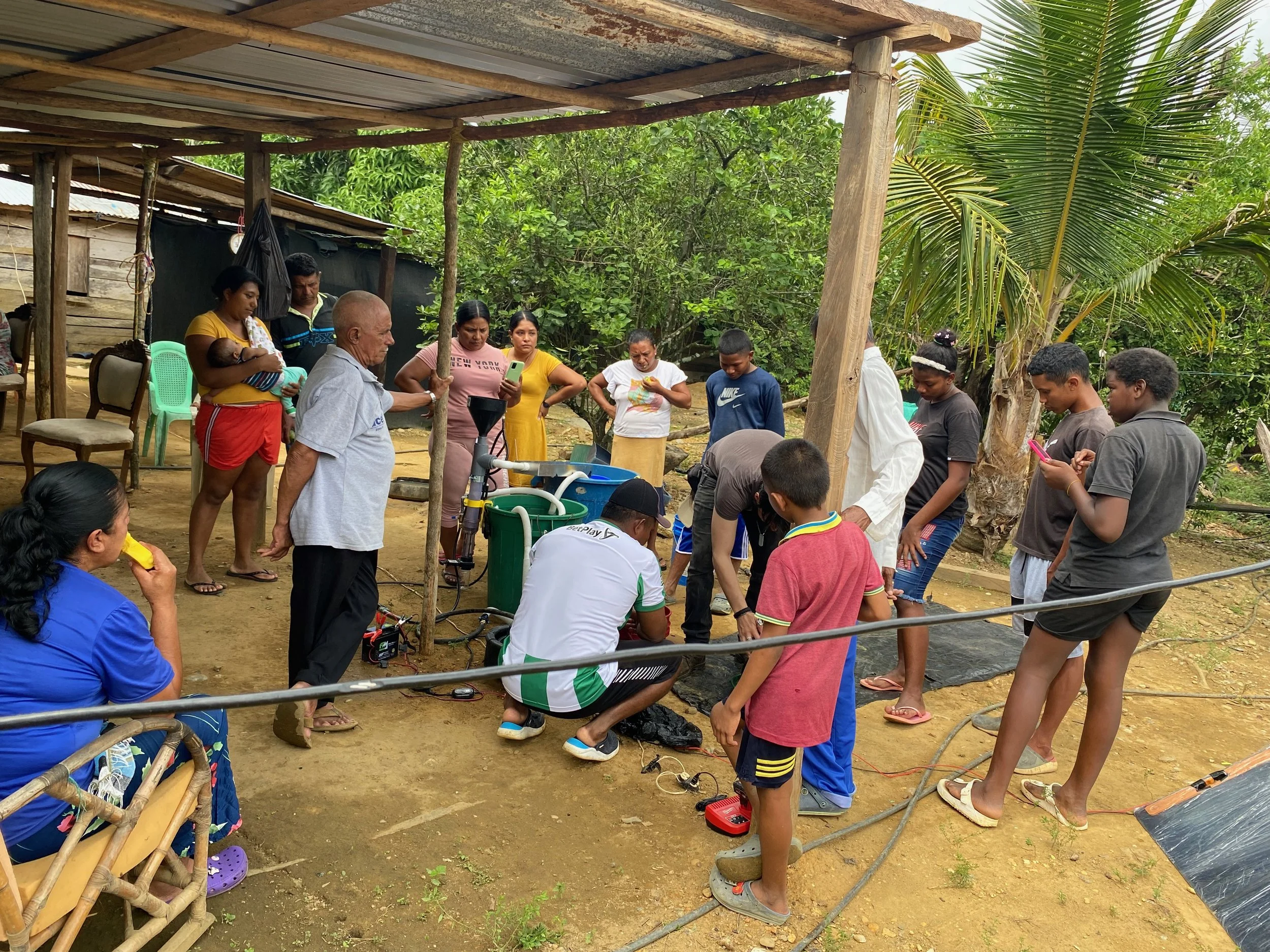
The community of miners and their families join to learn about the Goldrop and how it works. Photo courtesy of Toby Pomeroy.
In 2017, Pomeroy founded Mercury Free Mining with the mission of leveraging the resources of the jewelry industry to fund the creation of technology to replace the use of mercury in the field. That year, introduced by the Alliance for Responsible Mining (ARM), he visited the mining community of San Antonio, a small village near the Zaragoza Municipality in Antioquia, Colombia significantly impacted by mercury use.
The miners in San Antonio welcomed the opportunity to teach Pomeroy about their processes and the health impacts they suffered from mercury. They were eager to learn more about the possibility of minimizing or eliminating mercury use, and agreed to run field trials on any promising technology.
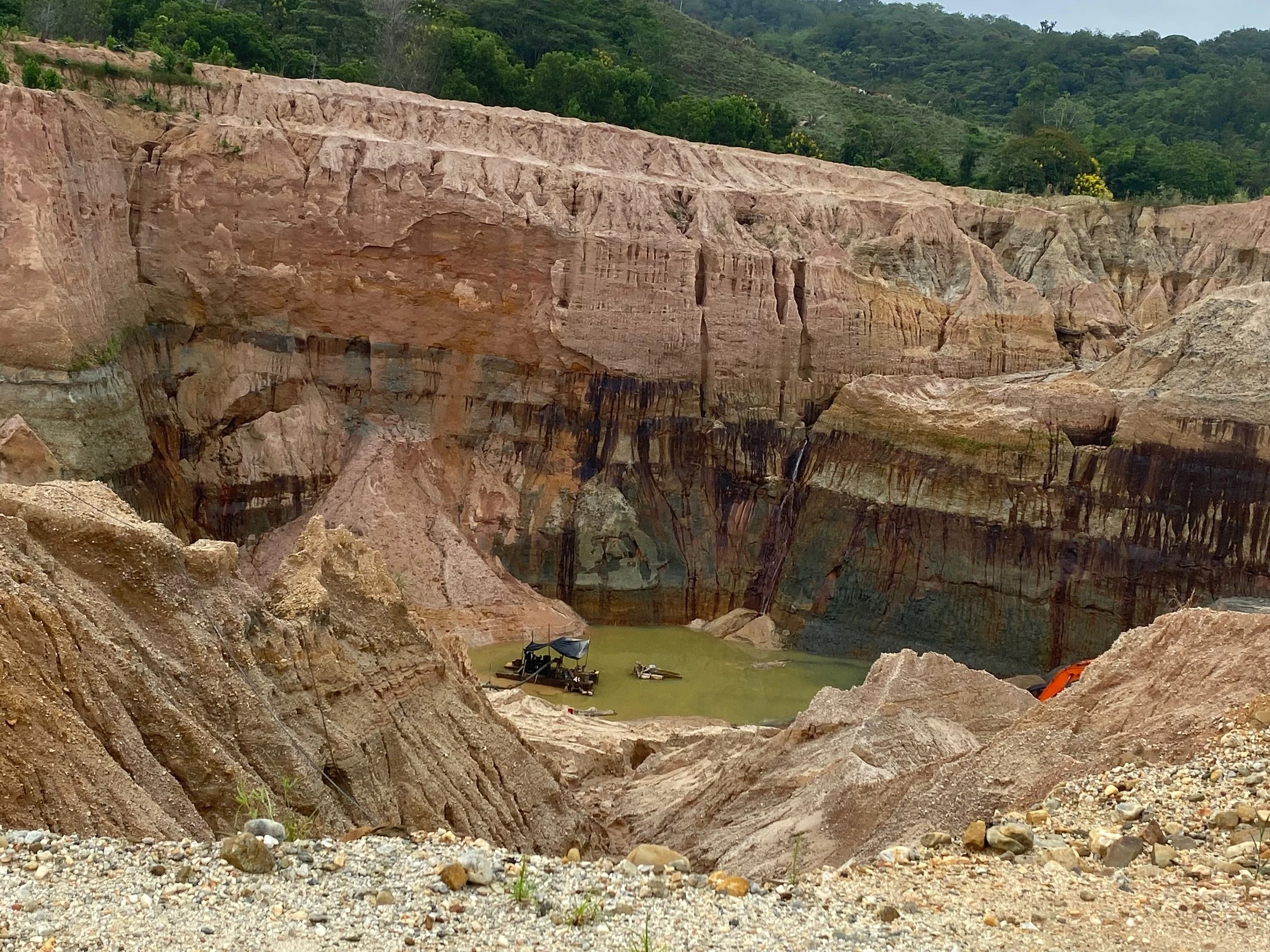
A "legal" mining operation, the tailings of which the community of San Antonio, Colombia is allowed to process to find gold they have missed. Photo courtesy of Toby Pomeroy.
Pomeroy explained some of the specific benchmarks MFM has looked for in a viable mercury replacement:
Intuitive to use so that it can be easily operated and maintained in the field.
Capable of handling the hundreds of different types of ore, or capable of being adapted for different sites.
Able to handle the differing volumes of ore at various mine sites.
Affordable to obtain and use in the field, including running on an accessible power source.
The GOLDROP Processor was previously field tested in Ghana in 2020, where it proved promising but did not perform as well as needed for the miners to be satisfied. Richmond made adjustments to address issues that arose during those tests, related to ease of use and the size of the ore being processed. In recent laboratory tests of multiple ore types, the GOLDROP performed as well as or better than mercury at extracting gold.
Sponsored by the Gemological Institute of America (GIA), and once again accompanied by representatives from ARM, Pomeroy and Richmond traveled to Colombia in April 2023 with the GOLDROP Processor for field testing.
During the trip they visited four mine sites: two in the Chocó region which are part of the Unión Panamericana collaborative project of ARM and the World Wildlife Federation (WWF); and one each in Yali and San Antonio. With different field conditions at each site it was a great opportunity to test the system.
The response from the miners was very positive. The GOLDROP was easy to set up, required a relatively short amount of training to use, and the miners found it adaptable to their uses.
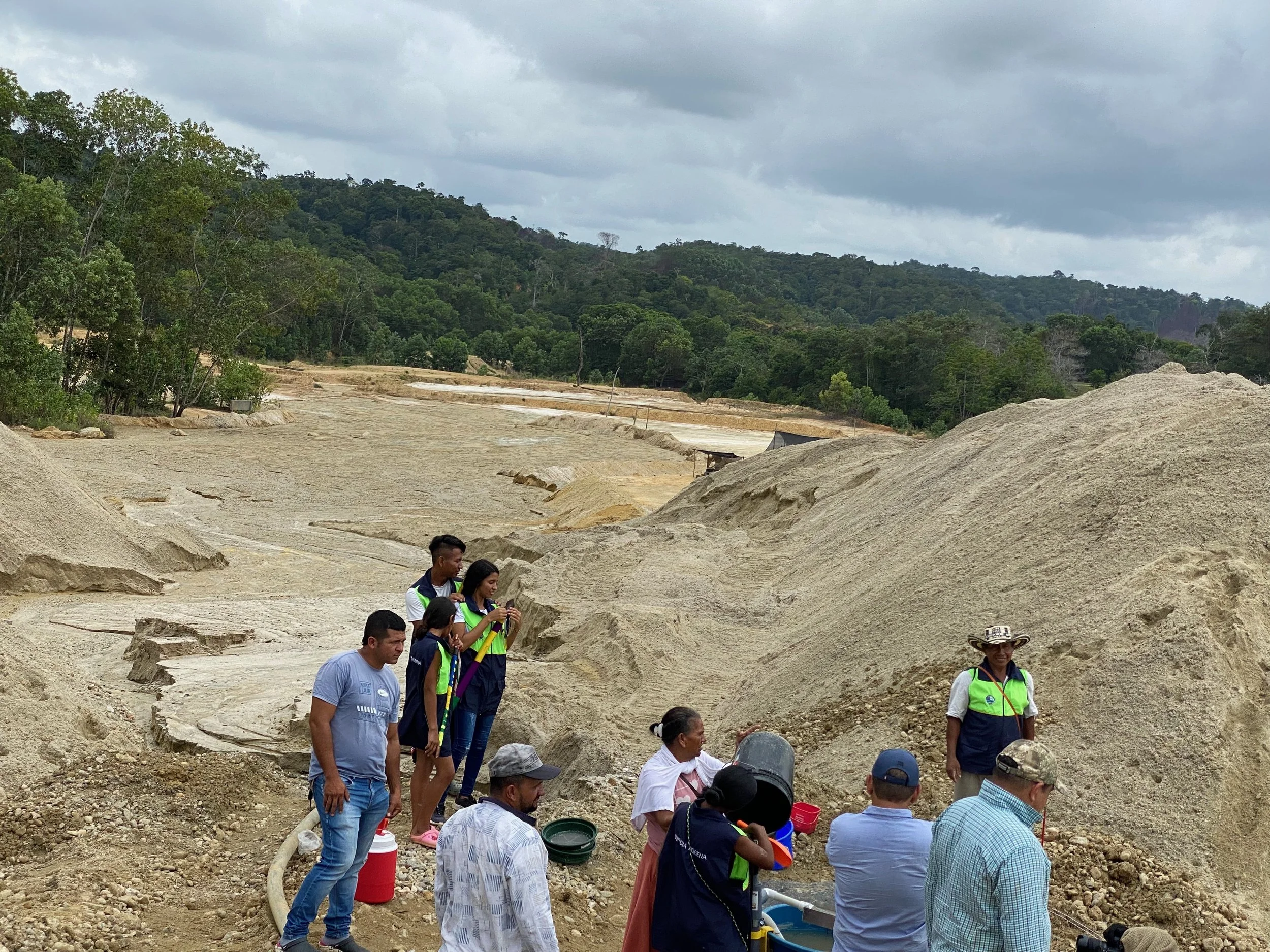
Andreas' miners and a neighboring community, the "Indigenous Guardians" are fascinated and hopeful of being able to use the GOLDROP to make their transition from mining to farming. Photo courtesy of Toby Pomeroy.
Currently, each unit weighs about 75 lbs and costs $3,000, complete with duplicate parts so it can be easily repaired at each site. It runs on a motorcycle battery and small solar panel, or with electricity if it’s available. Although this is a larger one-time investment than a single purchase of mercury, it is relatively accessible - especially if a team or collective of miners is able to purchase it together.
Pomeroy shared with me, “We had about a mile hike into one of the mines - two miners picked up everything and carried it in there. When we got there they had it filled with water and were basically up and running in ten minutes. This was after one day of having seen it, on the second day they knew how to work it… and we basically just stood back and watched as they processed the ore samples there.”
At each location they visited, miners suggested that the sluice needed to be lengthened and widened in order to increase gold recovery. Upon his return to the US, Richmond immediately prototyped a replacement part to ship to the miners at no cost.
The MFM team was able to leave two GOLDROP Processors in Colombia for continued use at mine sites - one with the ARM and WWF teams in Choco, and one in San Antonio, donated in honor of and with gratitude for the tremendous support of Eric Laker and the team at Lashbrook.
The other universal feedback was that the size of the device needs to be increased in order to process a larger amount of material. The volume that the GOLDROP Processor can handle is relatively small compared with the volume miners are processing now. Richmond is prepared to scale up the technology, and requires approximately $125,000 to make that happen.
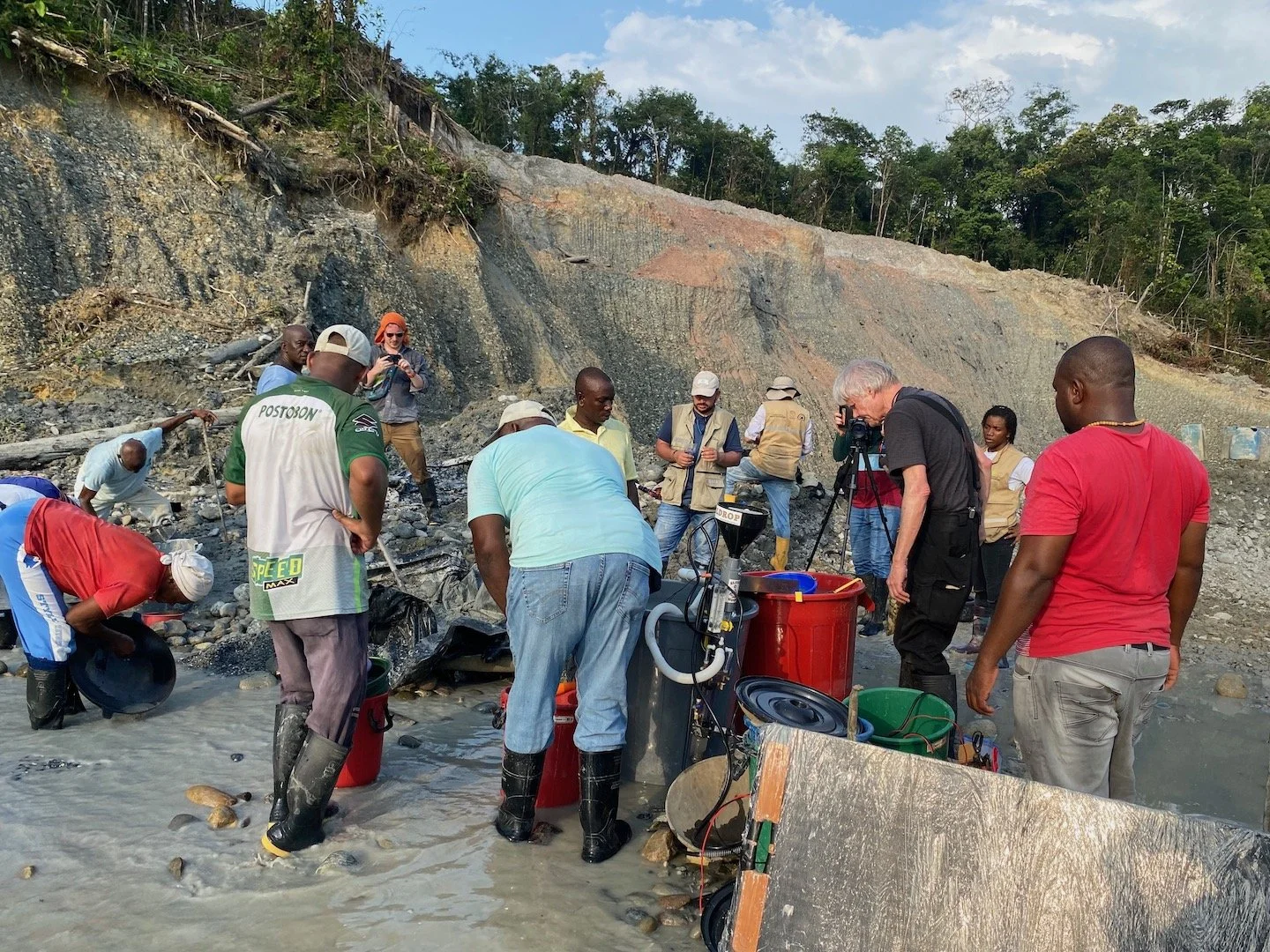
ARM staff and EMAGROAUP Board of Directors comparing GOLDROP to their traditional mining methods that do not use mercury. Photo courtesy of Toby Pomeroy.
The positive results, the response from the miners, and the interest from several NGOs in collaborating to support the development of the GOLDROP Processor have Toby Pomeroy feeling very optimistic. .
ARM and Pure Earth are both interested in pursuing how this technology can be deployed and added to the work they’re already doing. Exactly how they move forward will depend on gathering empirical evidence.
This means the next step is to run trials to collect scientific data and assess precise numbers to compare how much gold is collected by the GOLDROP Processor with the methods currently being used, including mercury extraction. These organizations are currently in discussion about how they might work together to achieve this. Pomeroy’s ideal goal is to move forward with this analysis in the next three or four months.

GOLDROP at La Mascota processing plant, capturing gold as well as mercury (shown) in the process. Photo courtesy of Toby Pomeroy.
Scientists and funders need to see the numbers. Miners need to see the results. Both avenues will continue to be pursued by MFM - empirical testing and demonstrations at mine sites.
I asked Pomeroy what jewelers can do to support this work. He envisions the possibility of connecting businesses or individuals with a particular community that they can fund to get set up with a GOLDROP Processor. He also stressed the importance of learning and communicating the story of the miners impacted by mercury use.
For now, a great place to start is supporting the work of MFM, which you can do with a one-time or monthly donation. Pomeroy added:
“I want to make sure that Ethical Metalsmiths knows that we are here because of small jewelers. Even though GIA, Pure Earth and ARM are involved, Ethical Metalsmiths’ support has been instrumental in MFM being where we are .”
To learn more about how to support Mercury Free Mining and the GOLDROP initiative, click here.
“We are a small team of passionate jewelry industry professionals and writers. We’d appreciate your support to grow our team and continue to be able to provide the best responsible jewelry content for years to come!”

Something we rarely talk about to the extent that it is almost taboo is what happens with a break-in, burglary or even a hold-up: How do we deal with the aftermath?