

How Jewelry Can Support the UN Sustainable Development Goals

The content of this article is the opinion of the writer and was written for The Source
SDGs banner- from Adobe Stock
So What are the UN Sustainable Development Goals, and What do they Have to do With Jewelry?
The answer is...actually quite a lot.
There isn't a single facet of the jewelry industry that doesn't tie into the UN SDGs. The Sustainable Development Goals, or “SDGs”, were developed by the UN in 2015 as part of Agenda 30 to guide nations, policy, NGOs, and funding through 2030. These global goals were built upon decades of work and global agendas for change by the UN to address significant worldwide social and environmental challenges. The SDGs outline 17 goals with 230 indicators on how they can be achieved to further progress sustainable development to end global poverty and protect the environment.
It may seem like these broad global goals don't affect you in your business, but they do, and our jewelry is intrinsically linked to many of them. We live in an increasingly interconnected world, and what we do and wear throughout our day can have substantial impacts on people, communities, and the planet. To help illustrate this interconnectedness and the importance of these goals, this article focuses on their impact on water, land, and people.

Water SDGs
UN SDGs and Water
Sustainable development goals 6 and 14 deal with water, highlighting our access to clean water and sanitation (SDG 6) and the health of ecosystems underwater (SDG 14). As jewelers, we can start assessing our impact by first asking ourselves what materials we use in the studio that end up going down the drain. At a quick glance, this might include ultrasonic cleaning solutions, pickle, or other chemicals (a former employer of mine had even admitted to dumping ferric chloride, a highly toxic and corrosive salt solution used for metal etching, down the drain, much to my horror). Many of these have eco-friendly and low-impact alternatives like using citric acid or vinegar instead of the commonly used sparex for pickle. An excellent resource for exploring all the chemicals you may use in the studio and alternatives for them is The Eco Jewelry Handbook by Christine Dhein.
Taking this one step back, let's look at the materials we use and their effects on the water supply and life below water.
“How do the gold, silver, and gemstones we use impact our water supply? ”
Making this assessment may be a bit trickier, as it means we need to have some knowledge of gold and gemstone mining and how both small and large scale mining affects the water supply. Cyanide and mercury pollution stand out as significant issues in gold mining affecting our water. In fact, artisanal and small scale gold mining is responsible for 40% of global mercury pollution, releasing 8,000 pounds of mercury into our biosphere every day. This increased toxicity in the environment poisons rivers, miners and the surrounding communities who suffer from health conditions and congenital disabilities due to exposure to this toxic heavy metal. As a pollutant, mercury is notoriously difficult and expensive to remove.
Large scale mining (LSM) doesn't fare much better, polluting waterways with cyanide and other toxic mine tailings; look no further than the documentaries "Shadow of Gold," "River of Gold," and "Maxima,” all screened at the Chicago Responsible Jewelry Conference over its last three iterations. In particular, one instance unleashed a cocktail of millions of cubic meters of toxic mining waste in the Mount Polley Mine (operated by Imperial Mining) tailings spill, one of the most massive environmental disasters in Canadian history. Events like these poison the water supply and the wildlife living in, and depending on, those bodies of water. This event devastated First Nations communities' land and water supply, a crime for which the mining company hasn’t had to pay any restitution.
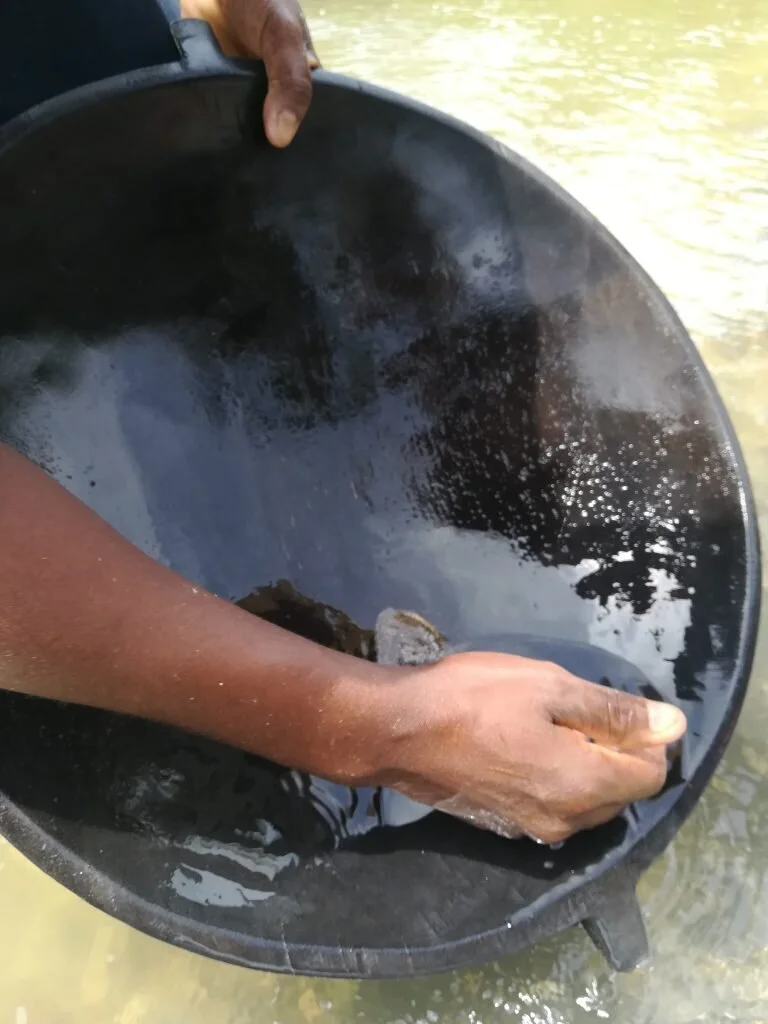
Gold panning in Choco, Colombia- photo credit Toby Pomeroy
“Ask yourself, do you know where your gold is coming from or how it was mined? ”
Can you be sure that it isn't dirty gold?
By purchasing recycled gold, you can be assured that no additional mercury was used in mining your gold. Ask your refiner about what they do to protect the environment and water supply. However, even with the ready availability of recycled gold, it's done little to lower the demand for new mining. Another option is supporting responsible gold mining initiatives like Fairmined, Fairmined Eco, and FairTrade. Fairmined silver is also available in limited quantities. These initiatives source gold from empowered small scale and artisanal miners and are subject to strict environmental standards, which may include foregoing mercury all together and limited and responsible use and disposal of chemicals. Mines meeting these standards undergo regular audits to maintain their certification and the additional premium helps miners invest in their communities (this ties into UN SDGs 1, 5, and 8 as well).
We can take this even a step further and cast a proactive vote with our dollars and support projects within our industry to protect the water and end mercury pollution. Mercury Free Mining Project aims to find a safe, effective, and accessible alternative to toxic mercury use in gold mining. Before the pandemic, the Mercury Free Mining team traveled to Ghana to conduct field tests with their new Goldrop process with artisanal and small scale miners, yielding promising results and have since been testing ore samples from Fairmined gold mines in South America. Supporting mercury cleanup projects such as Better Without Mercury also help protect our waterways. The project recently completed its first phase in cleaning up 400 tons of mercury from a former gold ore processing site in Columbia.

Land SDGs
UN SDGs and Land
UN SDG 15 deals with life on land. It aims to "protect, restore and promote sustainable use of terrestrial ecosystems, sustainably manage forests, combat desertification, and halt and reverse land degradation and halt biodiversity loss." A vital part of this goal is to take urgent action to halt deforestation and biodiversity loss. However, even protected areas of Madagascar's rainforests are threatened by ruby mining, while illegal gold mining contributes to around 10% of deforestation in the Amazon rainforest. Mining rushes like Madagascar's ruby rush leave a larger footprint than just the holes the miners dug. Swaths of rainforest are cleared to access remote mining sites, and trees are cut down to create shelters for the miners and pipes to transport water to the mine sites. Wildlife is often poached for bushmeat as miners live near these remote sites for weeks or months before moving to a new deposit. The poaching and consumption of bushmeat increases the likelihood of zoonotic diseases like COVID-19. This deforestation contributes to even more land degradation, causing landslides and mining holes and tunnels to collapse. This degradation is often visible for years after miners have abandoned the site.
While gemstone mining doesn't depend on the use of chemicals the same way gold mining does, it is not without its environmental impacts. The extraction of rough gemstones can contribute to land degradation, harming wildlife and biodiversity. Because of the diverse nature of colored gemstone mining worldwide, the environmental footprint can vary drastically, depending on how easily the gem material can be separated from the host rocks. Colored gemstone mining can mean families are working with hand tools, digging, and using shovels and pickaxes to unearth gems. Gemstone mining may use explosives in mining primary deposits. It can even mean collecting garnets that ants move to the surface as they dig their tunnels, for some seriously low impact mining. It's worth looking into your specific gems and asking your suppliers to learn more about their footprint.
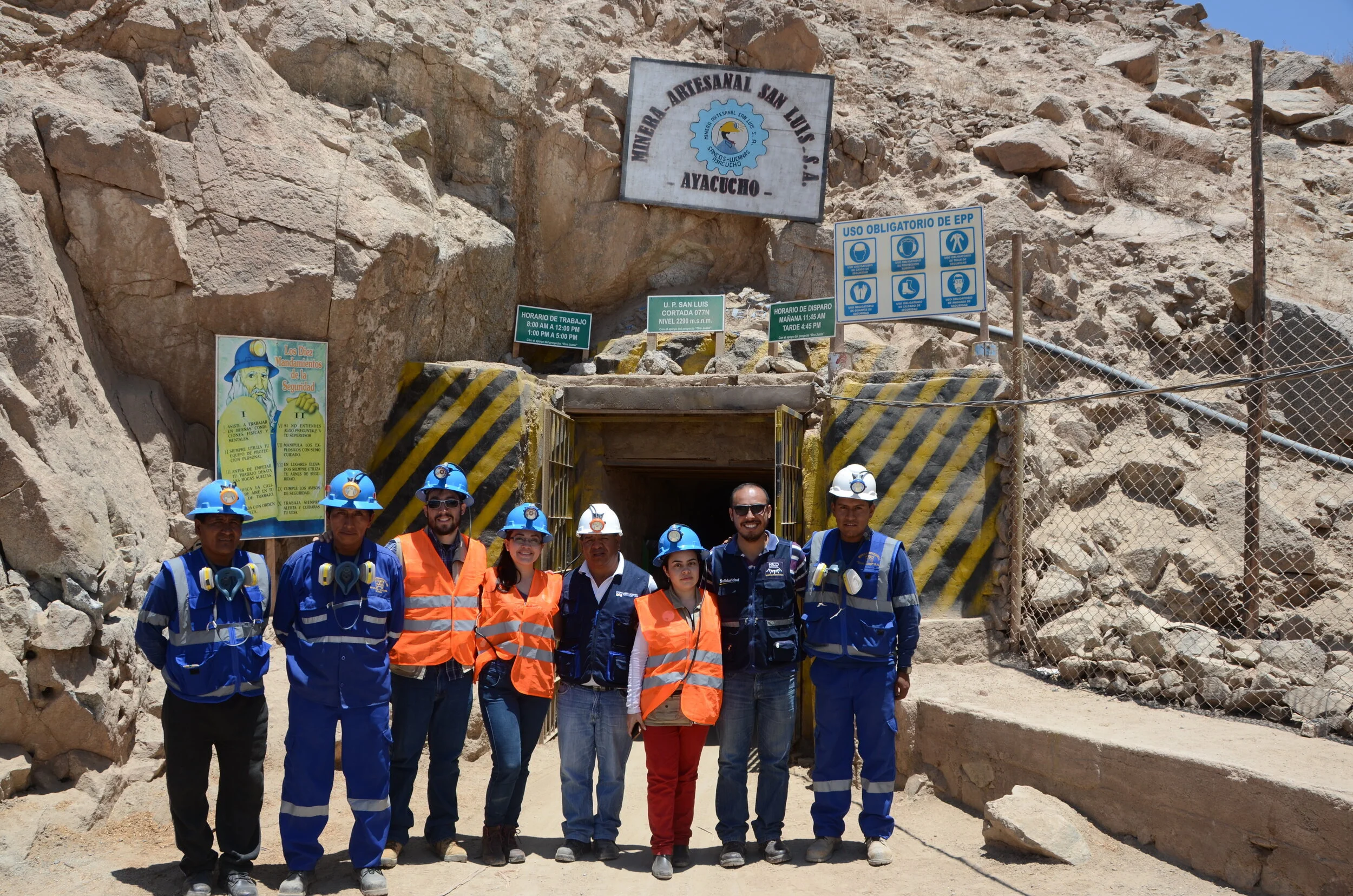
Fairmined miners
Supporting the Land SDG requires more than just doing your due diligence with your precious metals and gemstone suppliers, as voting with your dollar only does so much to address economic disparities in developing countries. Supporting initiatives like Fairmined and Fairmined Eco means supporting mining practices that don't irreparably harm the earth and that help restore land degraded by mining. Last year at the Chicago Responsible Jewelry Conference, Colombian Fairmined mining cooperative Coodmilla shared the work they did to help reforest land that had been previously deforested for mining.
Additionally, you can easily work reforestation into your business. You can plant a tree for every order you ship by becoming a One Tree Planted partner or donate a percentage of sales to help reforestation. For as little as $1, you can plant a tree and share the story of how you're helping your industry and your community take care of our planet. As an industry, we can support regenerative agriculture and reforestation to help restore areas affected by mining.
UN SDGs and People

People SDGS
Over 40 million people globally work in artisanal and small scale mining, sourcing 80-90% of our colored gemstones, 15-20% of our diamonds, and 20% of our gold supply. While Artisanal and Small-Scale Mining (ASM) has long been treated as the problem child of the industry, even in its informal state, it contributes positively to most of the SDGs according to Jordan de Haan of Pact, presenting at this year’s Chicago Responsible Jewelry Conference.
The ASM sector especially supports the goals linked to social (SDGs 4, 5, and 10) and economic development (1 and 8), nutrition (2), clean energy, infrastructure, and sustainable cities (7, 9, and 11), adaptation to climate change (13), peace, justice and governance (16), and partnerships (17). In its informal state ASM also has negative impacts on the majority of the SDGs, and particularly those concerned with human health (SDGs 3 and 6), environment (13, 14 and 15), social development (4, 5 and to some degree, 10), decent work (8), cleaner production (12), and peace, justice and governance (16), many of which can be mitigated with the formalization of the sector. In the sense of this study by the NGO Pact and De Haan, formalization refers to a "process of capacity building to enable compliance with national regulations and facilitate access to the formal market." This formalization process includes bioprospecting and allocating land for ASM, facilitating miners organizing into cooperatives, regulating ASM, facilitating access to finance and markets, and monitoring and enforcing regulations on ASM.
Even in its informal state, artisanal mining provides jobs for millions worldwide living in impoverished areas and creates secondary jobs and markets around mine sites. This makes it key in alleviating poverty (SDG 1) and providing decent work (SDG 8). Formalization prevents miners and ASM communities from getting stuck in a poverty cycle by facilitating equal access to land and mineral resources, technology, training, formal markets, supporting responsible mining practices, and reducing informal labor and forced child labor.
Women miners also face additional barriers when it comes to ASM. When we think of mining, we may think of heavy machinery or men with pickaxes; however, women make up 30-50% of artisanal miners, according to Cristina Villegas of Pact (full disclosure Cristina is on EM's advisory council). Women miners face additional hurdles in access to decent work, capital, education, and like many women globally, are also primarily responsible for home and childcare work, and can face gender-based violence in the home and at work. Women are often stuck doing low-paid secondary work such as crushing ore or sifting through tailings, and many also take up farming to sustain themselves and their families.

Projects like SAMALA (Sustainable Artisanal Mining Applied Livelihood Advancement) in Malawi, the Golden Line in Ghana, and the Fairmined Standard all work towards promoting gender equality in and around artisanal mining through a progressive improvement approach. The Golden Line's program has seen success by addressing both access to savings and capital through developing village savings and loan associations (VSLAs) and addressing patriarchal norms and gender stereotypes with both women and male miners and household members. The Golden Line's programs have been able to improve working conditions and positions of women in mining, their access to and control over resources, increased women’s' participation in decision making, and increased recognition of the importance of gender equality among the mining communities in Ghana and Tanzania they work with.
The Gemological Institute of America has also partnered with Pact to bring training and a specially developed guide available in Swahili to groups of women miners to help close the knowledge gap, which has helped these women significantly increase their incomes (on average by 3-5 times) and reinvest in their communities. "We were keen to involve TAWOMA (Tanzanian Women Miners Association) because female miners have faced even more challenges than their male counterparts: sex discrimination, exclusion from some mining sites, less mining knowledge, less access to capital and less education in general," said Cristina Villegas, director of the Mines to Market program at Pact. "When it comes to education, why not start with women?"

Image 8- Institutions SDGs
Working Together Towards the Goals
SDG 16, peace, justice, and strong institutions remains one of the most challenging SDGs to address as mining (particularly ASM) tends to thrive in areas that have been affected by conflict and with weak governance and institutions, according to De Haan in his presentation. ASM has a reputation for human rights abuses, illicit trade, corruption, and links to organized crime and funding conflict. An inclusive and human rights based approach which considers all 17 of the SDGs to formalization can help unlock ASM's full potential to support peace and strong institutions—even addressing the root causes of conflict while legitimizing the livelihoods of marginalized mining communities.
Helping the ASM sector formalize can help break the link between mining and conflict, and strengthen peace by protecting labor rights and human rights. By formalizing the sector, governments collect revenues from taxes and fees which can be used to fund infrastructure development and innovation for more sustainable processing and industrialization. This supports affordable and clean energy (SDG 7), industry, innovation, and infrastructure (SDG 9), and sustainable cities and communities (SDG 11).
By working together, small businesses, large refiners and manufacturers, NGOs, industry organizations, and governments, we can create meaningful partnerships for sustainable development (SDG 17). Take Moyo Gems, a collaboration that officially launched at last year's Chicago Responsible Jewelry Conference, as an example of how traceable and equitable supply chains benefit everyone involved and contribute to the SDGs related to social development, quality education (SDG 4), gender equality (SDG 5), and reduced inequalities (SDG 10), (full disclosure Monica Stephenson, EM's president, is a partner in the Moyo Gems project). The mission of this international partnership between Pact, Anza Gems, Nineteen 48 Ltd, TAWOMA, and blockchain company Everledger is to empower women miners and create stable, equitable markets for fair trade (even during a pandemic that shook the whole world).
As an industry, by working constructively with ASM communities, purchasing their gems with transparency and an understanding of how they were sourced, and deepening our understanding of how our industry can support the sustainable development goals, we can support these global goals with our jewelry. Check out the replays from the Chicago Responsible Jewelry Conference's Virtual Gem Fair to learn more about initiatives and vendors who work with and source from ASM communities.
Editorial Sections
What to read next from The Source



What do beekeeping and fish ponds have to do with diamond mining?