

Creating Authentic Meaning: Responsible Crystals in Jewelry

The content of this article reflects the views of the writer, and not necessarily those of Ethical Metalsmiths. This article was written for The Source
I was connected to Celeste Ramos through a mutual friend at New York City Jewelry Week 2023, and was pleased to hear about Celeste’s interest in writing for The Source. At Ethical Metalsmiths, we believe that all materials are worth sourcing responsibly—-from faceted gemstones, to gold, to the smallest melee sized gems, to crystals.
At this point, we’ve all heard of influencers using crystals to “set intentions” and spread “love and light”......but what about the actual origins of these materials?
Despite the overwhelmingly opaque and brutal nature of the crystal industry, there are several important players that have been advocating for and supporting traceability and fair practices when it comes to the miners who procure beautiful crystals like quartz and tourmaline from the earth. Read the full piece to get Celeste’s take on how and why designers should use responsibly sourced crystals in their jewelry!
Chloe Beaumont

Celeste is a writer from New York City with a background in fiction, poetry, and essay writing.
Her writing is influenced by psychological thrillers and magical realism, looking for a unique, otherworldly perspective on the everyday. http://linktr.ee/thisisceleste

Celeste Ramos headshot. Photo courtesy of Celeste Ramos.
Responsible sourcing is at the crossroads of ethics and inspiration. Every piece created with ethical materials contributes to normalizing the process across the entire jewelry industry. Depending on the material, some jewelry pieces may take a little more sourcing time and work to be produced. Of course, this can complicate the process for a designer looking to keep their work unique, responsible and affordable. However, a responsibly-designed piece can include unconventional materials that go beyond simply establishing perceived value “by default” like diamonds and gold do.
Crystals and other minerals such as meteorites should not be completely off-limits for conscientious designers. While they can add tremendous symbolic value, for decades many crystals have had a track record of opaque origins, widespread child labor, and dangerous sourcing conditions. By doing the work to source them responsibly, one can be a part of changing that narrative to align with crystal’s artistic qualities and make them authentic symbols of integrity.
Crystals
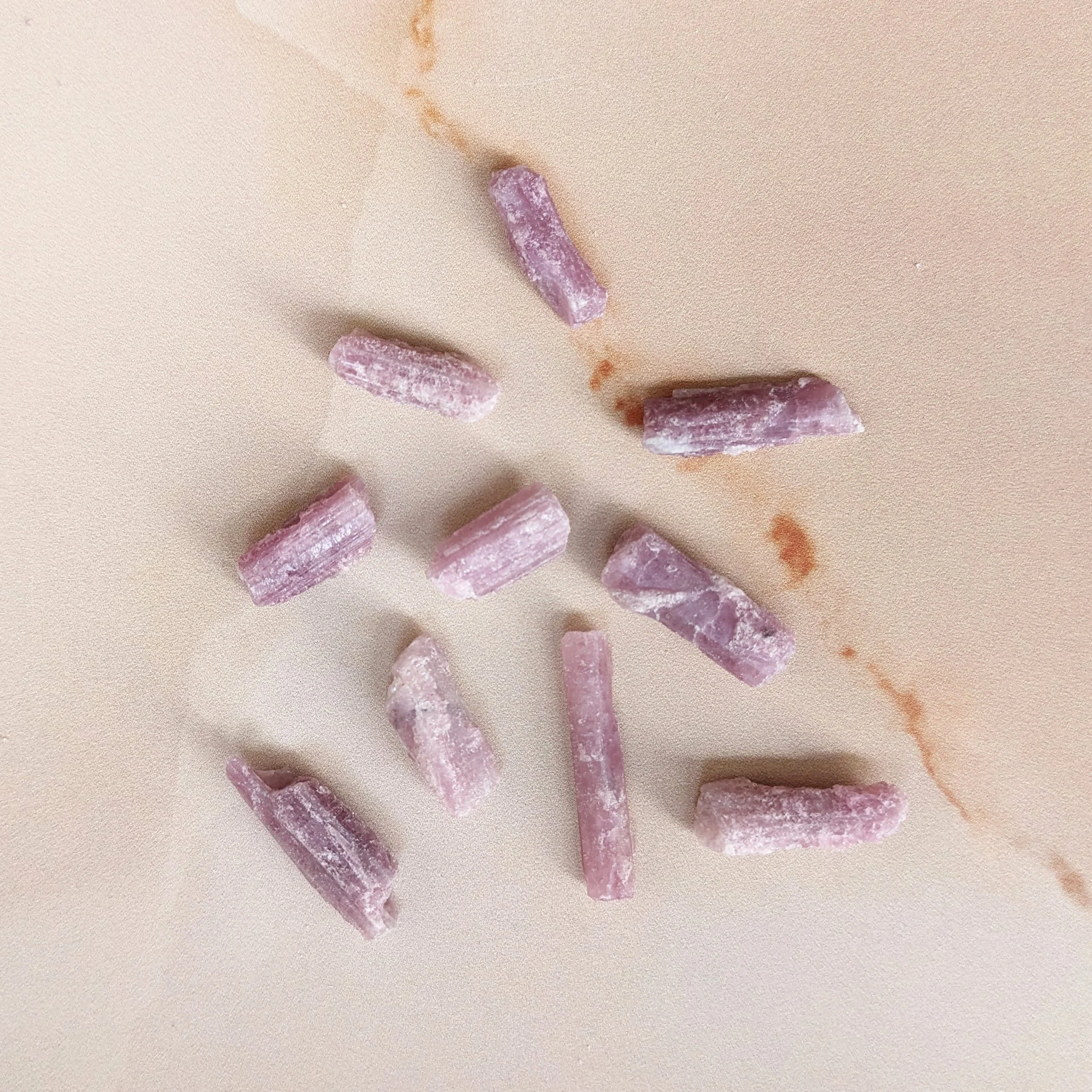
Natural Pink Tourmaline crystals from She’s Lost Control. Photo courtesy of She's Lost Control website.
Crystals account for over three million posts on TikTok alone and are a part of a booming multi-billion dollar wellness industry. Some glamorize their psychedelic shapes under a microscope, others highlight their variety and sizes. Typically, crystals are said to have spiritual or energetic associations to help people meditate, “ground” themselves, focus, or attract particular characteristics and feelings.
Unfortunately, the crystal industry is not all “love and light.” National Geographic recently called the crystal industry “the Wild West” in a February 2024 article that spotlights potential human rights abuses within the industry, as well as how consumers can avoid buying crystals that harm the people or the planet.
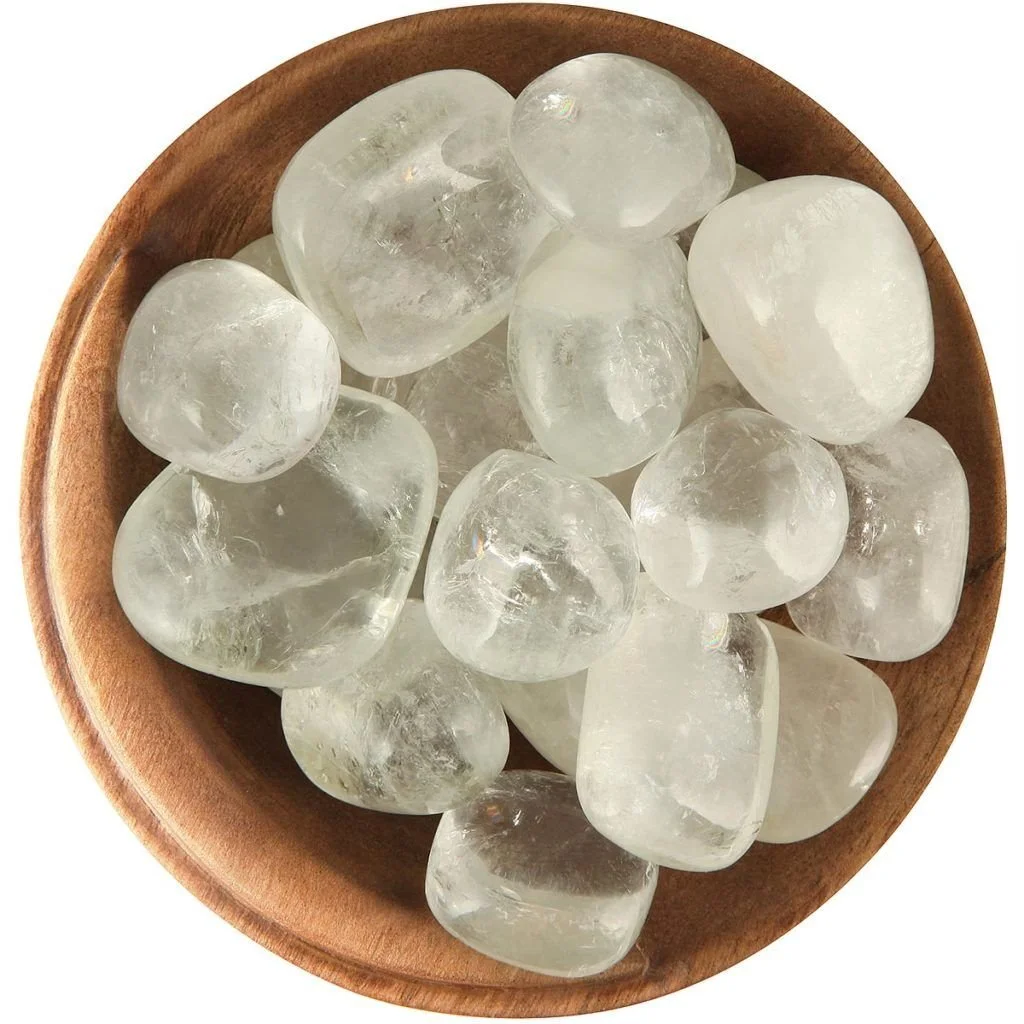
White Apophyllite crystals. Photo courtesy of Moonrise Crystals website.
It is imperative that jewelry designers, bench jewelers, retailers, or anyone who sources and sells crystals know as much as they can about the conditions that these crystals are being obtained. We do not have to partake in unjust, “buy extremely low, sell high” supply chains that are all too common in countries like Madagascar. This 2019 article takes a closer look at the dark side of the crystal industry there, where profit has historically overshadowed the human cost of mining crystals.
In response to track records like these, there are several notable stores setting a new standard in ethical crystal procurement.
Moonrise Crystals (USA) and She’s Lost Control (UK) are two examples of crystal stores that have established responsible sourcing practices. She’s Lost Control owner Jill Urwin has founded Crystal Clear, a social enterprise that exists to reinvest in and empower mining communities. An increasing number of vendors like these are introducing new standards in the crystal industry, working to ensure fair treatment and pay for people working the mines.
These efforts also reinforce the symbolic/creative purpose for using crystals, which often originate with “intentions” or ideals like connection to the earth, integrity, and honesty.
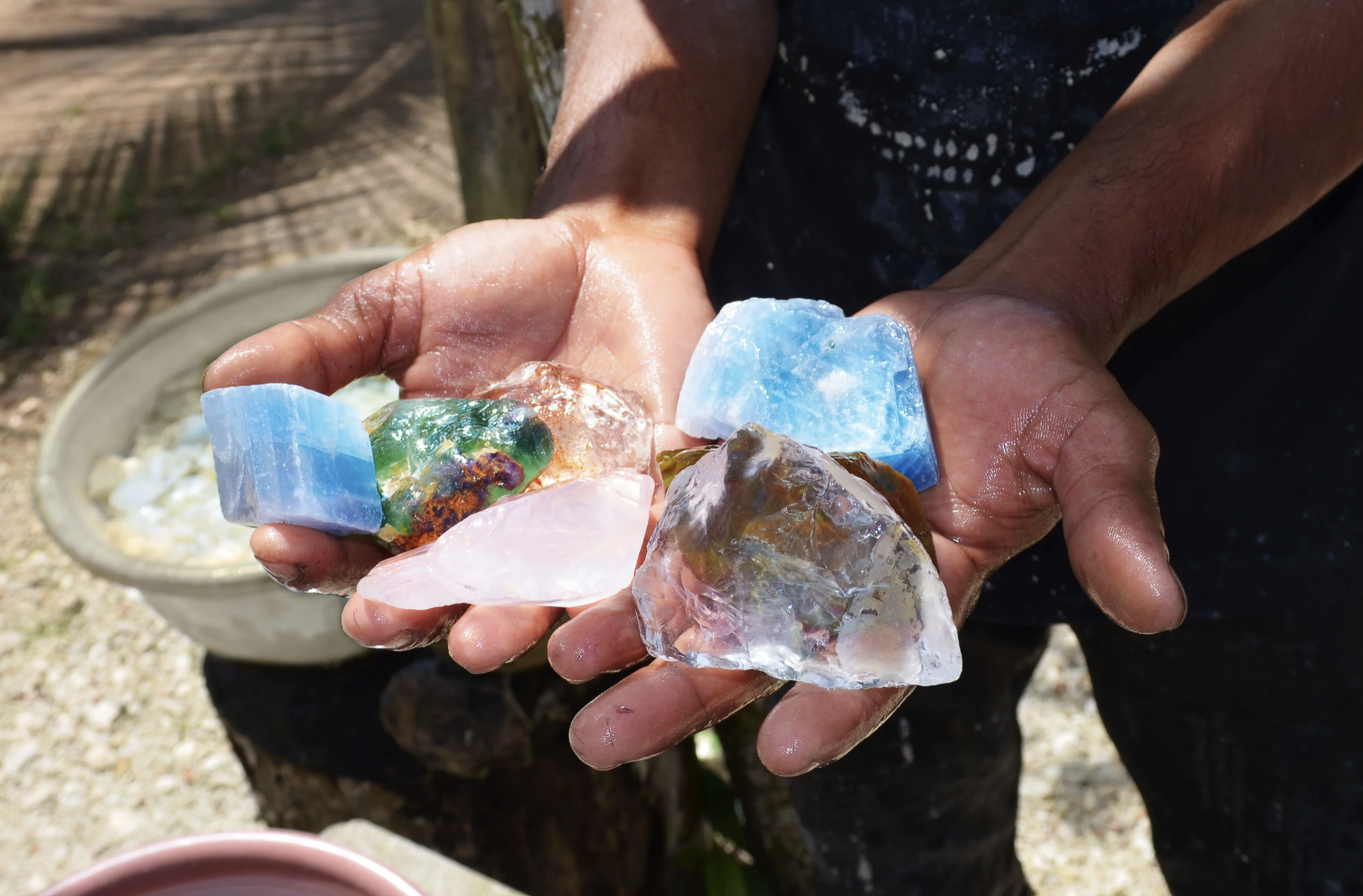
A variety of She’s Lost Control crystals that all contribute a portion of funds to Crystal Clear. Photo courtesy of She’s Lost Control website.
Meteors
Creating jewelry with extraterrestrial minerals adds a powerful, dreamy allure. There’s something to be said for the idea of wearing the sky, and having access to metals that are typically relegated to the imagination. Asteroids and meteors (also meteorites and meteoroids depending on size) bring a touch of romantic drama–they’ve traveled great distances, some dating back to the “galactic walls” that predate the Big Bang.
Although this material is not unheard of, it is still rare to work with, and getting a clear sourcing history might be difficult. As mentioned in Skyfall Meteorites: “As long as the meteorites were hunted, found and exported in accordance with the laws of the country of origin, then the ethical issues are greatly diminished. However, that is not to say that there are no ethical issues.”
Establishing relationships with the people who go out into the deserts and forests themselves to source beautiful space rocks will help you determine whether you’re supporting a responsible dealer. Usually, individuals will find the rocks using manual and automated technology, then go through a lengthy authentication process. Find out if any of their steps in procurement involve processes, chemicals, or labor that could risk harm or fair practice.
It’s also important to know the qualities of authentic meteorite material for jewelry, primarily that it is magnetic and rusts (without proper care) over time. There is a significant amount of self-policing within the community of meteorite hunters and collectors, where authenticity is the number one goal. The International Meteorite Collectors Association (IMCA) is one of the groups that demands and supports authentic procurement and ethics among collectors and dealers alike.
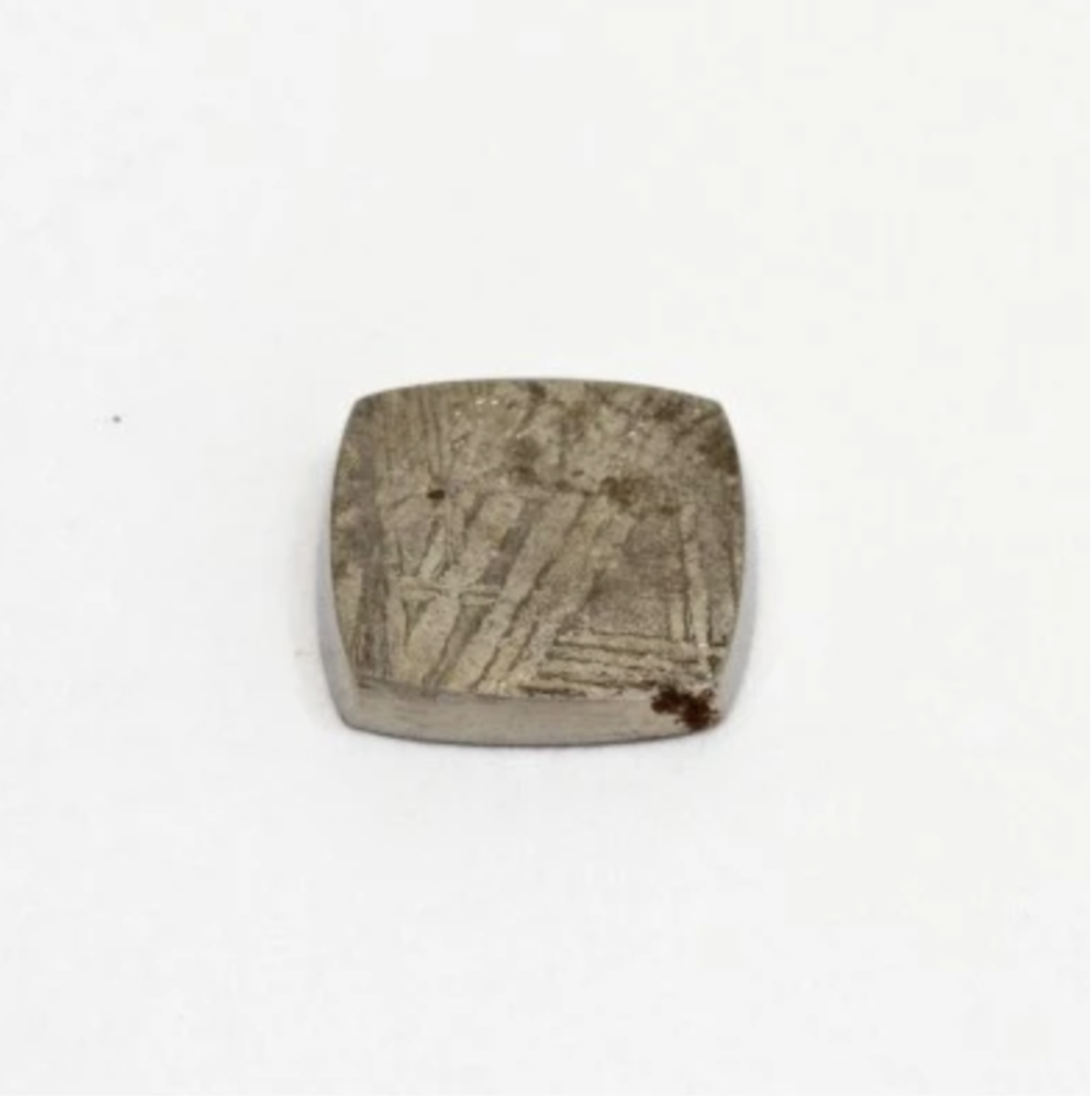
A Meteorite slice from Columbia Gem House. Photo courtesy of Columbia Gem House website.
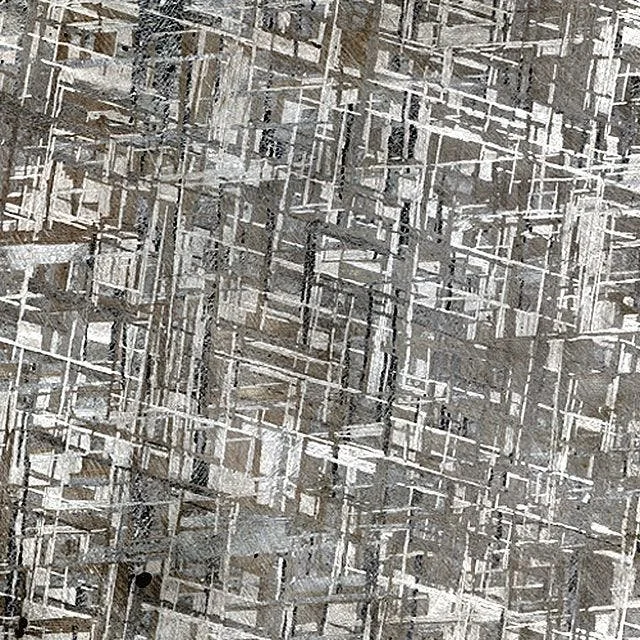
A Meteorite Iron Matrix Cross Section. Photo courtesy of the International Gem Society website.
Meteorites are especially fascinating because of their secrets and shapes. After tumbling and burning in the Earth’s atmosphere, they take on oddly-structured “ugly” qualities that show the violence of their journey; yet when drilled, opened and polished, they reveal breathtaking cross-sections that can even include matrices of peridot and olivine. Like crystals, they are a classic example of resilience and beauty that results in a rewarding experience for the wearer.
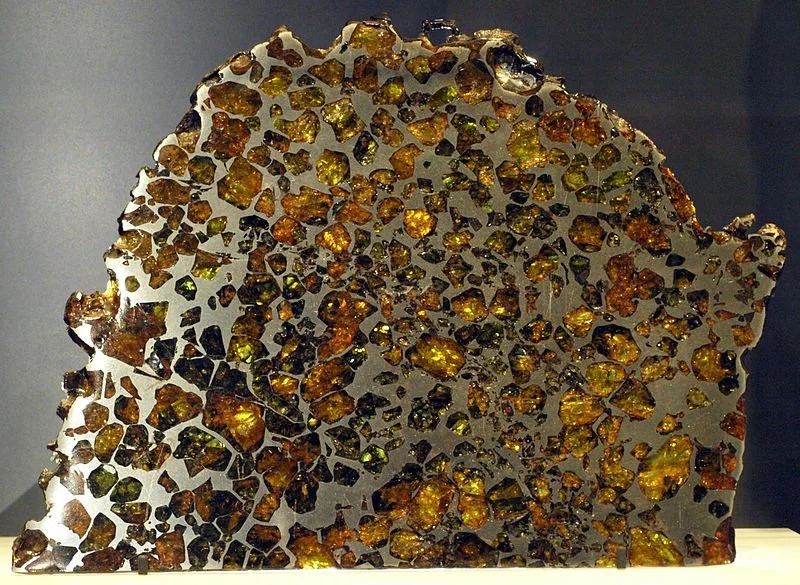
An Esquel pallasite slab (meteorite with olivine). Photo courtesy of IGS (International Gem Society).
Until fair crystals are ubiquitous, the onus is on jewelers and designers to educate themselves and their clients on what their purchases are supporting (or not supporting). The benefits of incorporating materials like responsibly sourced crystals and meteors greatly outweigh the extra work: not only does it reinforce your customer’s personal, authentic connection to the piece of jewelry but it also highlights your commitment to sustainable practices in the industry.
Not sure what questions to ask a crystal or meteorite dealer? Check out EM’s Supplier Conversation Guide HERE!
“We are a small team of passionate jewelry industry professionals and writers. We’d appreciate your support to grow our team and continue to be able to provide the best responsible jewelry content for years to come!”



Chloe interviewed Jessica Hudson of The Nomad Jeweler on her latest collection that features ASM Colombian gold and Tahitian Kamoka pearls. Read the full article to learn more about Jessica’s story and why she chose to design with traceable artisanal gold and sustainable pearls.