

Zulaikha Aziz, Your New “Friend of a Friend”

The content of this article is the opinion of the writer and was written for The Source
Meet Zulaikha Aziz of Mazahri
Human rights attorney turned jeweler: a career swivel of 180°, yet she is graciously bringing these two worlds together. Meet Zulaikha, as we continue our intermittent series called “Friend of a Friend” and get to know other people in the jewelry industry and beyond. Full disclosure for the sake of transparency: Zulaikha is a member of Ethical Metalsmiths.
Guests are invited to ponder a series of questions; their responses may have been lightly edited for reasons of space.
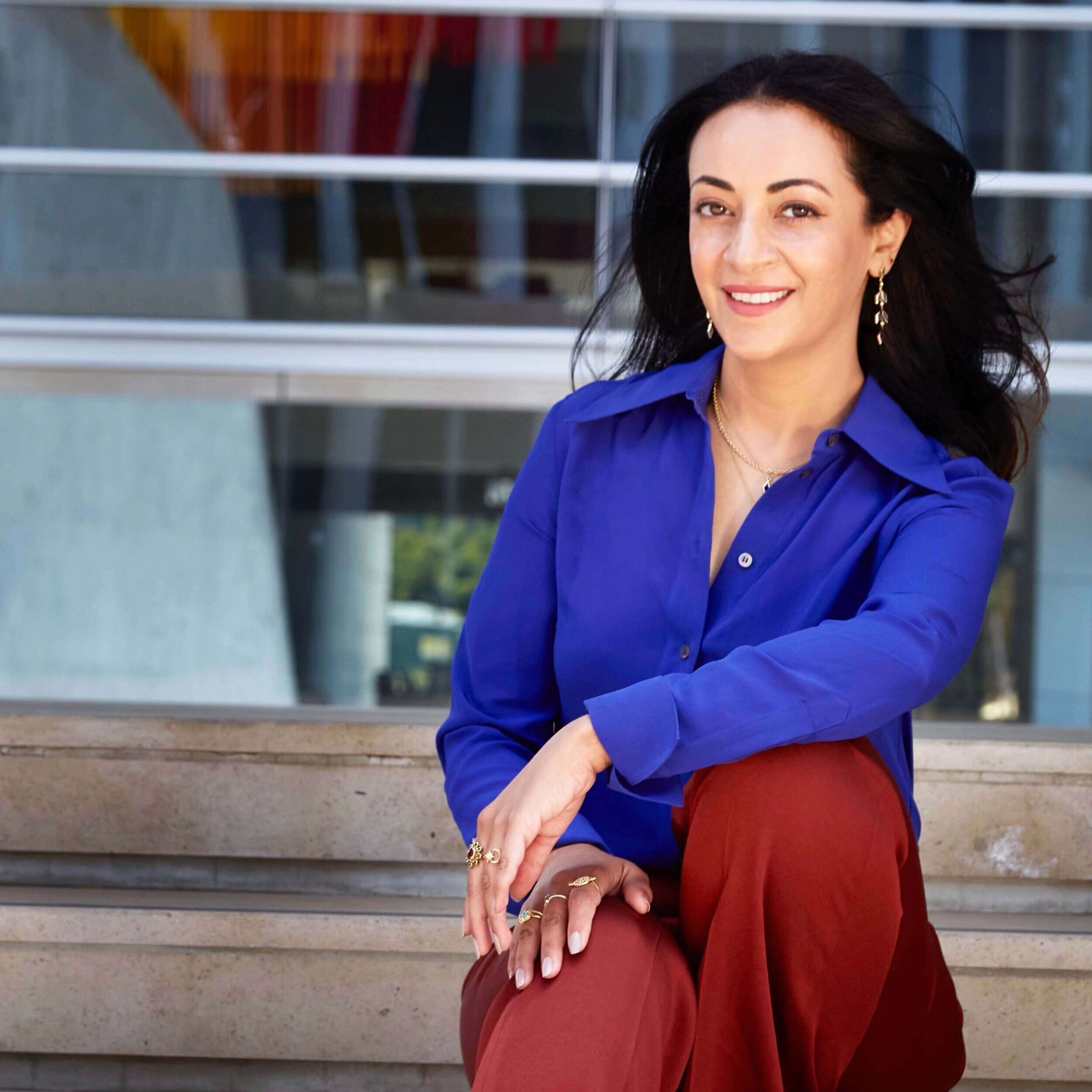
Zulaikha Aziz; photo by Hemali Photo.
ZA: I am in Laguna Niguel, California drinking my morning coffee and watching a hummingbird outside my window, thinking about how different my morning is from that of my family in Afghanistan who are going through unexplainable fear right now as the US military exits the country and the Taliban gain ground.
CM: How did you first get involved in the jewelry world, or in the professional orbit in which you work now?
ZA: I’ve always had a special connection to jewelry as it was the medium through which I connected with my culture and heritage. My family and I came to the US as refugees from Afghanistan and had to leave everything behind, save for some ancestral jewelry my grandmother brought out with her. She used those pieces to teach me and my cousins about our culture and ancestry.
Through my work as an international human rights lawyer, I routinely travel to diverse communities around the world and I would always have a small piece of jewelry made with local jewelers. I started seriously considering creating my own pieces, which eventually led to my brand Mazahri, while I was working on a legal rights project in Kabul in 2019. I was inspired to design my pieces while learning about the ethical sourcing of gold and gemstones. This led me to pursue a graduate gemologist degree at the GIA and go on to launch Mazahri in the spring of 2021.
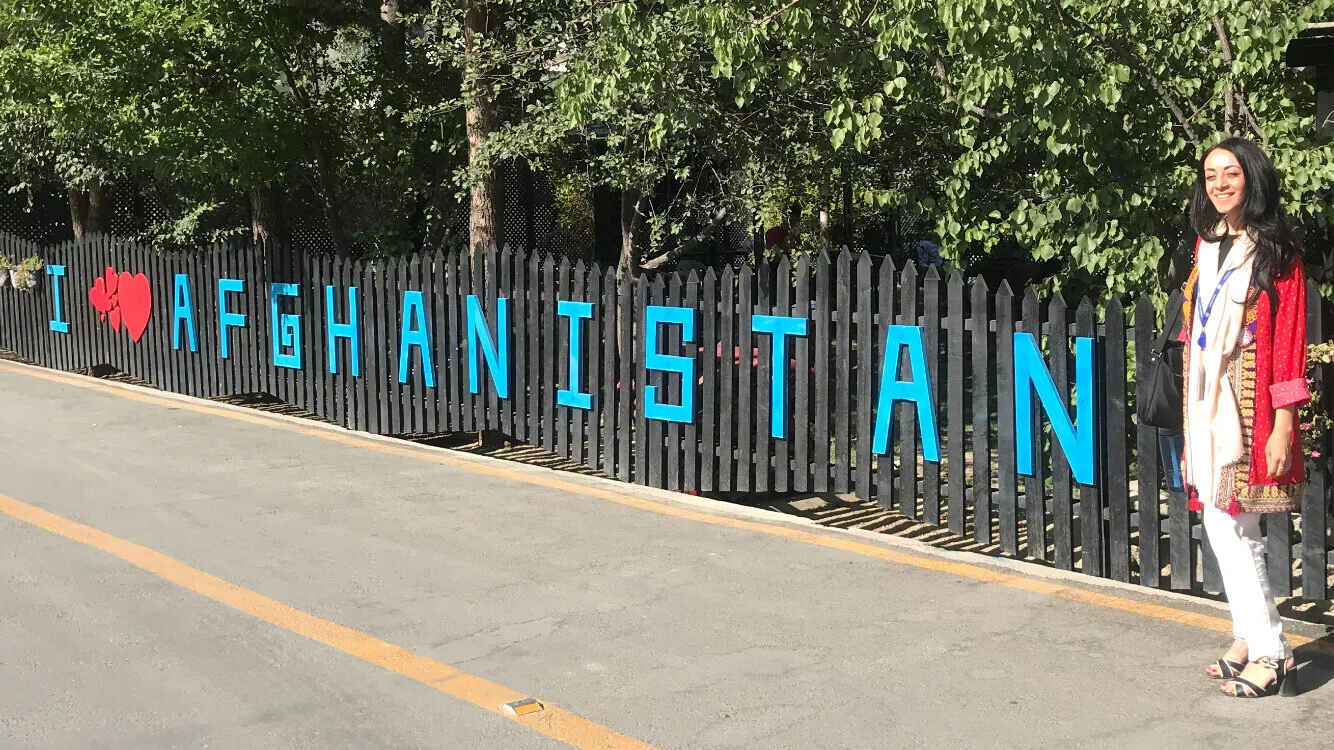
Zulaikha Aziz at the UN Compound in Kabul, Afghanistan; photo courtesy of Zulaikha Aziz
CM: How did you first start learning about issues of environmental impact, responsible sourcing and green practices in the jewelry world?
ZA: Many communities I have worked in throughout Asia, Africa and Latin America are resource rich countries; my own homeland of Afghanistan is rich in a variety of gemstones so I have always been aware of issues surrounding mining and exploitation of artisanal and small-scale miners. I had never worked directly on these issues with regards to the jewelry industry but all of the international development projects I’ve ever worked on consider environmental, social and political factors of the industries they impact, (i.e. agriculture, tech, law, etc.) so I knew what questions to ask and who to start speaking to when I began my research into responsible sourcing of gold and gemstones.
CM: Do you have some go-to vendors or suppliers whom you find trustworthy? Do they share confirmable, vettable information about their own supply chains?
ZA: I’ve been very fortunate to find amazing suppliers I’m currently working with such as Nineteen48 and their partner Crown Agent Gems as well as Columbia Gem House for gemstone sourcing. I am Fairmined certified and use only Fairmined for my gold, Daniel Casting for casting, and Hoover & Strong and Stuller for findings. I have a whole list of suppliers I want to start working with including Mina Stones, Agere Treasures, Moyo Gems, and Virtu Gems. Ethical Metalsmiths has been invaluable in helping me to connect with the people who help me create my pieces. For instance, Megan Cochran, an active EM member, made the CADs for my entire first collection. I would not have been able to launch my collection without her!
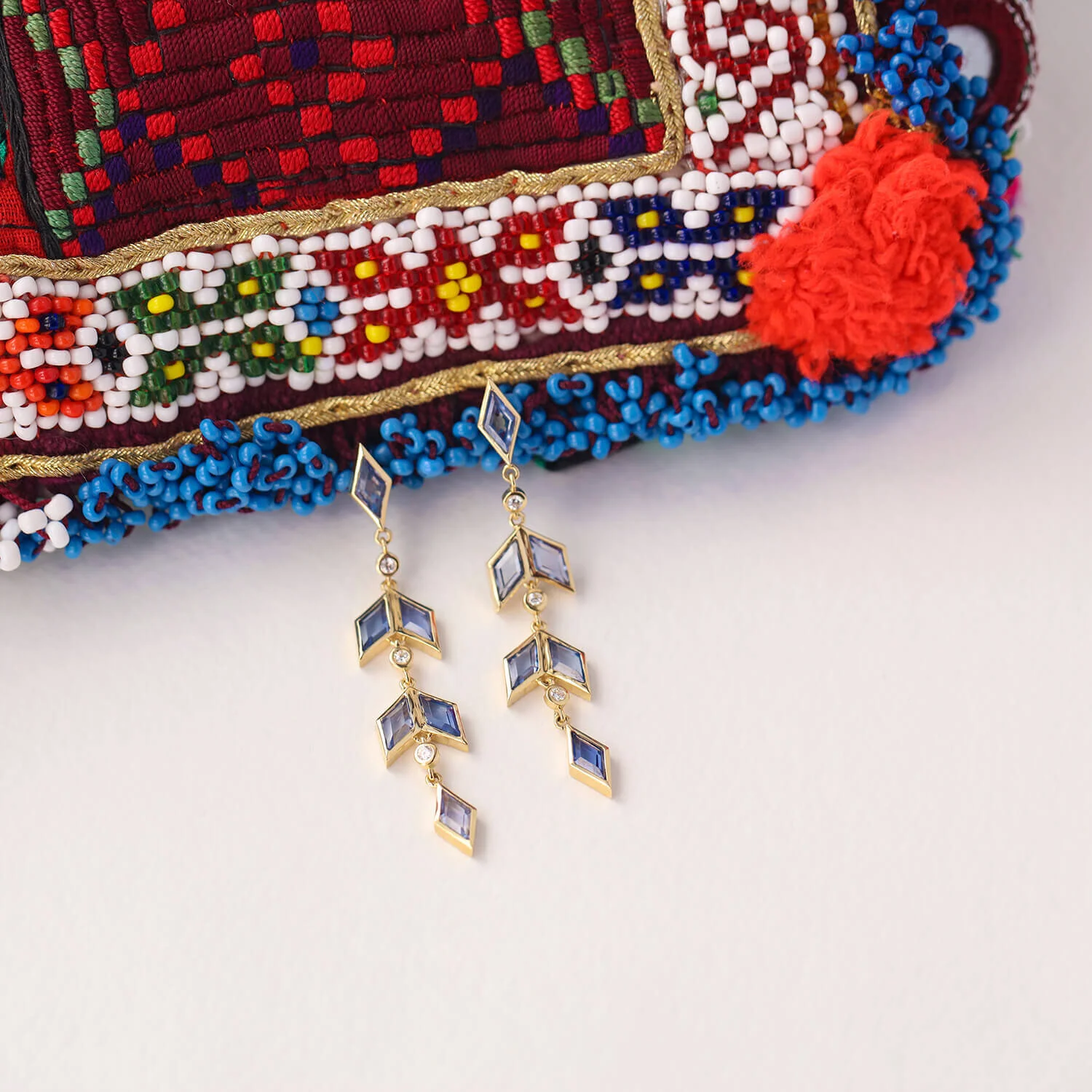
Mazahri Zan Earrings in Sapphire; photo by Sara Rey.
CM: Please list five things (more or less) readers can do to make their bench, studio workspace or business more ethical, responsible or ‘green.’
ZA: Mazahri has 5 foundational pillars upon which we have built our entire business model and that we take into consideration in all business decisions, these may be able to provide some general areas to consider for others as well:
Ethics and Sustainability— All of our actions, from sourcing to sales, are governed by our central question of who and/or what is that action helping or harming. I think this is an important question to ask when taking any step, how am I helping or harming people, their communities, or the greater environment by taking this action. This is the core of ethics and sustainability for us.
Women’s empowerment—We prioritize working with women to the greatest extent possible. From gemstone suppliers to CAD designers and bench jewelers. All the research on the subject shows that economic empowerment of women helps the greater society because of women’s decision making outcomes—so if you want to make a greater beneficial impact on the world, work with women.
Diversity, Equity, and Inclusion—As a woman of color I understand some of the barriers the BIPOC community faces because I’ve faced them too. Many people don’t understand how issues such as access to capital, education, and even networking opportunities are a function of structures and systems that have been in place without scrutiny. I believe it’s important to examine our decisions and look at why there are such few people of color as members and leadership of our companies and organizations and what we can do to address that.
Cultural Preservation—This is another big one for me as Afghanistan, my homeland, is a place in which culture is literally being erased. From the destruction of the Buddhas of Bamyian, to the oppression and displacement of ethinic minorities throughout the country, keeping the diversity of our ancestral culture and heritage alive is necessary for its existence. As the Taliban gain control over larger swaths of the country, many fear a destruction of their culture, language and religion. As the US troops leave and the greater world seems to only focus on the darkness and destruction, it is imperative for me to focus on the light.
Accountability and Transparency—Traditionally the jewelry industry is not known for its transparency. I made a decision to be as transparent in our business operations as I could. We are currently a BCorp (pending) and will become full BCorp once our first 12 months of operation are up in order to hold ourselves accountable to a third party auditor. Also, we use reporting tools from my law and international development background to share information and resources both about our practices as well as our success and challenges in pursuing our purpose all on our website.
CM: Are there any good books you are reading now?
ZA: I just received my copy of Ask Hafiz by Sahar Muradi yesterday and I can’t wait to read it this weekend!
CM: Favorite websites, authors, books, podcasts?
ZA: I’ve been loving the content from the Slow Factory all year, they are a non-profit working at the intersection of climate and culture, building anti-racist community, and growing climate-positive global movements.

A collection of Mazahri Necklaces; photo by Sara Rey
CM: Do you have dependable aesthetic inspirations? They can be visual, musical, written…
ZA: I’m eternally inspired by the poems of the great theologians and mystics Jalal ad-Din Balki (also known as Rumi) and Nur ad-Din Abd al Rahman Jami. My name was inspired by Jami’s poem Yusuf and Zulaikha from his epic work Haft Awrang or “Seven Thrones”. My next collection is heavily influenced by their poetry and mysticism.
CM: Do you have mantras that keep you motivated, balanced or just plain sane?
ZA: “Everything is always working out.”
CM: Favorite way to unwind, relax, gain perspective…
ZA: I love being out in nature and connecting with the earth. I try to start every morning with a meditation on the beach and close out my day with an afternoon or early evening walk along a local trail.
CM: If you could change one thing about the jewelry industry (or the industry in which you work), what would it be?
ZA: The current systems in place in the jewelry industry arose directly from systems of oppression developed during colonialism. I wish everyone would acknowledge this and really “get” what that means. Trying to prop up the current system is inherently exploitative. Working to build new, more inclusive, more equitable partnerships with people around the world whose resources (from natural elements, to labor, to expertise, to cultural inspiration) we want to make use of requires a dismantling of oppressive systems and starting from a space of acknowledgement.
CM: How can we -- all of us, collectively -- make the world a more harmonious and just place?
ZA: Learn more. About each other, about our shared history, about the reality of what we as humans have done to each other and the planet. Not in order to shame or blame ourselves or each other. But from a place of transmuting and transcending some of the wrongs of the past. There can be no healing or harmony without an acknowledgement of truth.
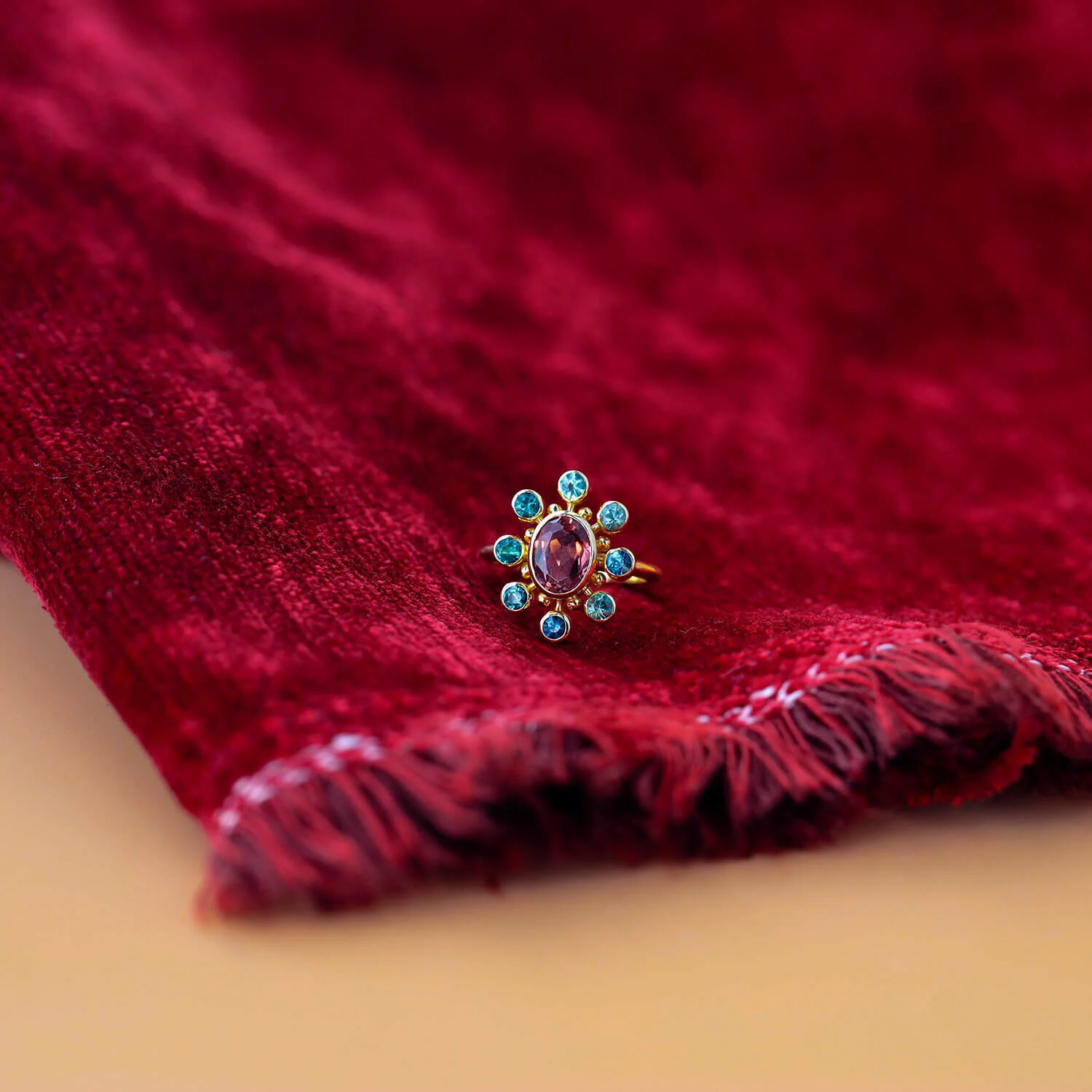
Mazahri Cosmos Ring in Tourmaline; photo by Sara Rey.
CM: Do you have any advice for a recent college graduate or anyone starting out in a new job?
ZA: I’ve learned that there is no cookie cutter formula or path for one’s career. We are very blessed to live in a time where we are more free to explore and express different sides of ourselves.
I’m a lawyer and a jewelry designer; those two things may seem wholly unrelated, but my purpose in both paths is to use my abilities to bring more light into the world.
I advise all the folks I mentor, regardless of what stage of their careers they are in, to always follow their passion and calls of their heart. That will never lead you astray and it is what the world needs from you most.
CM: What do you wish you knew then, when you were first starting out as a jeweler, maker, entrepreneur, artist, innovator or entrepreneur?
ZA: I am just starting out! Though it really has been a lifetime in the making, I only started my jewelry journey during the pandemic and just launched Mazahri in the Spring of 2021! I think the thing I’m realizing is that everything will always work out, even when you don’t know how, as long as you have a clear intention and keep putting one foot solidly in front of the other.
Thank you for reading ~ and stay tuned to meet other Friends of a Friend in the future!
Editorial Sections
What to read next from The Source


What do beekeeping and fish ponds have to do with diamond mining?