

Much Ado About Russia: Deafening Silence Elsewhere
The content of this article is the opinion of the writer and was written for The Source
Unpacking the jewelry industry’s recent response to Russian diamonds is a lot like opening up layer upon layer of Matryoshka dolls.
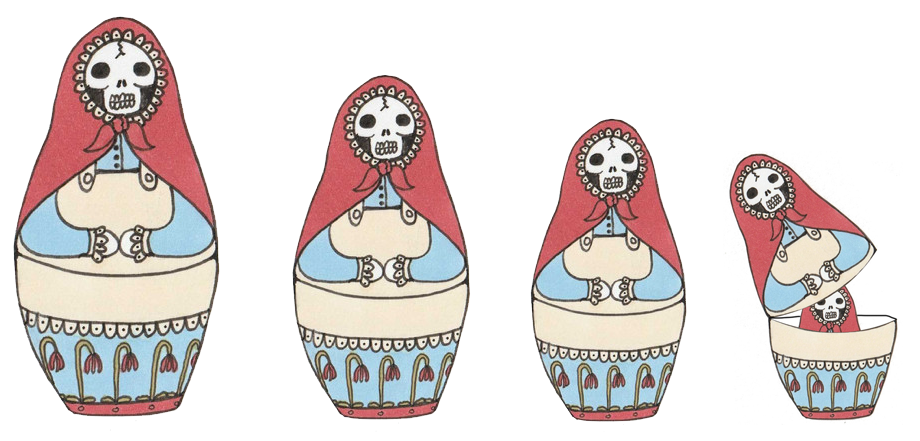
Illustration by Alyssa Lown, courtesy of Reflective Jewelry.
If you're concerned about diamonds and ethics, no doubt Russian mining giant Alrosa has been on your mind lately. The Biden administration has issued sanctions against Alrosa and its CEO Sergei Ivanov, and banned imports of Russian diamonds. Yet because of some legal peculiarities (one might argue: loopholes the size of houses), it is still perfectly legal to buy and sell diamonds from Alrosa in the US — as long as said diamonds are cut in another country along their journey. As at least 80% are.
Brilliant Earth, after facing some swift backlash from those in the ethical jewelry world over its longstanding positioning of Russian diamonds as fitting into their "beyond conflict free" vision toward a "fair trade" future — given the current situation in Ukraine — has officially announced it will no longer offer diamonds from Russia. Signet Jewelers likewise announced that it has "suspended business interaction with Russian-owned entities," and is donating $1 million to Red Cross Ukraine. Tiffany & Co followed suit several weeks later.
For its part, Alrosa has also voluntarily abdicated its position as vice chair of the Responsible Jewellery Council (RJC). As of the time of writing (*see Addendum at the bottom of this piece), Alrosa is still a member of the RJC in good standing.
Searching for the Line in the Sand
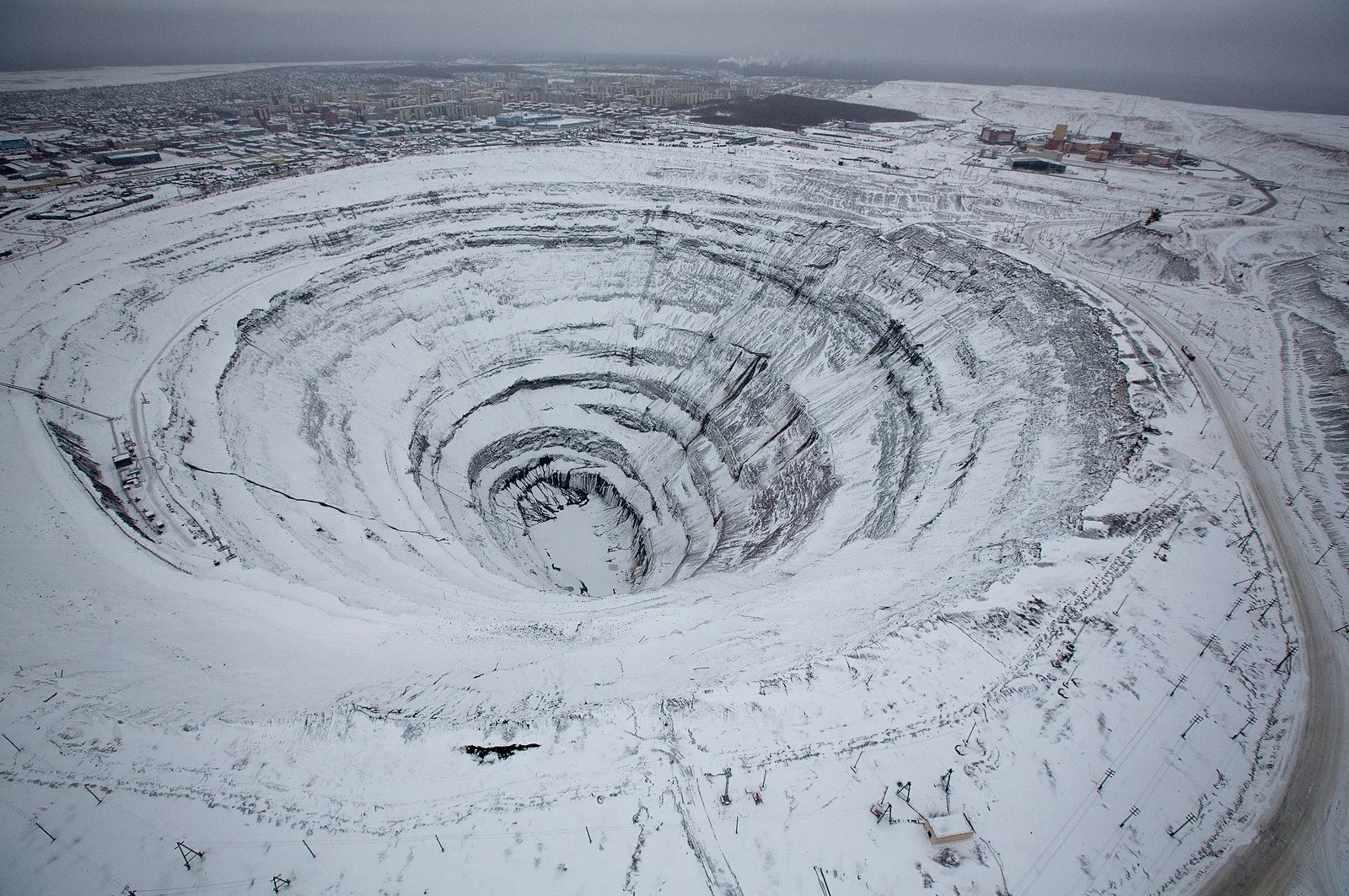
The Mir diamond mine in Siberia, currently operated by Alrosa as an underground mine. Photo credit-courtesy of Wikimedia Commons
Save that last point, these developments all appear logical at first glance. But they beg the question of why the industry — and the American public at large — seem so ready to embrace these moves, while failing to do so in other similar contexts.
Take Sean Clinton's more than decade-long campaign against the Israeli diamond cutting industry. He claims that Israel is an apartheid state, accused of war crimes against Palestinian citizens. There are a lot of reasons why many Americans may be reluctant to criticize Israel, fear of being labeled antisemitic by mere association not least among them. It's a much more politically-savvy move to ignore the issue entirely.
I have previously faced resistance when attempting to broach this topic with some in the ethical jewelry community. While acknowledging the humanitarian crisis, they argue that the subject of Israel leads even the most seemingly-rational to devolve into hateful rhetoric with surprising haste. This of course is not productive, and at the end of the day risks undermining larger objectives of working toward ethical sourcing. In a more ideal world, any humanitarian crisis could be examined without the burden of politics. It's not about governments, it's about the toll to individuals. But I acknowledge the unfortunate reality spoken to above.
But one other pushback I received struck me a little differently, and has stuck with me. This being that the US could itself be criticized in many of the same ways as Israel — that our historical and present-day human rights abuses of BIPOC (Black, Indigenous, and People of Color) communities, as well as our much-maligned wars abroad, could be grounds for boycotting American gemstone and gold mining and manufacturing.
Broad abuses by the American government aside, there is no doubt that the American gold mining industry — and its legacies in Georgia and California — have terrible legacies that defy words. They contributed to the Trail of Tears and the genocide of millions.
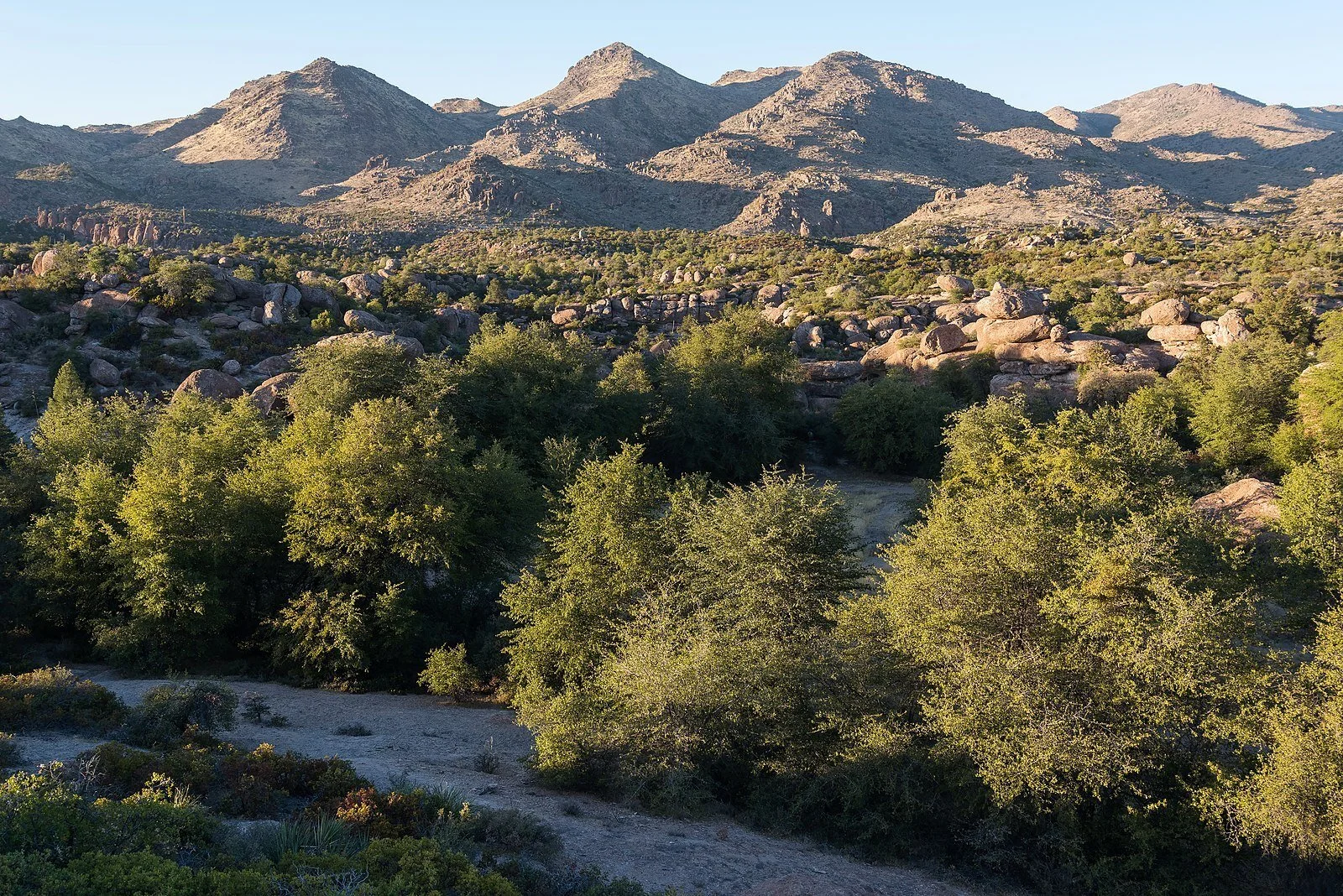
The Oak Flat sacred site in Arizona. Photo credit-courtesy of Wikimedia Commons.
In the present day, mining companies in North America continue to treat Indigenous land as sacrifice zones. Consider the 2014 Mount Polley mine disaster, ongoing issues of uranium contamination on Navajo lands, persisting mercury contamination from legacy gold mines in California, and mining conglomerate Rio Tinto’s ongoing attempts to (almost literally) steamroll the San Carlos Apache tribe in Arizona to build a copper mine, which will destroy a sacred site in the process. (Note that Rio Tinto, an RJC member in good standing, destroyed a 46,000 year-old archaeological site sacred to the Puutu Kunti Kurrama and Pinikura Aboriginal peoples of Western Australia in 2020. But controversy is nothing new to the company — just look at their actions in Bougainville and Serbia.)
Certainly, each and every one of these atrocities is deserving of the industry’s attention. Those responsible ought to be held accountable, and those impacted deserve restitution.
Writing this piece itself has proved a difficult balancing act of deciding what to include or exclude. For example, it has recently come to light that Alrosa’s diamonds have direct ties to Russia’s nuclear weapons program. But who am I, as an American, to criticize another country’s nuclear weapons? I’m no expert on how the United States’ own program is funded.
Also, it’s important to consider that Russia’s diamonds provide a lot of jobs for cutters in India. What might the repercussions be for those innocent individuals if they’re put out of work — especially so shortly following what was likely a difficult economic time due to the effects of the Covid-19 pandemic?
But here's what I'm really wrestling with: why such swift backlash against Alrosa in this instance, when the industry still hasn't faced up to De Beers' role in the deaths of 3.7 million people during the '80s and '90s? Do Americans really despise Russia/Putin/communism this much? Or do they just care so very little for Black Africans?
All this brouhaha seems a little silly, perhaps performative, given all the other atrocities we seem to be comfortable sweeping under the rug.
For that matter, there was no shortage of available criticisms against the Russian government prior to February 2022. Take the invasions of Chechnya in the 1990s, attempts to "exterminate" the LBGTQ+ community, the 2014 annexation of Crimea, and interference in the 2016 United States presidential election. Alrosa is 1/3 state-owned, which means their diamonds — which generated $943 million in net profit in 2021 — fund all of this. Why was Brilliant Earth, the self-proclaimed “global leader in ethically sourced fine jewelry," promoting these stones as "ethical" up until just now — while many other companies have never done so?
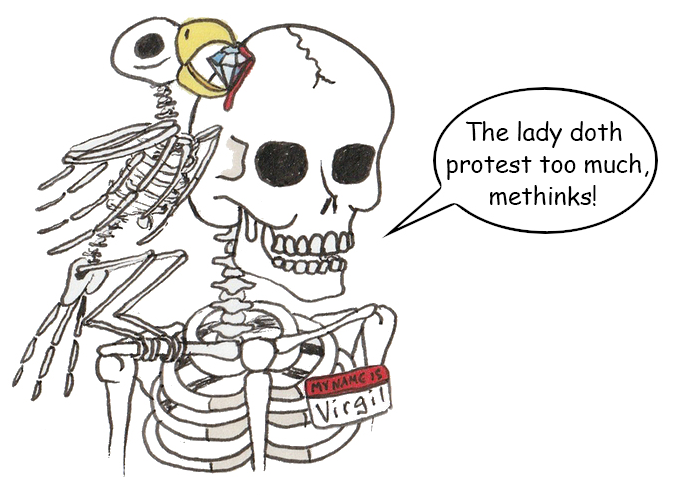
"The lady doth protest too much, methinks.” Illustration by Alyssa Lown
“When it comes to “ethical” jewelry, where exactly is the line in the sand?”
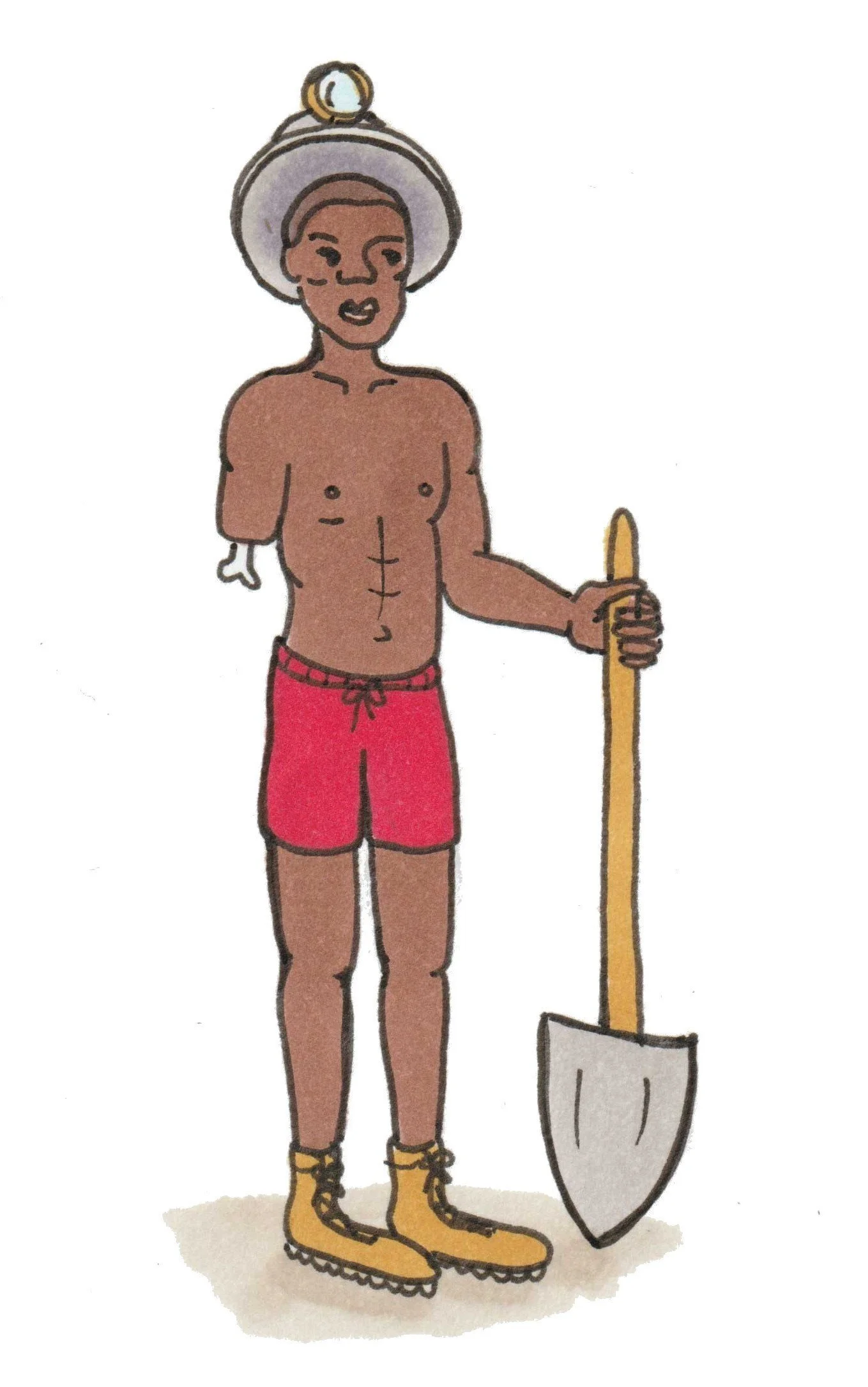
There has never been any truth, reconciliation, or restitution for miners and communities killed, maimed, or displaced in Africa’s diamond-funded wars of the ‘80s and ‘90s. Illustration by Alyssa Lown.
Unfortunately to me, it seems pretty clear.
My own views on the coverage of the war in Ukraine, and some of the jewelry industry's response against it, are succinctly summed up by host of The Daily Show Trevor Noah: "I don't know about you, but I was shocked to see how many reporters — around the world, by the way — seem to think that it's more of a tragedy when white people have to flee their countries. Because, I guess, what? The 'darkies' were built for it?"
Questioning the Ethical Jewelry M.O.
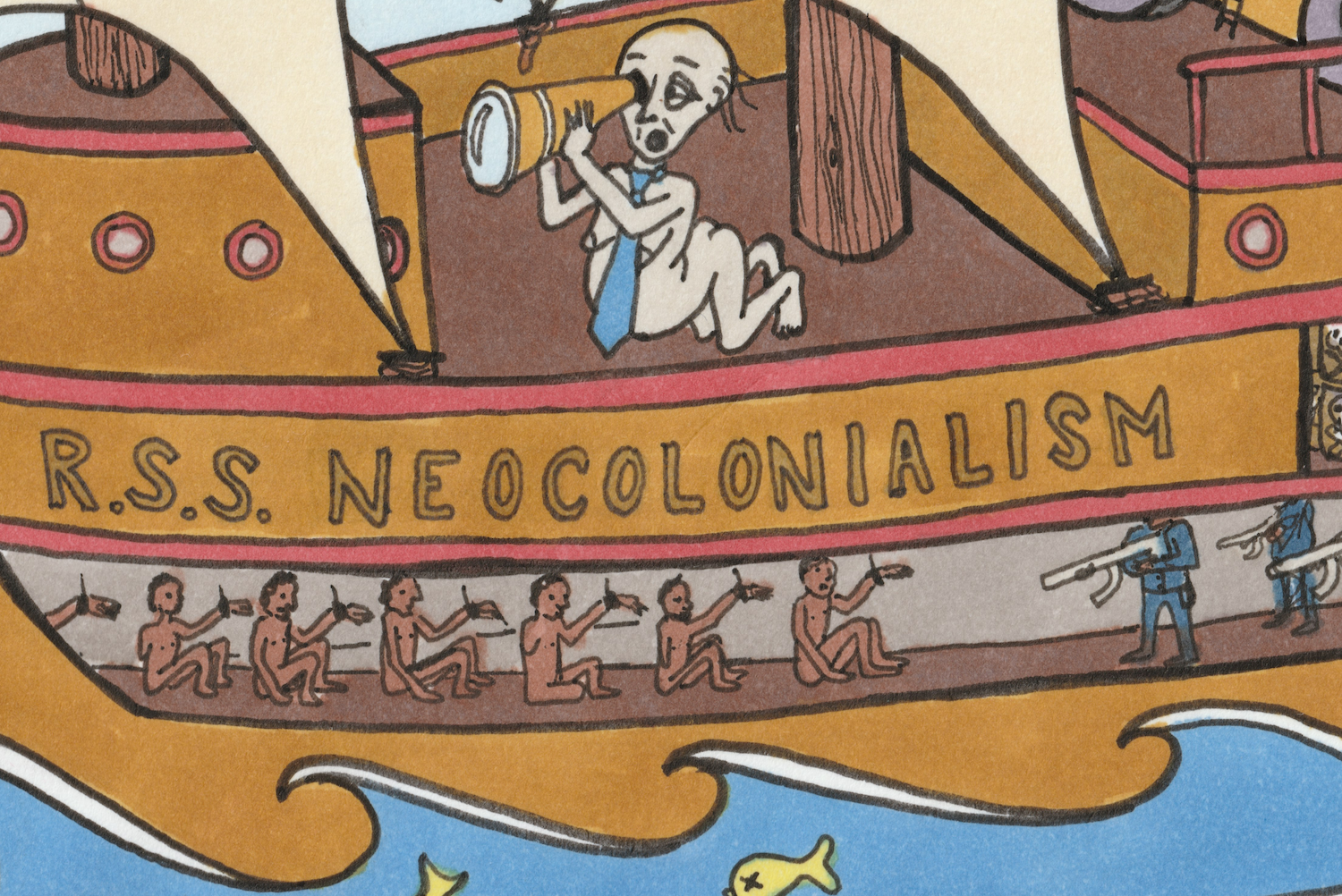
As an industry, we need to unpack the ways in which our actions build on the legacies of colonialism. Illustration by Alyssa Lown.
The aim of Excavations is to explore what "ethical jewelry" means and should mean. Whether certain industries in certain countries have contributed to genocide, war, or apartheid practices is under the purview.
I've raised a lot of questions here, and I don't pretend to have all the answers. Regardless, this is a discussion members of Ethical Metalsmiths need to have if they wish to live up to their reputation as movers and shakers in the industry.
As with any area of ethical debate, there are some things that appear very clear-cut, and a lot of things that are far more murky. Necessity demands we work together to address the clear-cut arenas. But at the same time, my wish is for us to begin the debate on some of the gray areas. After all, pretending it's not there doesn't make it go away — and sooner or later, these topics will crop up again.
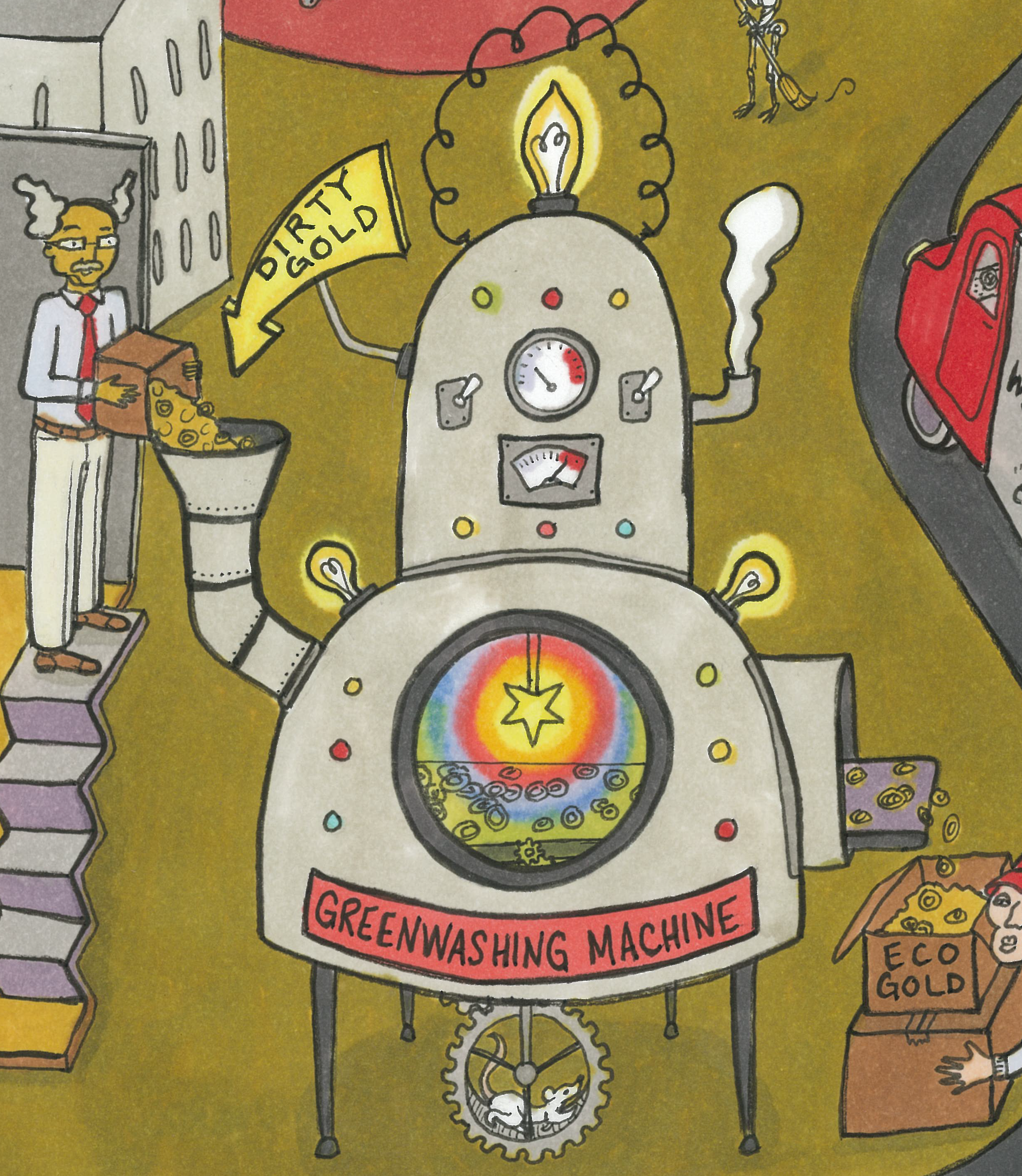
Conversation offers the jewelry industry a chance to work toward more ethical and equitable sourcing practices, but only if we are honest with ourselves and our customers. Illustration by Alyssa Lown.
That being said: the conversation currently taking place around Alrosa offers an opportunity for our industry. I've seen some jewelers using social media to call consumers to action, urging them to ask questions of their jewelers. No doubt, that's something we could all get behind — because asking questions is precisely how you get customers to start thinking deeper about sourcing issues. And the answers to even some basic questions can be very revealing.
So here's what I suggest:
If you're uncomfortable with your diamond sources, please know you are not alone. Diamonds are a particularly frustrating area for jewelers attempting to be responsible in their sourcing. There is no fair trade diamond source, and even traceability can be a challenge. Currently, the only fully traceable diamonds available to most of us are either Canadian mined or lab grown — neither of which contribute to a better future for African diamond mining communities.
Consider that you can likely, right now, reach into your fridge — pull out whatever produce you have — and see, clearly labeled, where it was grown. And how much did you pay for this? The opaque nature of the diamond trade is by design. It serves the financial interest of the large players.
Your frustration is valid, but you don't have to feel hopeless. The industry can change — but not through a singular, heroic action. It will take sustained pressure from both jewelers and consumers, and it's going to have to hit diamond suppliers where it hurts — their wallets.
The natural diamond industry is already feeling some heat from the rise of lab grown stones, as well as the relative disinterest of Millennials and Gen Z compared to their parents' generations.
Given the added pressure the conversation around Alrosa provides, I'd argue we ought to strike while the iron is hot. We can start by using our voices on social media, or in direct conversations with our suppliers, our customers, and each other. While conversation is a far cry from preventing unsavory gems (or metals) from entering our supply chains, it is a critical first step. Those who haven’t yet joined the conversation should be called to do so. If we get people talking —and answer truthfully — then maybe, just maybe, we can improve our industry.
But most importantly: what this can’t look like is giving organizations an easy out to point to to assuage an unsuspecting public’s genuine concerns. This is how the energy for change is subverted, and precisely what has stunted the American ethical jewelry market so severely.

Addendum:
Since initially drafting this piece, this story has evolved into an unprecedented string of events that I would be remiss not to include.
In previously unheard of actions, several major members of the RJC have left the group. This began with Pandora Group and Richemont, and now includes Kering and Watches of Switzerland. Amidst this exodus, RJC Executive Director Iris Van der Veken resigned, and Bulgari quit the RJC board.
To glean precisely why organizations are abandoning the RJC, we can consider the words of Richemont CFO Burkhart Grund: "We're not trying to make a statement per se, we're trying to uphold the very high standards we've been shaping over last 15 years. If RJC cannot uphold highest of standards, then we cannot be part of that. That's why we stepped down."
Alrosa, too, has now left the RJC. But it did so voluntarily, rather than be removed by any action of the RJC itself — which has raised further questions.
The RJC issued a statement on Alrosa's departure following what was perceived by some as a sluggish response decried in multiple high-profile industry publications over the past few weeks. After describing a "comprehensive, third-party legal review to ensure [the RJC] had the appropriate authority, within its constitutional documents, to take action" on Alrosa, the statement says, "Taking any action prior to the delivery of the legal opinion would have exposed the RJC to significant legal risk.”
In other words, the RJC is arguing that it did not know whether it had the legal authority to suspend or remove Alrosa's membership. Which implies it had never previously considered suspending or removing any participant's membership in its 17-year history.
In this same statement, RJC Chair David Bouffard asserts that the RJC's goal is "...to ensure all jewellery is responsibly sourced."
Here's a serious question: if an organization cannot reliably manage its own membership, how can it possibly regulate the actions of its members to ensure they align with this professed goal?
This topic deserves the undivided attention of its own future piece, so I will kindly ask anyone reading to hold it in mind till we connect again.
However, I would like to stress that this conversation presents a massive opportunity to better our industry. I look forward to exploring ways to do so very soon.
More on this in a future piece.
Are you a member of Ethical Metalsmiths looking for ways to get involved?
Consider joining our newly-formed Action Coalition: an initiative where we tackle the real-world problems facing our industry.
Email mail@ethicalmetalsmiths.org for more info.



What do beekeeping and fish ponds have to do with diamond mining?