

Jewelry Journeys with Stuart Pool
The content of this article is the opinion of the writer and was written for The Source
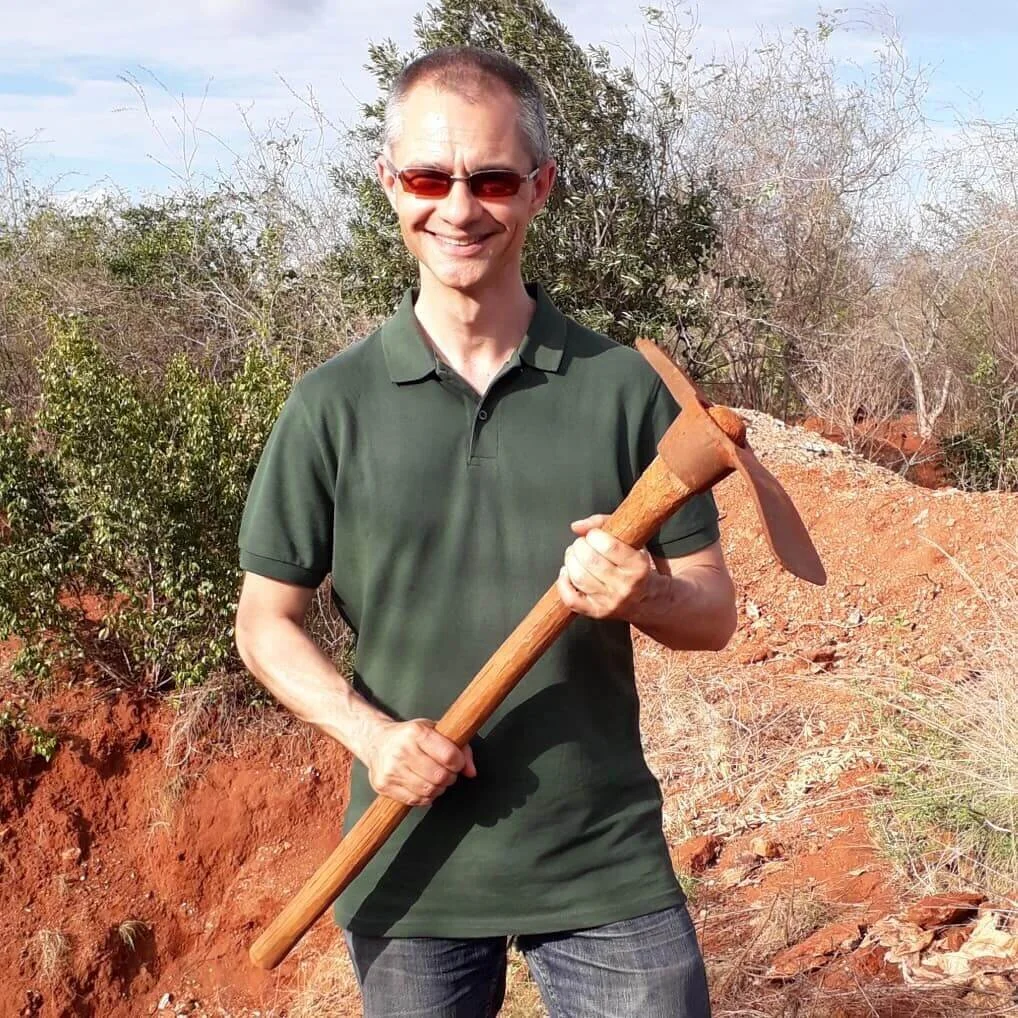
Stuart Pool at a mining site in Tanzania. Courtesy of Stuart Pool.
The following conversation has been edited for content and clarity.
Stuart Pool runs gem trading company Nineteen48, named after Sri Lanka’s year of independence, with business partner Gary Seneviratne. He’s also a co-founder of Fair Luxury and a partner of the Moyo Gems collaboration in Tanzania. Fair Luxury is a UK-based independent collective of jewelry industry changemakers with a shared vision for a responsible and sustainable future for people and planet. Moyo Gems is a collaboration between Pact, TAWOMA, Everledger, Nineteen48 and Anza Gems (owned by Monica Stephenson, current EM president) to empower women miners in Tanzania to bring responsibly mined Tanzanian gemstones from mine to market.
Chloe Beaumont: I always ask people I’m interviewing how they got into the jewelry industry because I’ve found that no two answers have been the same so far. How did you become involved in the trade?
Stuart Pool: Previously, I was in IT, mainly in sales and account management. Through that I made a good friend, Gary, who subsequently became my business partner with Nineteen48. Gary was born in the UK but is of Sri Lankan descent, and would travel frequently back to Sri Lanka for family visits. We were having lunch after one of his visits and he mentioned that he had met this guy who happened to be the Chairman of the Gem Authority, the governmental body that oversees the gemstone industry in Sri Lanka.
He was very excited about the connection and the possibility of building a business that would connect both the UK and Sri Lanka. He sort of pitched his business idea to me and I figured it was time for a change, so I joined him. The communication skills I built from doing IT sales actually transferred over nicely.
CB: And you’ve never looked back, have you?
SP: No, not at all! I came in knowing nothing, and I have been really fortunate to meet some amazing people who have been open to sharing their skills and experience to help me along the way.
When we started Nineteen48, we were naïvely amazed at how little people knew about gemstone sourcing, and we quickly became aware that we greatly cared to know exactly where our gems were coming from and how they were being mined.
CB: It’s crazy how most people have no idea about the back ends of the jewelry industry. My good friend who is a philanthropist always says, “Once you know, you can’t un-know.” It’s one thing to go into something blind, but it’s a lot harder to ignore knowledge once you’ve gained it. I want to ask about the Nineteen48 mine in Sri Lanka and your cutting facility that is run by a Sri Lanka native. What are the conditions there like compared to other places in Sri Lanka?

Miner Maama Sorting Rough in Sri Lanka. Courtesy of Stuart Pool.
SP: Well, I should preface this by saying that overall, the conditions for miners and cutters in Sri Lanka are pretty good, within the context of the jewelry industry. We were really lucky that we started our business with Sri Lanka, because for a gemstone producing country it is quite open and well-structured. They have a good framework in place, partly because they’ve been mining gems there for so long and it is so important to the country’s economy. The mining and cutting skills there are very well developed.
For us, it was very important that we could categorically say that between our mine and our cutting facility, we were doing things as well as we possibly could. It’s about maintaining a good and safe workplace—that we have and use all of the correct protective equipment, that there is proper ventilation and lighting, that they are paid fair wages, that we ensure there are no children running around the workshop, and that we don’t have a negative environmental impact.
As we’ve broadened our horizons to working with/sourcing from other countries, that’s where I’ve seen some truly awful working conditions in both mining and cutting.
CB: How does the setup that you have in Sri Lanka impact the local community? Do you invest back into it?

Chandrasiri, one of the cutters Nineteen48 works with in Sri Lanka. Courtesy of Stuart Pool.
SP: Firstly, I want to say that when we first visited Sri Lanka, we expected to find “mining villages” or communities that are entirely dependent on the gemstone trade. However, that’s not the case with Sri Lanka; the gemstone trade is well integrated (this is a completely different story in countries like Tanzania). We still wanted to support our miners but it wasn’t like they were part of a “mining community” as we’d envisaged. So we chose to partner with smaller charities that are quite accessible that will benefit the area and greater community in general. We currently give to various different charities; some are education-based, some are children’s homes.
CB: That’s wonderful. I’m also encouraged to hear that Sri Lanka is a place that is open to responsible practices; I think we need to highlight good situations as much as undesirable ones so that people can know exactly what we are aiming for—and to know that it is not impossible!
Let’s switch now to talking about Tanzania, another country that Nineteen48 sources from. How did you become a part of the Moyo Gems project? It’s such a big team effort!
SP: Yes, it really is. As much as Sri Lanka is the core of our business, the potential in Tanzania is so big that it’s the most important thing I’m working on right now and will continue to be focusing on in the upcoming years. As for how I got into the Moyo project: I basically gate-crashed it!
Cristina Villegas, who is the director of the mines-to-market program at Pact, gave a presentation at the Chicago Responsible Jewelry Conference (CRJC) 3 years ago. She talked about the work they were doing in Tanzania and partnering with a GIA education program headed up by Robert Weldon. At Nineteen48 we already had a slight connection to Tanzania through another project that was being run by someone in the UK. I came out of the lecture room and Cristina Villegas was speaking with Monica Stephenson (Note: Monica is EM’s current President). At the time, Monica had been working in Kenya and so she already had a connection with East Africa as well. I approached them and said, “Whatever you are talking about, I want to be a part of it!”
In 2018, we did our first exploratory trip in Tanga, Tanzania and met with the amazing ladies of TAWOMA. We went around to different villages and introduced ourselves, and started to build relationships with the miners there. We also got to ask the women how they became miners and what they would like the future to look like for them.
After that trip, we started working on the actual commercial structure of what would be Moyo Gems. In 2019, we ran 3 “Market Days” which are a great opportunity for miners to be able to bring their mined gemstones to market as well as for us to discuss price points together. We want to find a way for everyone involved, (the miners, buyers, and brokers) to make a fair wage off of these gemstones.
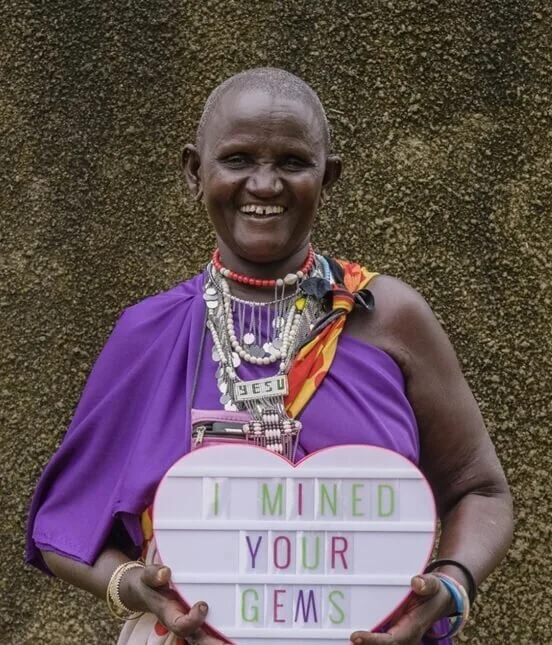
Raheli, a Moyo Gems Miner. Courtesy of Stuart Pool.
Our goal is to build a long-term structure where we can introduce other people; this isn’t a monopoly for either Monica or I. The miners have more stones than we both could ever buy, so we need to make it so that lots of different buyers come to Market Days and feel comfortable. I can’t be in Tanzania every month buying gemstones, even if I wanted to.
It’s a really incredible project and has loads of potential; it’s been incredibly frustrating what the pandemic has thrown at us this year. Thankfully there have been loads of people working on the ground in Tanzania such as Pact and Gem Legacy to provide pandemic relief for the miners. Moyo Gems has definitely had to change its focus due to Covid for now, but I’m hoping next month (October 2020) we can start buying gems from the miners to get the cycle going again.
Pre-covid, we were doing pretty well, we had our show at Tucson and got loads of interest. People have been really enthusiastic and supportive.
CB: Not to mention, Moyo Gems just popped up in British Vogue!
SP: Yes—Anabela Chan, who is a prominent British jeweler, has been very supportive of the Moyo Gems collaboration and wanted to feature them in her jewelry that would in turn be featured in Vogue. We couldn’t be happier for the mention.
The marketing side of Moyo has been strong, but we always have to make sure all that attention translates into money for the miners at the end of the day, otherwise it’s no good.
CB: Hopefully there will be some pent-up demand due to Covid and travel restrictions will ease up a bit soon. Before the pandemic hit, I was actually able to hear Robert Weldon speak at GIA Carlsbad about the education program in East Africa that you mentioned earlier. He showed us a copy of the educational picture booklets they made in Swahili and gave to miners so that they could learn how to distinguish which gemstone rough was valuable. I will never forget him telling us that this educational booklet alone helped triple the miner’s standards of living because they were no longer getting ripped off by brokers.
To now also hear about you and others coming in after all this groundwork has been done to establish a long-lasting framework is admirable. It really shows that when we partner together we can actively make a difference in the jewelry industry and have a positive impact on people’s lives.
SP: Yes. Education really is everything; when the miners have the knowledge and the support, they know the value of what they have and they can avoid being taken advantage of. And you’re right; it all started with a simple booklet.
CB: Oftentimes I think we get daunted by the number of issues in the jewelry trade, but sometimes it truly is just a matter of working to create a simple solution that can empower people.
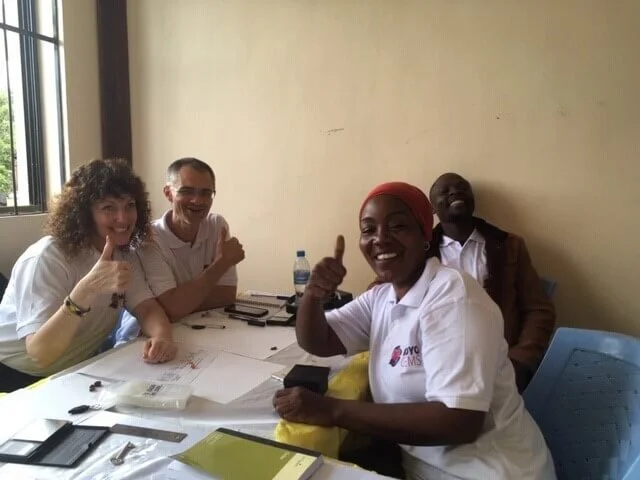
Monica Stephenson, Stuart Pool, and Salma in the buying room. Courtesy of Stuart Pool.
Is it the hope of those involved in the Moyo Gems collaboration that Moyo can serve as a model to be duplicated in other parts of Africa?
SP: That is the dream, yes, absolutely. So within Tanzania, the government there wants to set up more trading centers around the country. If, in the future, other countries see that this model is really and truly benefitting miners in Tanzania, I would hope they pay attention and take it up and try to replicate it. GIA is also committed to education in various other African countries, so I don’t see why not.
Of course, it will be different in each country because each place has its own nuances and local conditions, so I’m sure the model would need to be slightly modified. But it would be amazing to see the Moyo model implemented elsewhere. Mining is really hard, taxing work, and miners so deserve to make a fair living from what they do.
CB: Which brings me to another venture you helped start; Fair Luxury. How would you compare Fair Luxury to EM?
SP: I see them as complimentary. When we had Nineteen48 running for around 3 years, we started reaching out to other jewelers to see if anyone was interested in getting together over a cup of tea to talk about whatever was going on (in our industry). Being a jeweler can be isolating, because you’re usually working alone and aren’t talking to very many people. Especially when we are talking about responsible sourcing, it would be very easy for jewelers to not know that there was anyone else out there who cared as much as they did about it.
“Fair Luxury came together to provide a community for like-minded people to share their experiences.”
Once we started thinking about what else we could do as a group, we came up with the idea of having an annual conference which was quite successful. We’ve had four of those now. Hopefully next year will be our fifth. Fair Luxury has continued to grow and pull more people together from around the world, not just the UK, to come and share their knowledge.
We’re not a membership organization, we function more like a forum. I refer people to EM to fill that membership role, which comes with its own benefits. CRJC, EM and Fair Luxury are all linked together in some way, just doing slightly different things or should I say fulfilling slightly different roles.
Editorial Sections
What to read next from The Source
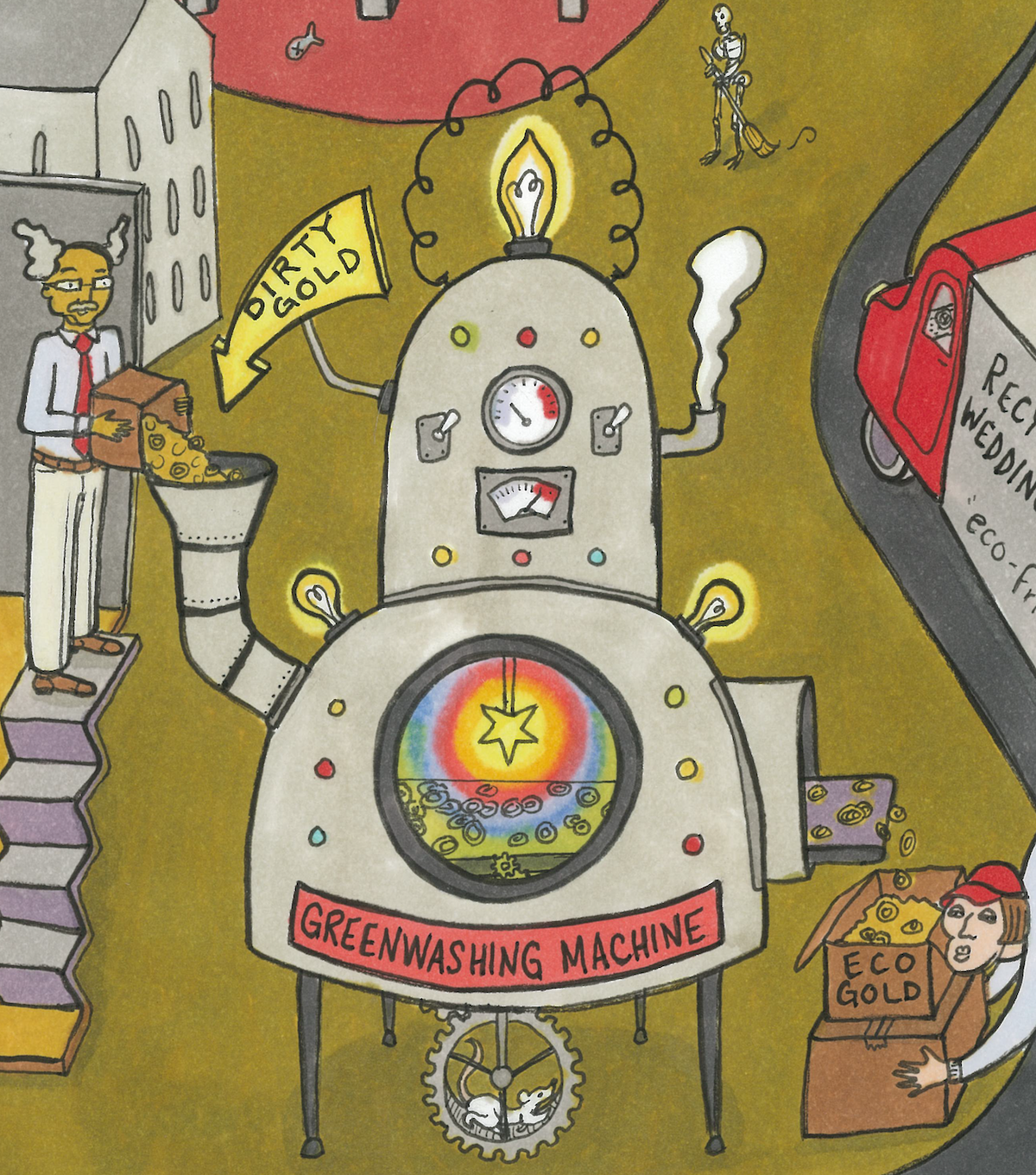

Chloe interviewed Jessica Hudson of The Nomad Jeweler on her latest collection that features ASM Colombian gold and Tahitian Kamoka pearls. Read the full article to learn more about Jessica’s story and why she chose to design with traceable artisanal gold and sustainable pearls.