

Jason Clarke on Mercury-Free Traceable Gold from the DRC

The content of this article reflects the views of the writer, and not necessarily those of Ethical Metalsmiths. This article was written for The Source.
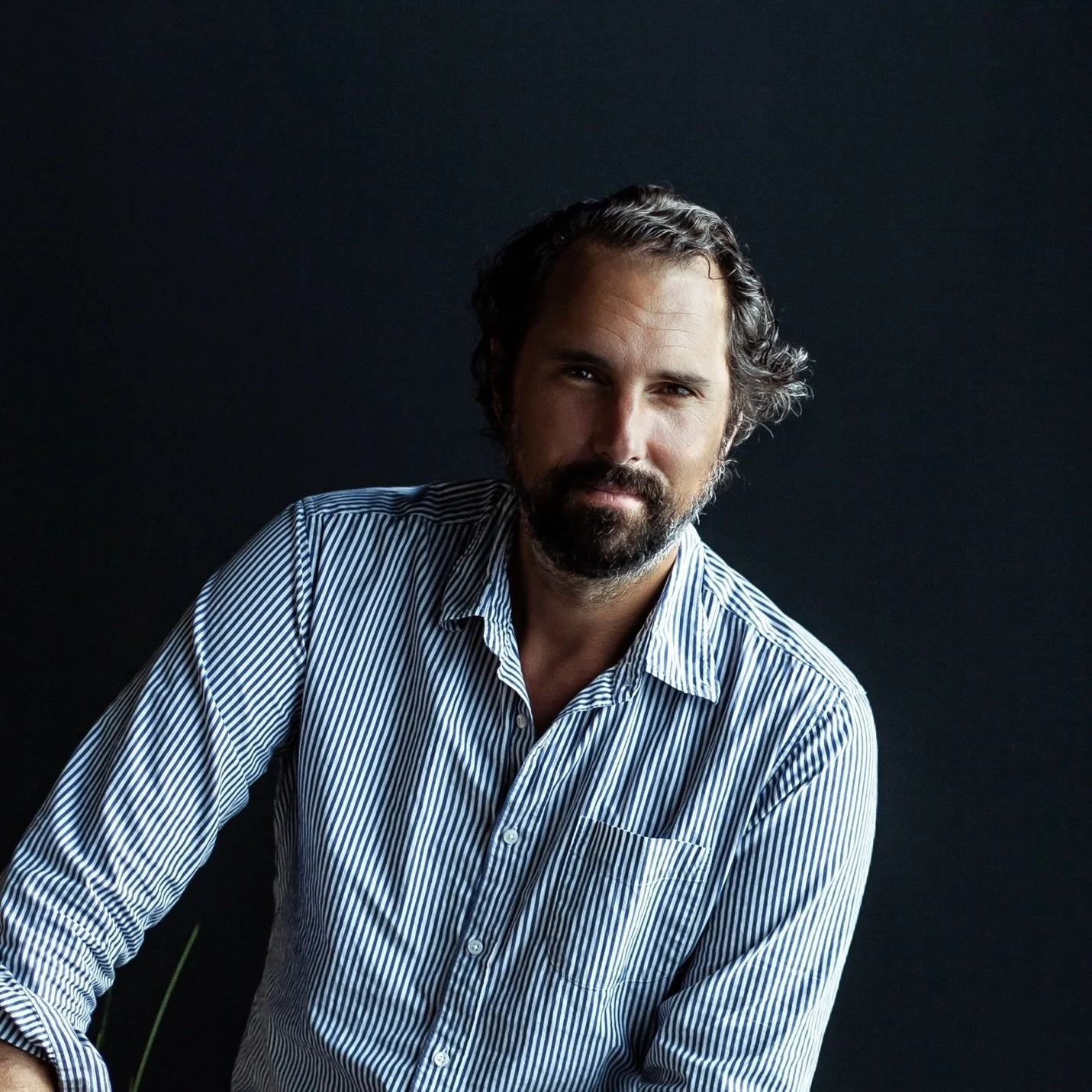
Jason Clarke headshot. Photo courtesy of Jason Clarke.
Jason Clarke is co-founder and CEO of Society Artisanal, a company that has become the first to mine and export traceable, mercury-free, third-party validated artisanal gold from the Democratic Republic of Congo (DRC). Jason and his co-founder Evariste (“Eva”) Emmanuel partnered with a South Kivu Artisanal Mining Cooperative and went to work envisioning and developing a responsible business model with the goal of transforming the artisanal gold sector in the DRC.
Chloe Beaumont: Would you share a little bit about your background and how you got into the gold industry?
Jason Clarke: Sure! Essentially, my background is: I’m an entrepreneur but in kind of a different way than your typical US-based entrepreneur. I had lived in China, the Middle East, and had a little bit of experience in Africa as I was running a refugee NGO for a decade. One of the first refugees I ever met was named Eva, and he became like a little brother to me in a sense after years of working with him on various projects. Eva, now my business partner, eventually reconnected with his family in the DRC, who happened to be operating one of the largest gold cooperatives in the region. Upon learning this, he mentioned it to me and asked if I saw any kind of business opportunity there and what that might look like.
I had just finished a Masters in International Relations, so I thought I would investigate and try to learn more. Based on what I learned, it didn’t seem like there was any legal gold coming out of the DRC at that time. USAID (The US Agency for International Development) had programs such as Zahabu Safi and The Madini Project that were designed to create viable, responsible supply chains that benefitted local producers as well as the global supply chain. At that point, they hadn’t exported anything yet.
I didn’t have any background doing business in the DRC previously, but Eva and I wanted to see if it was really possible to not only export gold legally from the DRC, but to do it in a way that was also up to our own personal ethical standards. We wanted there to be mutual value gained on both the miner’s side and the buyers side.
We found that it was possible; in fact there is a wealth of this dynamic to be had in the DRC— it’s just really nuanced.
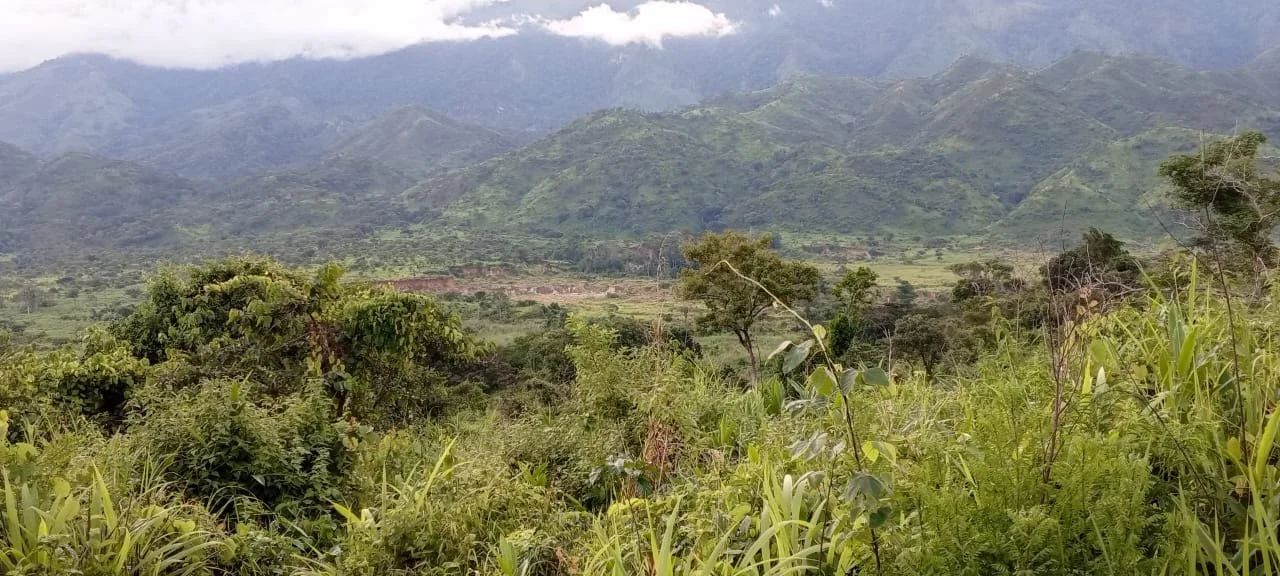
Panorama of a mining region in South Kivu, DRC. Photo courtesy of Jason Clarke/Society Artisanal.
CB: That’s great to hear that you have a partner to navigate all that with, who is equally committed to doing things responsibly.
Our jewelry community is always on the lookout for new responsible gold sources, so I definitely want to hear more about your model and how it’s different from other gold sources out there. One of the things I read on your website was that you don’t believe in “handouts.” What do you mean by that?
JC: Yeah, the sentiment behind that was that for me, I’m not a big fan of labels like “sustainable” or “ESG” or “ethical.”
Yes, of course we want to do things in an ethical manner, but what it boils down to for me is the core of good business: is this a mutually valuable partnership?
I made that point just to say, in this environment, we work near more NGOs than businesses, and most of the international funding going into the DRC is NGO-based because the country is seen as “so high-risk”. I get it; it’s definitely not without risk especially from a financial perspective.
For us, we want to create immense value to the point that the miners would choose us over anyone else. At the end of the day, every single one of these communities is asking, “Can I feed myself and my family? Is there room to grow? Can tomorrow look better than today?”

Society Artisanal miners having a meeting. Photo courtesy of Jason Clarke/Society Artisanal.
CB: I appreciate you explaining that, and I agree– I think the biggest thing for artisanal mining communities is fair market access and having somewhere they can do good business and not have to resort to smuggling. I saw that a lot of the work that you do is helping these artisanal miners formalize and get licenses as well, which is crucial.
Is the process of formalization cumbersome in the DRC?
JC: It’s actually pretty straightforward. The mining code there is quite mature, so you know exactly what the rules are. The way I look at it as an outsider, I’m held to international law and standard. If you’re a local just doing business in the DRC with other locals, it usually looks much more informal and is based on good faith, not the letter of the law.
One of the barriers to formalization for miners here in South Kivu is that taxes can be a burden, so we will often pay these taxes for the miners as part of our partnership. We want to do all the legwork and facilitate the process for them, so that no one else can come along and take their mining claim away from them.
The biggest challenge for us honestly has just been finding the right mining partners who are aligned with us and share our mindset. We are looking for long-term partners who we can do amazing business with and grow with over time, not those who are looking for a “get extremely rich extremely quick” scenario who ask for exorbitant amounts of money, thinking that we are only going to be around for a one-time transaction. I understand where that thinking comes from; a lot of the miners have seen foreigners come, do a quick business, and then promptly leave. So, a common mentality that’s arisen is, “I have to get as much money as I can right now, because I can’t depend on it in the future.”
We are looking to be in the Democratic Republic of Congo fifty years from now. I want to be partnering with my current partner’s kids fifteen years from now! Even if the next generation becomes our competition, we know we will have made a significant impact.
CB: That sounds like an incredible goal! I heard that this gold is mined 100% without the use of mercury. Were the miners already mining without mercury, or was that something that you wanted them to stop using?
JC: It depends completely on the type of mining they were doing. If the mine site was alluvial, since it’s a lot easier to access that gold, they didn’t need to use mercury to help separate the gold out. If the mine site is hard rock, then yes, they were using mercury. I totally understand why miners use it, but personally for me, it’s a complete no-go.
In 2020 I went on a deep dive researching neurotoxins, which led me to learning about just how toxic mercury really is. If it gets out into the local environment, it will cause generations of disease. I’ve had people tell me there are ways to contain it responsibly, but I still do not want anyone we work with, miner or otherwise, remotely near it.
Even when you send gold that’s been in contact with mercury to a refinery, that refinery is off-gassing the mercury and it’s getting into the air for people to potentially be breathing in. The risks are so great that I just said, “No. It’s not worth it.”
I’m completely aware that it’s more expensive to not use it, but thankfully our budget allows us to process the gold in other ways.

Society Artisanal miners in South Kivu, DRC. Photo courtesy of Jason Clarke/Society Artisanal.
CB: It is really great to hear that you have those resources at your disposal and that you don’t place that financial burden on the miners. Even though we know how harmful mercury is, I think non-locals coming in have to be able to provide artisanal miners with a better, safer method, instead of just saying, “Well, don’t use mercury or we won’t work with you.” People use what works until they are offered an equally feasible way.
JC: I see my responsibility as an investor and business operator is to come up with a better solution, so I just made it a part of our business budget from the beginning to work without mercury. I was determined to find whatever technologies existed that were low-cost and low-maintenance that we could bring in to process gold in a safe, healthy way for people and the environment.
We also are not selling this gold at a premium, due to my philosophy on gold as currency and a store of wealth.
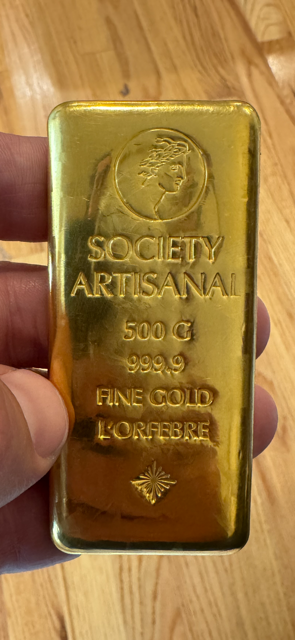
A Society Artisanal bar of gold. Photo courtesy of Jason Clarke/Society Artisanal.
CB: I think there are a growing number of jewelry businesses who would be interested in your gold, because not only is it priced at spot price, not above— it’s also mercury-free and traceable. Can you tell us more about your “Gold Passport” digital tracking system?
JC: Yes, essentially we are putting our product on a blockchain. We worked with a group called Minespider, it’s their technology, and they have their own “digital passport” as part of that. One of my goals was to really highlight the provenance of our gold, and for people to be able to say, “I’m proud of where this gold came from.” Just like we would with wine, or chocolate.
I’m really proud of where we work in the DRC, even though there might be conflict groups fifty kilometers away. We actually know who they are, and the locals we work with do as well. Everyone has worked on communicating the message to them, “the value we are going to bring to this area will be so impactful, and what we are building is special, you do not want to mess with it.” We have security for our miners, but so far it’s been okay.
I really believe it is possible to demonstrate that you can ethically source from a so-called “conflict country” such as the DRC and blockchain helps us show that. Our Gold Passport serves as a platform to share the journey of our gold, highlighting its origins and the meaningful relationships we've cultivated in South Kivu. Through this initiative, we aim to honor and celebrate these resilient communities, acknowledging their strength and potential rather than letting their histories of conflict define them.

Society Artisanal miners with equipment. Photo courtesy of Jason Clarke/Society Artisanal.
CB: Absolutely. How much gold are you predicting will come out of this area?
JC: Our supply is going to grow significantly in 2025. We’ve spent the last four years developing everything we’ve been talking about. We are acquiring multiple new sites in the DRC and then we also have some West African sites that we are opening this year, too. We definitely want this model to be scalable.
CB: For anyone reading this who might be interested in buying this gold, is that a possibility in 2025?
JC: It will probably be mid-2025 when we have more in stock (we are all sold out currently). I’d love to have a sort of collaboration with jewelers who are interested.
CB: That’s great to hear! I really appreciate you taking the time to fully explain your ethos and what you are doing at Society Artisanal. I’m really looking forward to seeing where this goes and hope you get a lot of interest!
Thanks for becoming my latest “Illuminator!”
For more info + articles on Society Artisanal:
Click here for the latest Society Artisanal press release.
DRC: Minespider, Society Artisanal to use Blockchain for ASM Gold Sourcing
En Francais:
Jeune Afrique: En RDC, la blockchain pour en finir avec les minerais de sang
To contact Jason click here: email
“We are a small team of passionate jewelry industry professionals and writers. We’d appreciate your support to grow our team and continue to be able to provide the best responsible jewelry content for years to come!”
Editorial Section
What to read next from The Source
Like what you are reading? Please help support our editors and writers today.

Chloe interviewed Jessica Hudson of The Nomad Jeweler on her latest collection that features ASM Colombian gold and Tahitian Kamoka pearls. Read the full article to learn more about Jessica’s story and why she chose to design with traceable artisanal gold and sustainable pearls.