

Ian Bone on Mining and Producing Queensland Australia Gemstones
The content of this article is the opinion of the writer and was written for The Source
Ian Bone is co-founder of Capricorn Gems, a wholesale gem business that specializes in sapphire, boulder opal, zircon, and chrysoprase from Central Queensland, Australia.
Ian, who has a background in education, management and business, partnered with Rod Beattie, a gemologist with decades of experience in the mining and cutting trades. Together they bring top quality, traceable gemstones to designers and makers worldwide.
The following conversation has been edited for content and clarity.
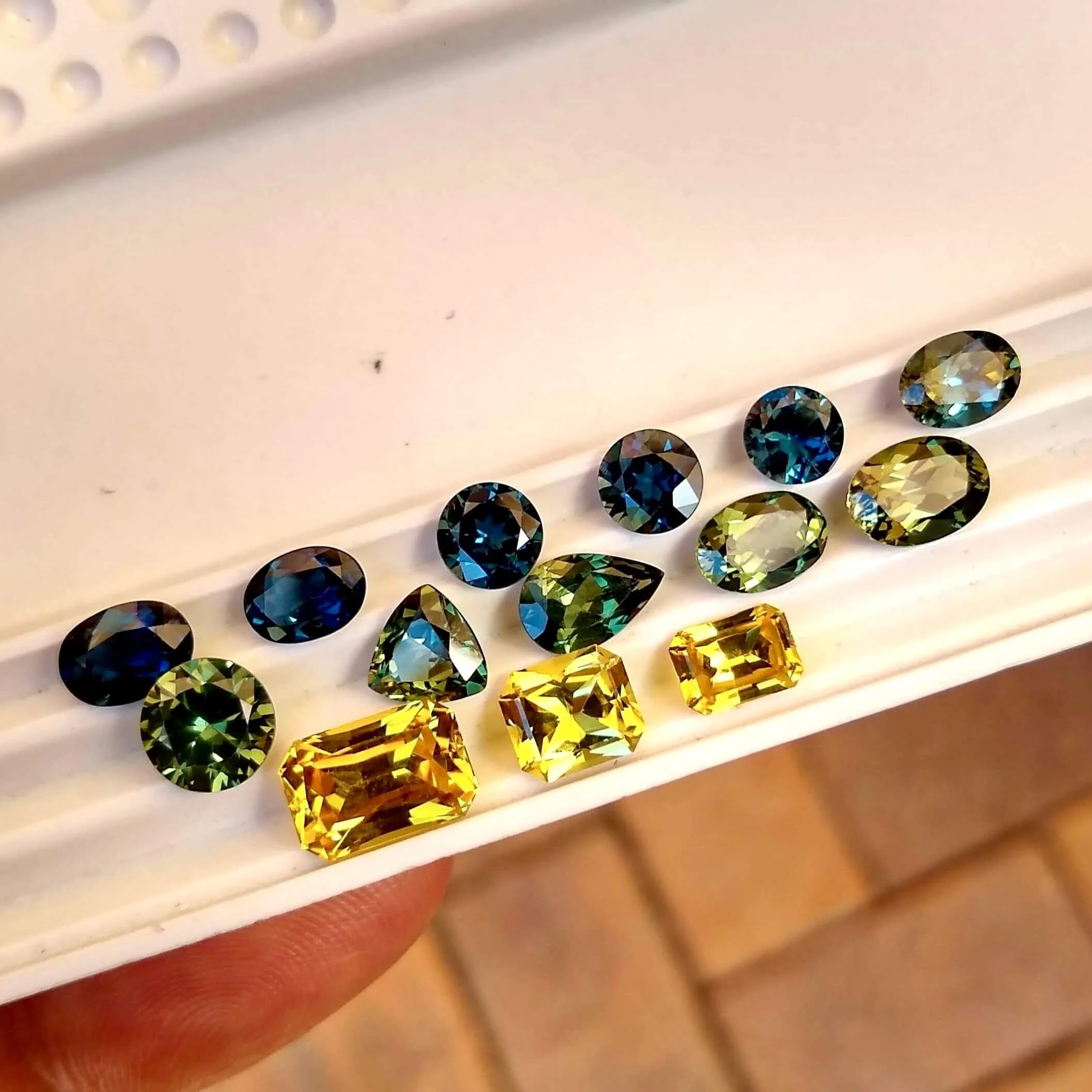
Capricorn Gems blue, green, and yellow sapphires. Photo courtesy of Ian Bone.
Chloe Beaumont: So you’ve just gotten back from the Denver Ethical Gem Fair. How was it?
Ian Bone: It was excellent! We had a lot of people telling us that it was great for them to be able to come, sit down, and have a look at gemstones without feeling rushed, pressured, or jostled by other people wanting to also get in. Several people flew in just for the day to meet with vendors, since they came knowing what they wanted already.
CB: How great is that to be able to have a concentration of gem suppliers focused on responsibly sourced gemstones, and it sounds like it was convenient for buyers and a success for you all. I hope they continue it in the coming years! I’d love to hear how you got into the wholesale gemstone business in the first place.
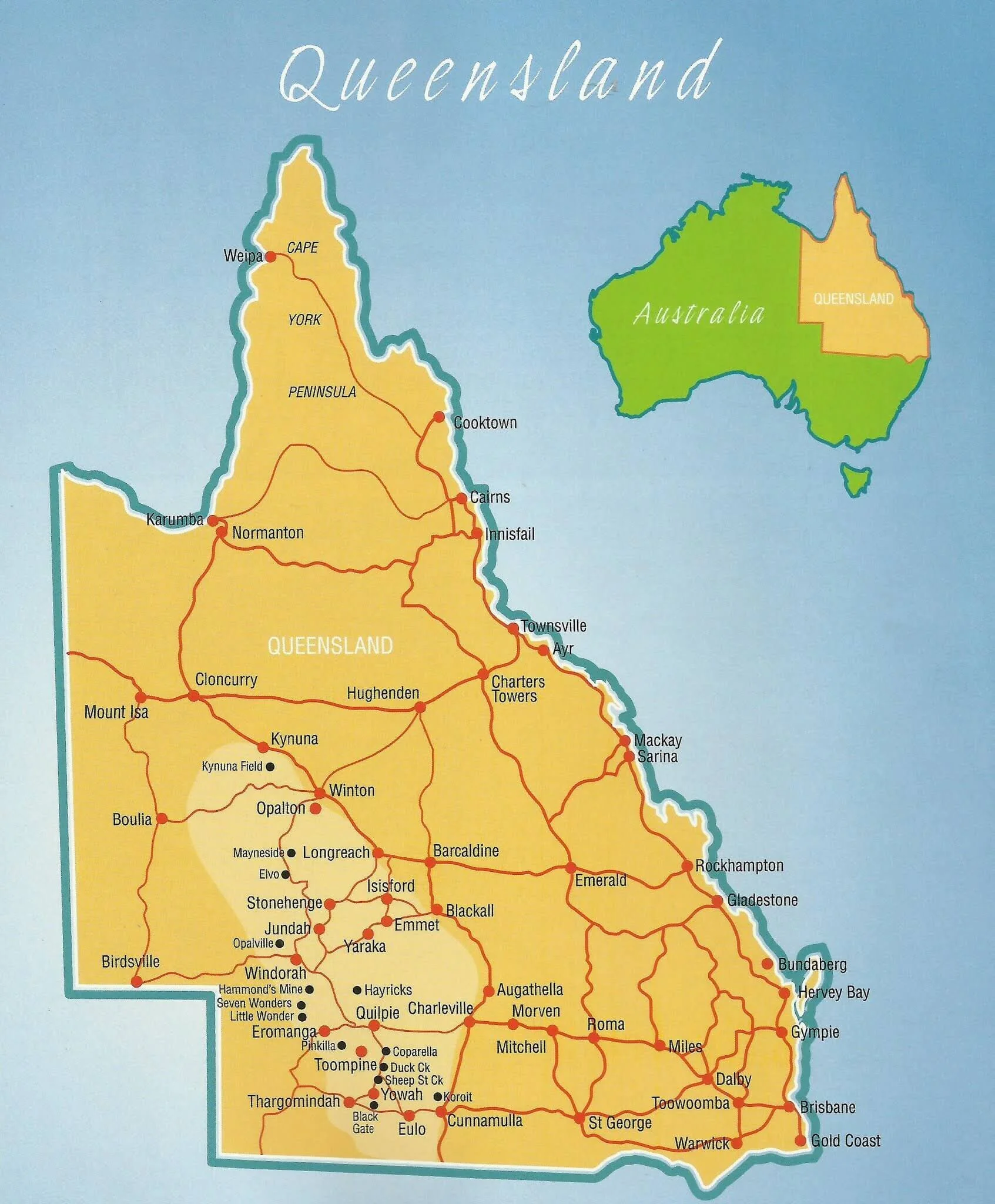
Opal areas of Queensland, Australia. Photo courtesy of Ian Bone.
IB: Well, from a business perspective I was quite late to get involved, but from just an interest point of view, not so. As a kid my father took me into the gem fields, where the sapphires are located in Central Queensland. We’d always be digging for sapphires, and I actually learned how to cut stones in my early twenties. I just never progressed with the field, I went off to other studies instead.
CB: What made you come back to the trade?
IB: Well, I finished my management career and was thinking about what else I could do. I had always thought there might be an opportunity for me with sapphires, and then I had the good fortune of meeting a chap named Rod Beattie. Rodney has been in the gemstone mining and cutting business for over forty years in Central Queensland. He had all these contacts and established relationships, but had not found anyone to undertake the marketing, promotion and sales of the material. This is where I fitted in. It really was a great opportunity.
CB: Yes, any great partnership needs someone who is business savvy and can run the marketing side of the business, it’s so crucial.
IB: Exactly, and we’ve continued to refine what we do over the years without varying from the core principles. We’re very specific in our product line: we only handle four different stones from Central Queensland, and we put a lot of time and energy into the traceability and provenance, therefore we know exactly where every piece is coming from and the full story behind each gem.
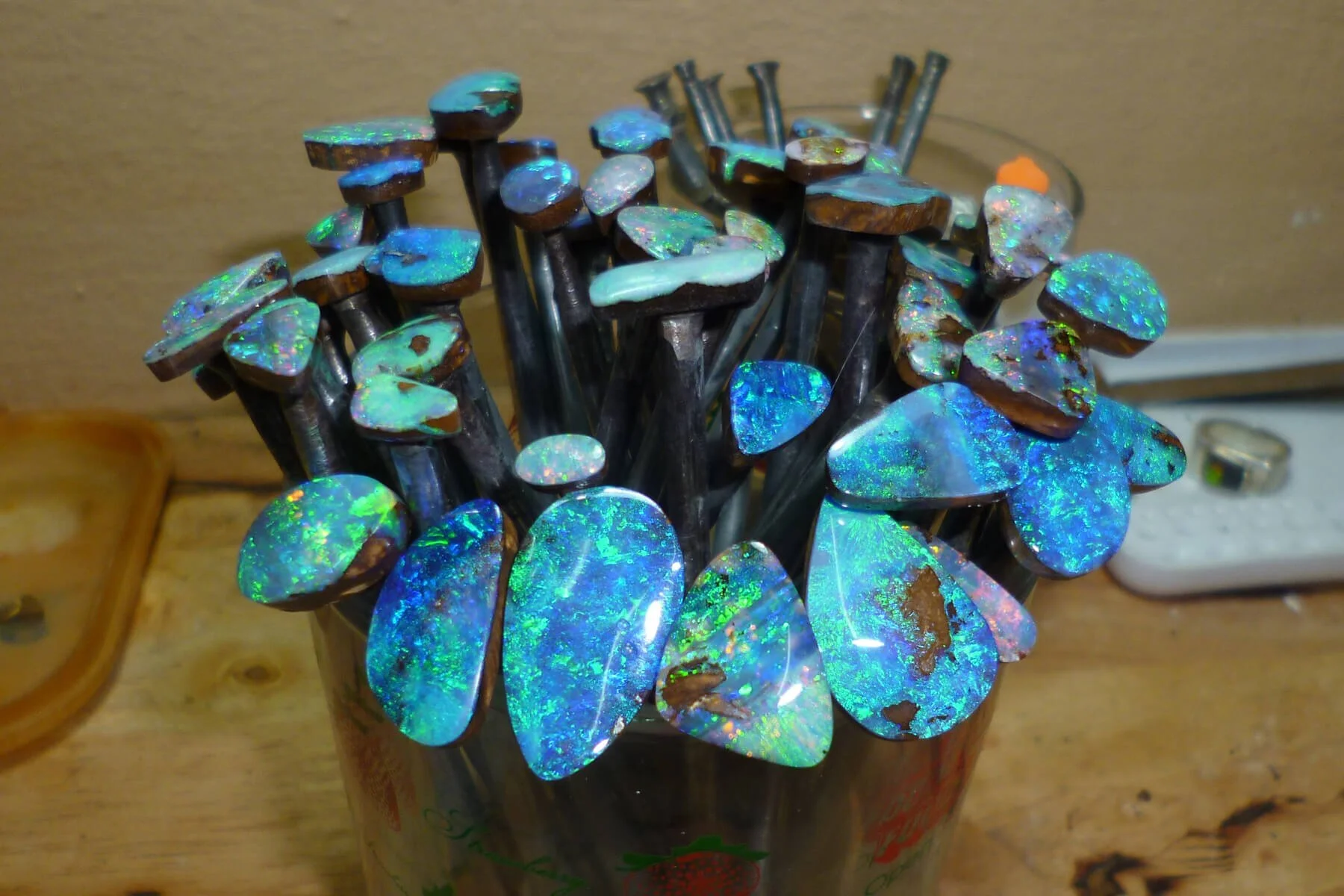
Capricorn Gems Boulder Opal from Queensland. Photo Courtesy of Ian Bone.
CB: What are the mining conditions like in Australia? Do you guys have contacts at different mines through Rodney, or do you have your own exclusive mines?
IB: Actually the former--Rodney goes and visits his contacts at different mines (and these are people he’s known since the 80’s or 90’s) to see what product they have. Not just anyone can get into the wholesale business in Australia, because the miners don’t want to talk to everybody, only people that they know well. The opportunities that we’ve had to source the amazing quality products are a direct result of the decades Rod spent developing these relationships.
CB: I’ve heard that mining regulations in Australia are quite stringent---could you share a bit about why you can trust in your country's system they have in place to ensure ethical mining and business practices?
IB: That's exactly right. There’s really two aspects to that--there’s our judgement and expertise, of course, so we have first hand knowledge of the mining set up because of our access. Secondly, the underpinning legal structure implemented by the Department of Mines that prescribes what rules the miners have to adhere to. Matters like having a mining license and a mining plan that includes an outline of their various processes--when, how and why they are mining a certain way. It’s fairly comprehensive, and there are Mines Department inspectors that go out and visit the mines periodically, just to make sure that everything is being done according to the regulations. There are also indigenous aboriginal land tenure matters that have to be dealt with, in terms of access to land.
“CP: Do the miners always like all these regulations?”
“IB: No, but Australia has a lot of measures put in place to prevent poor practice, especially in regards to health and safety. It’s not underground mining, and it’s usually small scale, so we don’t have the same issues as other gemstone producing countries. ”
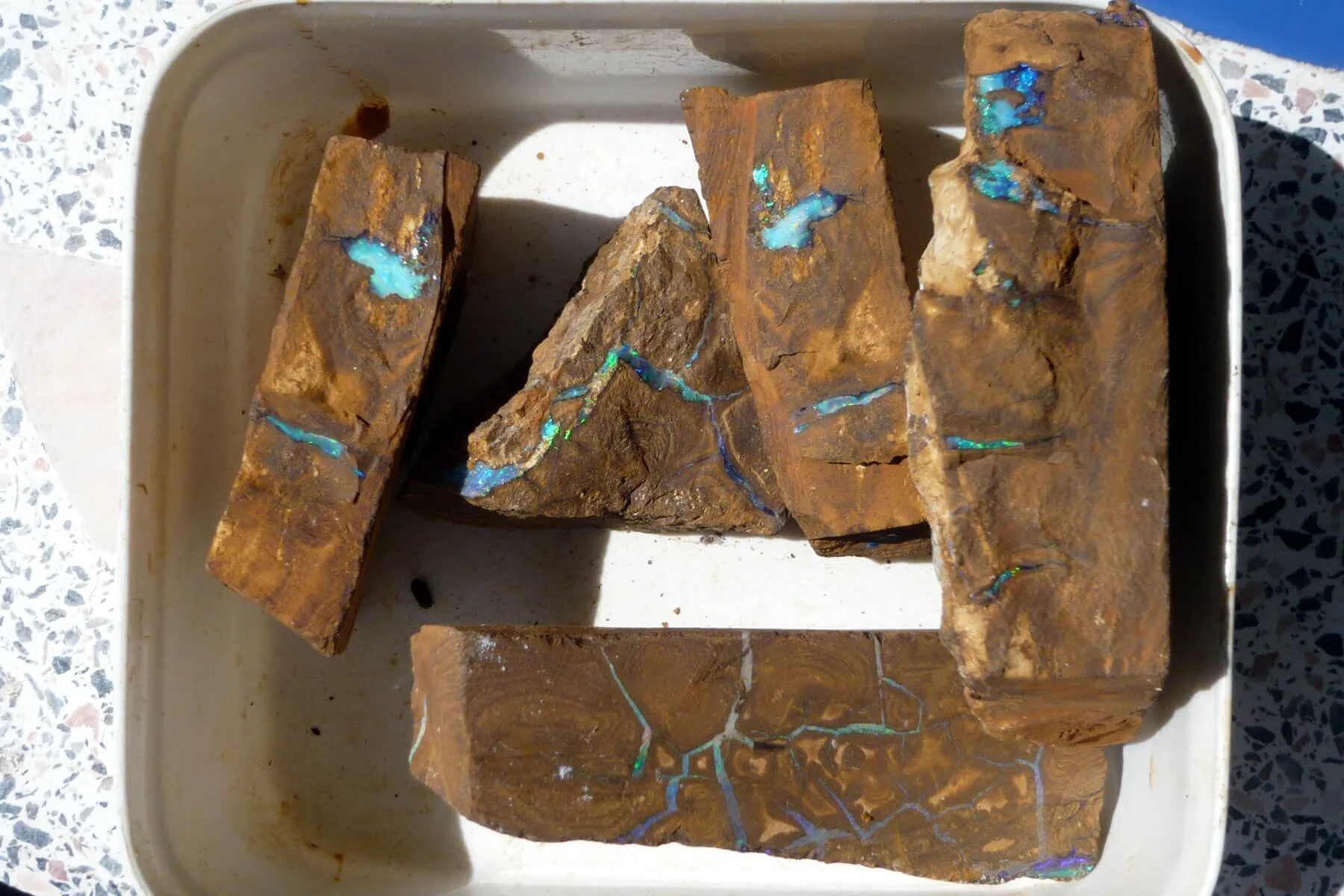
Container full of Queensland Boulder Opal. Photo courtesy of Ian Bone.
CB: I think many consumers associate gemstone mining in their minds with diamonds and the huge amount of environmental disturbance that comes with large, open pit mines. They may not realize that there are a lot of other gemstones that don’t have to be mined that way.
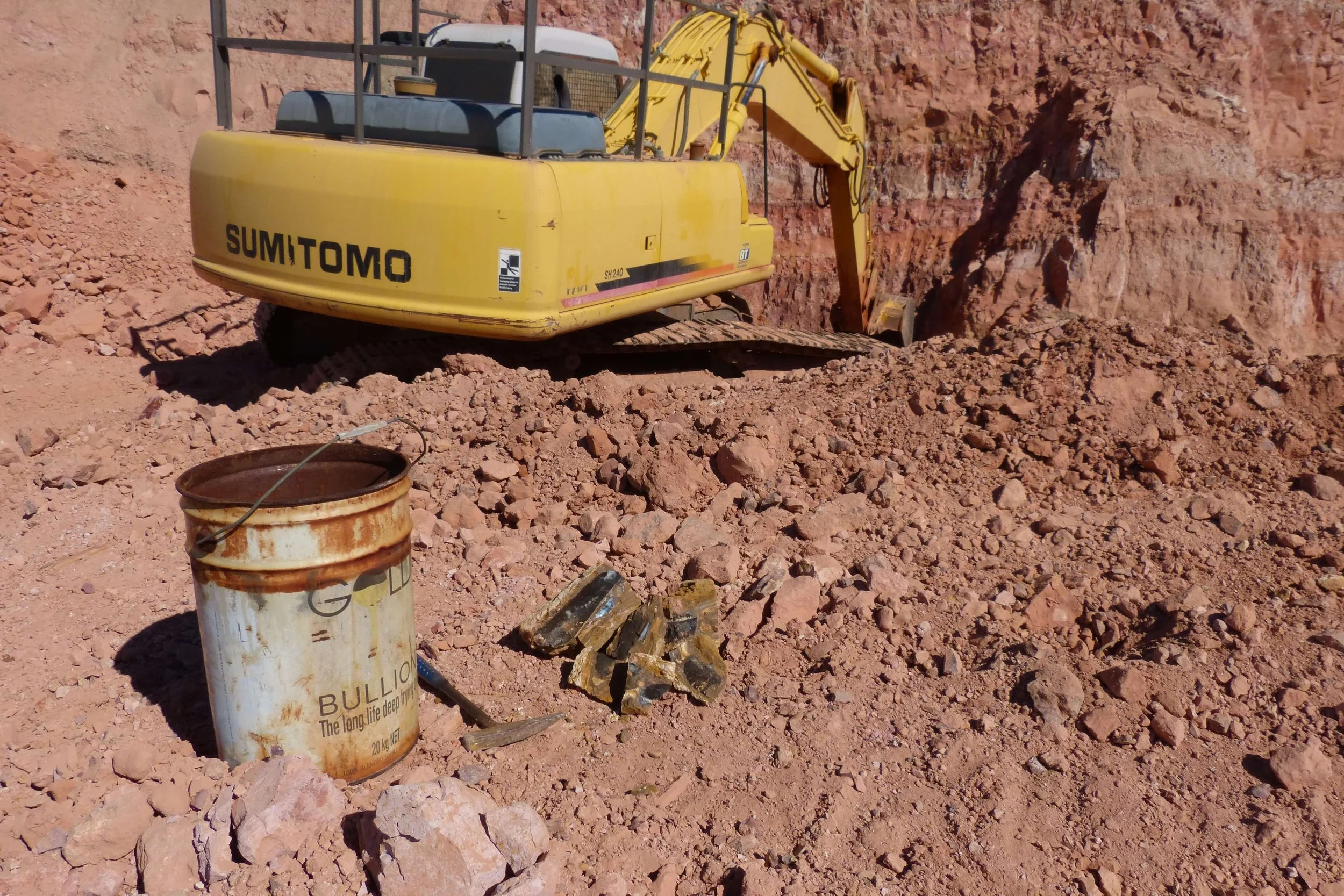
Opal mining in Queensland, Australia. Photo courtesy of Ian Bone.
IB: Yes---Australian mining is right in the middle in between small artisanal miners who are literally just going out individually panning and digging for gems, and those giant corporate mining companies with massive mines. Mining here is usually a family operation or a few people in a partnership working together. People here will have a reasonably substantial setup with excavators and mechanical equipment.
Opals and sapphires are similar in terms of the excavation equipment needed, but with opals, they aren’t just moving dirt around but are looking for big boulders in which boulder opal forms. The underground opal mining exists more in Lightning Ridge, and in South Australia, but here in Queensland they are just on the hunt for giant boulders near the surface. Again, one in a thousand boulders might contain some good opal!
With sapphires, the overburden is removed, or dirt on the surface, to look for gravel from the ancient creek beds that contain sapphire--it’s alluvial material, even if the water is no longer there. We find that gravel anywhere from a foot to fifteen feet underground.
CB: Well, I certainly have become such a fan of Australian sapphires. I hadn’t been exposed to their gorgeous colors until my current job, but they really are so unique and beautiful. I think social media has helped people become more aware of your product’s existence! Now, I see that you have a cutting facility in Thailand where you send all your gems.
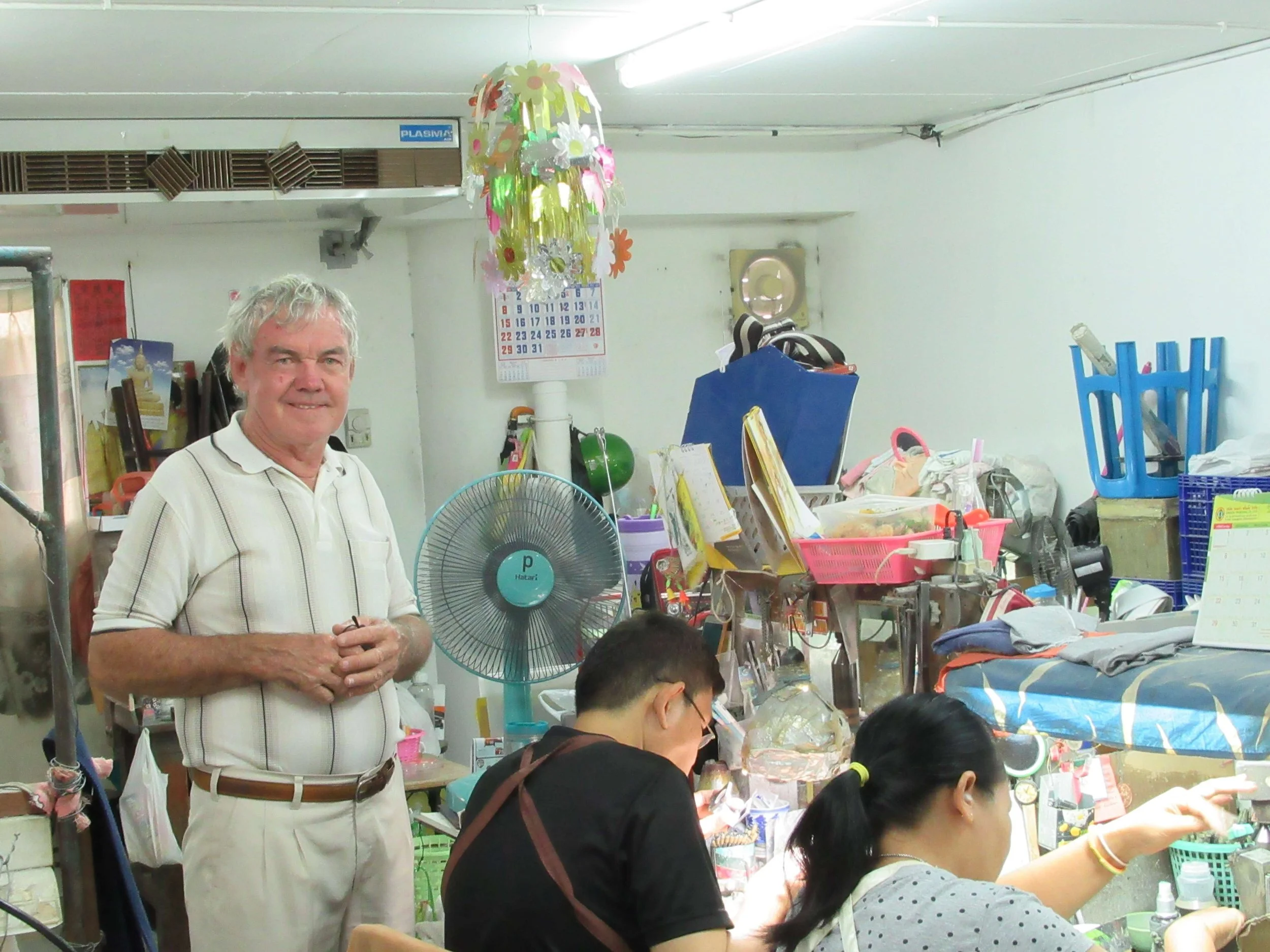
Rodney Beattie in Thailand working with gemstone cutters. Photo courtesy of Ian Bone.
IB: Yes, that is also thanks to Rodney. He actually went up to Thailand from Australia decades ago when the cutting industry was just starting, and really helped that industry get started. He of course formed a lot of contacts while there. Rod actually does all the pre-forming for gems that are going to be about 1.2ct himself in his backyard workshop. This is for security reasons as well as efficiency, so we know all our stones are going to come back from Thailand the same shape we sent them.
All our gems are cut by one guy in Thailand now, since he knows exactly what we want---we generally don’t step-cut our gems, because we think diamond cut pavilions bring the best color out of our gemstones. Of course, a lot of cutters want to step-cut sapphires, because they get more yield that way, as they are paid by the carat weight of gems they cut. Pre-covid, Rod was actually living up in Thailand for three or four months of the year, so he’s very familiar with everything that happens.
CB: It’s encouraging to see an example of a gemstone business that has a truly transparent supply chain. Of course, circumstances are wildly different between countries like Australia and say, Kenya. Would you say that it’s like comparing apples to oranges? Should these countries be looking to established Western nations as models?
IB: I’m glad you asked because I’ve actually thought about this a lot. My view may be different from other people’s, but I think that what we really should be encouraging is people from their home countries developing both the mining and marketing of their products worldwide. It’s okay that Westerners are starting initiatives in various countries and then taking the gems to market and sell them, and that’s probably as good as we are going to get for the time being. I would love to see more locals in every aspect of the gem trade, not just mining. I know a lady from Ethiopia who has a very similar model to ours, who is successfully marketing Ethiopian opal to the world and is fully in charge of her business.
CB: I agree, the more you can empower people in their own country to get them involved in a responsible way of being a part of the industry, it will only reap benefits for everyone in the long run.
IB: That type of model is always the better model, where you’ve got the value being added in the source country. We all know that this is a good way forward, but exactly how we get that to happen, I’m not quite sure.
“I think people from each country being the experts at their own gemstones and having the full supply chain is ideal; at Capricorn Gems, we are not interested in diluting our products by trying to get into all these other gemstones from different countries, just because there may be a dollar or two in that.”
We focus on being experts on the four Australian gemstones we source, and we have a niche market for them by selling exclusively to designer/makers worldwide.
A lot of people in the wholesale side tend to think, “Oh, what if I get into retail, maybe I could double my profits,” but let me tell you, it’s not that easy! In my opinion, it’s just not worth it. One, you’d potentially upset your designer clients who get wholesale prices and more exclusive access to this product. Two, you now would have to figure out the retail prices on top of wholesale prices for everything, and start getting inundated with people who may or may not actually buy your product. My clients come to me with specific requests a lot of the time, and I truly want my clients to be able to make a profit too. It’s just good business sense.
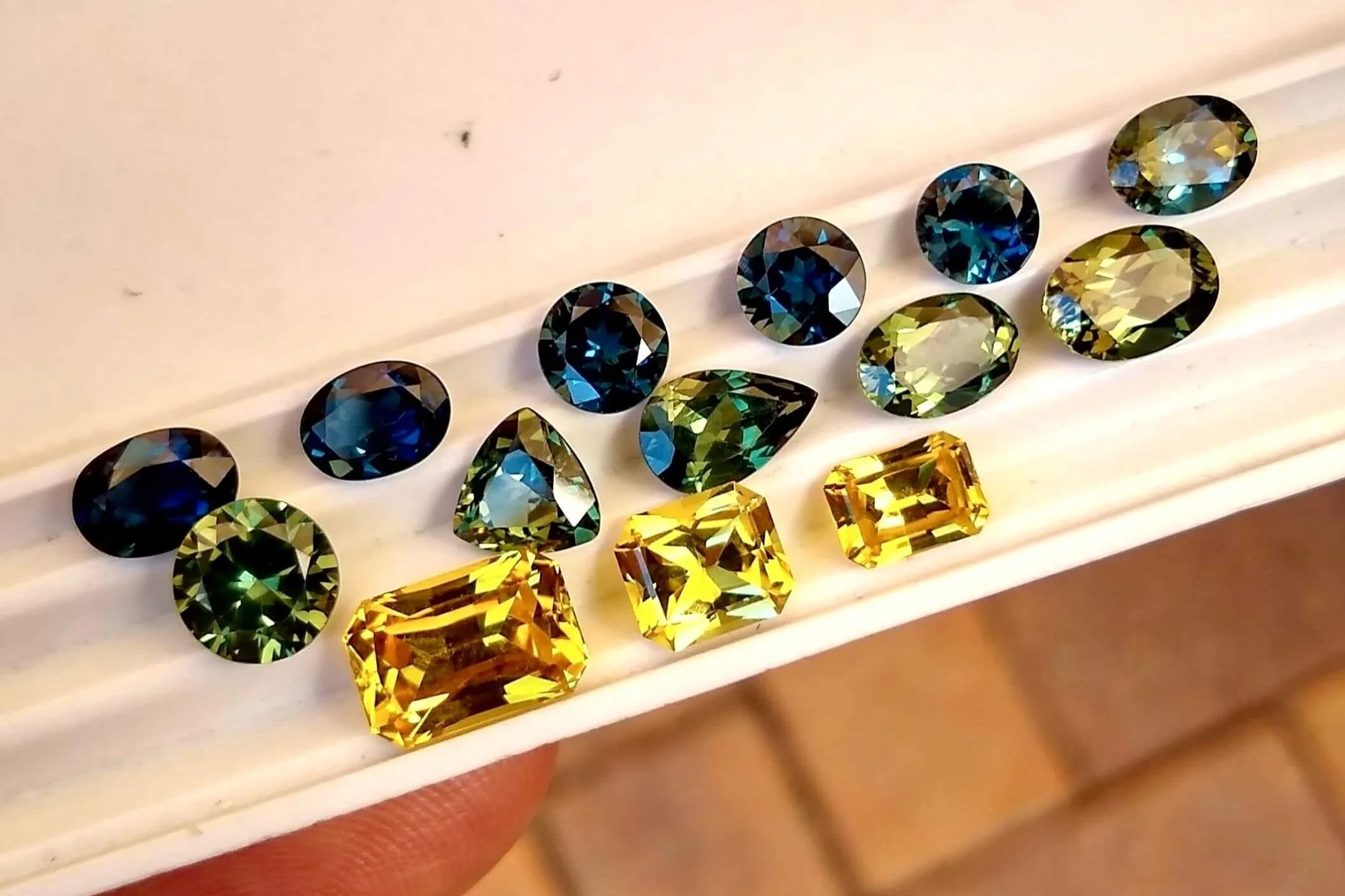
Capricorn Gems blue, green, and yellow sapphires. Photo courtesy of Ian Bone.
CB: Definitely. It’s great for our readers who may not be as familiar with the business to business model in the industry to hear all this. One last question--you host many educational talks about the four different gemstones you mine, which is something you definitely didn’t have to do. Why is education important to you?
IB: Well, I actually have a background in education, I used to teach sailing and taught at a local university in Australia in a previous career. I think it’s just a part of who I am. To me, education is so important, and I especially want younger designers just getting into the industry to be able to have someone they can go to and learn from. They don’t want to appear ignorant to their clients and it’s great for them to have talking points about the products they are using in their designs. I really value transparency and don’t want people to be scared or reluctant to ask lots of questions. The more designers are informed about gemstone products, the more transparency emerges for the whole gemstone supply chain.
CB: It’s great to talk to someone who believes in education as much as I do, and who has developed such a successful and responsible gemstone business. Ian, thank you for sharing with me and becoming my latest Illuminator!
What do beekeeping and fish ponds have to do with diamond mining?