

CRITICALSMITHS Research Series: Pickle

What’s the Dill with Jewelry Pickle?
This installment of the CRITICALSMITHS Research Series was conducted by Julia Giangrande, a student of Massachusetts College of Art and Design in Boston, MA, USA
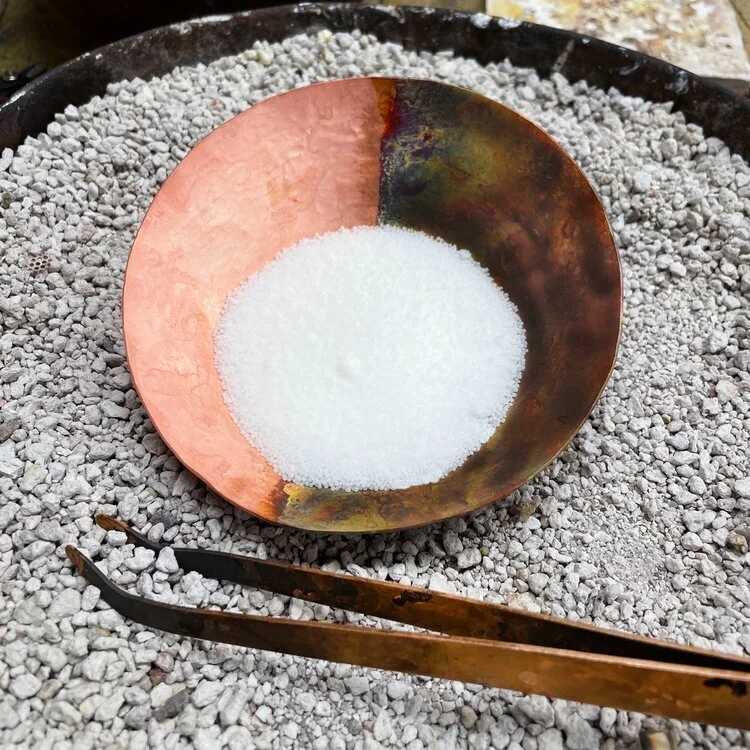

POSTER DESIGN AND RESEARCH BY JULIA GIANGRANDE
This installment includes:
Introduction: What’s the Dill with Jewelry Pickle?
What Type of Pickle Should I Use?
Toxic Effects and Safety Measures (and Skin Sensitivities)
Safe Pickle Disposal
Closing Statement
Researcher Bio
Links
Bibliography
This page compiles the findings of an integrative research project regarding different pickle solutions.
The research question:
How sustainable are these chemical solutions for our health and the environment.
Through interviewing chemists, talking to jewelers, researching the chemicals and surveying a wide range of metalsmiths, a large quantity of data was formed. As I tried to make sense of all my findings, the main threats for our health and our environment became clear.
The biggest concern for our health is the acid in some pickle solutions.
The biggest threat to our environment is the copper that is left in all pickle solutions after use (even from silver).
The findings of a survey received from 100 metalsmiths are integrated throughout this page. The survey was shared via online platforms and social media, and results were collected from 3/10/2021 to 4/10/2021.
What Type of Pickle Should I Use?
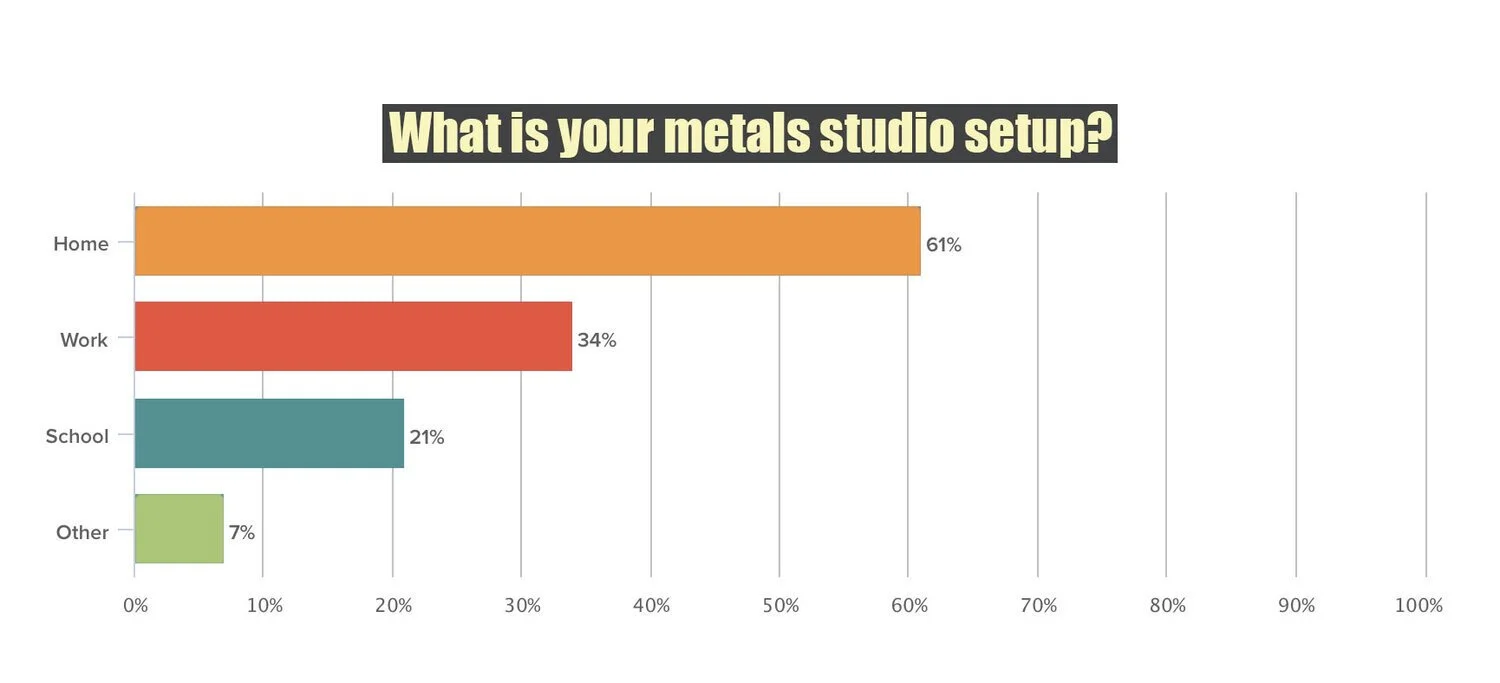
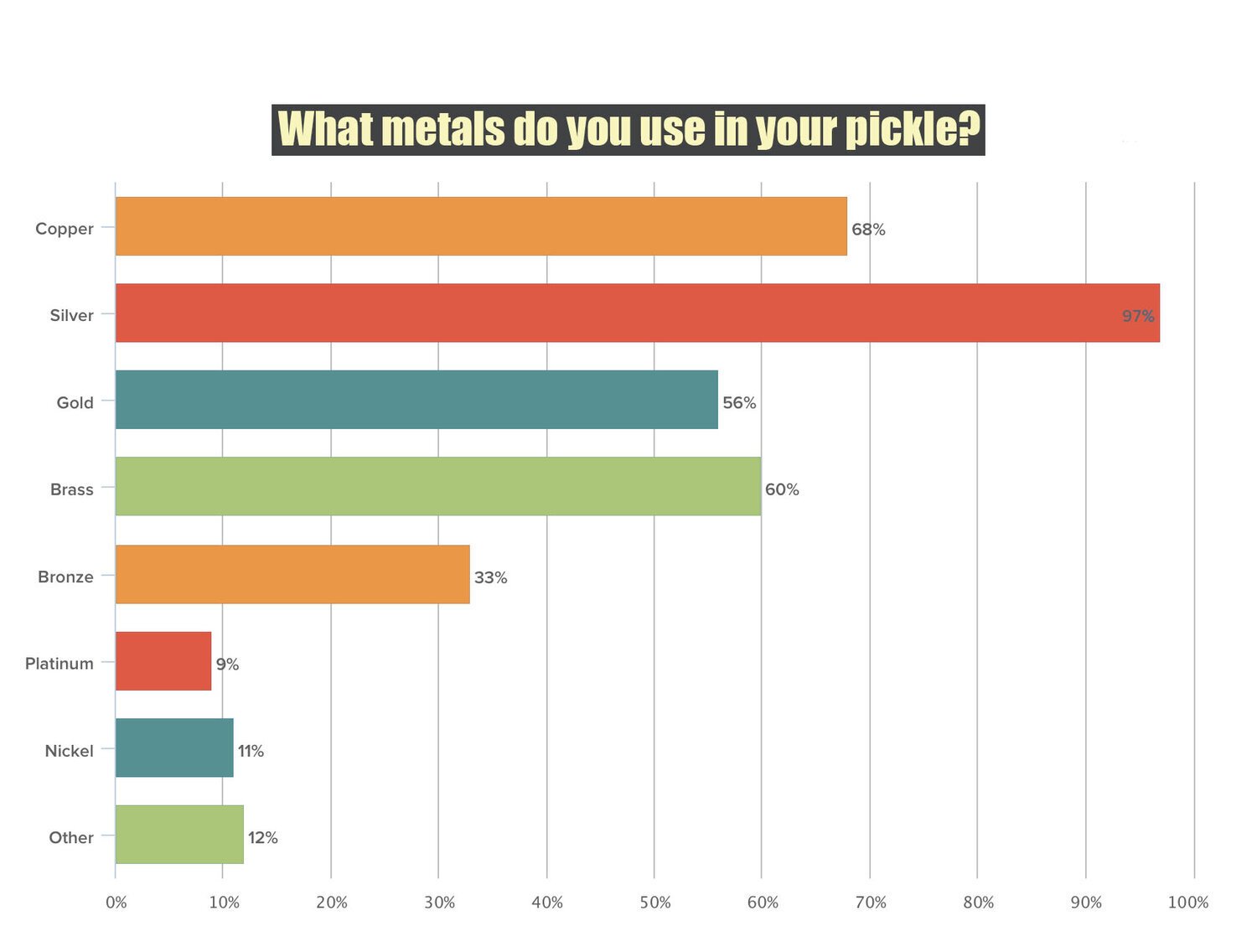
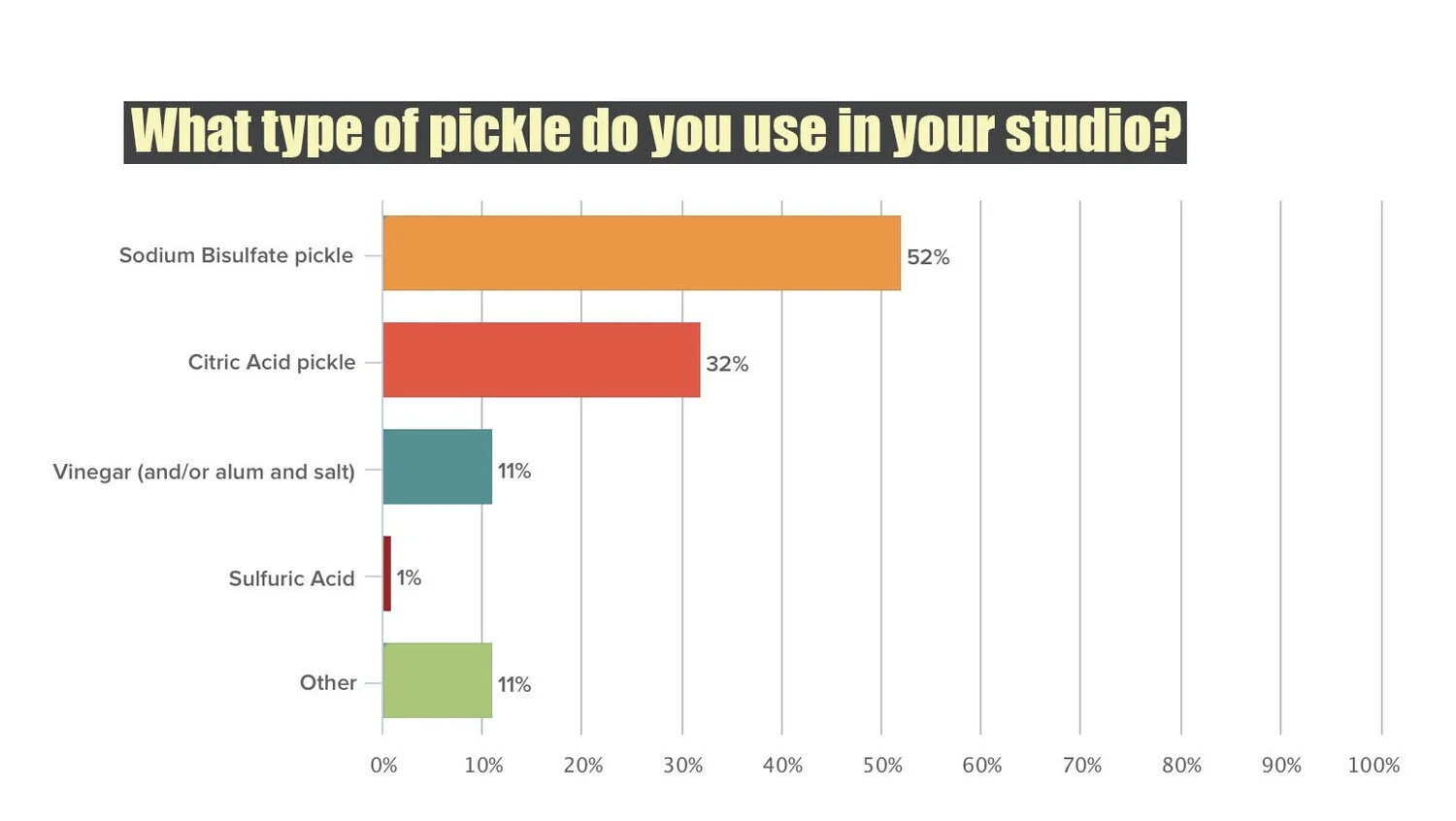
It is important to read the Material Safety Data Sheets (or “MSDS”/”SDS”) of your pickle for a complete list of the ingredients along with warnings and safety information pertaining to the specific ingredients.
Citric Acid Pickles
Citric acid pickles are overall a more sustainable option. They are mostly accessible and effective, often found at grocery stores. The solution must be used regularly to avoid molding and will need to be changed more frequently than sodium bisulfate pickles. While it is often said to be slightly less effective than sodium bisulfate, many jewelers have had no issues with its effectiveness and love that this option is less corrosive/caustic (I even conducted a mini experiment to compare its effectiveness to sodium bisulfate pickle and found that both worked great, while the citric acid only took slightly longer!)
Examples include: Citrex®, Citric Acid Pickle®, Citric Pickle®, PickleIt®.
Contains citric acid.
Citric acid is a food-grade acid.
Works with silver, gold, brass, and copper.
Works slightly slower, requires more upkeep to last.
Sodium Bisulfate Pickles
Sodium bisulfate pickles work faster and last longer. But this chemical will eventually become sulfuric acid, which is harmful to the environment.
Examples include: Rio Pickle®, Sparex No.2®, PH Down®.
Contains sodium bisulfate and sometimes sodium sulfate; releases sulfuric acid on contact with water.
Corrosive/caustic.
Works with all non-ferrous metals.
Works quickly, lasts longer with regular use.
More Pickles
With certain metals, there is an endless list of other solutions that many have explored with pickling such as vinegar (acetic acid), alum, and lemon juice. Varying recipes for these experimental, sometimes less effective solutions can be found online. For a small home studio, these could be great and easily accessible options! Although these alternatives are less toxic, the metal particles left in the solution should not be ignored.
Sulfuric acid pickle (sulfuric acid) is used mainly in the manufacturing industry as it is dangerous and more difficult to access.
Toxic Effects and Safety Measures
From the survey, the data found that most jewelers in their personal practice use the same pickle solution that they were first introduced to in their schooling. Because of this, most are largely unaware of the options they have when it comes to safer pickles. Additionally, a large majority of those surveyed were unaware of the dangers of the copper in used pickles.
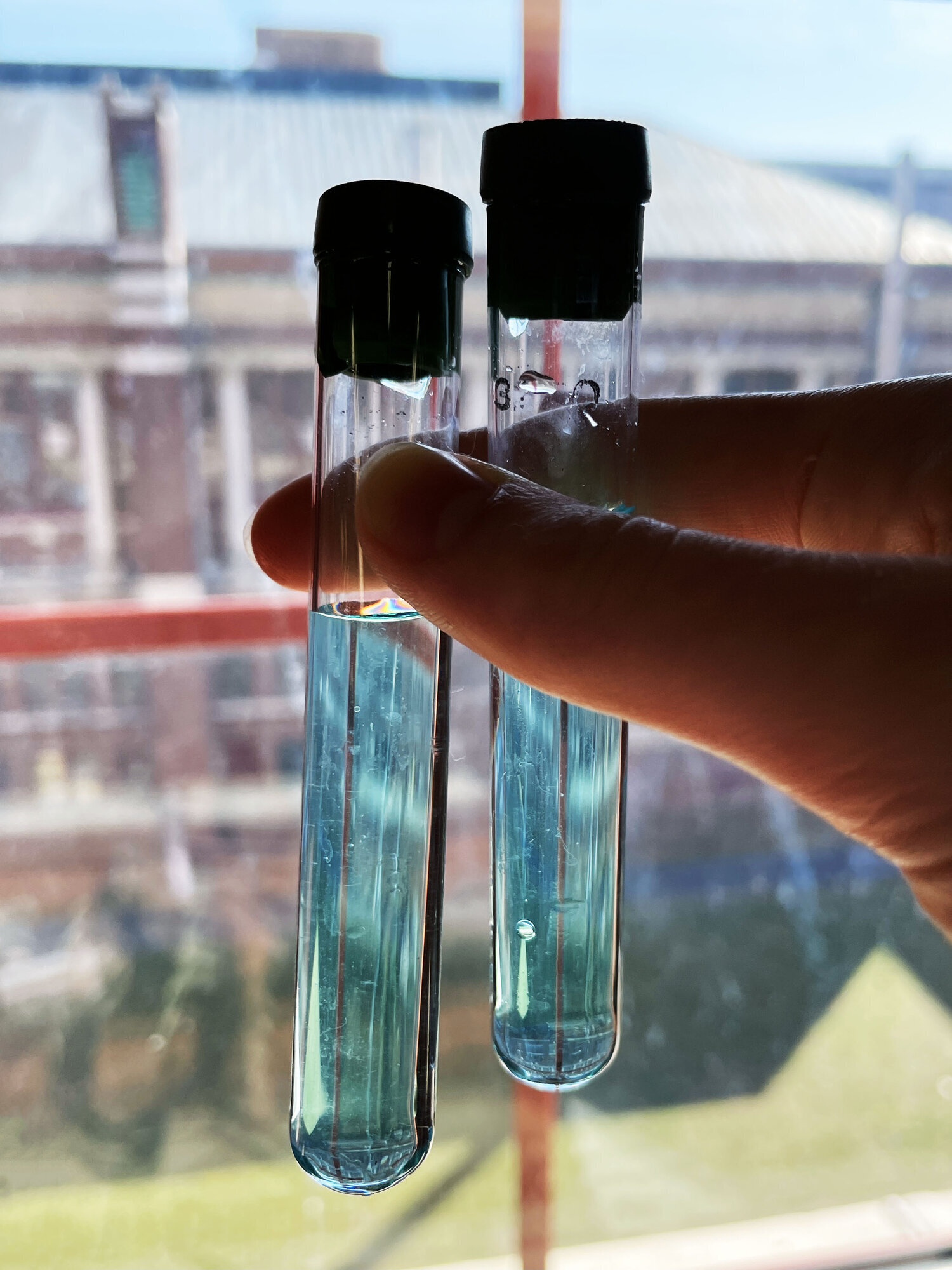
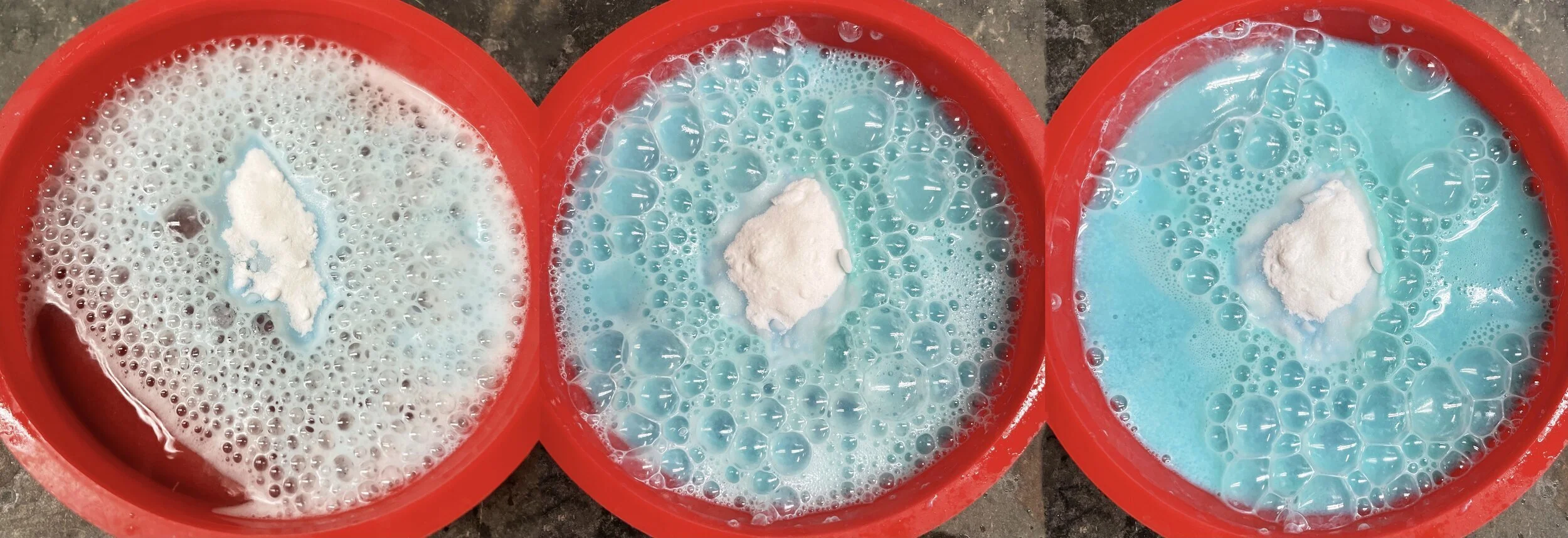
When a pickle solution turns blue, the copper ions in the pickle make it that color. Specific to Massachusetts, US: In this state, it is most likely hitting the MWRA (Massachusetts Water Resources Authority) value of 1 milligrams per liter, and should not be poured down the drain (†Dr. Sirokman). According to a MWRA document, it is clear that small amounts of sulfate are released overall in Massachusetts, so jewelers specifically are unlikely a major concern (“Proposed Revisions to the Massachusetts Water Resources Authority's Local Discharge Limits”).
“[Copper] is one of the most toxic elements to aquatic species (Woody and O’Neal 4),” and therefore can cause great harm to fish and our greater ecosystem if it contaminates our waterways.
Note: If you use flux in your soldering process, then the flux chemicals are also present in the pickle solution, and proper safety should be followed. Read more CRITICALSMITHS: What The Flux research here.
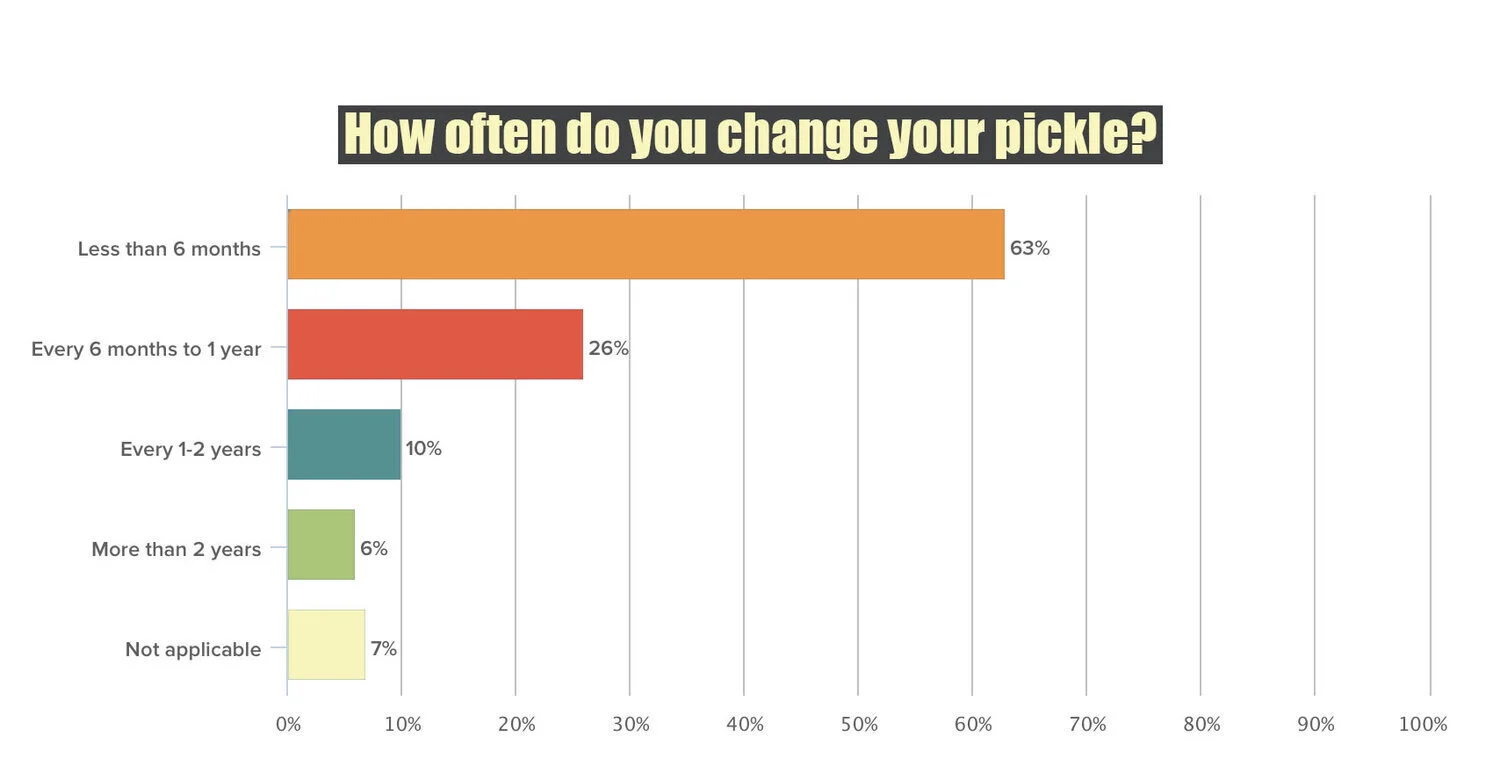
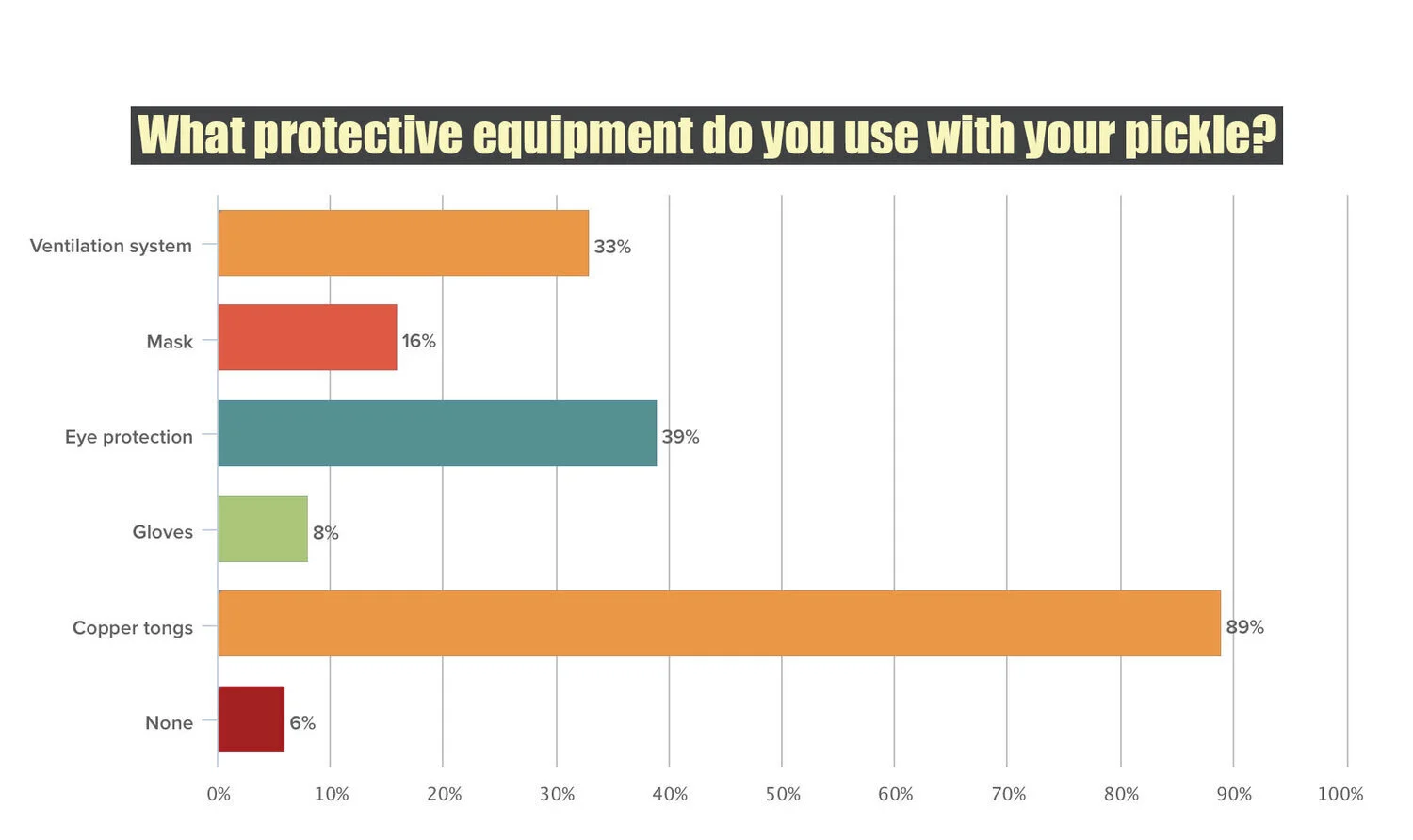
The chemist (†Dr. Sriokman) advised that when working with the dust/powder of these raw solutions, specifically sodium bisulfate, that a respirator be worn. It is a good idea to use protective equipment with all pickles and to read the Material Safety Data Sheets for warnings and safety information pertaining to the specific ingredients of your pickle. Many metalsmiths use additional safety equipment when working with pickles as shown in the survey data.
Upon removing an item from a sodium bisulfate pickle, he also advised that the piece be rinsed in a rinse bucket of water to dilute the chemical (†Dr. Sriokman).
Skin Sensitivities:
Of the 100 participants that completed the survey, reported skin sensitivities/allergies included:
Rash if pickle is not quickly washed off of skin
Mild skin irritation/burning from acid
Hives
Itchy skin
Nasal irritation
Eye irritation
A large majority of participants who reported experiencing symptoms stated that they had the reaction to Sparex® brand pickle.
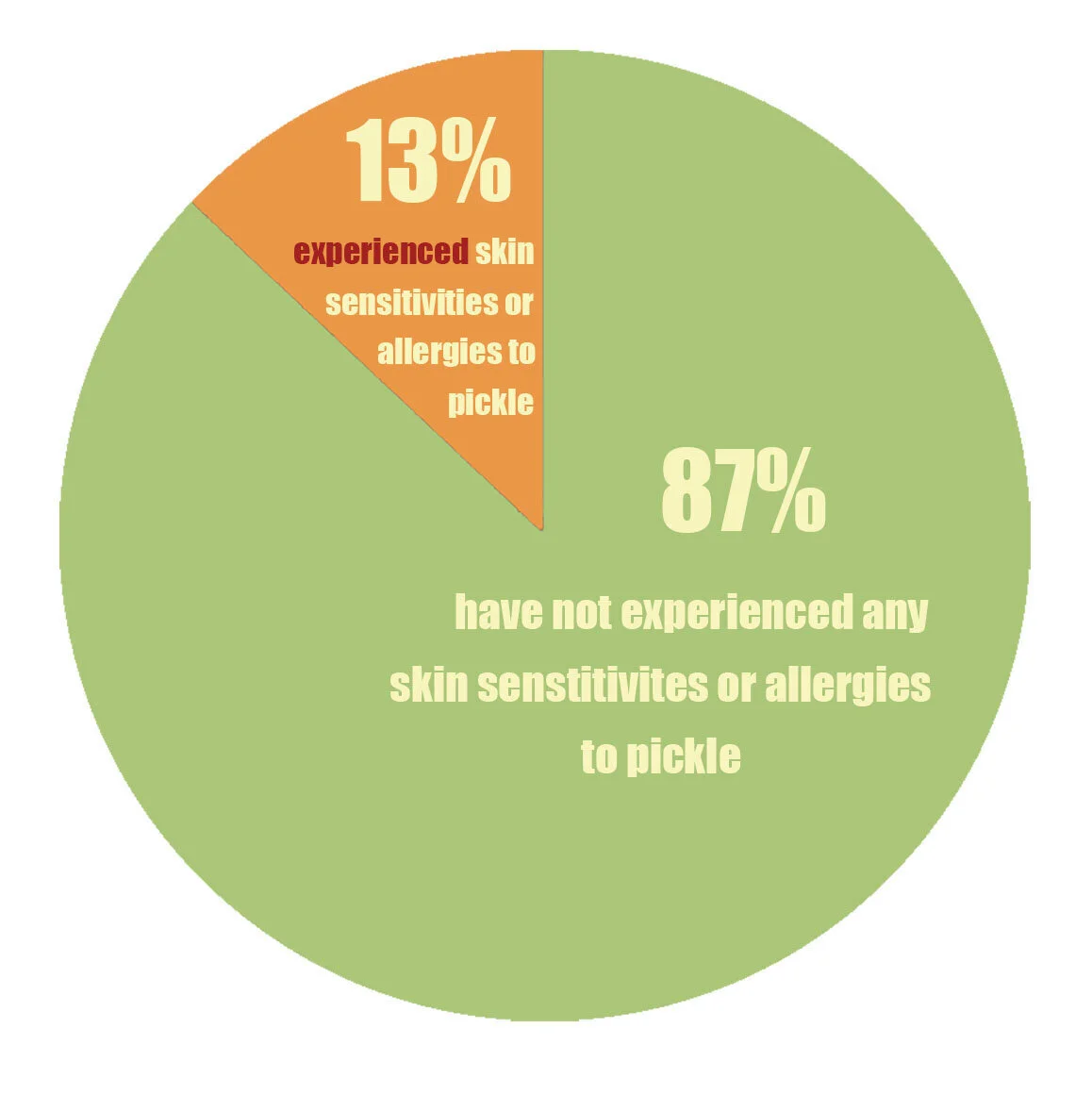
Skin Sensitivities: Chart
Safe Pickle Disposal
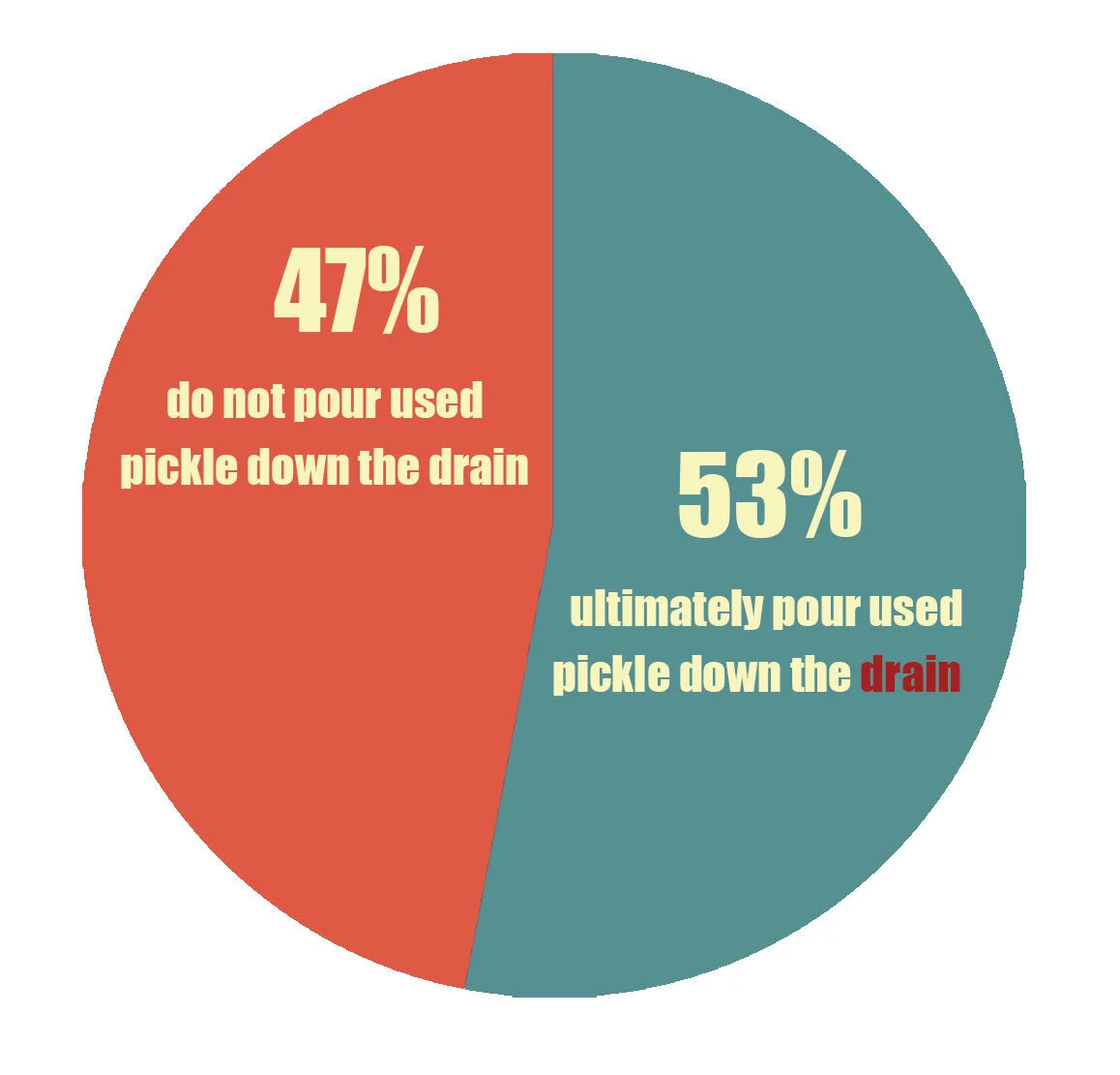
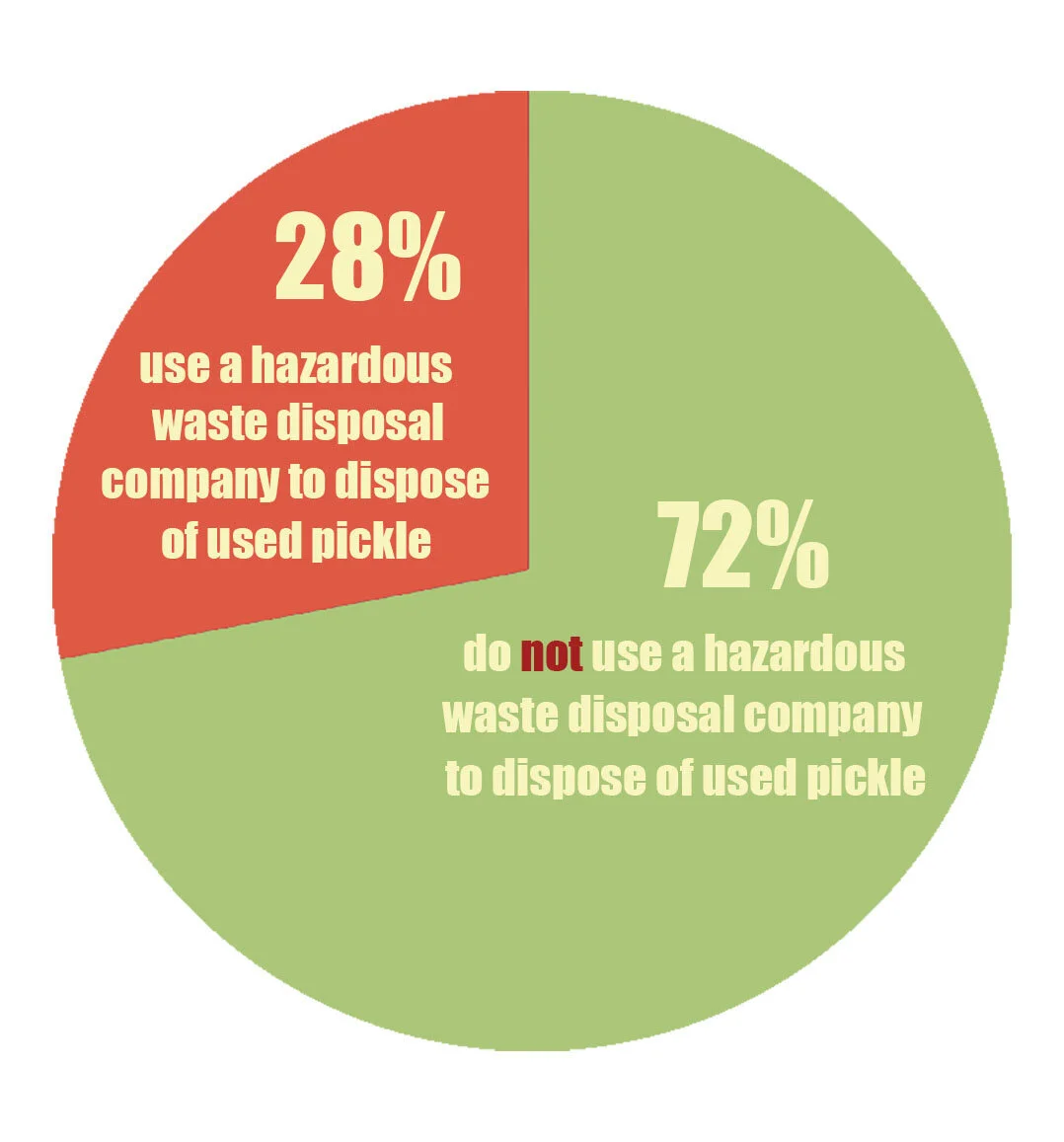
Used pickle solutions contain copper and should not be poured down the drain if possible, and instead disposed of through a hazardous waste disposal company.
It is important to check with the guidelines in your area when it comes to chemical disposal.
Suggestions and observations:
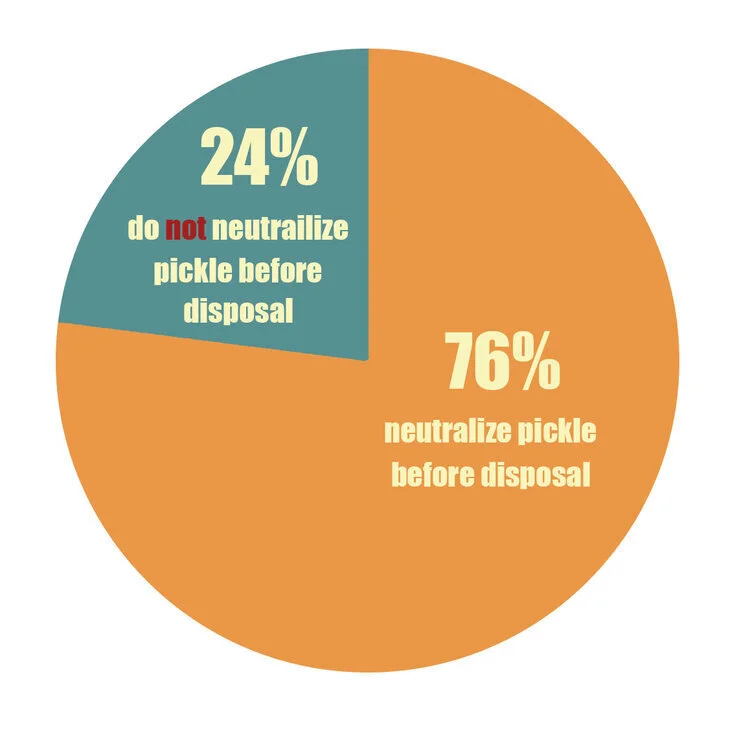
If we were to ignore the copper content of used pickle, the question of whether it is necessary to neutralize pickle with baking soda arises. Neutralizing a solution does NOT remove copper particles.
neutralize Chart
Drain Chart
Hazwaste Chart
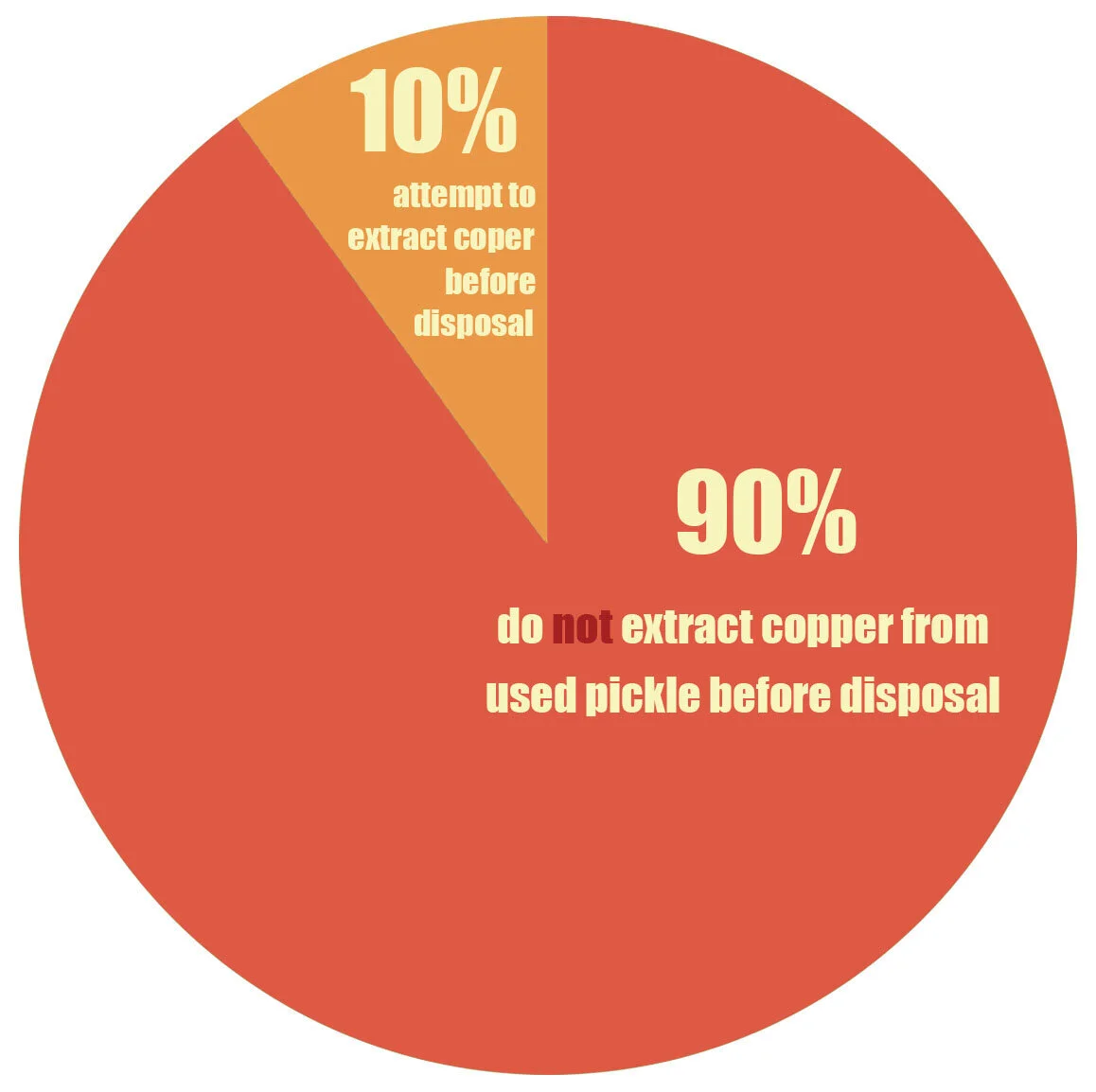
Copper Extract
Citric acid is a food-grade safe acid, but the used solution will still contain flux and metal.
Sodium bisulfate could damage pipes if the solution is not diluted or neutralized. The levels of raw material (sulfur) that you are releasing depends on the volume of the solution as well as how often you change it.
While used pickle solutions with toxic copper particles are harmful to the environment and waterways, it should be noted that copper sulfate solutions are sold today in most hardware and home improvement stores as septic and sewer pipe treatments to kill roots growing within pipes.
When a pickle solution is properly disposed of through a hazardous waste disposal company, the waste is removed then remediated (Rinkesh). There is a link to a web page that further explains hazardous waste disposal below.
https://www.conserve-energy-future.com/hazardous-waste-disposal-and-companies.php.
Used pickle solutions will contain the fluxes that are used in metalsmithing processes, and therefore should be kept out of waterways, and disposed of through appropriate waste disposal in your area.
Closing Statement:
Let's continue to educate ourselves and spread awareness on jewelry making chemicals, our health, and the environment, so we can be responsible jewelers and metalsmiths while doing our best to protect our environment!
EM Education Committee Statement:
The EM Education Committee is excited by Julia’s research, and we congratulate her ambitious efforts unpacking the mystery of pickle solutions. The most impactful findings presented confirm that pickle should not go down the drain, and the metal content in the exhausted solutions will contaminate waterways.
We still have more questions!
What are the best methods for removing metal content from pickle, and does this extend the life of the solution?
What happens to the pickle solution when it is processed through Hazardous Waste? What do they do?
When is pickle exhausted? What blue is too blue?
Does the temperature of the pickle matter, and why?
We look forward to the next student (or group of students) who will continue this research.
The CRITICALSMITHS Research Series is a project created by Lucy Louise Derickson of Ethical Metalsmiths and Missy Graff-Ballone of Wellness for Makers to inspire students to think critically about how their studio habits connect to environmental and personal safety issues.
Each installment of the research series is conducted by an individual or group of students with the intention of answering a specific question, sharing their findings, and creating a free downloadable poster for metalsmiths to hang in their studios!



What do beekeeping and fish ponds have to do with diamond mining?