

Can "Recycled Gold" Be an Ethical Gold Source At All?

The content of this article reflects the views of the writer, and not necessarily those of Ethical Metalsmiths. This article was written for The Source
In this piece, guest author Saskia Shutt gets into the details of why she believes people shouldn’t be touting “recycled gold” as a more responsible option than newly mined gold – or even a responsible option at all. You won’t want to miss reading this article carefully, as there may be aspects of the “Recycled vs Mined Gold” debate that you haven’t deeply considered or heard about before.
—Chloe Beaumont, Editor-in-Chief
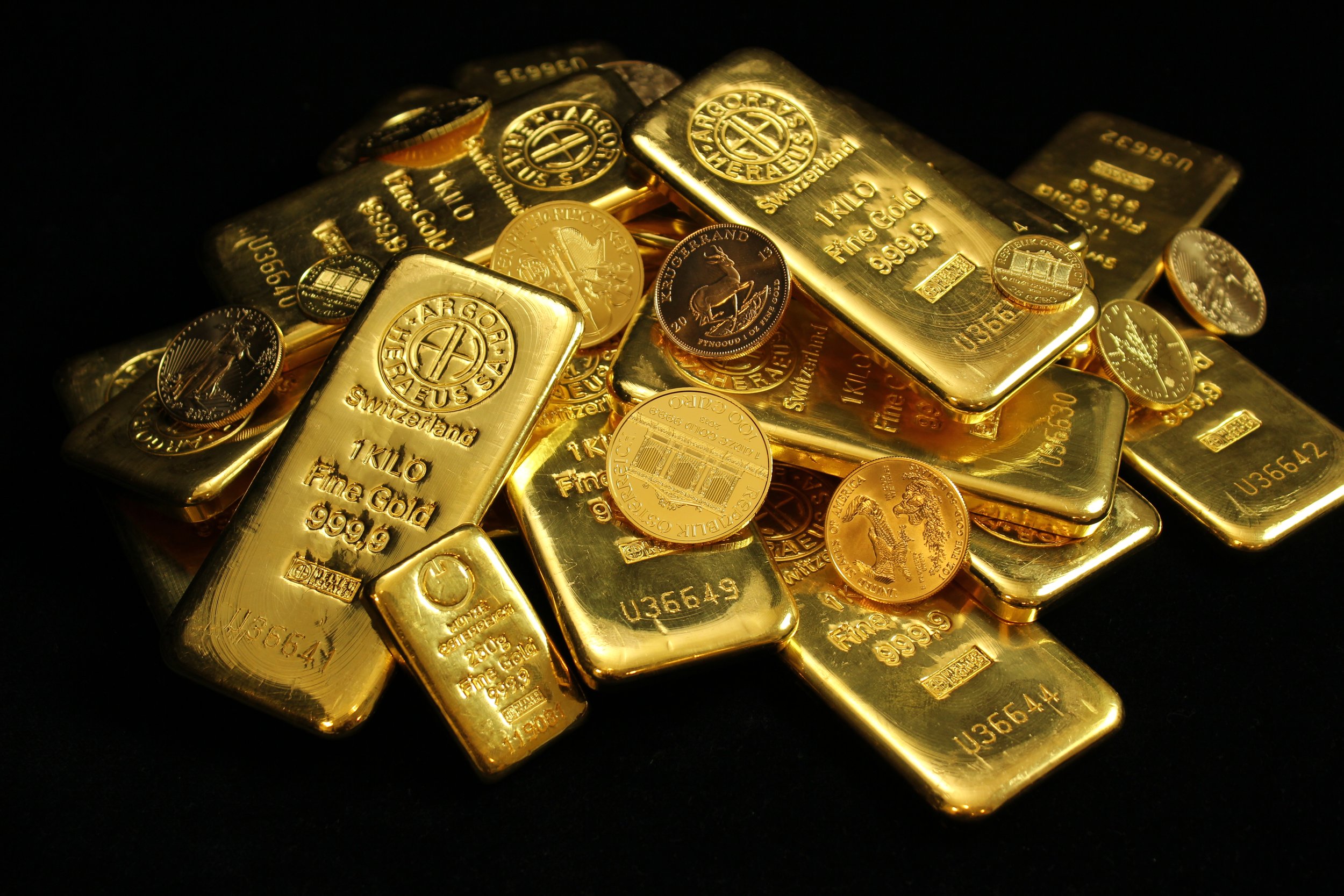
Gold bars and coins. Photo courtesy of Pexels (stock Photo).
Point of Consideration #1: The Definition is Murky (At Best)
Recycled gold in jewelry remains a pertinent topic; as of this writing, the FTC (Federal Trade Commission) is currently in the review stages of revising the official definition of terms such as “recycled” “sustainable” and “carbon neutral.”
Currently, in the wider jewelry industry, “recycled gold” has a very broad definition that leaves room for interpretation.
The Jewelry Glossary Project defines “recycled” as, “a term applied to metals and gemstones purchased or used by consumers (post-consumer), or are a byproduct of manufacturing (pre-consumer) or finished goods that were never in circulation (pre-consumer) that are reused in the manufacturing of new products. Bullions containing any non-recycled metal or manufacturing byproduct reintroduced back into the same production line are not recycled.”
During one of her Living Room Sessions, responsible sourcing consultant Christina Miller pointed out that, “gold sits in the bank for a day or 50 years, but as soon as it is sold, it is labeled ‘recycled' just because it has changed ownership.”
In my opinion, this is not recycling and should not be labeled as such. (Christina’s statement is based on the LBMA definition of recycled gold. To view how the OECD, and SCS Global Services currently define recycled gold, click here.)
While the world struggles to define “recycled gold,” it is worth noting that re-using gold is not a modern concept or practice. I have visited the Tower of London on a few occasions and it is well-documented that there are crowns no longer in existence, as the son (or daughter) did not like their father's (or mother's) crown, so they had it melted down and transformed into a new crown to their taste and design. One example of this is of a crown that was melted down in 1649 to be remade into a new design.
Another example of repurposing gold today is the jewelers who offer to redesign customers’ inherited, unwanted or unloved jewelry as a service. They start by dismantling the customer’s old gold jewelry, after which the gold jewelry is melted down to remake into a new piece of jewelry.
(Note for clarity: This practice of re-casting 100% customer gold is more common in Europe and the UK. In the US, most jewelers will not melt down customer’s gold and use it to make a new piece without at least adding some “fresh” gold grain to the alloy. This is due to the US not having goldsmith guilds, nor the ability to send the piece to an Assay office that can hallmark the exact karat of gold. It is also due to hesitancy to re-cast gold that could develop impurities or structural issues.)
This action doesn’t really have anything to do with the actual recycling process, but is more a personal decision made by the customers who would like to wear their inherited jewelry but they don’t like it, as it is no longer in style or to their taste. In this case it is purely motivated by sentiment.
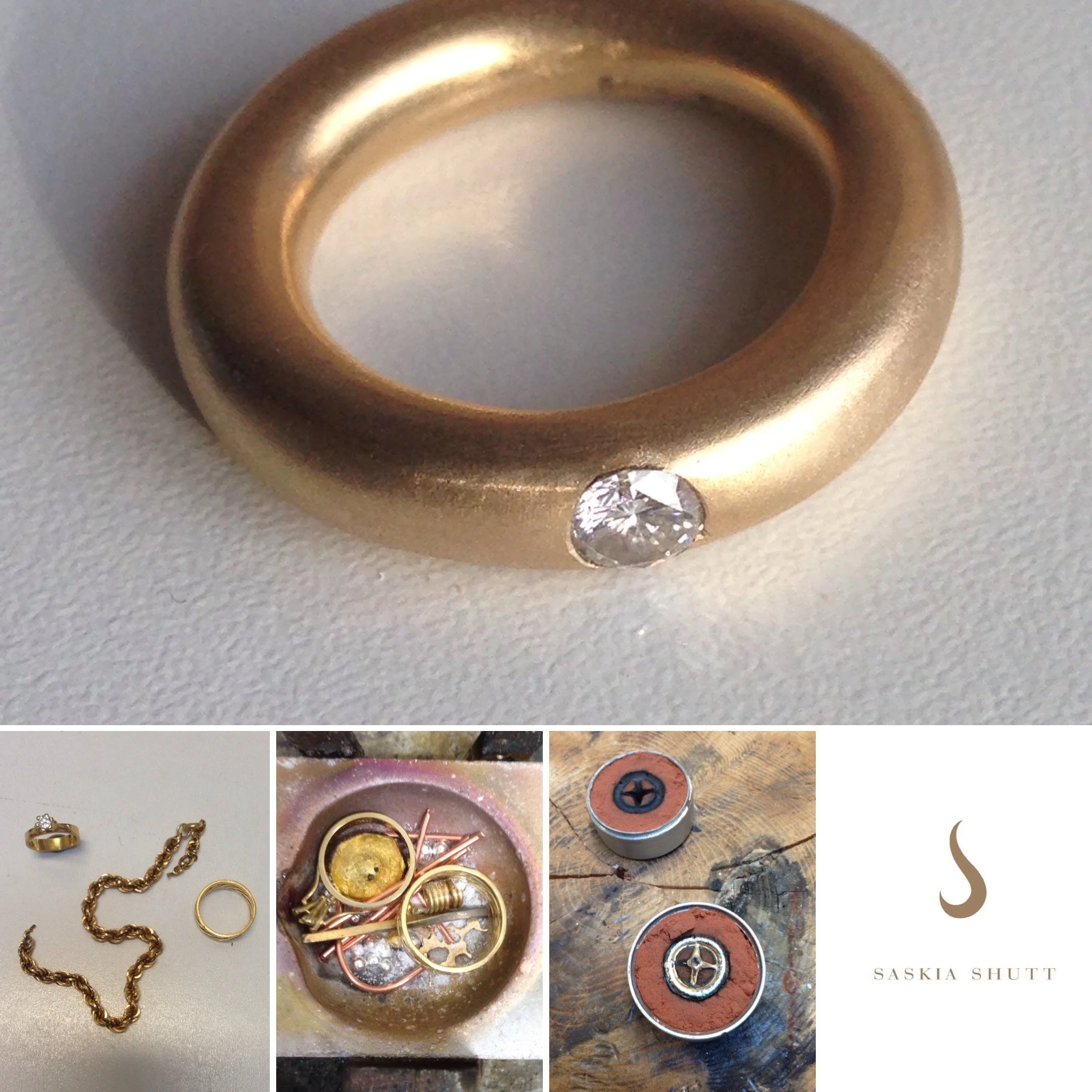
A “remodeled” diamond ring by Saskia Shutt. Photo courtesy of Saskia Shutt.
Personally, I believe recycled gold should only come from scrap metals. This means that the gold only comes from the medical, jewelry and technology industries where the gold has already been made into components and these components can be extracted from the broken and obsolete parts.

Graphic of Umicore’s recycled precious metals. Photo courtesy of Umicore Precious Metals Management website.
Point of Consideration #2: It Will Not Stop or Even Slow Down Gold Mining
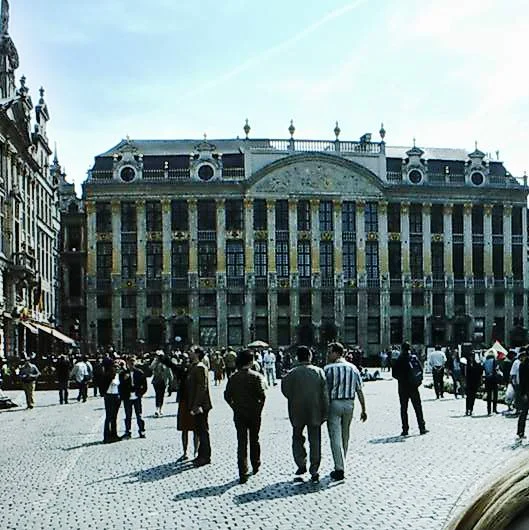
Le Grande Place in Brussels. Photo courtesy of Saskia Shutt.
Mining for gold is an activity which will always continue, as there is a constant demand for new gold since it is linked to currency and the stock market (Mark Pieth, “Gold Laundering” pgs 29-40).
I also had a discussion once about 10 years ago with a private banker, who told me that when an economic crisis is looming, he advises his clients to invest in gold, as it keeps its value and will even increase in value.
Outside of its link to currency, the demand for gold is high in not only the jewelry industry but also the banking, technology and medical industries. For example, gold can be mined, poured into an ingot and sold to a bank. Gold leaf is even used in the food and architecture industries — just look at La Grande Place in Brussels, built in the 12th century. All the buildings on the entire square are ornamented in gold leaf, which must be redone every so many years, as the gold leaf wears off due to the exposure to the elements.
Point of Consideration #3: The Origin of Recycled Gold
Just because gold is labeled “recycled” doesn’t mean its origin was free of conflict, that it was mined legally, or that the refiner has kept it separated from conflict gold throughout the refining process. (Source writer Christina Malle wrote another great piece that dives into all this even further, which you can read HERE.)
The value that gold holds makes illegal mining a lucrative business. Illegally mined gold can easily be added to the “recycled gold” supply due to lack of transparency about its origin, and thus “disappear” into the mainstream. The traceability of all gold needs to be far more rigorous in order to stop problematic conflict gold getting mixed in with the so-called recycled supply.
During the Fairmined Connect Day for European jewelers, that took place in Munich in February 2020, I was put into a small group with other jewelers to discuss the source of our precious metals. The discussion was concentrated on “Fairmined versus Recycled Gold” during which I had an interesting conversation with a German jeweler. She said that even 75 years after World War II there are jewelers in Germany who won’t use recycled gold, as its origins may be linked to the atrocities which occurred during that time. They have no way of knowing for sure, as the origin of recycled gold is not traceable. Although, she did not specify if this was a majority consensus or a minority who are of this opinion.
Having said this, in the aforementioned book “Gold Laundering” by Mark Pieth, it is revealed that during WWII the SNB (Swiss National Bank) purchased vast amounts of gold from not only Allied but also Axis countries. Germany was actually bankrupt in 1939 because it used all its pre-war gold to acquire arms. Since it had used up its gold reserves, the gold Germany sold to Switzerland during WWII came from its plundering of private homes, businesses and reserves from conquered countries. By the end of WWII it is estimated that Swiss banks bought 1.7 billion Swiss Francs worth of Nazi gold.
“The Swiss were the principal bankers and financial brokers of the Nazis, handling vast sums of gold and hard currency… Neutrality collided with morality; too often being neutral provided a pretext for avoiding moral considerations.” – Stuart Eizenstat, US attorney and diplomat who served as US Undersecretary of Commerce for International Trade.
That leaves me with the question, almost 80 years later: how much of this stolen gold is lying in our shop windows or hanging around our necks and fingers? It is horrifying that Nazi gold has been refined, turned into bullion bars, exchanged hands and refined all over again, all under the unassuming label “recycled gold.”
Point of Consideration #4: The Livelihoods of Artisanal Miners
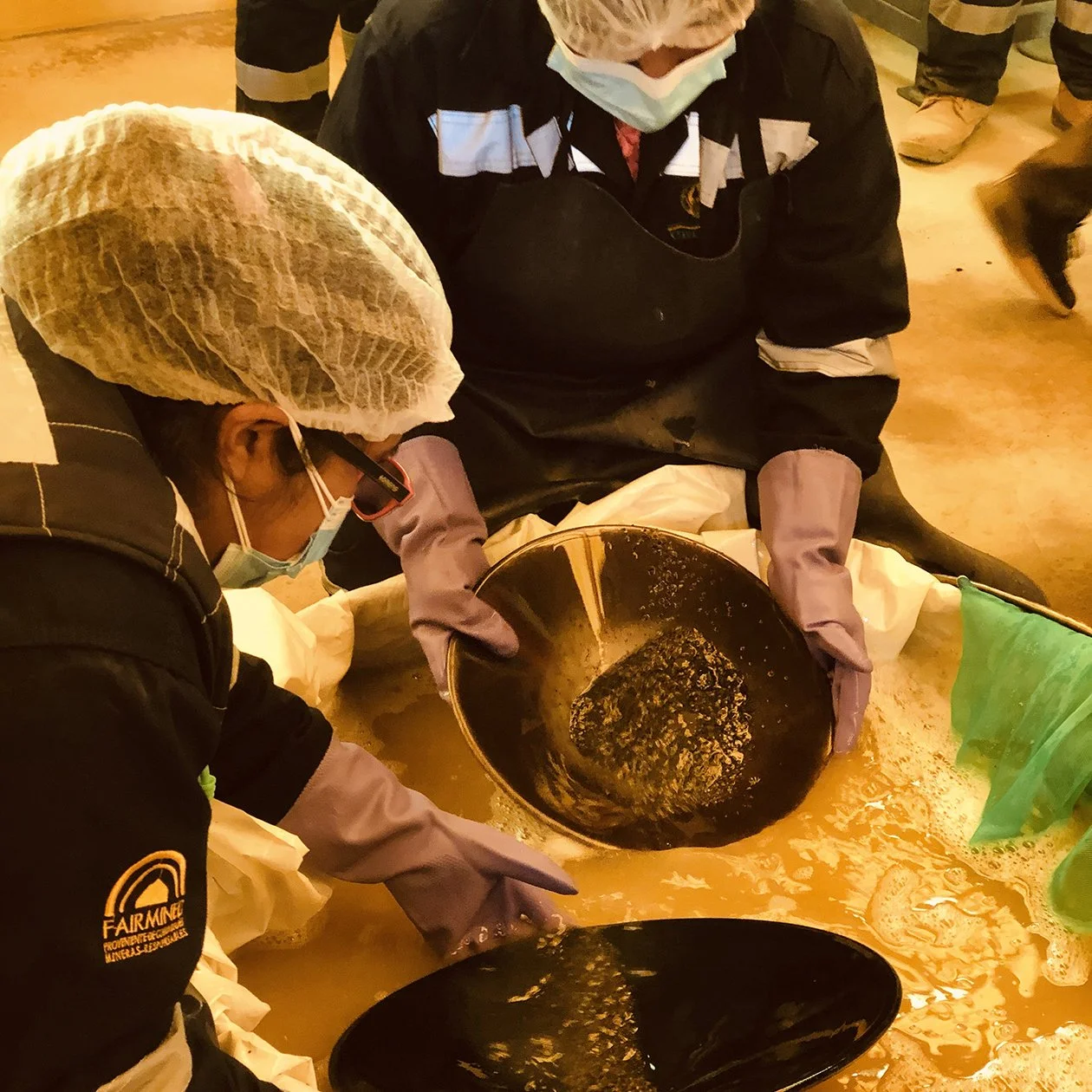
Women miners at CECOMIP in Peru separating Fairmined gold ore by panning. Photo courtesy of Saskia Shutt.
My last point about the “recycled gold” argument for you to consider is this: by focusing mostly on recycled gold as “sustainability” for the future, you risk putting 15 to 20 million artisanal small-scale miners out of work and destroying whole communities who depend on this line of income. Where is the sustainability in that?
By supporting the small-scale gold miners, we support their way of life and their communities. If we help and support them to mine more responsibly, i.e., like in the Fairmined eco gold mines in Peru, where their work practice is entirely circular, from water resources to the storing of the excavated earth, then we also hopefully encourage better practices for small-scale mining for future generations.
Stay tuned for my next article, which will focus more on why supporting artisanal and small-scale miners is imperative, as well as document my own visit to a Fairmined mine in Peru.
“We are a small team of passionate jewelry industry professionals and writers. We’d appreciate your support to grow our team and continue to be able to provide the best responsible jewelry content for years to come!”



Chloe interviewed Jessica Hudson of The Nomad Jeweler on her latest collection that features ASM Colombian gold and Tahitian Kamoka pearls. Read the full article to learn more about Jessica’s story and why she chose to design with traceable artisanal gold and sustainable pearls.