

Blood Diamonds of Russia


The Source received this statement from Vladimir Tatarintsev, PhD in Geology and Mineralogy at the State Gemmological Center of Ukraine. EM is not affiliated with the Gemological Center of Ukraine. The statement below is entirely Mr. Tatarinsev’s.
EM was one of many signatories to the open letter from the jewelry industry stating opposition to Russia's invasion of Ukraine as well as buying Russian gold that has evaded sanctions. We felt that it is important to post Mr. Tatarintsev’s perspective on the brutal invasion of Ukraine and how it relates directly to the diamond and jewelry trade.

Chloe Beaumont, Editor-in-Chief of The Source.
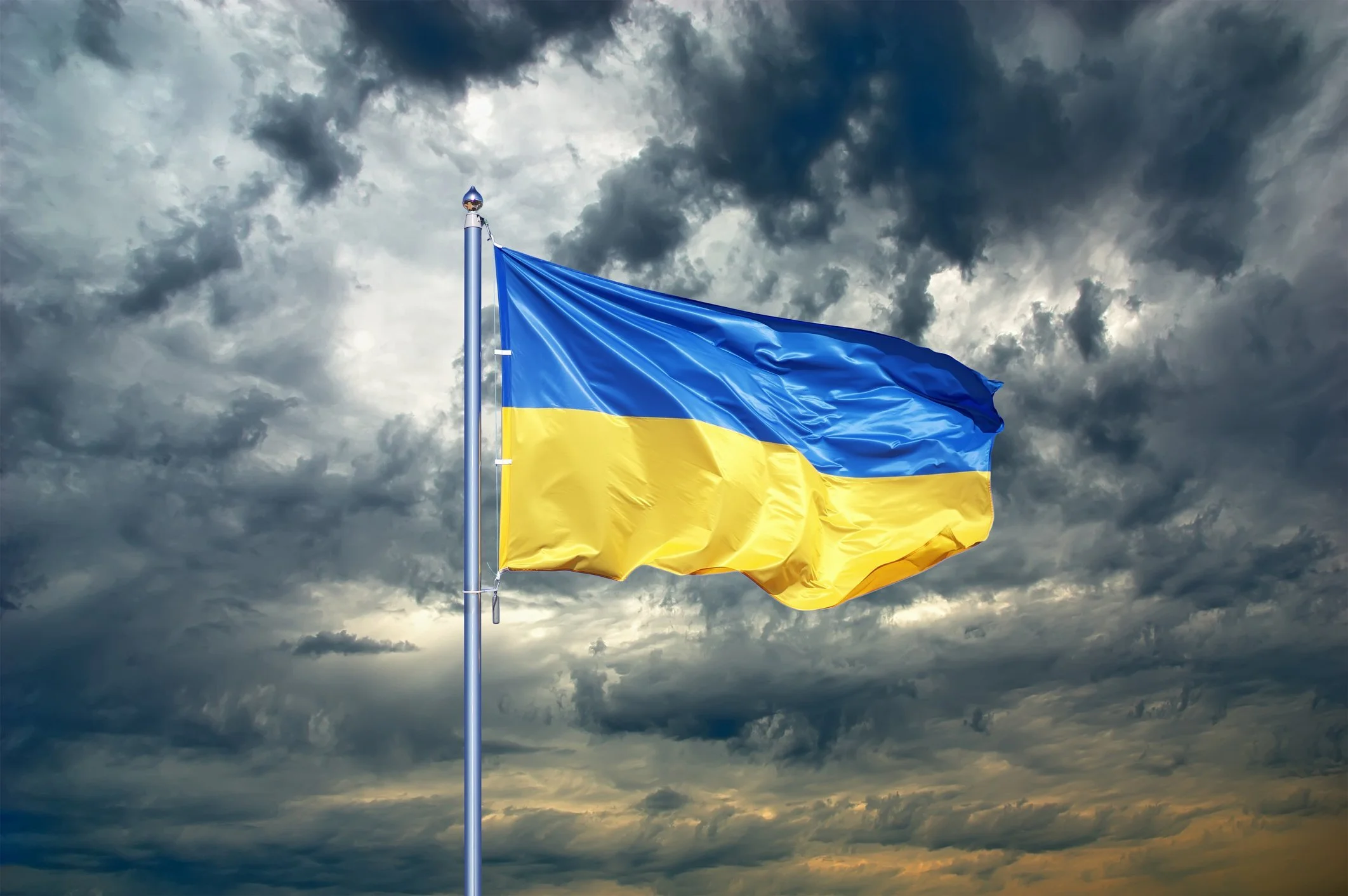
Ukrainian flag with storm clouds. Photo courtesy of Silent-GOS/iStock Photo.
In a recent report by Mr. Hans Merket, a Researcher at Belgian-based research institute IPIS, "Russian diamonds and the war in Ukraine," the idea is clearly conveyed that the Kimberley Process (KP) does not in any way prevent the global spread of blood diamonds related to the financing of an unprovoked, unjustified, cynical war unleashed by Russia’s atrocious leader Putin. In just a month, with extraordinary cruelty, Russian soldiers killed thousands of innocent unarmed civilians of Ukraine, including hundreds of children, and completely destroyed many cities (Bucha, Irpin, Mariupol, etc.) rendering them uninhabitable.
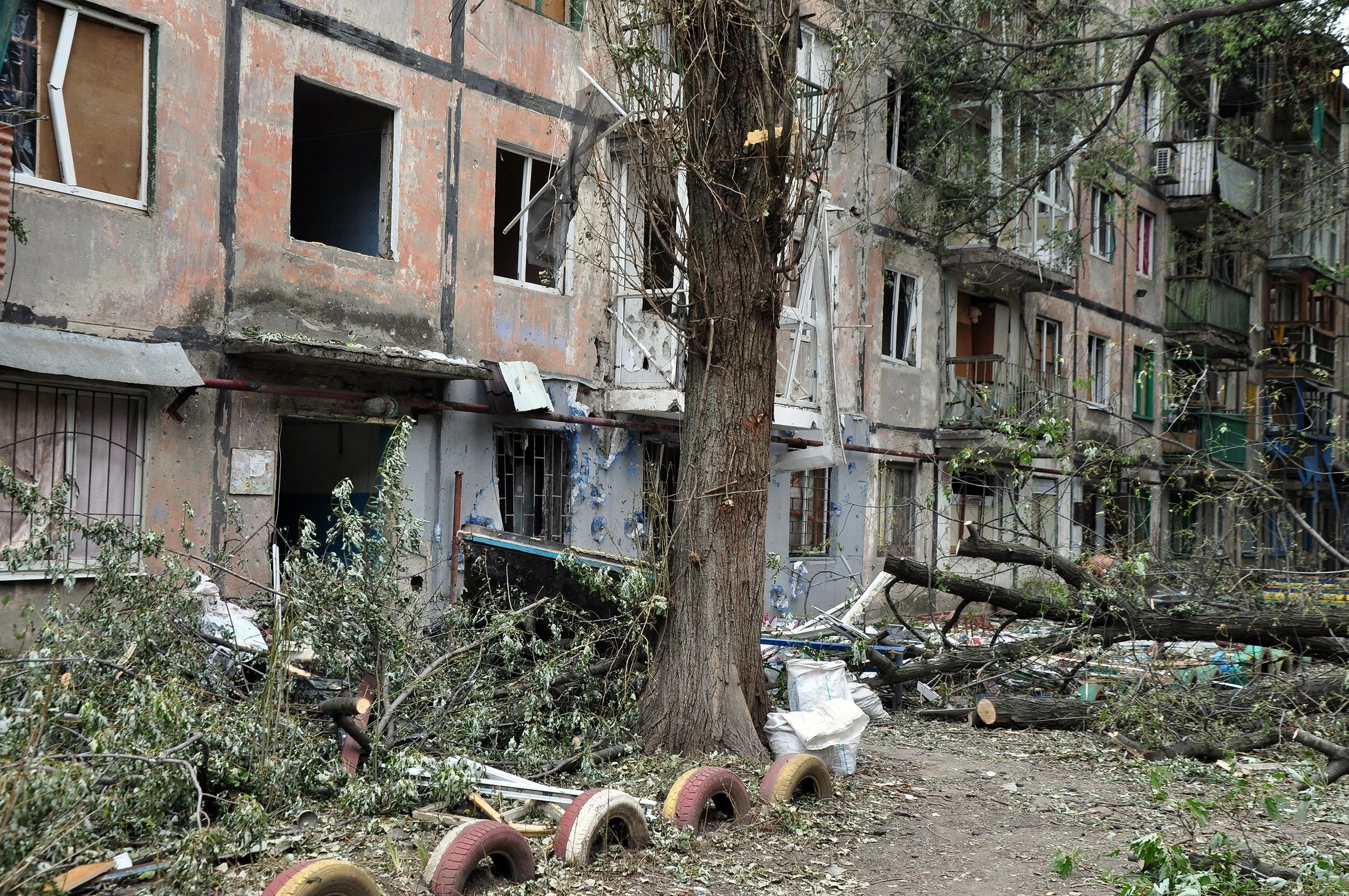
Residential area in Donetsk region, Ukraine. Photo courtesy evgovorov/iStock Photo.
In order to hide their atrocities from the public, they quickly bury hundreds of people in mass graves, burn corpses in mobile crematorium vehicles and blatantly lie that all these atrocities are the work of Ukrainian nationalists. A special height of cynicism is the government document of the Russian Federation, the decree of President Putin to award the military brigade that fought in Bucha in March 2022 with the honorary title of "Guards" for "Mass heroism and courage, fortitude and courage shown by the personnel of the brigade in combat operations to protect the Fatherland and state interests in armed conflicts.” The genocide of Ukrainians, massacres of unarmed people, children, rape of women are called heroism and courage by Putin.
IPIS’ review reliably shows that Russian diamonds, which are mined by the world's largest diamond producer, the partially Russian state-owned company ALROSA, are participating in the financing of the war. At the same time, the Kimberley Process (KP) based on its narrowly defined framework and mission, sees no reason to consider these diamonds as "conflict diamonds" and to stop Russia's membership in this organization, whose proclaimed goals are the maintenance of peace and sustainable development.
Strikingly, Russia to date even continues to chair two of the main KP working Committees that could take action on this matter - the Committee on Participation and Chairmanship (CPC) and the Committee on Rules and Procedures (CRP). The civil society observer to the KP, the KP Civil Society Coalition, has called to convene an Extraordinary Special Session dedicated to the financing of Russia's war against Ukraine. Ukraine supports this call. However, all decisions in the KP are made by consensus, and even just the organization of a meeting to simply discuss the matter can be easily blocked by any member who is opposed to it. It is not difficult to guess who that participant would be.
Currently, the United States, the United Kingdom, Canada, New Zealand and the Bahamas have adopted sanctions against ALROSA. Many loopholes remain in the absence of international coordination. First, the sanctions apply only to rough diamonds. And when they are cut in third countries, for example, in India, where about 93% of all diamonds mined in the world are polished, they no longer fall under sanctions and freely enter the market.
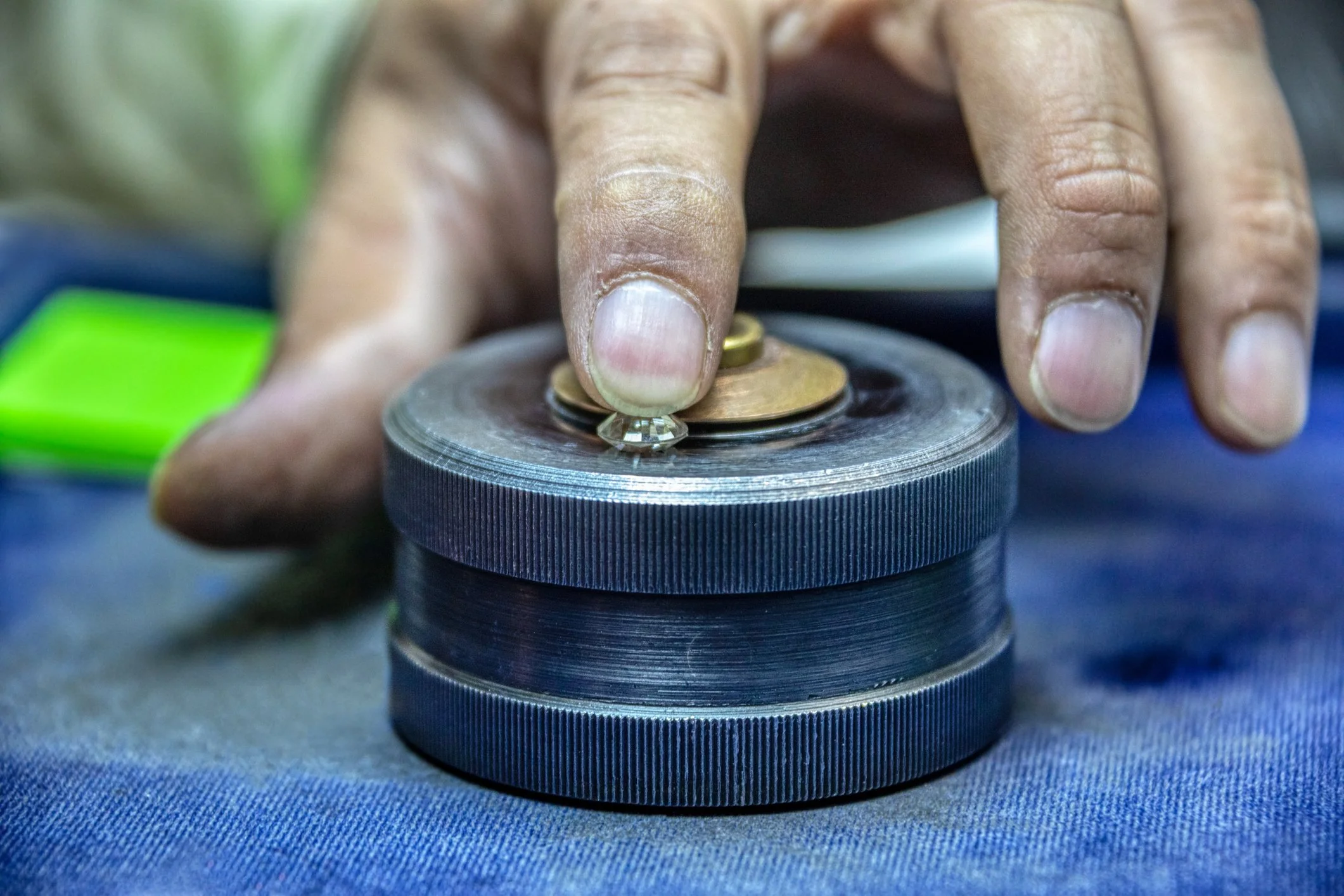
Indian man polishing a diamond. Photo courtesy of Poco-iStockPhoto.
Secondly, Russia is negotiating with a number of countries to sell rough diamonds not for US dollars, but for other currencies, for example, euros, as was done recently with India or use direct rupee-ruble payments as a mechanism to circumvent SWIFT banking restrictions.
IPIS’ report notes that in recent years there has been an increasing focus on tracing the source of diamonds in the market. This is facilitated by the rapidly developing diamond blockchain technology (tracing diamond's movement from the place of their mining to the final consumer in the form of polished diamonds), which was implemented by such well-known companies as De Beers, the World Diamond Council (WDC), the Gemological Institute of America (GIA), the Antwerp World Diamond Center (AWDC), the Swiss Gübelin Gem Lab, and some other diamond mining and gemological organizations of the world.
It would make sense for such companies and labs to make efforts to help distinguish and cut off diamonds of Russian origin from the global trade, as well as to conduct outreach to customers of diamond jewelry not to buy polished diamonds that could be linked to the financing of the war and the killing of people in Ukraine. The best way to do this is to only buy diamond jewelry that has documented origin, proving that it was mined in accordance with the rules of the KP, and not in Russia. Ironically, the Russian company ALROSA itself implemented the diamond blockchain technology right after De Beers.
It is clear that a ban on the trade in Russian diamonds may endanger many Indian and Belgian jobs in the diamond trading and polishing industry in the short-term, but let's take into account the words of Ukrainian President Zelensky during a video link speech in the Belgian Federal Parliament that "Peace is worth much more than diamonds". Moreover, these efforts to improve transparency and traceability in the diamond and jewelry industry will make this a much stronger business and will produce significant benefits for the sector as a whole in the longer term.
I would like to believe that the majority of consumers who wear diamond jewelry do care that the diamonds they cherish do not contain the blood of Ukrainian citizens killed and tortured by Russian soldiers.
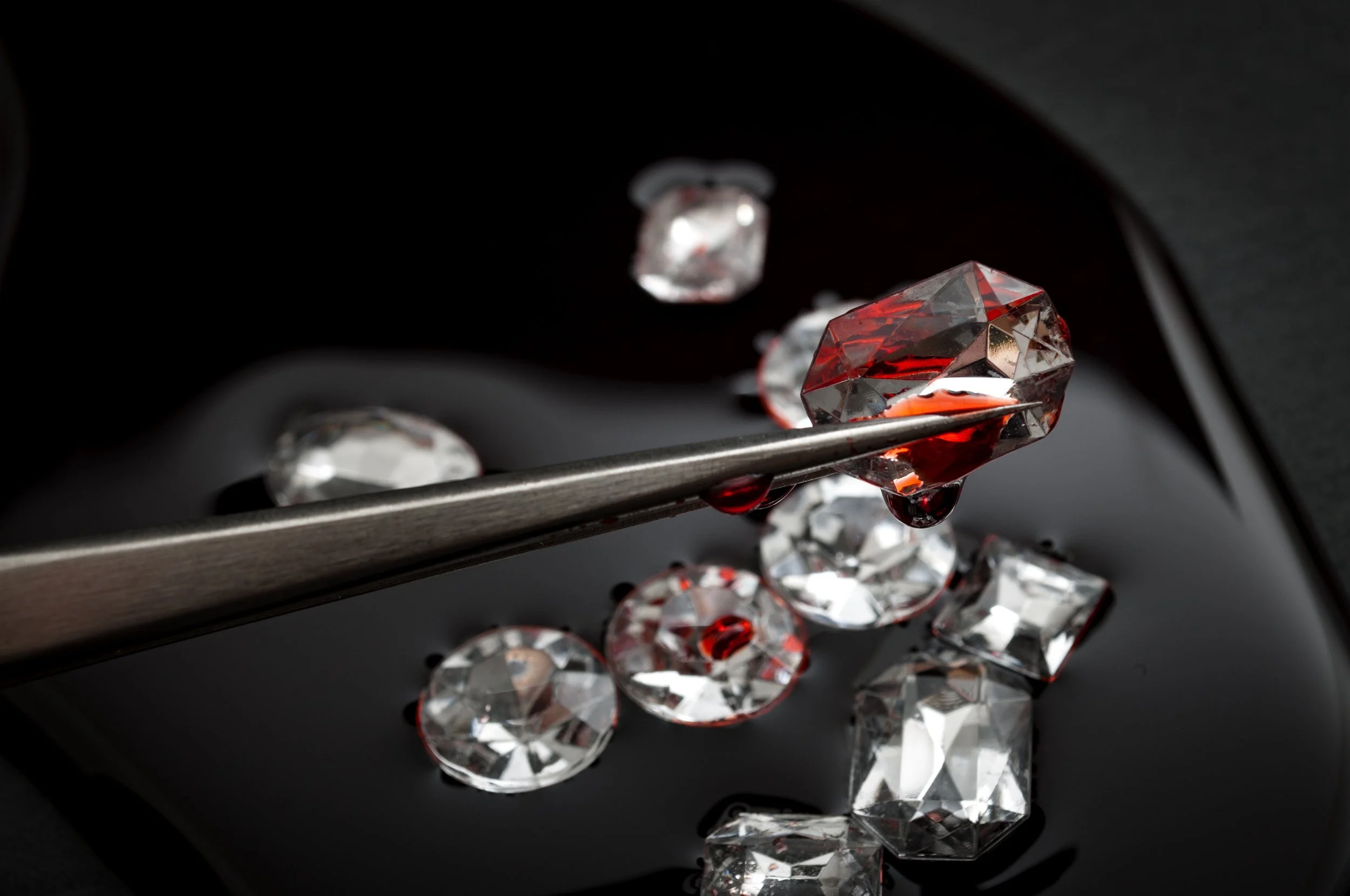
Blood Diamonds. Photo courtesy of Moussa81-iStock Photo.
Addendum July 1st, 2022
The last Intersessional meeting of the Kimberley Process-participants, held on June 20-24, 2022 in Kasane (Botswana), further deepened the idea that the Kimberley Process is currently not capable of preventing the global distribution of blood diamonds.
Ukraine proposed two amendments to the Kimberley Process Core Document to widen the definition of "conflict diamonds" to include government actors, and to allow Kimberley Process countries, by a majority vote, to expel a country that infringes on another Kimberley Process member's sovereignty.
The procedure for depriving a country of membership in the Kimberley Process is not provided for in any document related to the activities of this body. At the same time, a country can only be a member of the Kimberley Process if it proves that it meets the minimum requirements of the Kimberley Process Certification Scheme (KPCS). KPCS was approved by the Interlaken Declaration of Ministers and other heads of delegations of 38 countries (including the Russian Federation) dated November 5, 2002.
The preamble to the KPCS contains the program principles on which the adoption of this document is based. In particular, in the last paragraph of the preamble, it is clearly stated that the Participants recommend adopting the provisions of the KPCS "Acknowledging that state sovereignty should be fully respected and the principles of equality, mutual benefits and consensus should be adhered". In practice, the Russian Federation and Belarus do not adhere to these principles, carry out aggression against Ukraine, violate the state sovereignty of Ukraine and, therefore, do not meet the requirements of the KPCS. They should be excluded from the KP.
This thesis was supported by the Observer of the KP Civil Society Coalition (KPCSC), the European Union, Australia, Great Britain, Canada, Japan, Switzerland and the USA, but consideration of this issue was blocked by Russia, Belarus, the Central African Republic, Kyrgyzstan and Mali. The KPCSC criticized the KP for being "silent" about the invasion in Ukraine. In the closing speech of the meeting, the KPCSC coordinator said the Kimberley Process ship was "rudderless, or actually sinking".
At the Kimberley Process meeting Ukrainian's ambassador to Botswana Lyubov Abravitova said: "The Russian diamonds fund the war in our country.” Additionally, the European Commission's Marika Lautso-Mousnier stated, "Inaction would undermine the credibility and integrity of the Kimberley Process not only as a conflict prevention mechanism but also as a trade regulation mechanism," in her letter.
After challenging Source articles, we like to suggest action steps for our readers to take. It’s easy to be overwhelmed, but if we funnel our emotions into change, we truly can make a positive impact.

~Editor-in-Chief
A Few Jewelry-Related Actions You Can Take:
Support diamond mining communities outside of Russia. The more these communities are strengthened, not only will they immediately benefit, but the global diamond trade will be less and less reliant on its connections to Russia.
Stop calling diamonds “conflict-free” unless you know for a fact (and can prove it) that not even the smallest amount of harm took place in the communities that mined or cut that stone. The term originated from the Kimberley Process, which Mr. Tatarintsev and many others in the industry have shown is pretty much useless at this point. The term is misleading for industry members and consumers, because the KP is not what makes a diamond conflict-free, and because the word “conflict” implies any form of harm, not the extremely narrow definition set by the KP (violence by rebels working to overthrow a government). There are multiple examples of harm occurring in communities affected by large-scale diamond mines in countries that are active KP members. Simply put: the term “conflict-free” doesn’t mean what the average consumer may assume it means–and it does no one any good to have two “conflict-free” terms in the same industry that mean entirely different things.
Continue to educate yourself around diamond issues, and be conscientious about the diamonds that you use in your designs or sell in your store. The KP Civil Society, Rapaport and JCK are just a few of the organizations with loads of information and articles on this topic.
Join EM’s Action Coalition, where we tackle the real-world problems facing our industry. Current initiatives include a consumer-facing project to promote responsible ASGM (artisanal and small-scale gold mining), and an industry-wide survey of responsible sourcing practices. New ideas and projects are ALWAYS welcome.
Something we rarely talk about to the extent that it is almost taboo is what happens with a break-in, burglary or even a hold-up: How do we deal with the aftermath?