

Beyond Emissions Reduction: Climate Change and Mining


The Source Team has decided to repost this report because we want our readers to be aware of the further steps mining companies can/should be taking to fight climate change. If you’ve not read Christina’s post on calculating your climate footprint, do so here. If you have, this is the perfect follow up report.
This report was originally published here by the Responsible Mining Foundation in December 2021. The Source Team received written permission to repost this report and the images. A citation bibliography for this report can be found at the bottom of the original link.

Chloe Beaumont EDITOR-IN-CHIEF
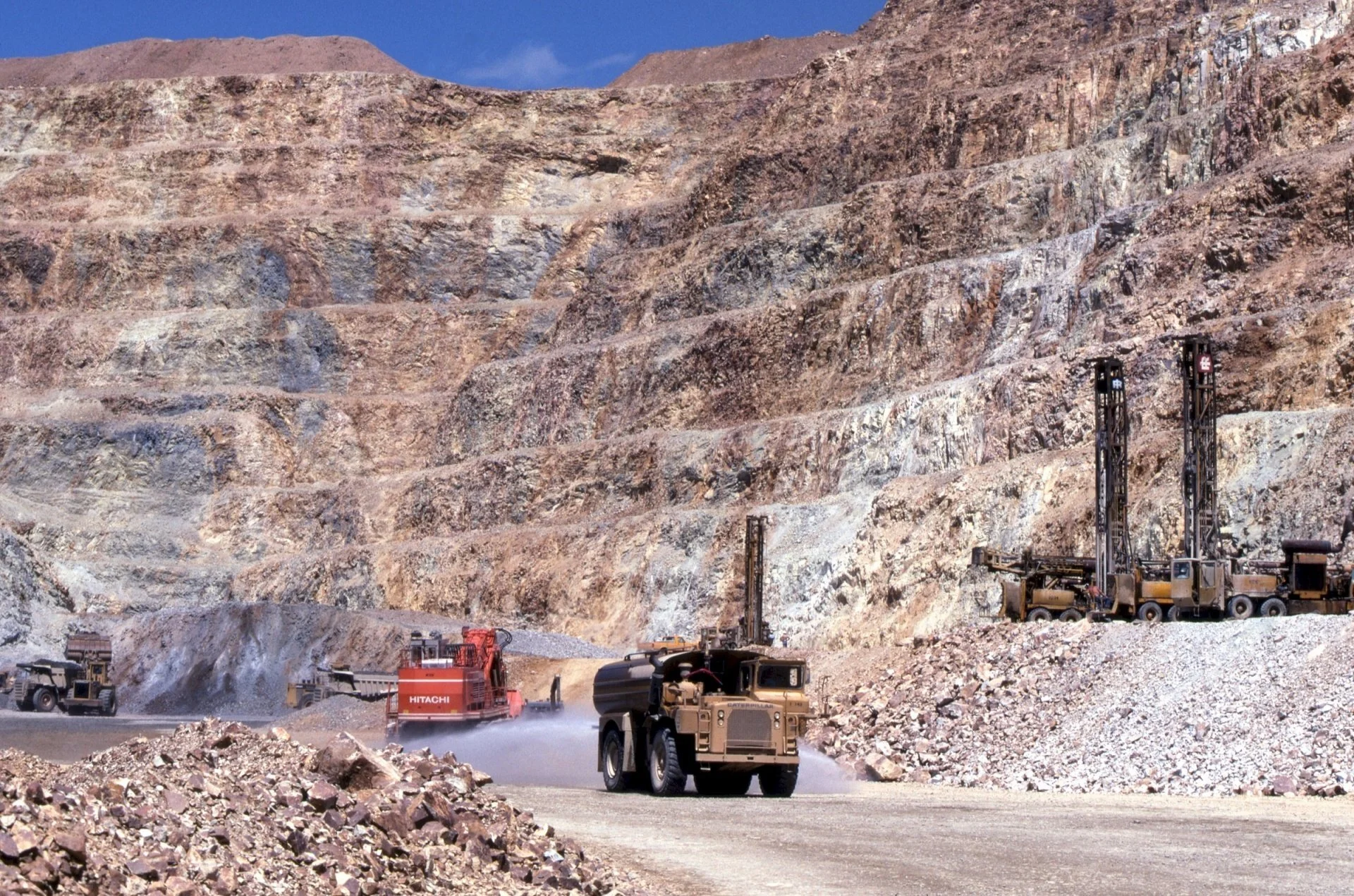
Open pit mining. Photo courtesy of Public Domain Pictures.
Climate Change and Mining
Commendable and important as mining companies’ commitments to become carbon-neutral are, emissions reduction is only one element of a responsible response to climate change. Conspicuously missing from current efforts is action to assess and address climate-related risks on people and environments impacted by mining – essential for a just transition.
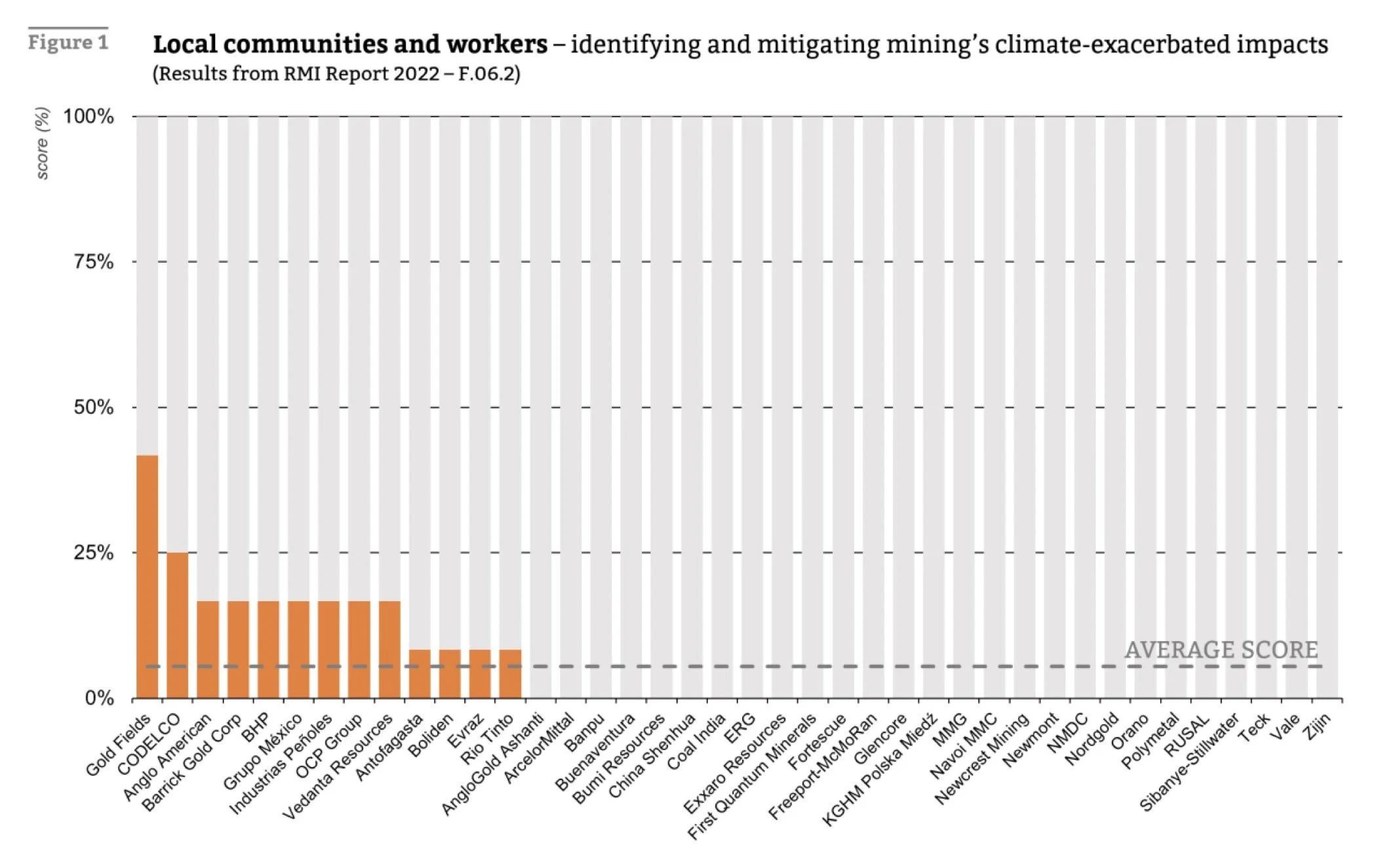
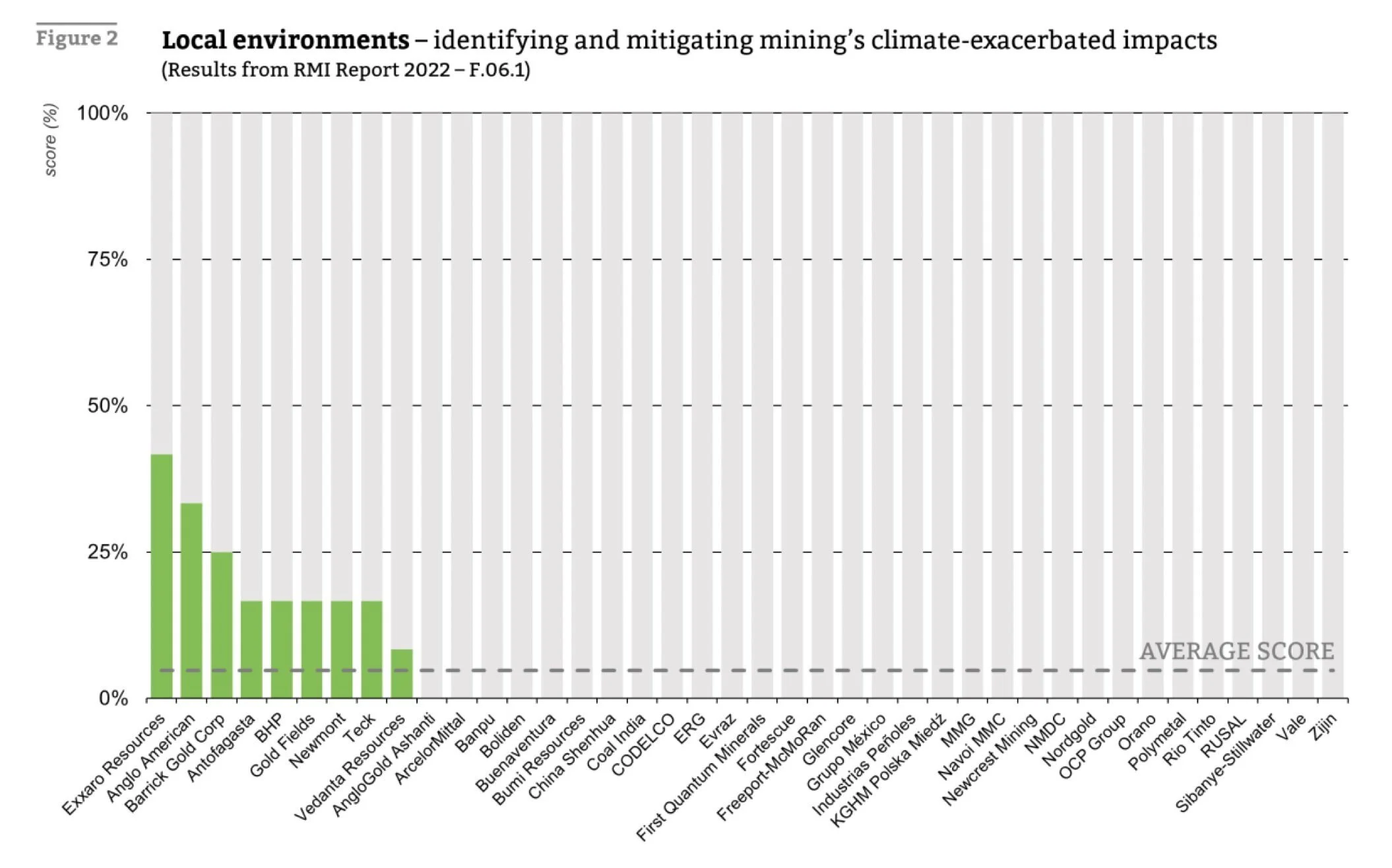
Recent research by RMF (Responsible Mining Foundation) reveals that the majority of assessed large mining companies cannot demonstrate they have considered how climate change may exacerbate the impacts of their operations on communities, workers and the environment.
Climate change is already aggravating mining-related risks to water, biodiversity, forests and health, and these are expected to worsen without adequate responses by the companies concerned.
Beyond emissions reduction
The conclusion of the Intergovernmental Panel on Climate Change leaves very little room for doubt: “The continued growth of atmospheric CO2 concentrations over the industrial era is unequivocally due to emissions from human activities.” 1 Faced with this situation, huge efforts at the international and national levels have been made to limit human-induced greenhouse gas (GHG) emissions – most recently at the 26th UN Climate Change Conference of the Parties (COP26). Installation of renewable energy technologies – based on solar, wind, geothermal, and hydro power – is being ramped up as part of emissions reduction strategies.
Mining companies and financiers have put emissions reduction at the heart of their materiality analysis and ‘climate-smart’ action plans, and many companies are rolling out plans to switch to renewable energy sources. Emissions reduction is a critical issue for the mining sector, and the recent commitment by members of the International Council on Mining and Metals (ICMM) to a goal of net zero Scope 1 and 2 emissions by 2050 or sooner is very much welcomed. Yet emissions reduction is only one element to ensure a just transition and a responsible response to climate change by the mining industry.
In the context of the Paris Climate Agreement, it is important to consider fully the impacts and the externalized costs of mining activities now and for future generations. While primary extraction of certain raw materials remains necessary to support economic development and achievement of the SDGs, it is essential to acknowledge how changes in climate can exacerbate the existing mining-related risks and impacts on ecosystems, local communities, and workers.
Manifestations of climate change such as shifts in precipitation patterns, increased frequency of extreme weather events, higher temperatures and sea-level rise adversely affect working and living conditions, and aggravate many of the impacts of mining. The UN Working Group on Business and Human Rights has warned that the impacts of climate change on energy, food, water and health is putting increasing populations at risk of poverty and conflict, forcing them into migration. 2
Although human-induced greenhouse gas emissions are the main reason behind the huge changes in the world’s climate system, working solely on the reduction of these emissions leaves local impacts and risks unaddressed.
Addressing local impacts on people and environments
Recent research by RMF reveals that the majority of assessed large-scale mining companies have not identified and disclosed how climate change may exacerbate their impacts on communities, workers or the environment. (see Figures 1 and 2).
These weak performances contrast with the much stronger results on companies tracking and reducing their GHG emissions (see Figure 3).
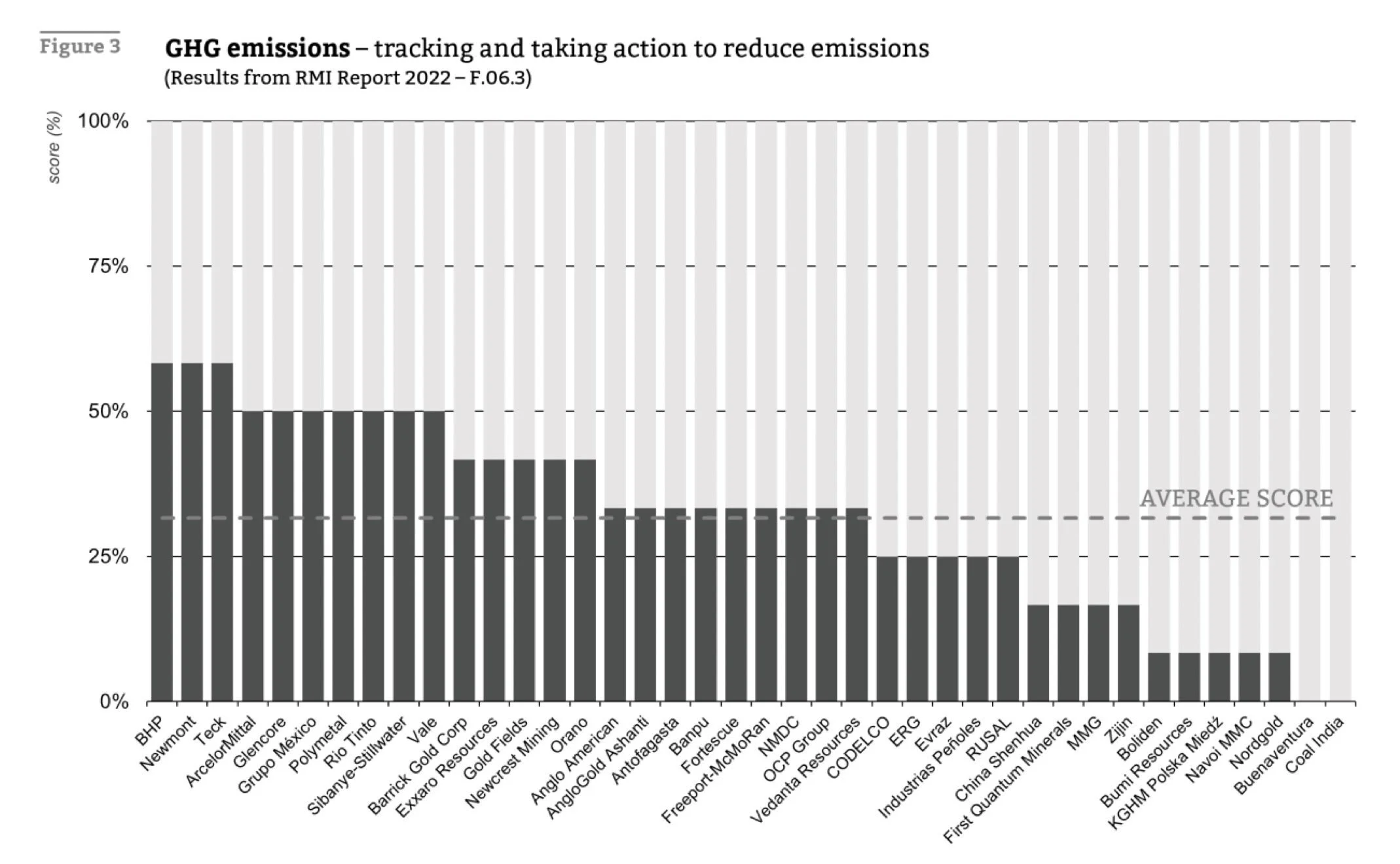
This disparity suggests that companies may be paying more attention to the demands of investors and financiers – increasingly concerned about financial and reputational risks to companies – than they do to the salient risks to people and environments. The growing alignment of companies’ reporting of climate risks with the Task Force on Climate-Related Financial Disclosures (TCFD) reinforces this trend as the TCFD disclosure recommendations make no mention of risks to local communities or environments.
Leading practice
Gold Fields is one of the few companies that demonstrates a broader perspective in its climate risk analysis. The company’s 2020 Climate Change report mentions risks not only to its business but also to local communities and workers, citing for example increased vulnerability to disease and water insecurity. The CEO has publicly stated that “A key consideration for all our future strategies will be to address the impact of the rapidly changing climate on our business, our employees, our host communities and the natural environment in which we operate.
Managing water as a common good
Mining often takes place in water-stressed areas, particularly in Latin America and the Caribbean4, and conflicts over water use by mining companies have already led to major disruptions to operations.
While climate change can adversely affect both water quality and quantity, companies have a direct interest and responsibility to reduce their adverse impacts on the water available for local communities and other water users.
On the whole, mining companies’ approaches to water management show a similar trend to how they address broader climate change, with a strong focus on operational considerations and much less attention to the salient impacts that mining operations have on water quality and availability at the local level. This reflects current reporting frameworks on water, such as the ones from the ICMM, GRI or CDP, which say very little on water quality, focusing almost exclusively on water quantity.5
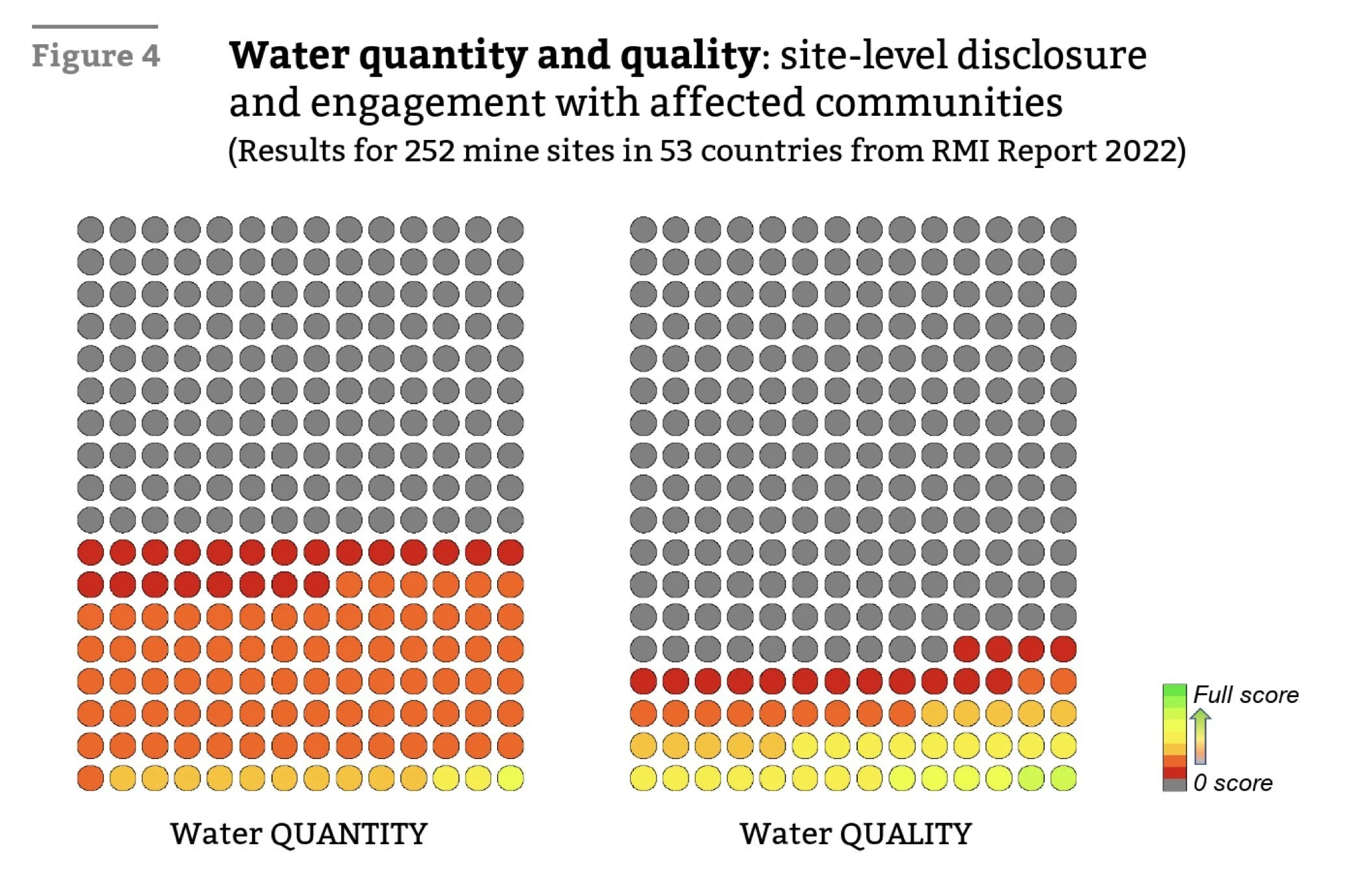
Water consumption is a clearly material issue for companies, particularly as mining often occurs in areas with limited water resources. In contrast, the quality of water downstream of their operations, beyond compliance concerns, is of little material importance to the companies’ operations. RMF research, based on public domain data, shows that while companies score an average 28% on tracking and working to reduce their water consumption, they score an average of only 8% on tracking and taking measures to reduce their adverse impacts on water quality downstream of their operations. A similar picture emerges at mine-site level. Of the 252 mine sites assessed, 140 sites show no evidence of disclosing data on water quantity or engaging with local communities on this issue, and some 192 sites show no evidence of these actions related to water quality (see Figure 4).
More generally, these weak results on water disclosure contrast with industry standards on water stewardship which promote proactive and inclusive engagement with other water users to manage water risks and support equitable access.6
Leading practice
AngloGold Ashanti provides detailed water quality data for several of its mine sites. The company’s Cuiaba mine complex in Brazil publicly discloses monthly readings of specific pollutants in water bodies in and around the mining areas, showing clearly where levels exceeded regulatory limits. Similarly, the company’s Geita mine in Tanzania publishes detailed results of its water quality monitoring programme, which covers 44 surface water, 30 wastewater and 50 groundwater sampling locations in and around the mining concession.
Addressing heightened risks from tailings
There is strong evidence that climate change is exacerbating the risk of tailings dam failures. An evaluation of 218 tailings dam failures between 1910 and 2010 identified unusually heavy rainfall as a frequent factor.7 In addition, the influence of this factor was seen to increase over time: before 2000, it was associated with 25% of the failures; after 2000, the frequency rose to 40%. Heavy rain has been implicated in 25% of global and 35% of European tailings dam failures.8
The frequency and severity of catastrophic dam failures is predicted to increase if nothing changes.9 And in most areas around the globe, extreme rainfall events have intensified as the climate has warmed.
Despite these increasing risks, mining companies show very mixed results on ensuring effective management of their TSF (tailings storage facilities) risks. RMF’s research reveals that only a handful of companies show evidence of having conducted third-party audits or reviews on the effectiveness of the measures they have taken to address potential risks related to its tailings facilities, including seepage and tailings dam failure.
Leading practice
Glencore is implementing a satellite monitoring program for more than half of its TSFs, prioritizing those with the most severe consequences expected in case of failure. The satellite monitoring measures the TSFs’ surface movements every 11 days. The results are made available for rapid decision-making in the event of unexpected movements and for independent oversight by auditors of TSF safety.
Mitigating biodiversity impacts
Forests, essential resources in fighting climate change, are particularly at risk from mining, which is often a major driver of tropical and subtropical deforestation, according to the World Bank. 10 Yet RMF’s research reveals generally weak results on biodiversity and land-use management regardless of climate change considerations.
Generally, companies’ disclosures on biodiversity management are limited to information on their land rehabilitation measures. Fewer companies provide information on wider biodiversity conservation measures they have put in place during their operations (see Figure 5).
And the lack of post-closure management and landscape restoration that integrate land-use opportunities can generate long-lasting impacts for the local environment and for communities that depend on natural resources.

Protecting Community Health
Climate change has potentially wide-ranging impacts on human health, such as by extending the range of disease-carrying insects, increasing the likelihood of malnutrition due to crop failures, or causing more diseases linked to poor air quality. While Covid-19 continues to disrupt many regions of the world, experts have pointed out that many of the root causes of climate change also increase the risk of pandemics.11
At the same time, mining activities may impact community health in various ways. Adverse health effects may result from exposure to, for example, contaminants in air, water or soil, noise from mining operations, or environmental degradation.
It is common practice in the mining sector to report on the positive contribution and support provided to the local and national health sector in producing countries. Whether through the training of personnel, the building of hospitals and facilities, or campaigns for the prevention of HIV/AIDS and other transmittable diseases, there are many examples of good corporate practice.
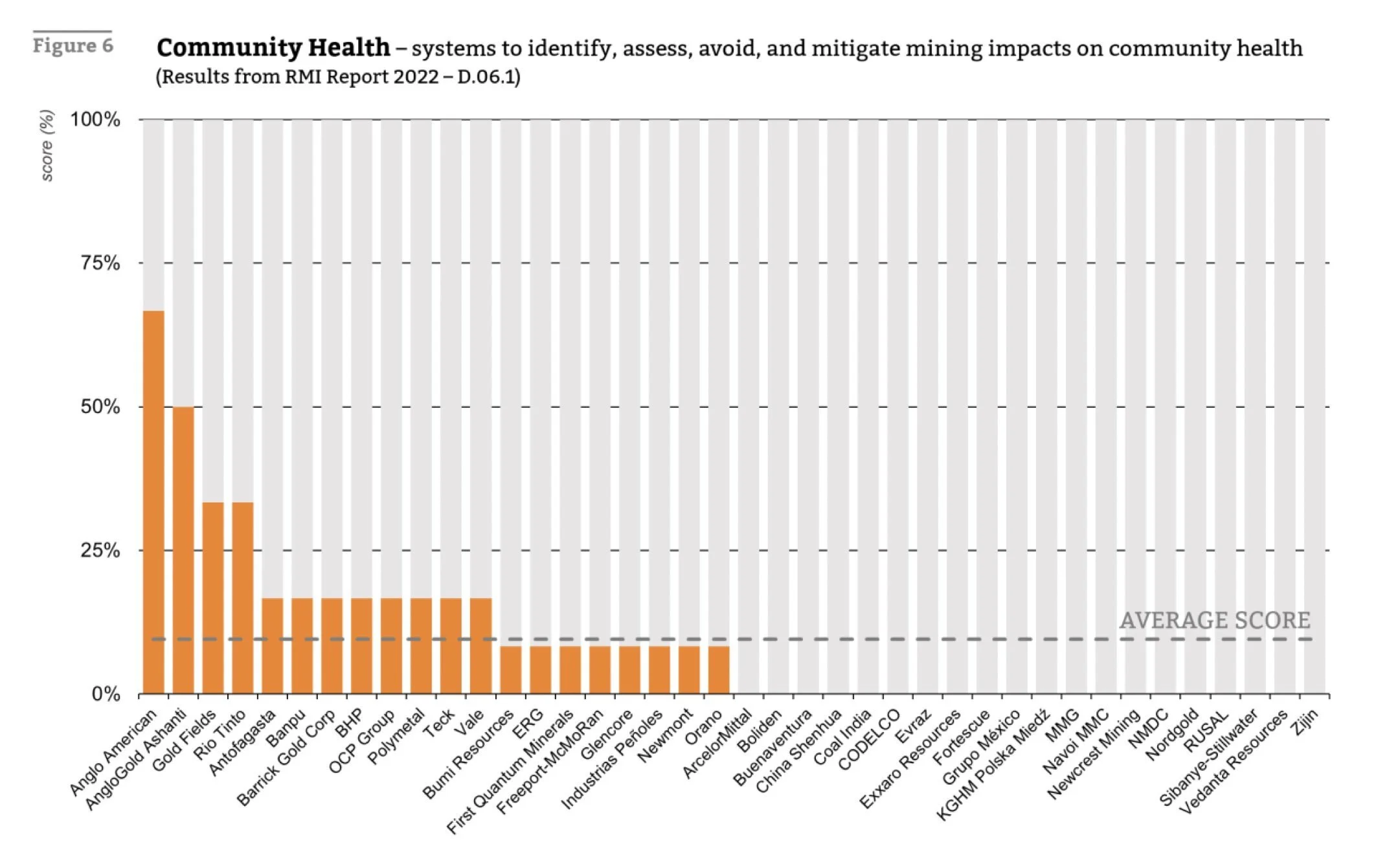
However, RMF’s research shows a generalized lack of attention by companies to the impacts that mining operations can cause on local communities’ health. In fact, less than half of the assessed companies can demonstrate they are assessing their impacts on community health and developing plans to address these impacts. For those companies that do provide evidence of health impact assessment, this relates mostly to brief mentions of such impacts within Human Rights Impact Assessments or Environmental and Social Impact Assessments, often not updated regularly. And no company provides evidence of tracking the implementation of plans to address these impacts (see Figure 6).
Leading practice
Anglo American’s Social Way Toolkit (updated in 2020) requires all operations to conduct Health Impact Assessments (HIA). It defines a HIA as a combination of procedures, methods and tools that systematically assess the (potential) impacts of site activities on the health of a population, the distribution of impacts within the population, and appropriate actions to manage such impacts. Where potential and/or actual -related impacts and risks are significant, it requires sites to develop a Management Plan to continuously manage and monitor impacts.
Looking ahead
Mining and climate are closely interconnected. The sector is a significant contributor to global greenhouse gas emissions, particularly when Scope 3 emissions are taken into account.12 At the same time, and in the absence of efficient recycling value chains and real circular economy models, it is clear that the energy transition will create additional demand for metals and minerals.13 Many mining companies are positioning themselves to take advantage of this opportunity, though appealing appellations like ‘green mining’ and ‘future- facing industry’ obscure the socio-environmental challenges that mining still faces as an industry.
There is a real risk of ‘carbon-washing’ if companies’ rebranding is underpinned only by the current limited action on climate impacts – i.e., if companies’ climate action stops at going low-carbon on site while leaving other urgent climate-related impacts unaddressed. To defuse this risk and deliver a positive contribution, companies, financiers, insurers, and governments must ensure that mining’s climate-related (and climate-exacerbated) impacts are identified, assessed and addressed. There is much work to do as RMF’s research suggests that little progress has been made on most climate-related mining impacts over recent years.
More encouragingly, RMF has identified some leading practices that illustrate how large mining companies can play a meaningful role in managing their climate-related impacts. These leading practices are already in place at some sites and can be mainstreamed and normalized across the industry.
Mining companies can show more leadership in how they tackle climate change beyond those impacts that affect their own businesses and operations. Action on the ground at mine- site level, where mining and climate impacts intersect, is essential for the wellbeing of local people and the health of local environments – as well as the stability of the socio-economic context of the mining operations themselves.
NOTE: A citation bibliography for this report can be found at the bottom of the report via the original link.



What do beekeeping and fish ponds have to do with diamond mining?