

The Launch of Moyo Gems: Kenya
The content of this article is the opinion of the writer and was written for The Source. *Please Note: Monica Stephenson is the 2022 President of Ethical Metalsmiths.
How do I even begin to describe what was one of the most impactful trips of my life?
I didn’t believe it was actually happening until the jet wheels touched down in Nairobi. Something about the endless getting-hopes-up-only-to-be-disappointed Covid era has made me more reserved with my excitement about trips.
Suddenly, Monica Stephenson and I were in a completely different part of the world with a big goal: to be part of the launch of Moyo Gems in Kenya.
For those that are not familiar with Moyo Gems, it’s a miner-to-market international gemstone collaboration that began in 2019 and has seen massive success since then. Moyo Gems has been featured by publishers such as National Jeweler, British Vogue, and Forbes, just to name a few.
It was co-designed directly with the women of TAWOMA (Tanzanian Women Miners Association), although there have always been male ally members in both TAWOMA and the Moyo program. Currently, 60% of Moyo Gems miners are women, with the intent to keep it that way. Since the program was designed to include male miners as well as brokers, the women have not seen retaliation. In fact, entire villages are being uplifted through the ripple effect of the miners selling their gems at “Market Days.”
We didn’t quite know how the first “Market Day” in Kenya would pan out, even though Monica had been to Kenya previously and was quite familiar with the areas we’d be traveling through.
Despite much preparation, there were still lingering questions….
Would the miners trust what they were told and believe that we were, indeed, a legitimate market? Would there be any nice gems that we could buy? What about the brokers—would they be supportive like the brokers had been in Tanzania?
All we could do was trust in our excellent partners on the ground; Marvin Wambua of Amor Gems, Norbert Massay, Program Manager of Pact Tanzania, Cristina Villegas, Director of Pact International Mines to Markets, and AWEIK (Association for Women in Extractives and Energy in Kenya). We also had the county government of Taita Taveta and the World Bank’s full support, and Moyo gemstone trading partner Stuart Pool of Nineteen48 cheering us on from the UK.
I couldn’t wait to meet everyone. After a long journey, my head finally hit the pillow in Nairobi at 1am.
Five hours later, I grabbed an Americano and we briskly hopped in the shuttle to the train station. Soon, we’d be meeting up with Norbert and Lou-Anna Piat, whose father Emmanuel runs Maison Piat, the third and newest trading partner of Moyo Gems.
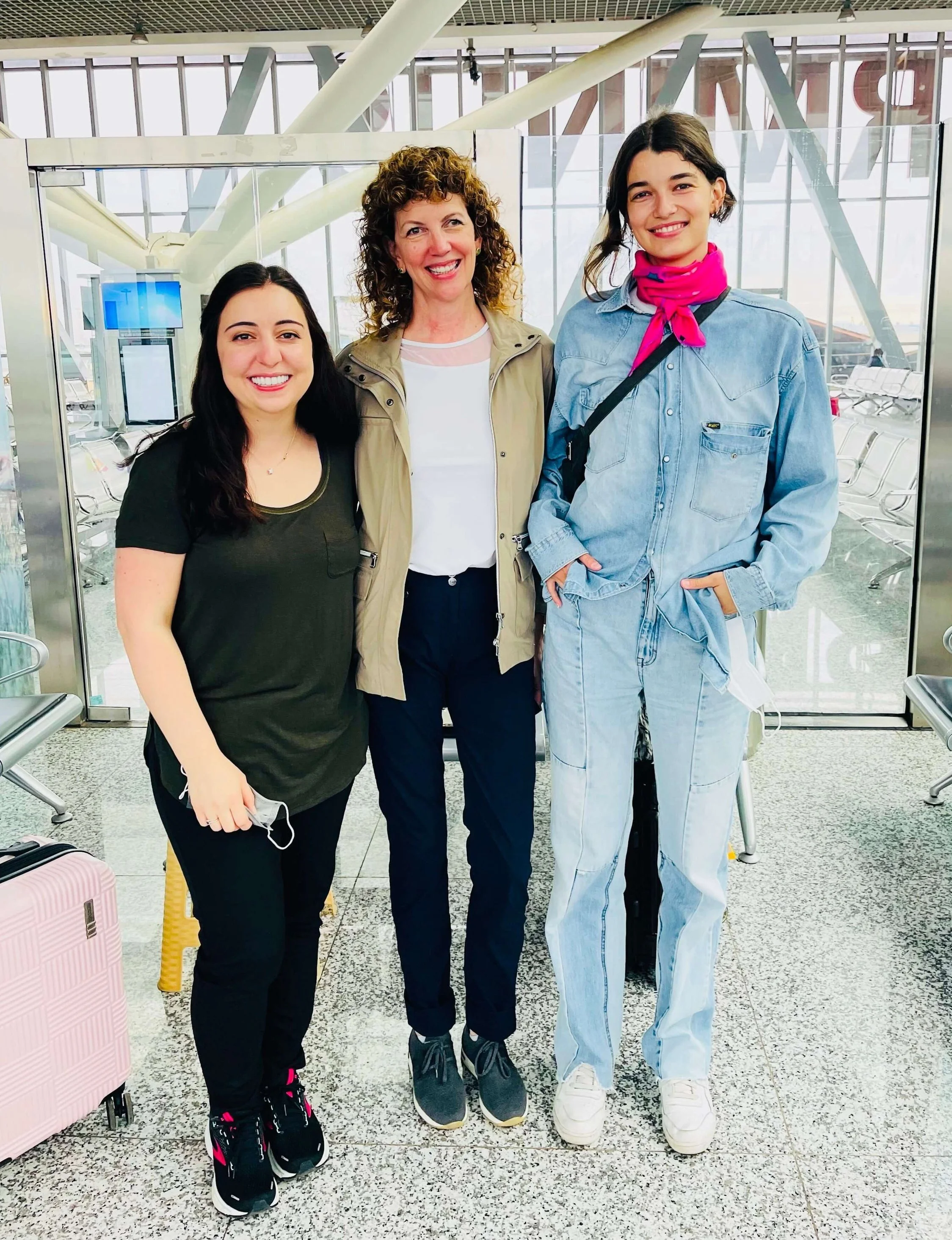
From left to right: Chloe Beaumont, Monica Stephenson, and Lou-Anna Piat. Photo by Chloe Beaumont.
After a lovely introduction to Norbert and Lou-Anna, we were off. Within five minutes, I was seeing wildlife outside the train window. Zebras, elephants, giraffes, ostriches, impala. Oh, and a whole herd of camels!
I turned to Norbert. “Kenya has CAMELS?!” Apparently yes, but they are not native to the area of course.
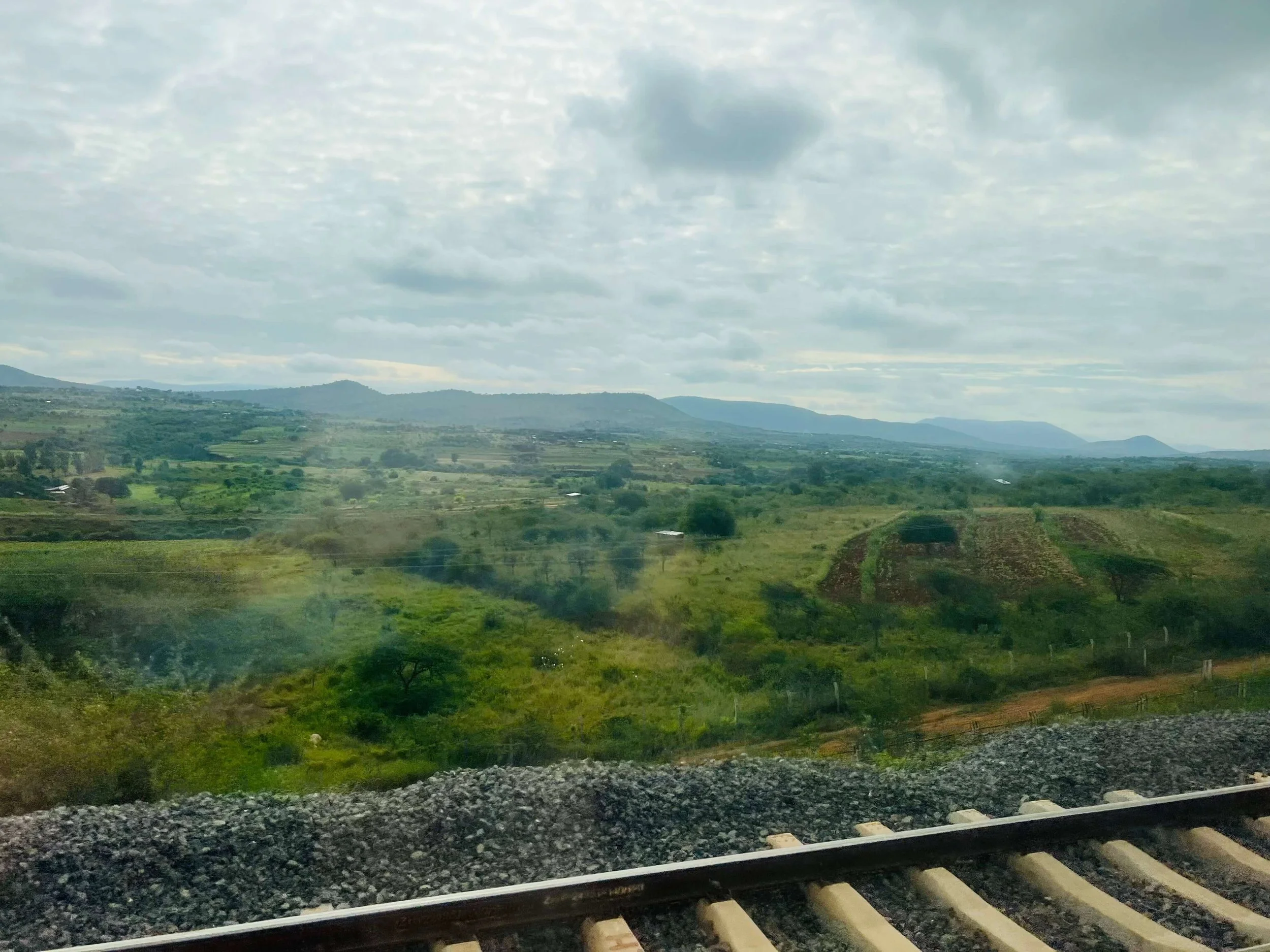
The view from the train to Voi. Photo by Chloe Beaumont.
We were in Voi before I knew it, and had another person to meet: Vincent, our amazing guide (who is basically a Moyo team member at this point) who owns Natamani Africa Safaris. Upon arriving at our lodge, Cristina Villegas greeted us warmly.
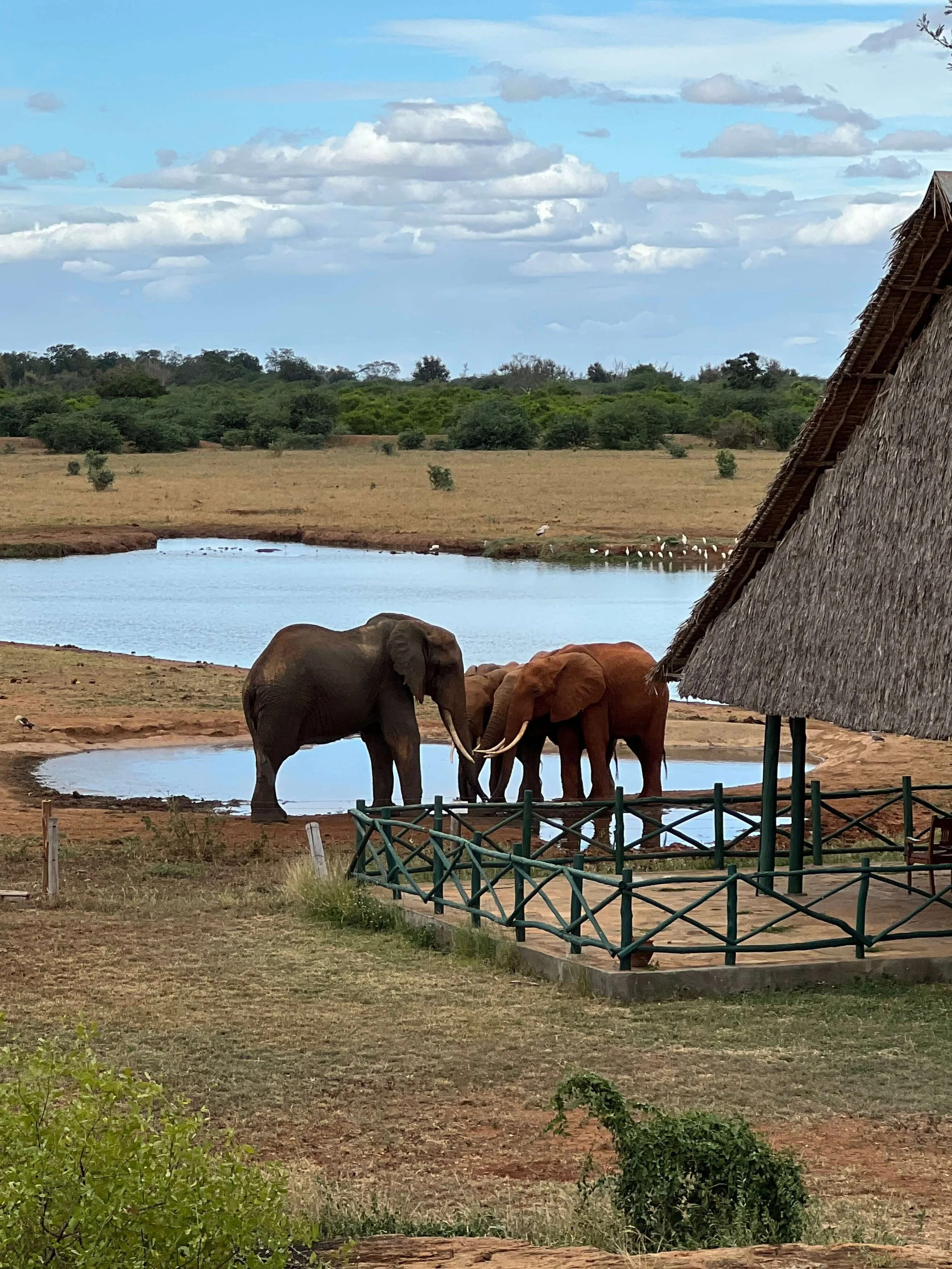
Elephants by a watering hole in Kenya. Photo by Chloe Beamont.
We walked up to the covered dining area, where we were promptly greeted by a herd of elephants. I turned to Lou-Anna with a ridiculously giddy smile on my face.
How is this my life? And to get to participate in the first-ever Kenya Market Day tomorrow….
DAY 1
Tomorrow rolled around, but the miners did not. At least, not at first.
Monica, Marvin, Lou-Anna, Norbert, and Cristina and I were sitting at a long table under the cover of a vibrantly painted building in the Mwatate region.
A couple hours later, after Marvin used a map to give us all a fascinating and thorough explanation of all the mining areas in Kenya, we noticed some miners had approached the registration table.
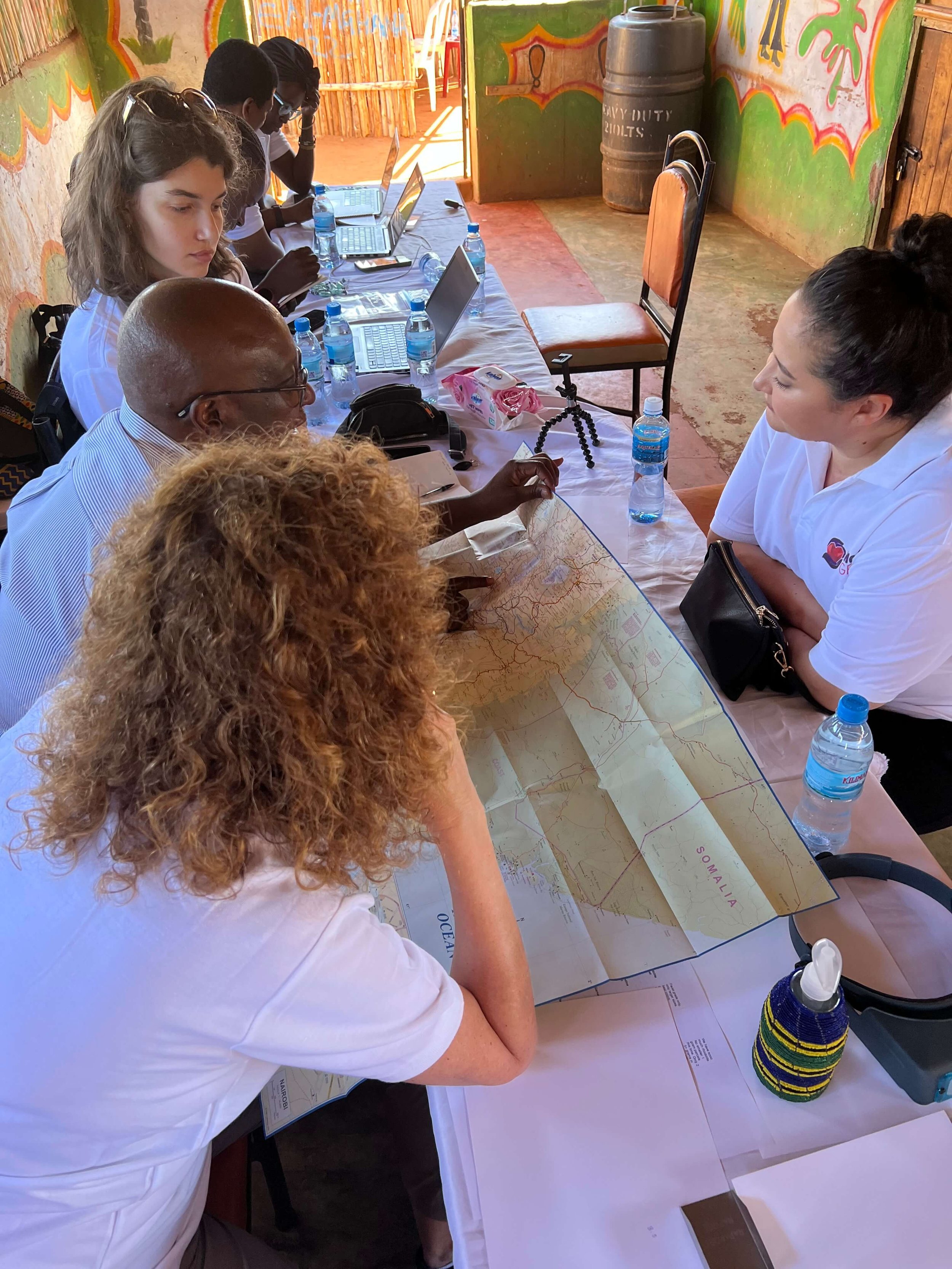
Marvin Wambua explaining Kenyan mining areas and gemstones to us. Photo by Chloe Beamont.
From there, they transitioned to the sorting table where a broker would help them each sort all their gems by type and quality. After about five miners successfully made their way through the market and walked out satisfied with cash in hand, it was like the floodgates opened. Out of nowhere, we had a line of miners, with more and more people arriving.
I breathed a sigh of relief as Monica and I traded grins – this was going to work!
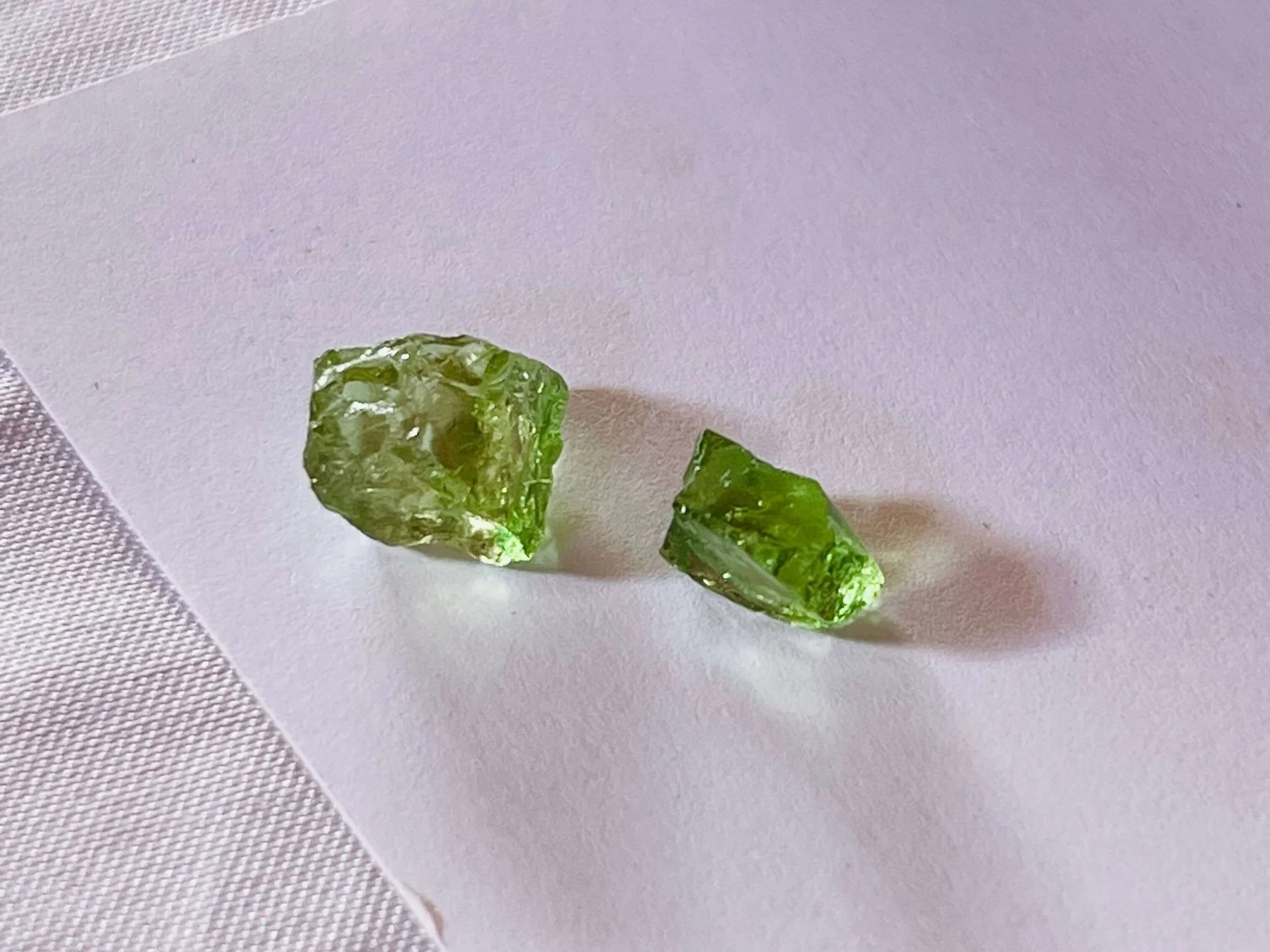
Grossular Garnet from Day 1 of Kenyan Market Days. Photo by Chloe Beaumont.
DAY 2
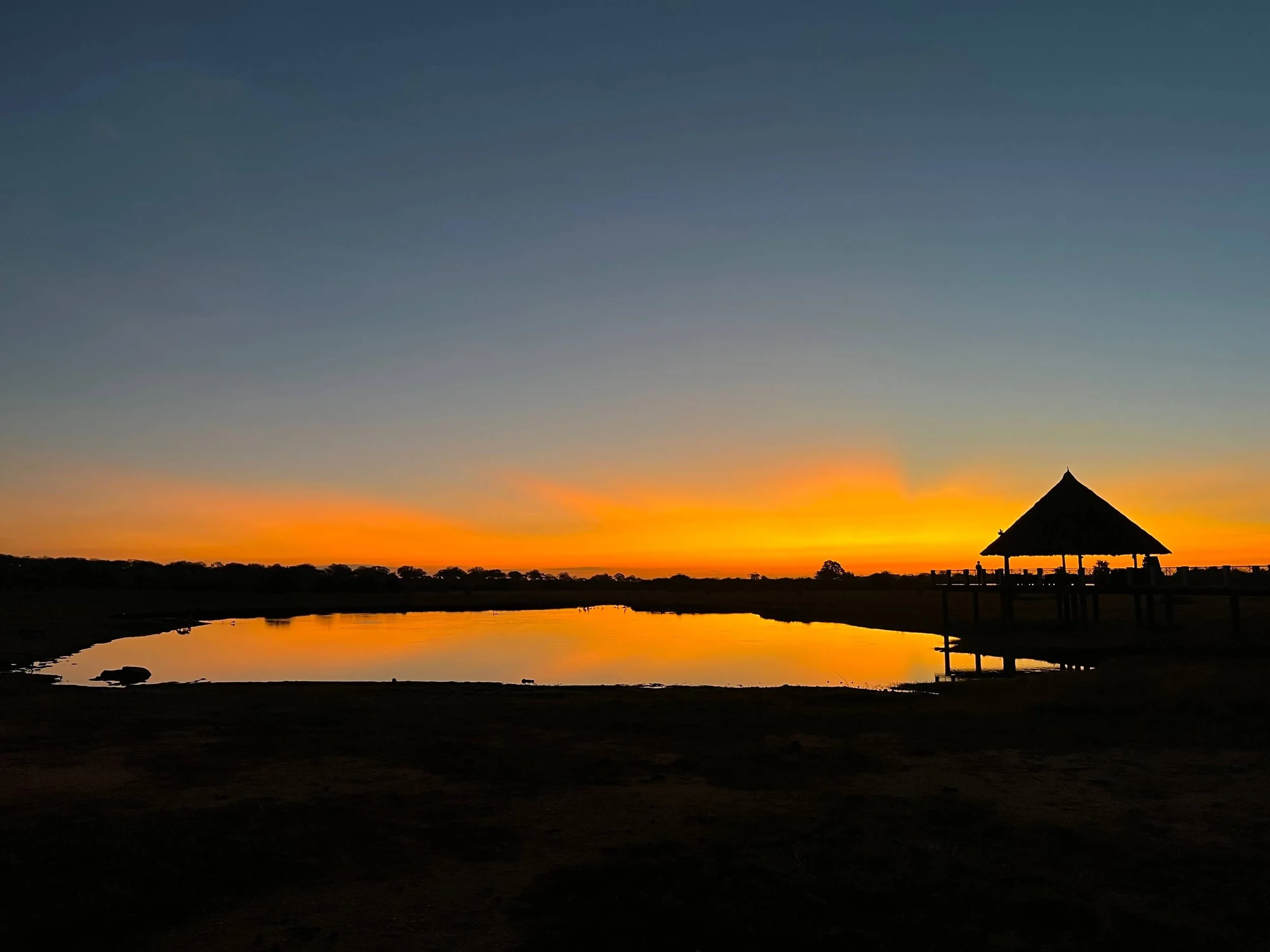
Voi sunrise. Photo by Chloe Beaumont.
After a glorious Voi sunrise and passing many baboons on the highway, we pulled up in the Kasigau area for Day 2 of our Kenya Market Days.
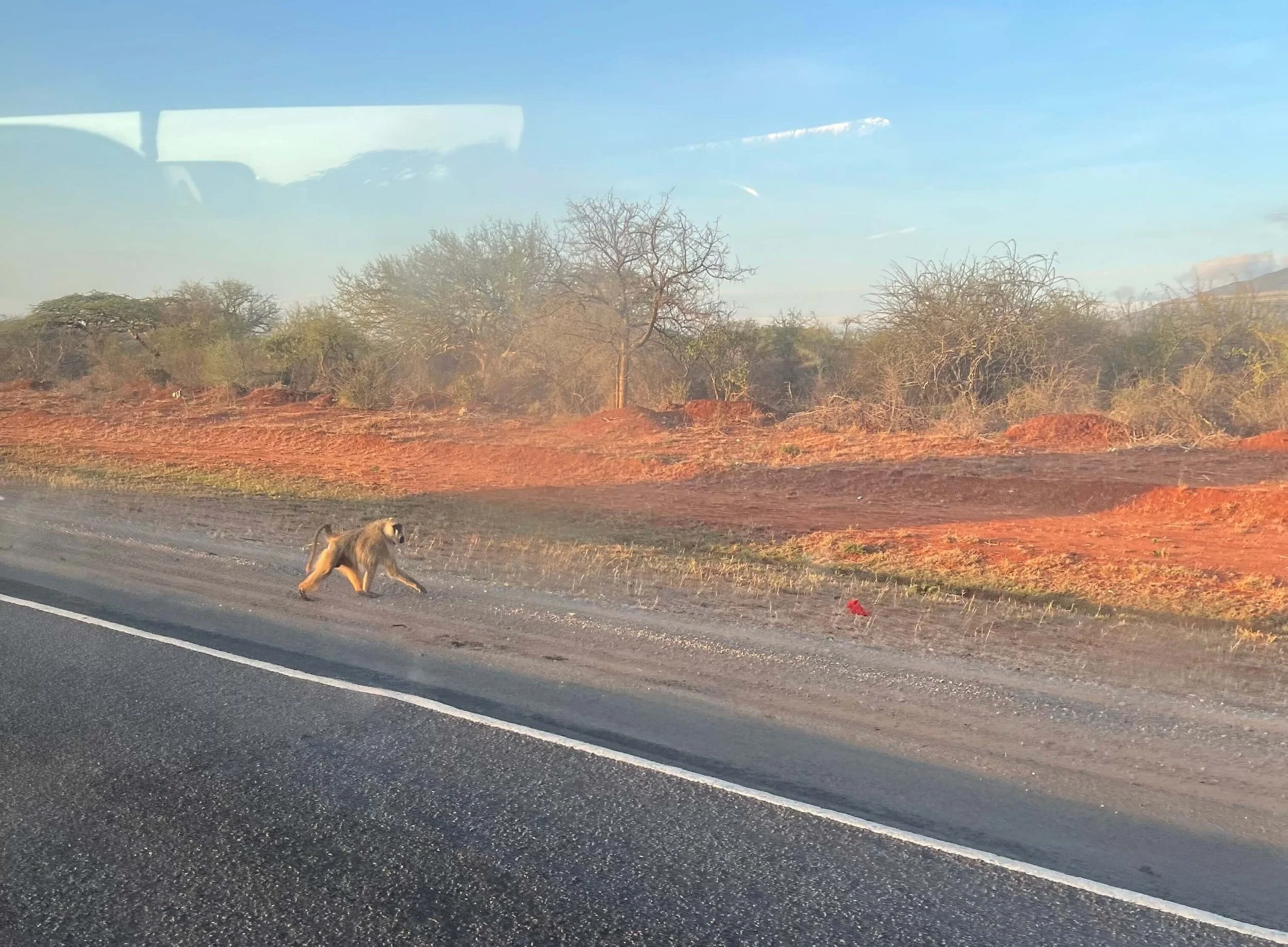
Baboon by the highway. Photo by Chloe Beaumont.
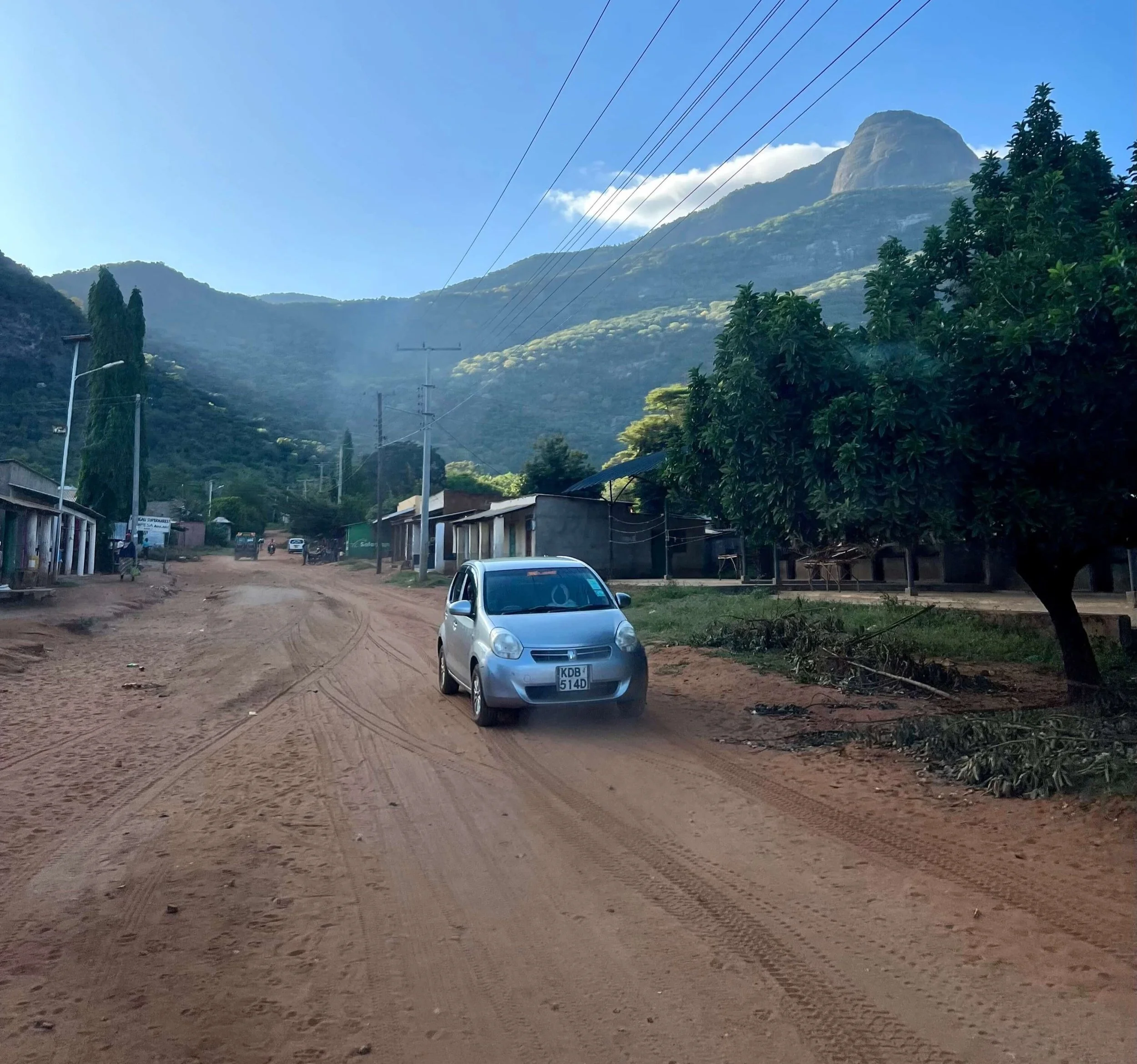
Kasigau region, Taita Taveta County, Kenya. Photo by Chloe Beaumont.
Each miner began by taking a seat in front of Monica and laying out all their parcels and individual stones on a white sheet of paper for us to begin evaluating.
Like the day before, I watched and listened as Monica opened each and every parcel and inspected the gems using a mini travel light and her magnifying visor. She even made a point to do so in cases when we both knew immediately without even pouring out the baggie of stones that the gems were not the quality we needed. Not only that, but she kindly explained to each miner what made the gems we could buy marketable, and why we couldn’t buy some of their other stones.
“This parcel has gems that are a bit too small for us to use. Very good color though!” She would add encouragingly. Or, it might be, “these ones are a bit too included. If they were bigger, and cleaner, we could buy them.” In cases where we bought, she or Marvin might point out how the gems had clean “open color” and were a good shape for faceting.
Honestly, even writing about this right now makes me start to get emotional. The time, care, and respect given to each Moyo miner from not only Monica, but Marvin and Lou-Anna as well, was something special. Most of the majority-female miners told our customer care staff later that they have never had any buyer give them feedback while they purchased stones.
Typically, buyers look quickly at the gems, then push them back immediately if rejected. But here our team was, giving detailed feedback and further educating the miners so they’d know exactly what to bring to the Market next time.
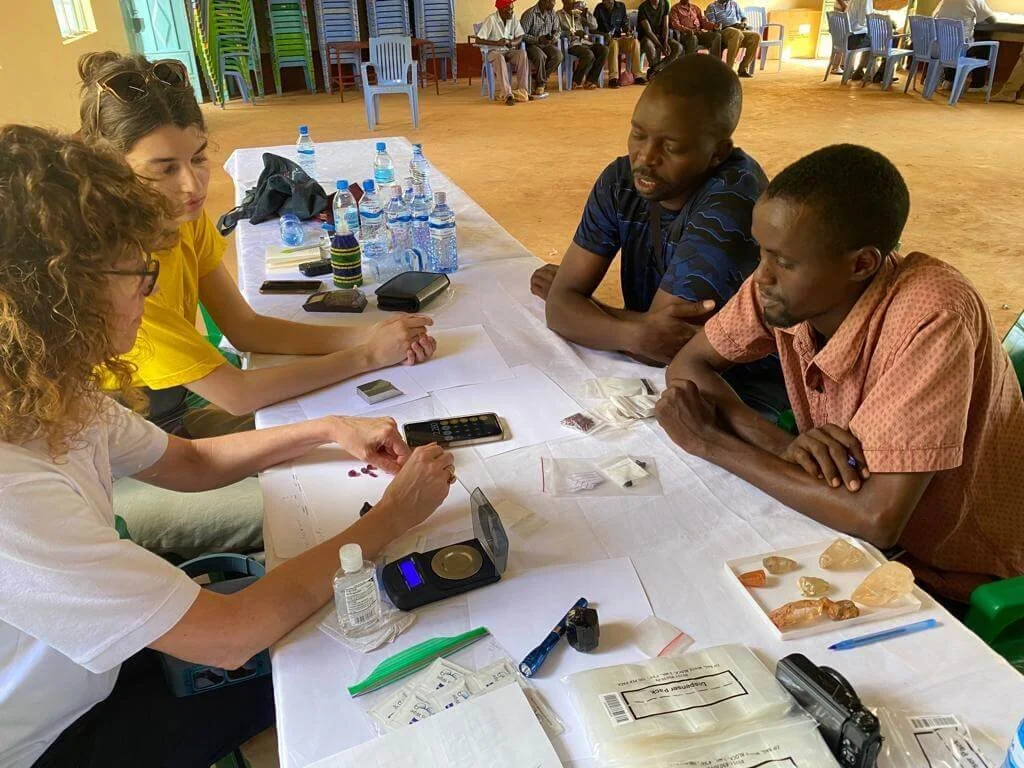
Monica Stephenson and Lou-Anna Piat at the buying table with Moyo Miners. Photo by Chloe Beaumont.
Marvin, who was acting as an expert broker on behalf of Moyo, and Monica selected the gems they were interested in and negotiated the price with the miner. I was surprised to see some of the miners really stick to the price they wanted—sometimes even walking away from our generous offers—but then again, they had worked extremely hard to get these stones out of the ground. The brokers were super supportive and would council each miner on whether to take our price or to counter-offer.
One of the groundbreaking aspects of the Moyo Market program is that we pay the miner directly, and then the miner pays the broker five percent. Outside of the Moyo program, it is common for it to be the exact opposite, with the broker paying the miner a nominal amount at the time of transaction.
When the miners and the brokers join Moyo, the miners can expect to make 3-10 times what they would otherwise have made outside of our system. The miners actually nominate the brokers involved, and the brokers are quite satisfied because they are able to make a windfall after three Market days of helping many miners.
Not just anybody can walk in and partake in Moyo—there are a few rules when it comes to responsible sourcing! Cristina explained it brilliantly during this video with National Jeweler, but I’ll summarize:
Rule #1
Each miner must be an alumni of the GIA training (of which there are several rounds). They also attend a separate Occupational Health and Safety training with regards to mining.
**Note: the GIA trainings have improved dramatically since their inception. Cristina informed me that soon, the entire training along with the gem guide books will be available in chapter format online for the miner’s ease of access and sharing.
Rule #2
The miners must be able to prove that they are working on a licensed mine. All mining licenses are verified by Pact and the county government.
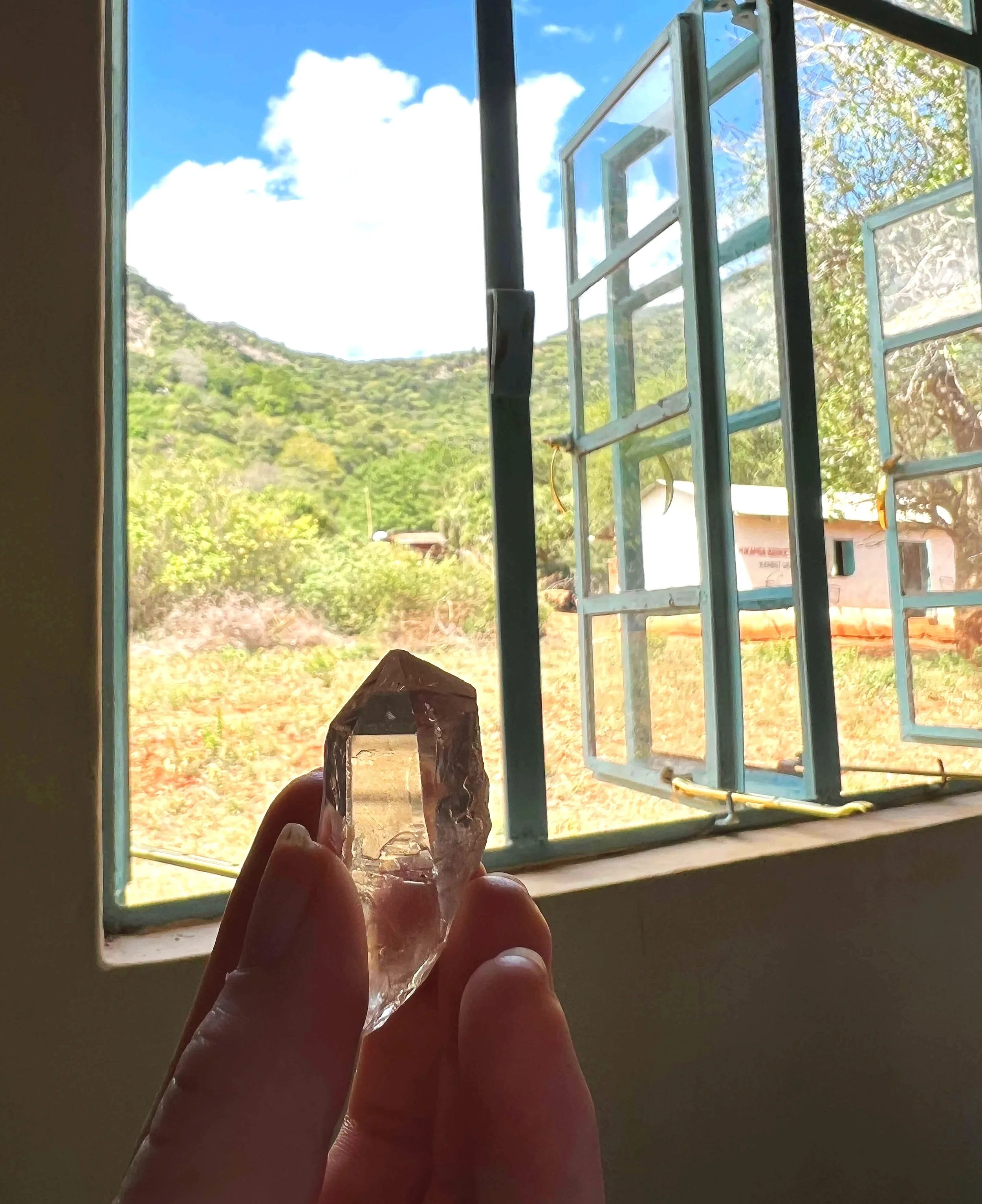
A quartz crystal from Kenya Market Day 2. Photo by Chloe Beaumont.
After a miner decided to sell their stones to us, part of my role was to record information of what we purchased and pass the gems down to the end of the long table. There Norbert, Maureen, and other rotating AWEIK staff would be entering data for spreadsheets and blockchain (Everledger is our Moyo Gems program partner in that regard).
We were like a well-oiled machine–generating positivity and motivation for everyone involved.
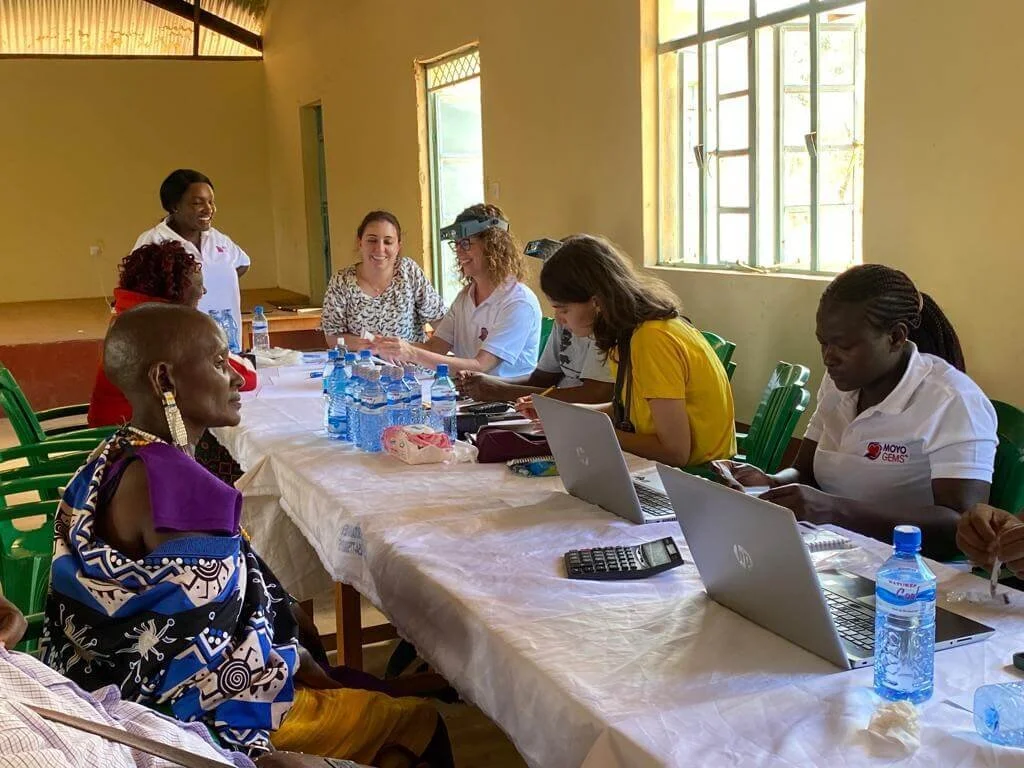
At the buying table of Moyo Market Days. Photo by Chloe Beaumont.
DAY 3
By the third day of the Market Days, not only did the team have the system downpat, but we also had miners from Days 1 and 2 returning again to bring us more gems.
This was really encouraging, as it proved to us that the miners had a good enough experience to want to come back and make the journey to us this time. We were all feeling lucky to have air conditioning on our last buying day—a big treat and a rare commodity in these regions.
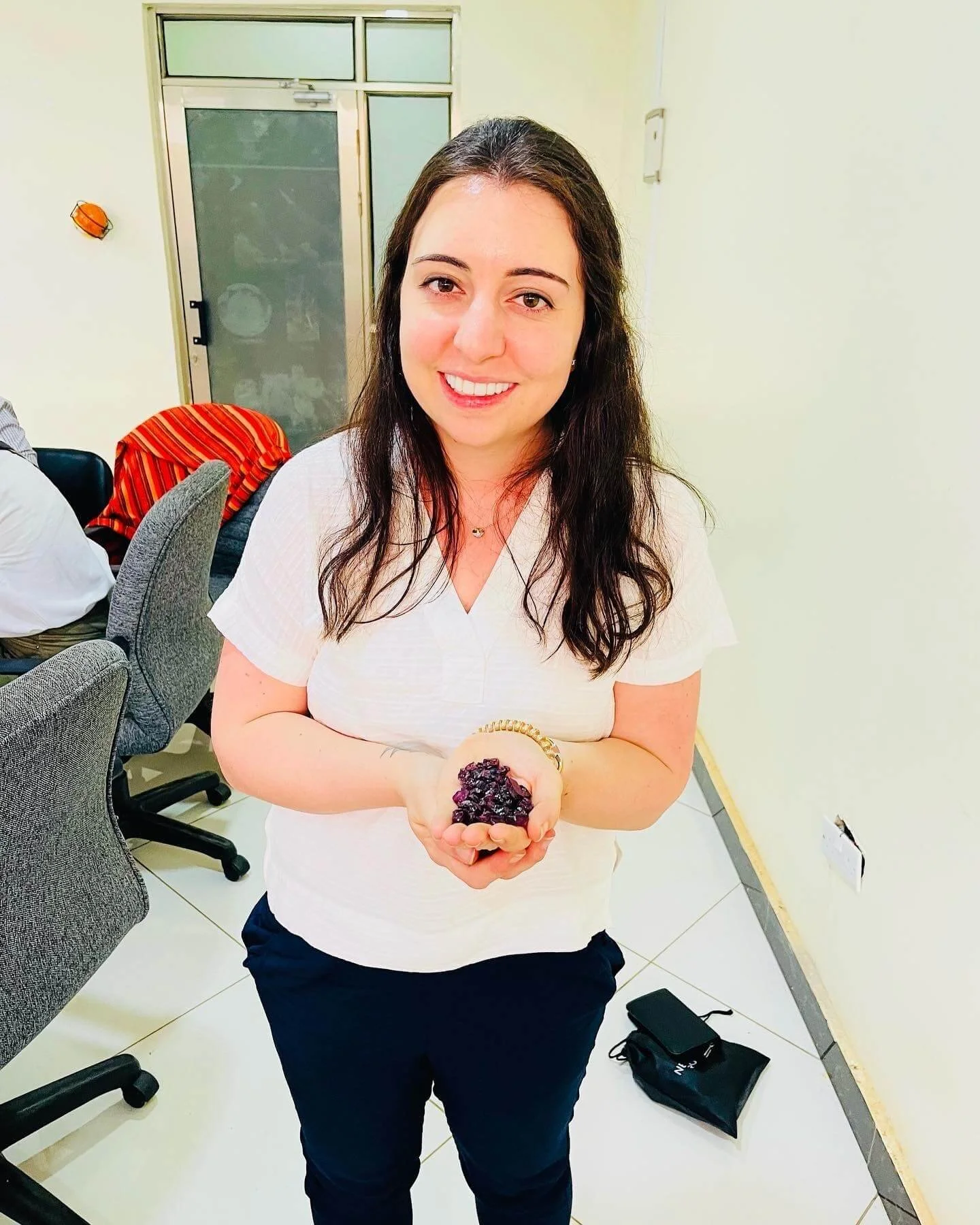
Rhodolite Garnet rough from Kenya Market Days. Photo by Chloe Beaumont.
After a successful completion of the first Kenyan Moyo Gems Market Days, we had an insightful debrief back at our accommodations in Voi.
Then, another treat before leaving Kenya: an afternoon safari through stunning Tsavo National Park East with our friends at the World Bank.
You know that “mind-blown” emoji where it looks like the head is exploding? Yeah, that was me the entire time. What a way to wrap up the Kenya leg of our trip.
By now, I’ve heard several people talk about the very early beginnings of Moyo Gems in Tanzania. They describe it with a smile and a sort of sparkle in their eyes that gives you the impression that maybe, they’re still in awe that such a thing could happen.
“And the rest was history” they say. I hope that before we know it, we’ll be saying that about Moyo Gems Kenya, too—and looking back on what such a powerful team of partners both local and international have accomplished.
Stay tuned for my next article, where I got to check back in and interview Marvin Wambua!
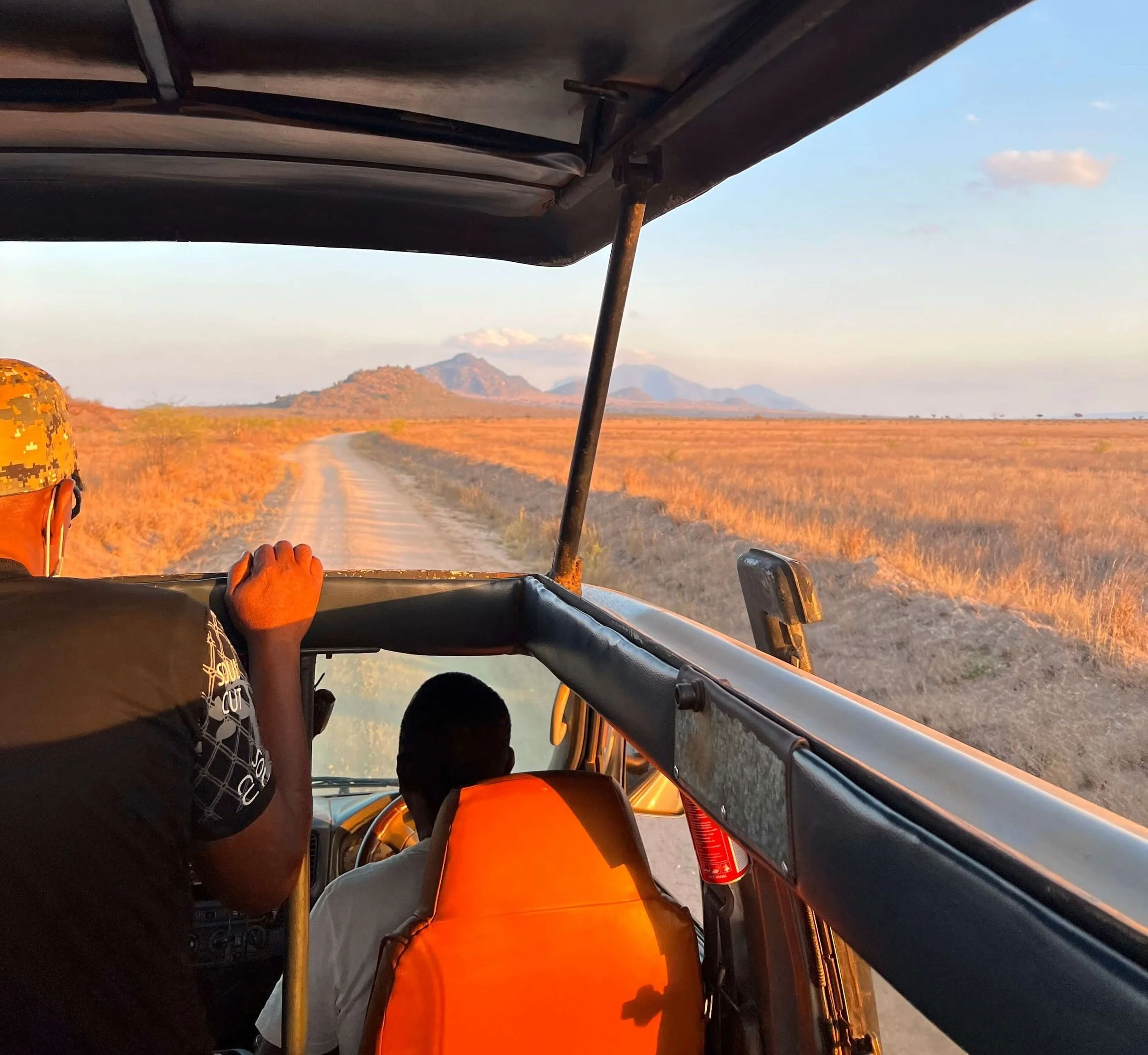
View out of our safari truck at Tsavo National Park East. Photo by Chloe Beaumont.



Our Source Wrapped piece this month marks our 100th article since we launched in 2020! In celebration, we organized all our most popular articles into easy-to-navigate categories.