

Superstition: An Uphill Battle for Diamonds for Peace

The content of this article reflects the views of the writer, and not necessarily those of Ethical Metalsmiths. This article was written for The Source

Celine Rose David, Chie Murakami, Saskia Shutt and Maki Yamagishi. Photo courtesy of Celine Rose David.
In June 2023 I listened to Chie Murakami give a presentation at the IPIS research center in Antwerp on the difficulties confronting Diamonds for Peace (DFP) in rural communities due to local myths and superstitions.
Diamonds for Peace is an NGO which aims to support artisanal and small-scale diamond mining in rural Liberia. DFP aims to improve the diamond miners' working conditions and social status as well as promote fairness in the industry through education.
In 2009, Ms. Murakami got engaged and was given a diamond ring to mark this loving occasion. Inspired by her joy, she went onto the internet to read all the “romantic and beautiful” stories about the origins of diamonds and how they are mined, only to discover hardship, poverty-stricken miners and child labor in some circumstances. This was the catalyst for how DFP was born in 2014. “How could something that is the symbol of unity between two people have its origins steeped in deprivation and exploitation?” she asked.
The next step for Ms. Murakami after learning about the miner’s conditions was to find a country with a government that would allow her project to take shape and grow. She also wanted to uplift a community where women miners were operating. These artisanal, small-scale diamond mining communities are in rural areas, and superstition and traditional beliefs are at the core of these communities' way of life. Women are often not allowed onto the mining sites, as people believe their presence may anger the female spirit that puts diamonds in the ground. In Liberia, Ms Murakami found a community which has women miners who were allowed to go into the diamond mines. DFP was later launched in the Weasua community of Liberia.

A brass ankle bracelet from the Dan tribe of Liberia/Ivory Coast. These ankle bracelets define the social ranking of the girls who wear them. Photo from book “Adornment” by M. Butor and P.A. Ferrazzini.
One of the main challenges DFP has had from the beginning is education, due to the deeply-imbedded superstitions that miners have. It is not easy to convince the miners to learn about the science of diamonds, as they typically don't become convinced until they see it with their own eyes. Even after attending an educational workshop, the miners that do come can be swayed by their non-attending peers to still believe myths about diamonds instead of facts.
According to the Oxford English Dictionary the word “superstition” is explained as follows;
Credulity regarding the supernatural.
An irrational fear of the unknown or mysterious.
Misdirected reverence.
A practice, opinion, or religion based on these tendencies.
A widely held but unjustified idea of the effects or nature of a thing.
As demonstrated by Beth West in the February 2023 DFP webinar, within the Kpelle tribe’s society, magic and medicine play pivotal roles, significantly shaping the community’s social structure, educational practices and behavioral norms. These medicine societies serve as a channel through which age-old wisdom, cultural traditions and spiritual teachings are passed down from generation to generation. The myths and superstitions stemming from this are what the majority of diamond miners in Liberia believe.
Here are some of the things that the miners believe:
Diamonds are much heavier than other rocks
(Fact: diamonds are almost the same weight as rocks of similar sizes. Bigger diamonds stay on top of the jig and only smaller diamonds fall to the bottom.)
This is why the miners and diggers believe that the diamonds drop to the bottom of the jig, and that they will find the best diamonds at the bottom of the jig.
Diamonds and the jig are magnetic
(Fact: they are not magnetic)
Another misconstrued theory is that diamonds are magnetic and attach themselves to the bottom of the jigs, which are composed of fine metal pan/screen.
Diamonds have magical power to move where they want to, and diamonds want to move to the bottom
(Fact: diamonds don't have such power)
The above reasons are why a lot of the larger diamonds are not found, as the diggers immediately discard the upper levels of the soil in the screens without carefully watching it. Miners are losing income at this levelby essentially throwing away the most valuable rough.
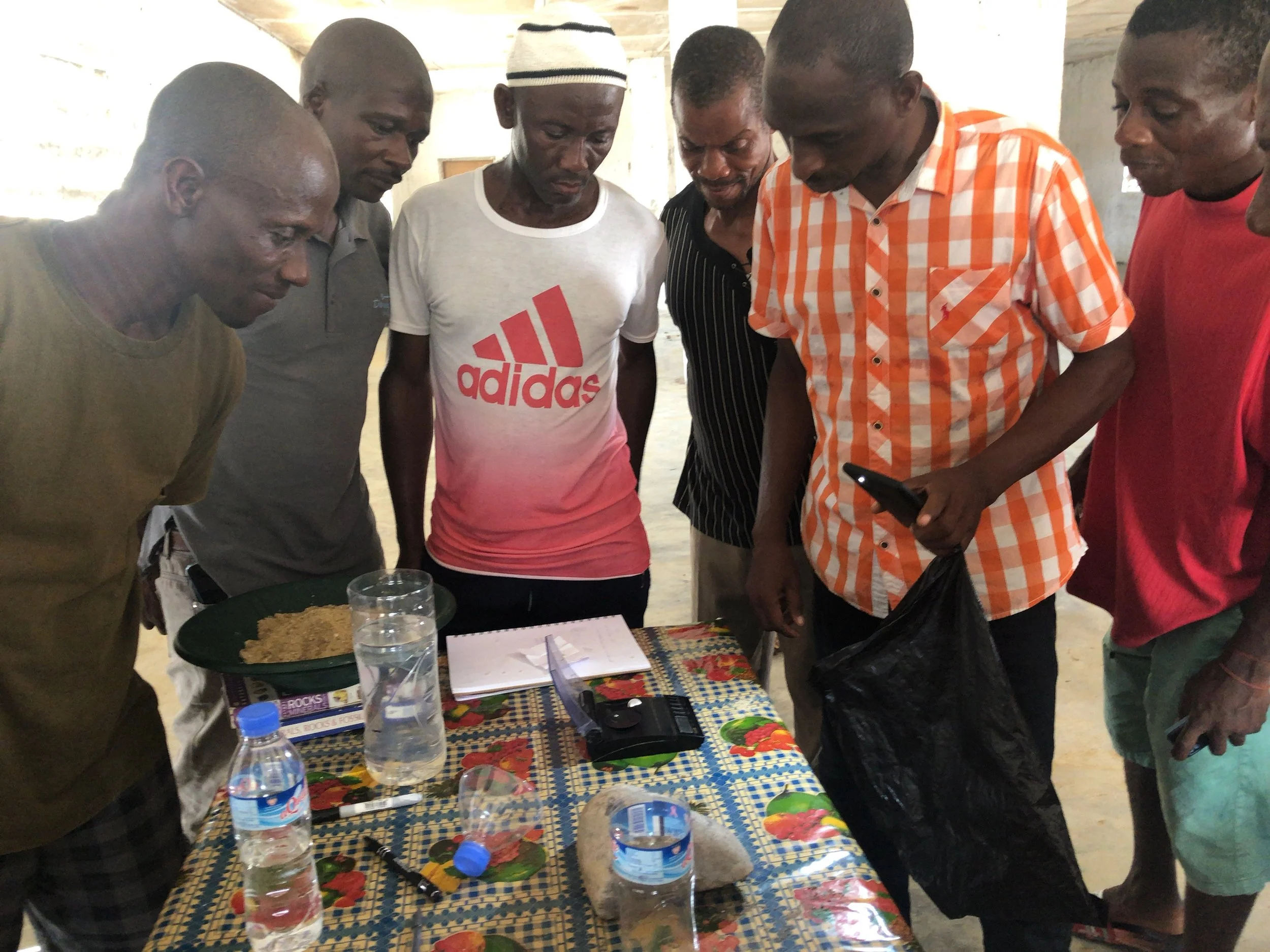
Artisanal miners in Liberia weighing diamonds and sand. Photo courtesy of Diamonds for Peace.
“There are systems of belief, no doubt far removed from our own in the West, should not fall into the scope of our discussions on myth, this subject should highlight the friction created when a product intended for the developed world is being mined by people of the developing worlds with no concept of that product's use. Which often leads to an obstructive information extremity, in this case considering myth as a misconstrued meaning.” - Beth West
This is where the struggle lies for DFP. It is the place where two worlds collide over diamonds. Most miners in this community did not know that their rough diamonds are cut and polished and set into jewelry. They mostly believed that diamonds are made of glass and water, that if you shatter them, water will come out. Another common belief was that diamonds are used to keep planes in the sky.
The myths and the miner’s lack of knowledge of what their diamonds are worth also affects how they sell their diamonds; they are not able to negotiate the correct price when a buyer offers very low prices for their diamonds, which in turn means they don’t make a profit from their sales.
In Liberia there are what locals call “supporters,” or brokers who provide miners/diggers with a part of the mining cost and buy all the mined diamonds that the miners find. Brokers are not aware of the value of diamonds either, or might have a basic knowledge, but don’t disclose or share this knowledge with the miners in order to suppress the diamond sale prices. The majority of diggers earn less than $1.19 per day, which leads to the miner’s vicious cycle of poverty.
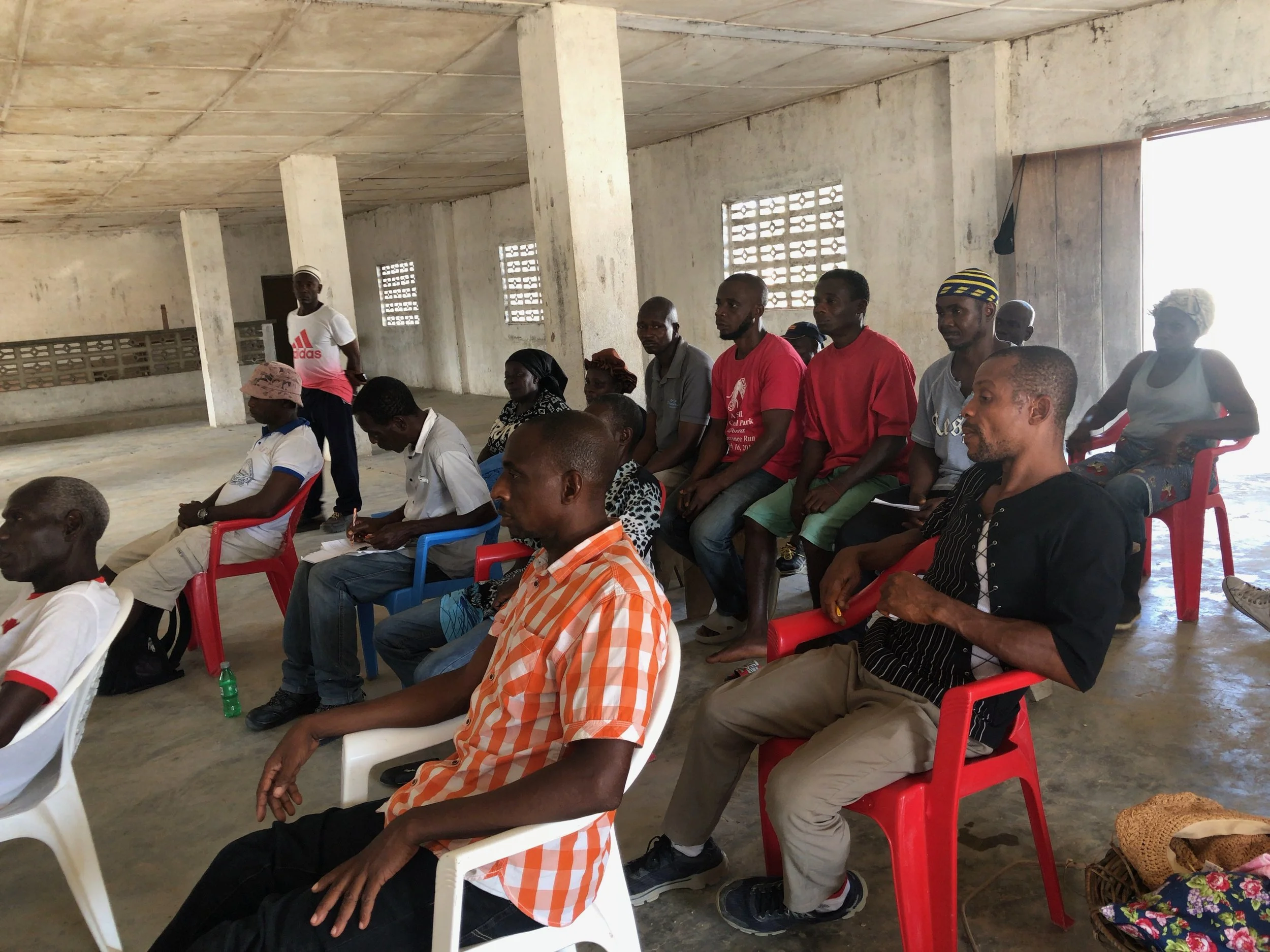
An educational training session held by Diamonds for Peace. Photo courtesy of Diamonds for Peace.
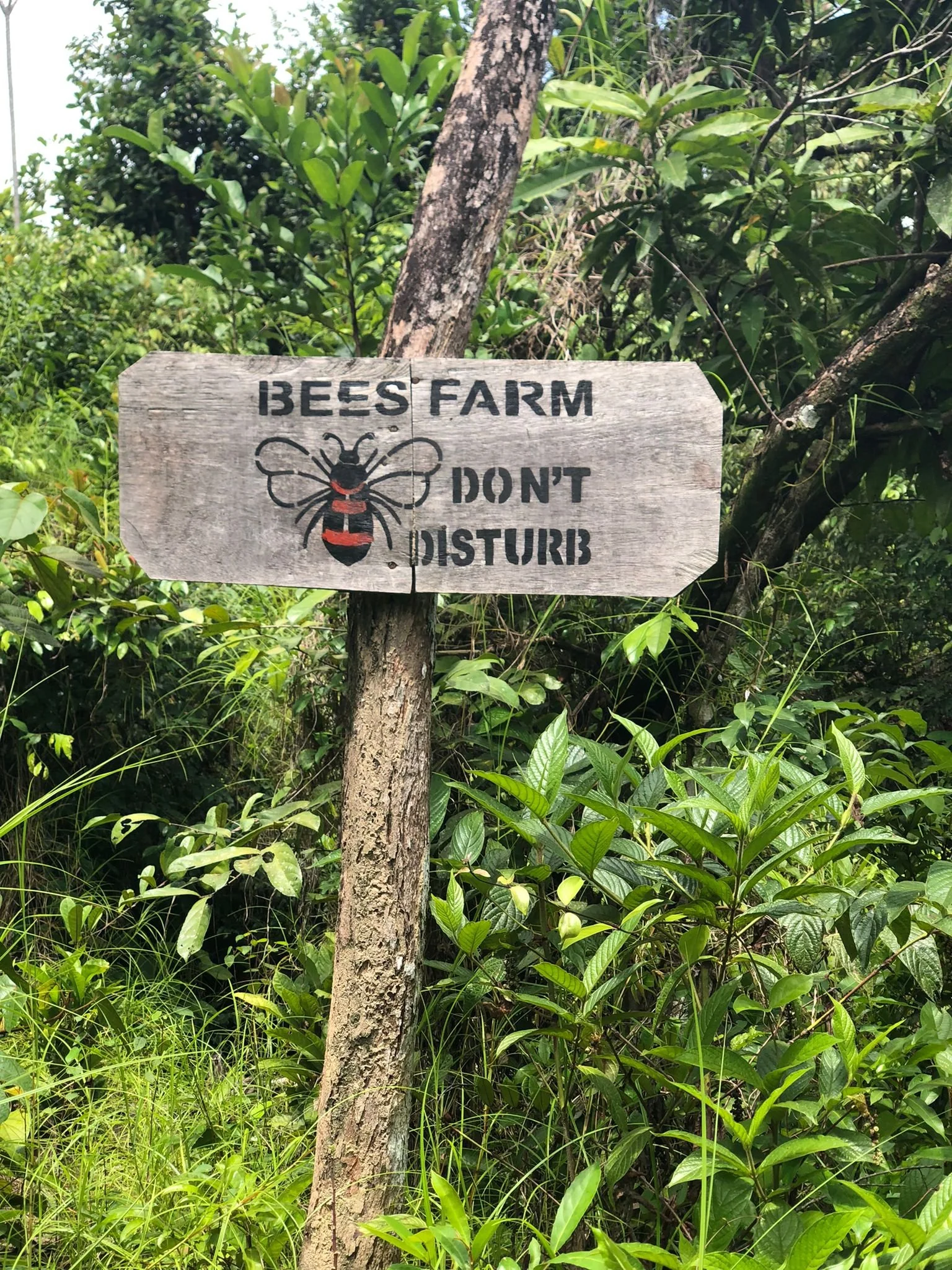
DFP encourages miners to generate a second income through beekeeping or cultivating fish ponds. Generating a second income is critical because firstly, all the miners depend on the investors, known as "supporters," for (a part of) the cost of their mining projects. They have a customary agreement to sell all their mined diamonds to the supporters at the supporter’s low asking price (or "convenient price”). In this way, miners cannot make any profit because the supporters always have power to decide the price.
This "supporting" system has been perpetuated since the miner’s grandparents' generation started diamond mining in Liberia in the 1950s. Currently the majority of miners in Weasua don't have valid mining licenses because they cannot afford it, which means that they are mining illicitly in the eyes of the government. It is very necessary for miners to break this cycle of dependency in order to get out of poverty, and to sell their diamonds at a better price in a formal market. DFP has been encouraging miners to be self-reliant so that they can fund their own mining projects and afford licenses without depending on investors.
Secondly, generating secondary incomes helps prevent a relapse into extreme poverty when diamonds/minerals are exhausted in the community. Diamond mining was more lucrative when the miner’s grandparents started mining in the 1950s. Even though this generation didn't know what diamonds were used for or the real value of diamonds either, they could get some profit out of mining. People in Liberia often tell DFP that miners at that time had a helicopter in Weasua and often flew to Monrovia (the capital city of Liberia) only to have lunch. If you look at the community now, you can see that they didn't leave anything for their children and grandchildren by going through money like water. Now, miners are suffering from poverty again. Miners and diggers need to change their mindset and accept new ideas and then practice what they have learned in order to rise out of extreme poverty.
DFP has helped set up cooperatives to help sustain diamond miners, which the Liberian government supports. Everyone’s goal is to enable the cooperatives to sell responsibly-mined diamonds at fair prices, but it is a slow process.
Currently, DFP doesn’t facilitate the sales of diamonds that the cooperative mined, as they are not yet at that stage. However, DFP and the Liberian miners are preparing for a program to bring their diamonds to the international market. Watch this space for new developments in 2024!
Follow Diamond for Peace’s progress journey as they continually work to assist artisanal diamond miners in Liberia.
Call to Action:
Learn about the ways your can Volunteer with Diamonds for Peace
Learn more about Diamond for Peace’s Impact
Become a Supporter of Diamonds for Peace
Your donation will help implement important activities such as:
Promoting self-reliance of the artisanal diamond miners, diggers, and women in Liberia (e.g. capacity development training, coaching and monitoring for mining cooperatives)
Awareness raising, targeting consumers, jewelers, and other stakeholders in the industry (e.g. holding events, workshops, and lectures, developing awareness tools)
“We are a small team of passionate jewelry industry professionals and writers. We’d appreciate your support to grow our team and continue to be able to provide the best responsible jewelry content for years to come!”


Chloe interviewed Jessica Hudson of The Nomad Jeweler on her latest collection that features ASM Colombian gold and Tahitian Kamoka pearls. Read the full article to learn more about Jessica’s story and why she chose to design with traceable artisanal gold and sustainable pearls.