Detoxing a Jewelry Studio: Start Here

The content of this article is the opinion of the writer and was written for The Source
As we settle into a new year – and please, oh please, may it be a better one – you may be cleaning your studio, or at least thinking about a neater and safer jewelry space.
Metalsmiths from around the world and across time have worked with materials that we now consider dangerous. Lead is one example, but there are others that we can avoid altogether, or at least handle with care, recognizing that they are harmful to people and the planet.
This article contains a few materials to consider. This is not an exhaustive list; it’s meant to remind us to examine each material we use. For example: what’s in that pickle solution you’re using? How about that “white gold” alloy? Double-check the ventilation and safe handling instructions for items in your studio. Think before you dispose of something… and so on.
Here are some ideas to get started; please add to the list by commenting at the end of this post.
Acids for Testing the Purity of Metals
Do you use acids to test the purity of gold? Those small bottles with different primary color caps contain powerful and toxic acids, such as nitric acid. Please take care when handling these acids, use them in a well-ventilated space, and store them properly. There are x-ray style machines that can determine the composition of metal without the toxic chemicals of a scratch test. But most studio jewelers do not have them, as the machines are quite expensive.
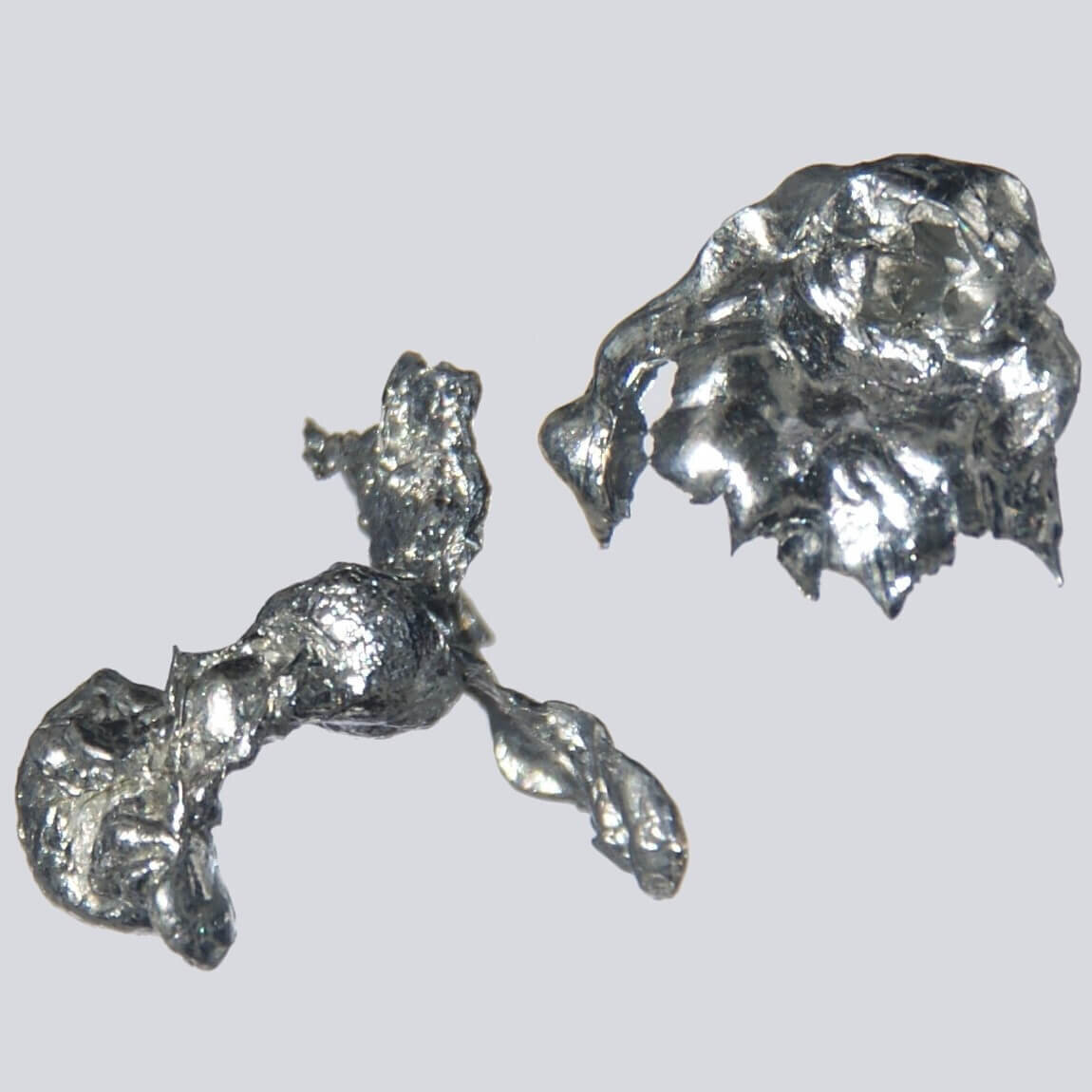
Cadmium is toxic, yet can be found in jewelry and other objects. Photo credit: Wiki Commons.
Cadmium
Cadmium is found in inexpensive jewelry and other mass-produced objects. It is toxic and can have long-term negative health effects. The Associated Press (AP) has reported extensively on the topic and there are regulations against its use in children’s jewelry. For one of the AP articles on cadmium, click here.
Fumes
Whether it’s fumes from pickling agents containing sulfuric acid or from the nitric acids used to test the purity of gold, remember to ventilate according to the instructions on the safety data sheet. Find the safe handling instructions online if you don’t see them on the item itself.
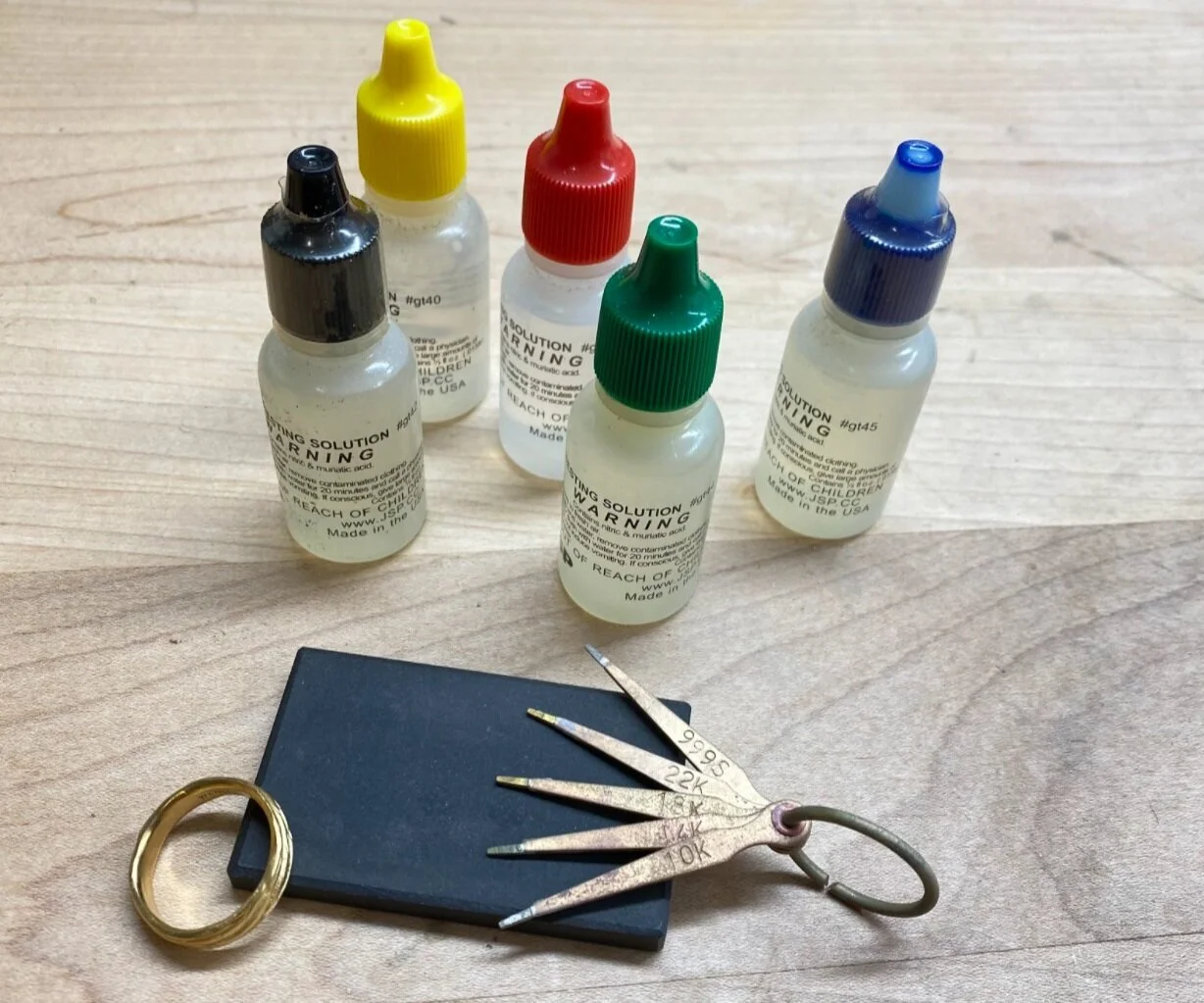
Take care when using acids to test the purity of metal; they require safe handling. Photo credit: Wendy Woldenberg
Pickle solution becomes increasingly concentrated over time, unless you are continually diluting it. The fumes will therefore also become stronger. Many jewelers use harsh yet widely-available pickling agents; why not switch to citric acid? It may take longer to do its job, but it’s safer for people and the planet. If you do use the more toxic version, do not throw those solutions down the drain! See my earlier post in The Source on citric acid for pickle, or just search online to compare the toxicity of different pickling agents.
Lead
Lead block: find an alternative (perhaps a sandbag), but also find a way to dispose of the lead block safely. No one wants lead in the groundwater.
Some jewelry is still made with lead, believe it or not. Expensive pieces, as well as mass-produced trinkets, have been found to contain lead. Be careful when repairing a piece you did not make yourself, since you may not know what is in it.
Mercury
You probably don’t encounter mercury in your studio, but millions of artisanal gold miners use it to extract gold from its ore. There are literally millions of artisanal and small scale gold miners (ASGM) around the world who use this method, since they do not have an affordable and accessible alternative. After using the mercury to amalgamate with the gold, the mercury is burned off, causing the release of dangerous fumes. Mercury is an element, and does not break down or dissipate over time. It enters the ecosphere and becomes a global problem; mercury has been found quite far from the initial source.
To learn more about mercury in our industry, start with Better Without Mercury. Full disclosure: Christina Miller, the leader of Better Without Mercury, is a co-founder of EM and now serves on its advisory council. Ethical Metalsmiths also supports this project, which helps artisanal miners find an alternative to mercury. Ask your gold vendors if they sell gold that was processed without mercury.
Nickel
A surprisingly high percent of Americans, and presumably others worldwide, have a nickel allergy and break into a rash when contacting it. Even a small amount of nickel in a piece of jewelry can trigger a reaction. Do you use white gold? Find out what your vendor is using to make the gold appear white. Remember, gold is yellow! See the paragraph called White Gold, below.
Patina and Blackening Solutions
Solutions and chemicals that blacken silver or gold, or create a patina of some sort, can contain hydrochloric acid, nitric acid, or liver of sulfur. You can find nontoxic alternatives online, but if you go to a jewelry supply store, it will most likely contain a toxic acid.
On another note, is “liver of sulfur” the ugliest jewelry-related phrase you’ve ever encountered in the English language? Charles Lewton-Brain has written on these strong blackening acids and other materials, as well as on other safety issues in the jewelry industry. Read more here.
Particles from Abrasives, Silicon, and Heavy Metals
When forming or polishing metal, microscopic particles become airborne. Think about where the particles are landing, in addition to your face, hands, and nearby surfaces. Opening a window may not be sufficient to remove these miniscule particles. Imagine if the piece you’re working on contains a toxic metal. The wheel or brush itself may also create harmful, airborne particles. Learn more about this here.
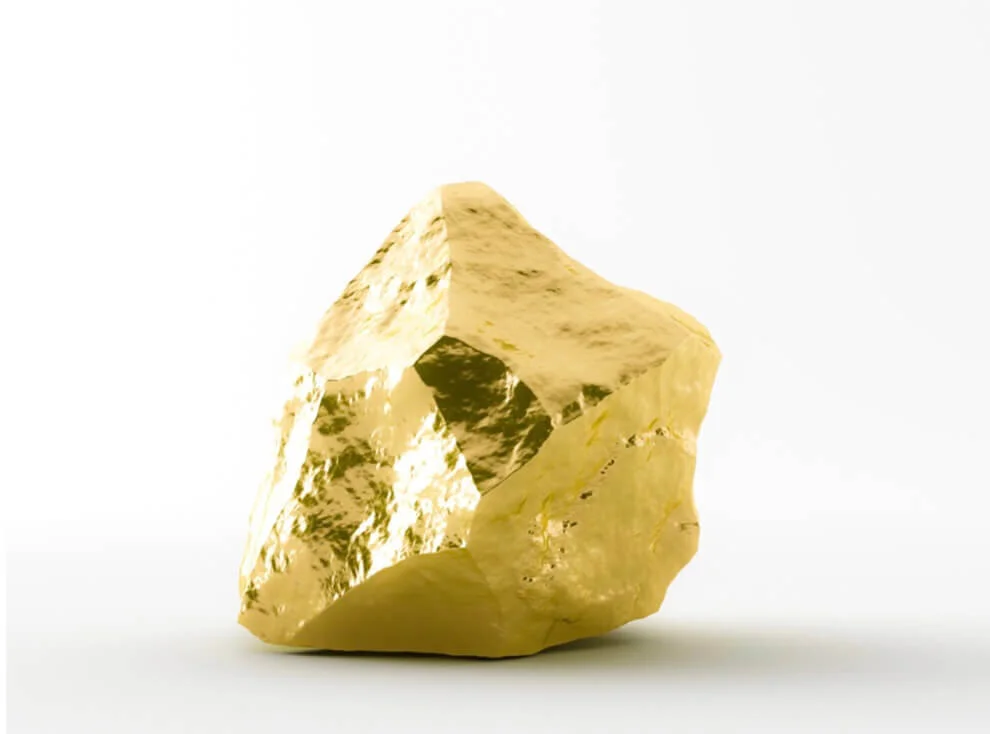
Pure Gold. If gold appears white, then another metal is responsible for that hue. Photo credit: Wiki Commons.
Find out what metals are in the alloy you’re using. Many people are allergic to nickel, which is one metal used to make “white gold.”
White Gold
Since gold is an element, in its pure state (i.e., 24 karat), it will always be yellow. The term “white gold” is a bit of a misnomer, albeit one that is used frequently and widely. If you see gold that appears to be white, or is described as white, then it has been mixed with something else: an alloy. It may also have been plated with something even whiter, to improve the whiteness and brightness. Rhodium is often the metal used in the final plating process, to provide a very thin layer of even whiter and brighter shine to the piece.
Nickel, cadmium, and palladium are all possible metals used to make the alloy appear white. Since so many people have a nickel allergy, it is probably best to source all of your white gold without it. Every vendor and supplier should list the content of their metals, just dig around their websites. If you don’t find it easily, ask!
To sum up, this is a starter list, to encourage a close examination of the materials we’re handling in the studio. If you’d like to read more on safety in the studio, a few authors to search are: Linda L.T. Hamilton, Charles Lewton-Brain and Monona Rossol.
Please add your studio detox ideas in the comment box below! As always, we at EM are curious to hear your ideas for future topics to cover in The Source. Thank you for reading!