

Jewelry Journeys with Jay Moncada
The content of this article is the opinion of the writer and was written for The Source

Jay Moncada is the co-founder of Perpetuum Jewels, a New York-based wholesaler of diamonds, precious stones, and fine estate jewelry.
Perpetuum Jewels is certified by SCS Global Services as a Certified Responsible Source and for 100% Post-Consumer Recycled Gemstones.
Jay also currently serves as EM’s Board of Directors Treasurer.
The following conversation has been edited for content and clarity.
Chloe Beaumont: First thing’s first: how did you get your start in the jewelry industry?
Jay Moncada: I basically didn’t have a choice! My family business was in wholesale gemstones and doing trade shows. My maternal uncle had taken over my grandfather’s business, which used to be a watch business based in Bogotá, Colombia. Then he slowly shifted from just selling and repairing watches to selling Colombian emeralds, which at the time had just come to market.
Flash forward to my high school graduation, and my inclination was towards architecture. My uncle was doing trade shows and I became intrigued about what was going on in the gemstone business. Upon my first trip to Tucson in 1995, I said, “Screw it! I don’t care about architecture! I want to get into the gem field!” Tucson, as many know, is the mecca of the gems world. I was hooked at 15 years old.
CB: It’s definitely so exciting whenever you are first exposed to this industry and are taking it all in! Did you fall in love with New York City so much you decided to permanently stay?
JM: Yeah, it was a great place for me to be—for the next 10 years I continued to grow within the company I had interned for while still helping out my uncle with gem trade shows. I also attended Baruch College for entrepreneurship and small business administration, since I knew in my heart I wanted to start my own business someday.
CB: Tell me about how you and your co-founder eventually started Perpetuum Jewels. Also, I’ve got to say, I love the name.
JM: You know, I’ve had conversations before about the name but no one has yet asked me about why or the process behind that. So it was around 2008 and one of my client’s cousins was Jared Holstein. (Note: Jared Holstein currently serves on EM’s Advisory Council). Jared’s dad was in the antique and artifacts trade so he became intrigued by jewelry pretty naturally. When we became friends, we both were getting more curious about things outside of our circles of understanding that we had been raised in.
Our first jewelry purchase together was an art deco (1920s-1930s) ring from a flea market! Jared knew he had found something beautiful but needed me to come look at it because he didn’t know about the value or quality. It was an exciting purchase for us; we started to think that we could actually do this as a fun way of making money.

A Post-Consumer Recycled hexagonal cut diamond. Photo courtesy Jay Moncada.
Right around the same time, the eco-conscious and sustainable jewelry movement was gaining popularity. Jared and I realized that even though gems and jewelry have always been a part of a circular economy, where the materials can be reused and repurposed, antique jewelry hadn’t been looked at within the lens of providing an alternative to customers seeking eco-friendly diamonds and jewelry. We started navigating this idea on our own and doing a lot of research to see how we could get certified as far as that method of gemstone sourcing. One of the first drafts of the SCS standard for post-consumer recycled had just come out. In 2011, after my first kid was born, we decided to take the leap and go all-in to found Perpetuum Jewels.
The side of the industry I had previously known was only concerned with “I can give you the best material and the best payment terms,” and we would think things like, “It’s all good, everyone gets paid fairly.” Jared introduced the questions: “Why? Where? Why don’t you know? Find out why!” We married desire for good quality and also having an ethical framework and answers to create Perpetuum.
CB: You were one of the first companies in the jewelry industry to get that SCS post-consumer recycled certification to back up your sourcing. Could you explain post-consumer recycled in your own words for readers who might not have heard about it before in the context of jewelry?
JM: Sure. As far as types of impact a diamond or gemstone could have, whether it’s the carbon footprint, environmental damage, or it’s labor-associated—those negative costs have already been “paid for” in a way before the jewelry comes full circle and is introduced back into the market. The majority of what we source is at least fifty years old, some things are one hundred to one hundred and fifty years old, so any damage from the retrieval or creation of those stones has already been done.
The big takeaway from the idea of post-consumer recycling is that you can source material that does not require any immediate additional costs on the environment. Not only that, but consumers extend the “life” of these resources when they pass the piece of jewelry down through the generations or sell it back into the market.
We were actually able to make suggestions to the original SCS draft to fine-tune it; it’s easy to have a conversation about one diamond from one engagement ring. When we are talking about a piece that has many stones of all different colors, sizes, and time periods (since they were replaced at a later date than when the original piece was made), it gets a lot more complicated.
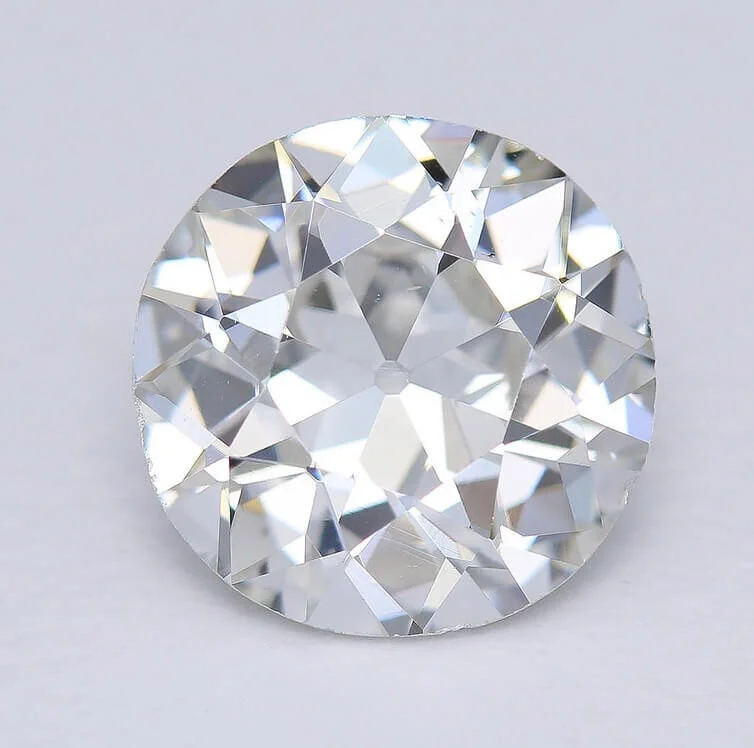
A Post-Consumer Recycled Old European cut diamond. Photos courtesy Jay Moncada.
CB: Would you recommend becoming SCS-certified to another wholesaler or gemstone dealer?
JM: Yes. It is definitely worth it. This is an industry that built trust based on a handshake system, but it is so helpful to have a third party that can audit and verify your claims. Having an SCS certification allows people to explain what their position in the industry really is.
For those of us who care about ethical sourcing and are interested in transparency, we can’t talk the talk without walking the walk.
In the responsible jewelry movement, getting certified is really the least you can do as far as sourcing goes. Companies who want to show further commitment can work on becoming a B Corp company, for example.
CB: Right. Let’s not abandon profit considerations, but let’s prioritize people and value people over profit. Have you been able to tell if there has been a shift in consumers wanting stones that are not newly mined more?
JM: Since I deal primarily with bench jewelers and designers, in an indirect way that is signaled to me through the diamond and gemstone requests I get. I mean, fifteen years ago if you talked about a “recycled diamond” people would look at you like you were talking about washing a can of tuna and putting it in the recycling bin! It didn’t connect at all.
Over the pandemic, when people were seeing fewer cars on the roads and less planes in the sky, they were also re-evaluating their priorities and thinking to themselves, “Am I always going to go with the cheapest offering on Amazon, or do I care to spend a bit more time and money on a more ethical product?”
The request for engagement rings has exploded during quarantine. I can tell you that because I’ve been doing that for 20 years! Instagram has helped to create an instant-gratification experience that has also helped popularize not only antique-cut stones but the whole idea of post-consumer.
Interest leads to education, and education leads to habits.
I feel that ethical considerations are going to be the norm in consumer purchases in the next 10 years.
CB: I agree. I think there’s a redemptive aspect to buying something that’s post-consumer recycled. While the original circumstances of that item’s creation may not have been ethical whatsoever, now we have the chance to redeem it by pairing it with things like Fairmined gold to try and counter some of the damage that had been done in the past by creating positive impact.
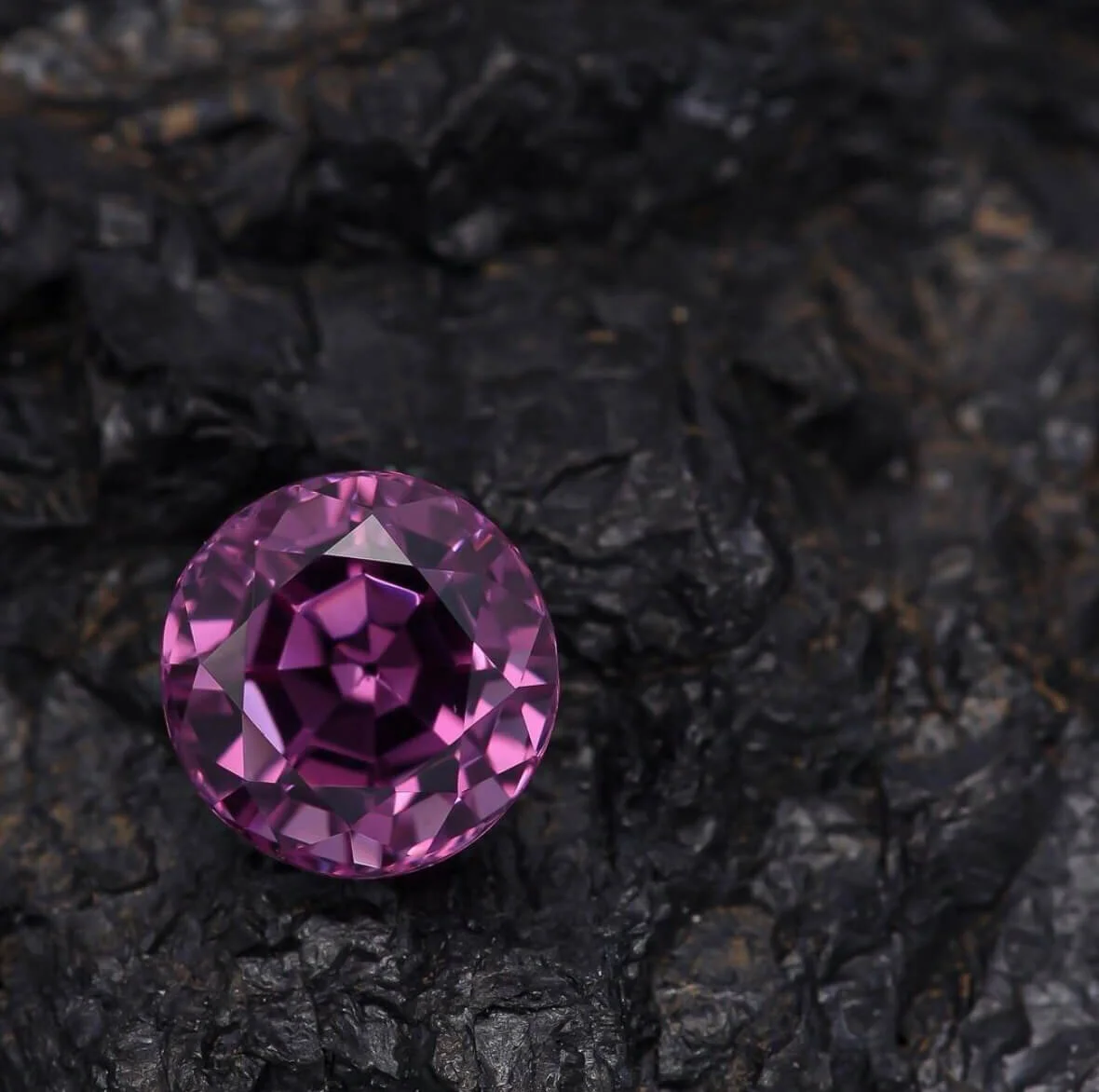
A Post-Consumer Recycled Spinel. Photo courtesy Jay Moncada.
I know there are some people reading this, whether they are in the trade or not, who would ask, “How are post-consumer recycled or even just recycled gemstones really more ethical?” They would argue that they are still contributing to the demand for those stones in general, which includes newly mined stones. What would you say to someone who is thinking that or who maybe doesn’t see the benefit of post-consumer?
JM: It’s tough. It all comes down to priorities. I cannot try to market what I do as more beneficial than what well-managed, fair artisanal mining could do for communities. We had a long and hard process of figuring out how Perpetuum could directly benefit people on the ground. You can’t place the label of “responsible sourcing” solely on recycled materials. The mindset we have at Perpetuum is that we aren’t trying to be the “best option.” If we can cover one aspect of ethical sourcing that is a priority for many people (being environmentally friendly or neutral) while also giving towards organizations that are actually directly impacting people’s lives, that’s the best we can do in the world right now, using the skill sets we have.
In our giving, we’ve focused on healthcare for the most at-risk diamond mining communities. We have been actively donating as much as we can every year to Partners in Health, and even more specifically to miners in Koidu, Sierra Leone (the area that was most affected by the war and that was the subject of the Blood Diamond movie). They are actively working to keep birth mortality low, as that is one of the biggest challenges in the area.
If we are able to help, even while being so detached from the issues, then truly everyone has the chance to make change. This past summer, as the Black Lives Matter protests were happening, we were able to raffle off certain pieces and give to social justice causes. I was having the thought, “If I am able to help communities in West Africa that I am so far away from and so detached from, then why can’t we also make change locally?”
If you want to have as much impact as you can, you can’t forget about your local community, right? It feels really good to give to matters that are close to the heart and know that somehow, we can make tiny diamonds have a positive impact on people’s lives, directly and indirectly.
CB: I wanted to ask you, on a less serious note, about your process getting your hands on all these unique gemstones. You get a lot of older-cut diamonds and just really interesting and unique material—I did not know what a Peruzzi cut was before meeting you!

A Post-Consumer Recycled Peruzzi Cut diamond. Photo courtesy Jay Moncada.
JM: Yes, so the quickest way for me is through auction houses, which there are so many of now—since the 2009 stock market crash, everyone started flooding the market with all of their stuff that they weren’t using. I like the experience of buying at an auction because you go from an observer to “I’m going to bid this one out over the other guy!” It’s exciting.
Another way I get inventory is buying from diamond dealers who have traveled up and down the East Coast buying stones from pawn shops and trade-in stores. I don’t have a clear-cut favorite process, but it is very helpful to have good working relationships with people who can help me hunt down stones since they already have in mind what I am looking for.
CB: It’s like having a personal shopper! Do you have a single favorite diamond find out of all the ones you’ve seen in your career?
JM: Oh my god. There’s been so much, it’s so hard to pick! But whenever I find a really early-cut diamond, that’s super exciting to me. That means you are looking at the original design for that stone. If I find a table-cut stone, I know I am holding a piece of history that is at least 200 years old, number one. Number two, I have a lot of awe of the fact that it was not re-cut and had been preserved for that long, since diamonds are so easy to re-cut. I like finding details in stones that are outside of the norm; you can imagine the cutter’s own individual style coming into play and see how they made decisions.
CB: What do you love the most about being a part of the EM community specifically?
JM: When we have EM meetings, we like to say that we “found our tribe.” It’s a meeting of similar mindsets, interests, and values. We don’t all have the exact same top values, but we can identify those values as part of the responsible movement. I can sit next to someone and hear what they are most passionate about and get inspired to work on that more myself. It’s a lot of reinforcing of what matters.
As of late, I’ve been paying more attention to what the EM students have been creating and what EM Education has been doing. I love seeing and absorbing the new trains of thought within our sphere: how are their bearings turning while they create?
CB: I think most people in this community, if not all, would say, “I’m here on purpose. I’m not just here because it’s a good marketing thing for me, I’m really passionate.” People care deeply. I love how you mentioned how we can make each other better.
JM: Yeah—a radical difference from the traditional arena I was raised in where people were mostly concerned with keeping things the way they are. Here at EM, we are all about grassroots, let’s change things up…I could go on about EM for weeks, seriously.
CB: I love that! Thank you for all your thoughtful answers, and your insights, Jay.
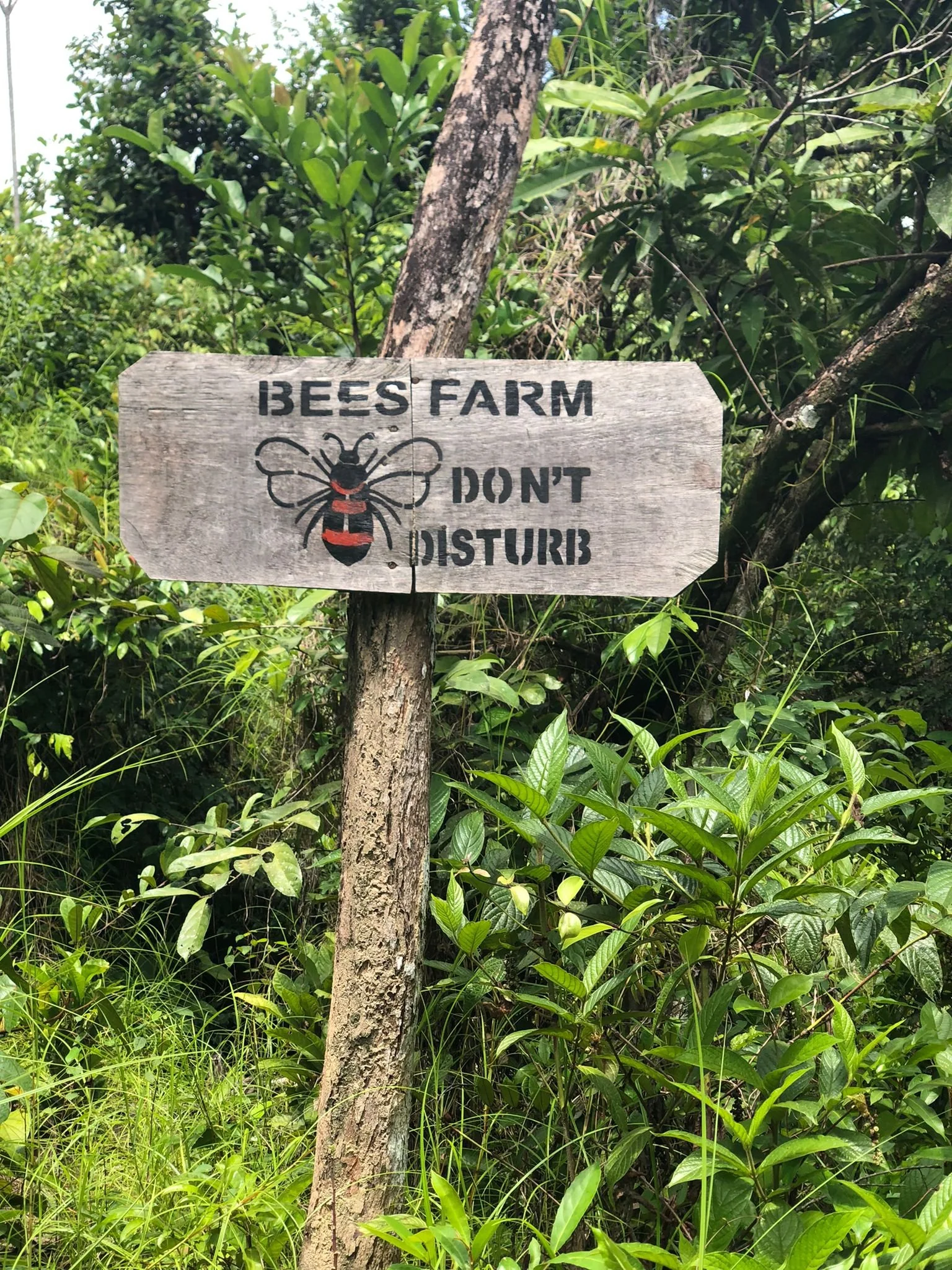
What do beekeeping and fish ponds have to do with diamond mining?