

Fair Trade Gems with Eric Braunwart of Columbia Gem House
The content of this article is the opinion of the writer and was written for The Source
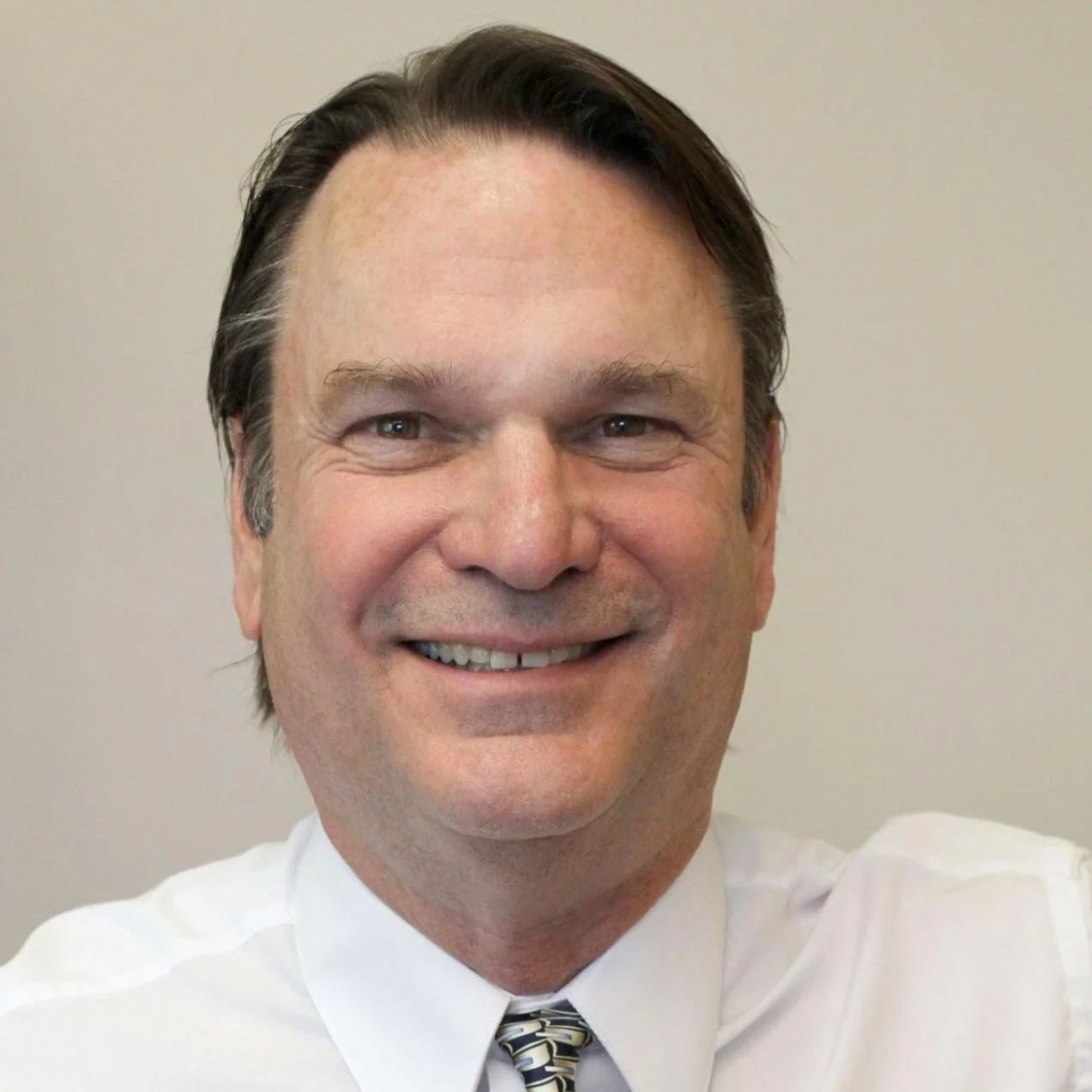
Eric Braunwart. Photo courtesy of Columbia Gem House.
Eric Braunwart of Columbia Gem House
This interview was conducted shortly before the Tucson Gem Show 2022.
Chloe Beaumont: Ok I have an obligatory first question: how did you get into the gem trade?
Eric Braunwart: Well, I have two degrees: one in Urban Planning and Environmental Design, and the other in Fine Art with a Jewelry Design concentration. Right out of college, I went to work for a design engineering company (which I hated) and left after 6 months. I had done my senior project in college on Far East Oriental architecture, and I picked up stones as I was running around for that. After I quit my job, I had to find some way to make money, so I started selling the stones that I had picked up on my travels—that’s how it all began.
CB: What is one big takeaway that you have about growing a gem business?
EB: Perseverance. It’s very difficult because outside of New York or LA, you’re not working with the local community. If you’re based anywhere else, you’re essentially working with the whole country. So, it takes time to develop contacts and work within the industry. Over time, you learn about the products and what designers are using, that sort of thing.
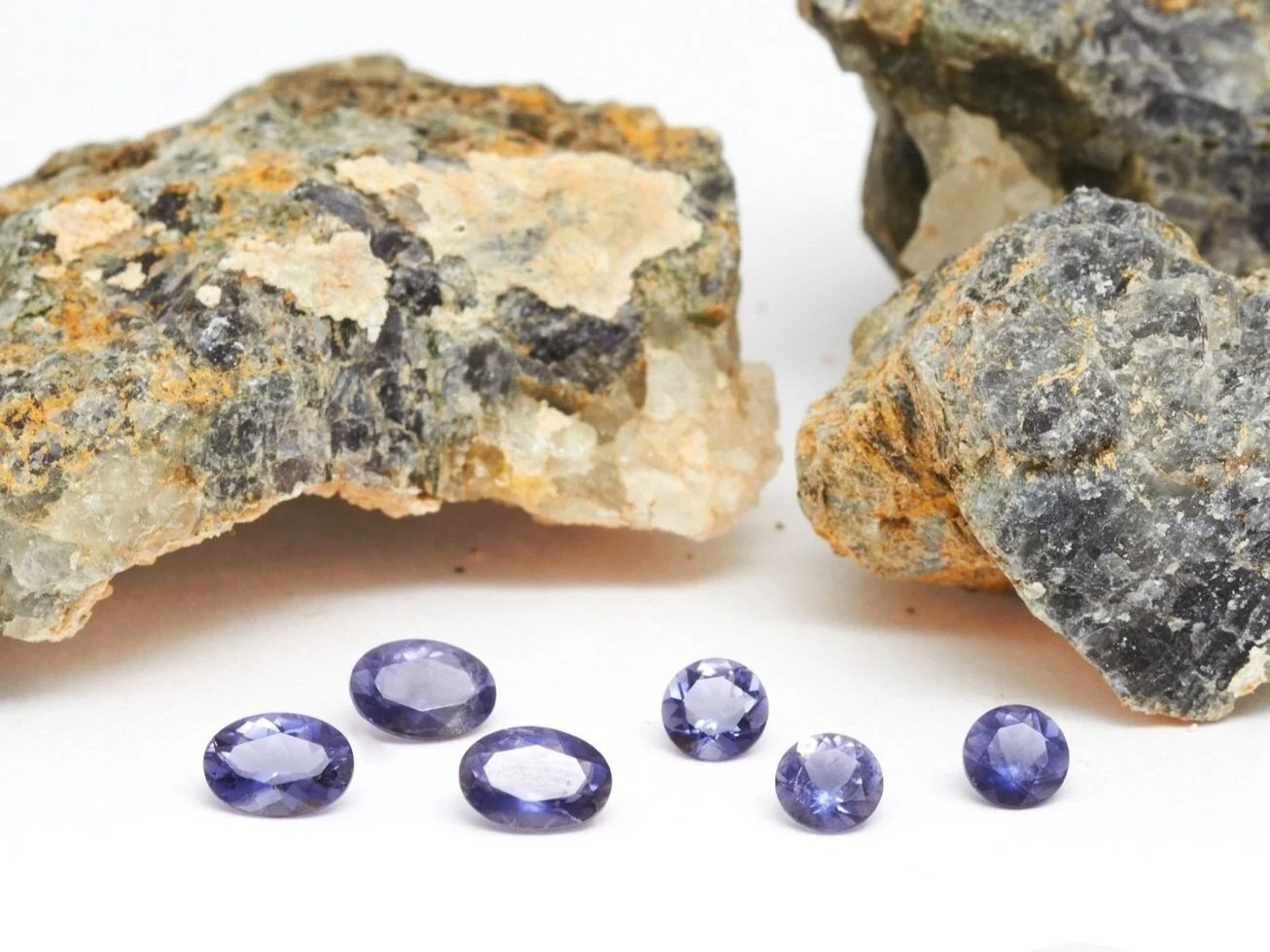
Columbia Gem House Iolite from the Rodeo Queen mine in Wyoming. Photo courtesy of Eric Braunwart.
With companies like I have, we sort of function like “gem banks.” Everyone wants access to everything year round, but the reality is that miners don’t produce year round. They have monsoon seasons where they can’t mine, or they are also farmers and so the only time they mine gemstones are while their fields don’t need tending to.
We have to just buy when stones are available, not just when we need them, so we buy in advance and warehouse them. That’s the other thing about starting a business like this: if you’re going to do it, you’re going to need capital.
CB: Has COVID-19 affected your access to different gemstones? How has that been for you?
EB: From the business point of view, it’s actually been very good for us. We’ve been really busy, largely because we’ve been moving towards digitizing our delivery methods. Pre-covid, we were positioned relatively well to take advantage of all the lockdowns. The downside is that, painfully, some of our suppliers have died from Covid. We have regular disruptions overseas. Sure, we think it’s bad here in the US, but over in China where we set up our cutting facility thirty-two years ago, the lockdowns are so severe. A city sees one Covid case, and the entire city is shut down—you couldn’t move a cat in or out!
So, we’ll have these floods of cut gemstones coming in, and then due to lockdown we’ll go a month or two with nothing coming in. However, because we have a very large inventory, it thankfully hasn’t had an impact on sales. If this continues for another year or two, then that’s going to be a different story.
CB: Wow. I know you guys have close contacts with a lot of miners—I’m thinking of the Navajo miners down in the Southwest especially, as we know that community was hit really hard by Covid.
EB: Yes. Some of these places had very little healthcare to begin with, so you add Covid on top of that and you’ve got even more of a problem.
CB: I saw on Instagram that you guys did the outreach to support the Navajo miners a few months ago.
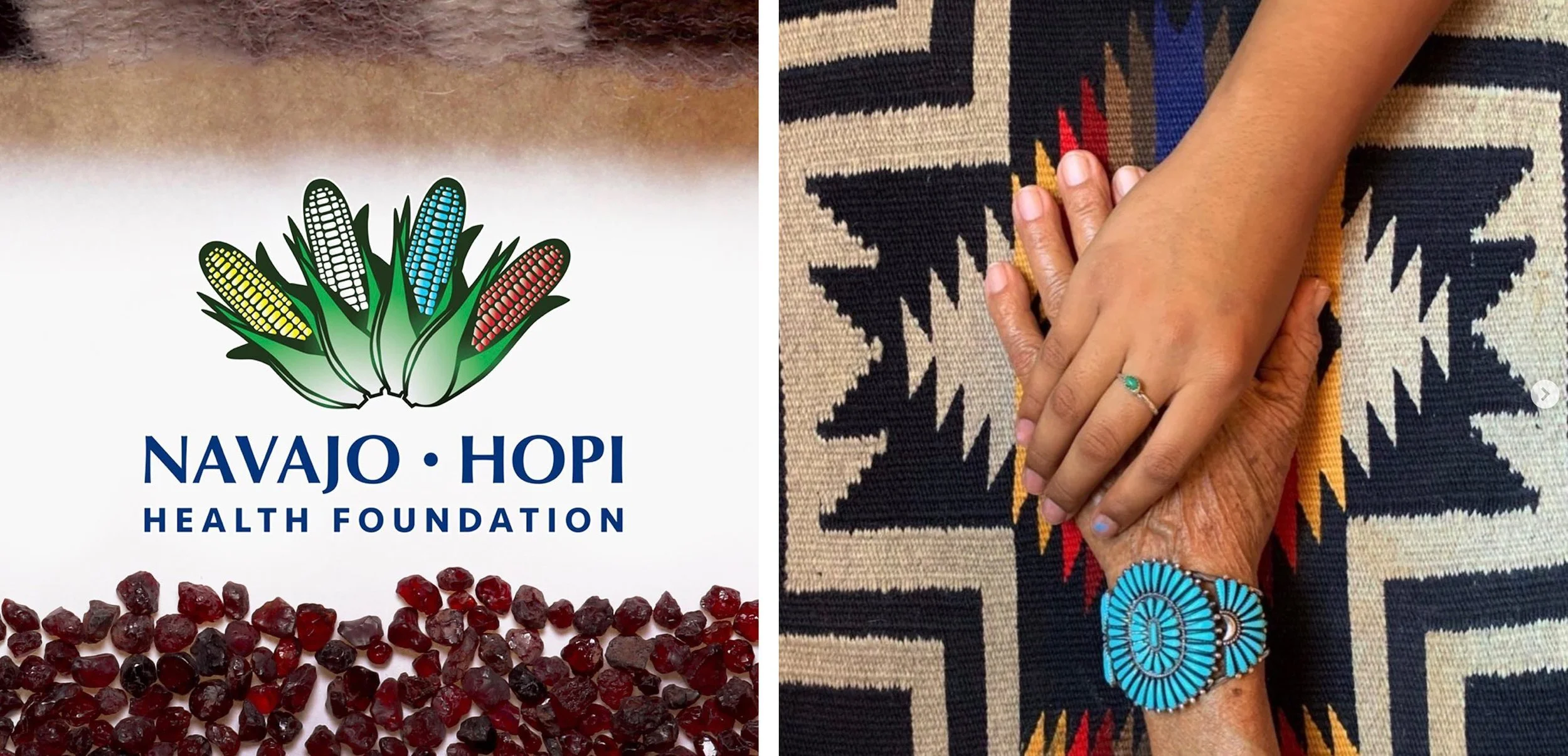
Navajo Hopi Health Foundation logo and Navajo jewelry. Photos courtesy of Columbia Gem House and the Navajo Hopi Health Foundation.
EB: Yes, that was for their healthcare system—and we did one before that went towards fighting Sillicosis in India and towards an anti-slavery group in Pakistan that essentially pays for cutters, weavers, and other craftspeople to get out of slavery. The third group we supported with that fundraiser was We Wield the Hammer, which helps underserved communities in both the US and Senegal by training them in jewelry making.
CB: I’m glad you can partner with different organizations like that—it’s really important, especially now.
EB: It’s really enjoyable because you get to do something in the luxury industry that is not just pure luxury. Everybody here gets pretty excited about these partnerships. We haven’t announced who we are partnering with this year just yet, because we are still finalizing details, but stay tuned everyone.
CB: Another thing I wanted to bring up is your branded “Fair Trade Gems.” I am really curious as to how you decided to go with that label and also how you decided to split them into different categories.
EB: There’s two very distinct, different answers to that question. One of the answers we’ve never really published much—but when we started this concept in 2001, we used the term Fair Trade Gems, but we thought it should be a public term that anyone could use. We had trademark lawyers already because we do a lot of trademarks on our unique cutting styles and gemstone names.
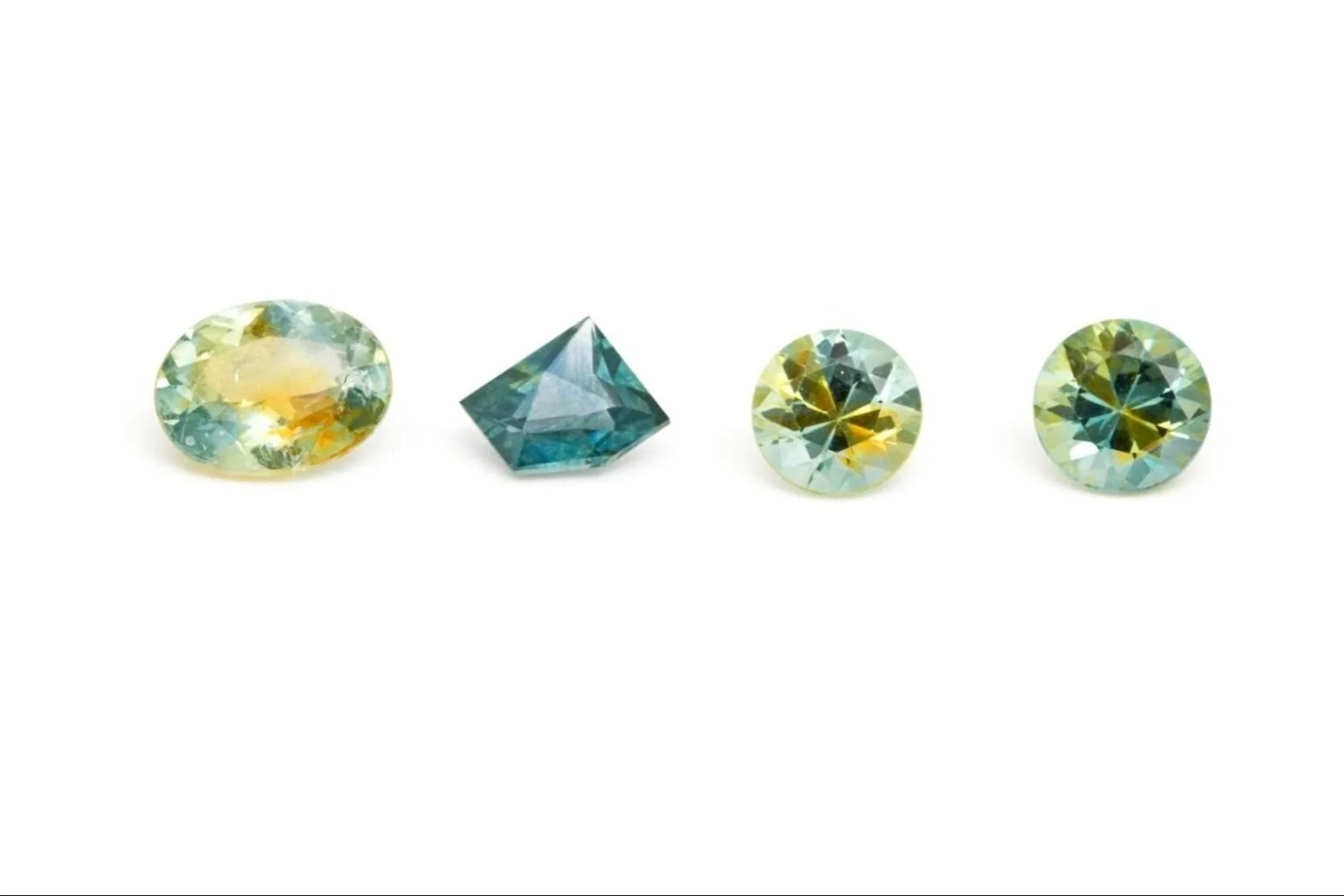
Blue Green Montana Sapphires from Columbia Gem House. Photo courtesy of Eric Braunwart.
Our lawyers called us one day and told us that a big company had filed for the Fair Trade Gems trademark. Our lawyer said, “Well, if you want to be able to use this term at all in the future, your only choice is to sue this company and win over the trademark.” I decided I really did want to be able to refer to my gems by this term, so we did sue them. In the end, the other company decided it wasn’t worth it, so they dropped their claim.
Six months later, a registered trademark shows up at our doorstep and I go, “Oh, yeah, we actually have this now.” But that was never my original intent.
Now, with regards to the five different levels—when we started this business, there was virtually nothing happening with regards to “fair trade” in the jewelry industry. I was looking at the chocolate and coffee industries and watching what they were doing to get some sort of idea. There was also a lot of greenwashing being done and blanket statements being made across all the industries. I didn’t want to be a part of that, so that’s when I decided we needed these levels for our gemstones to differentiate them.
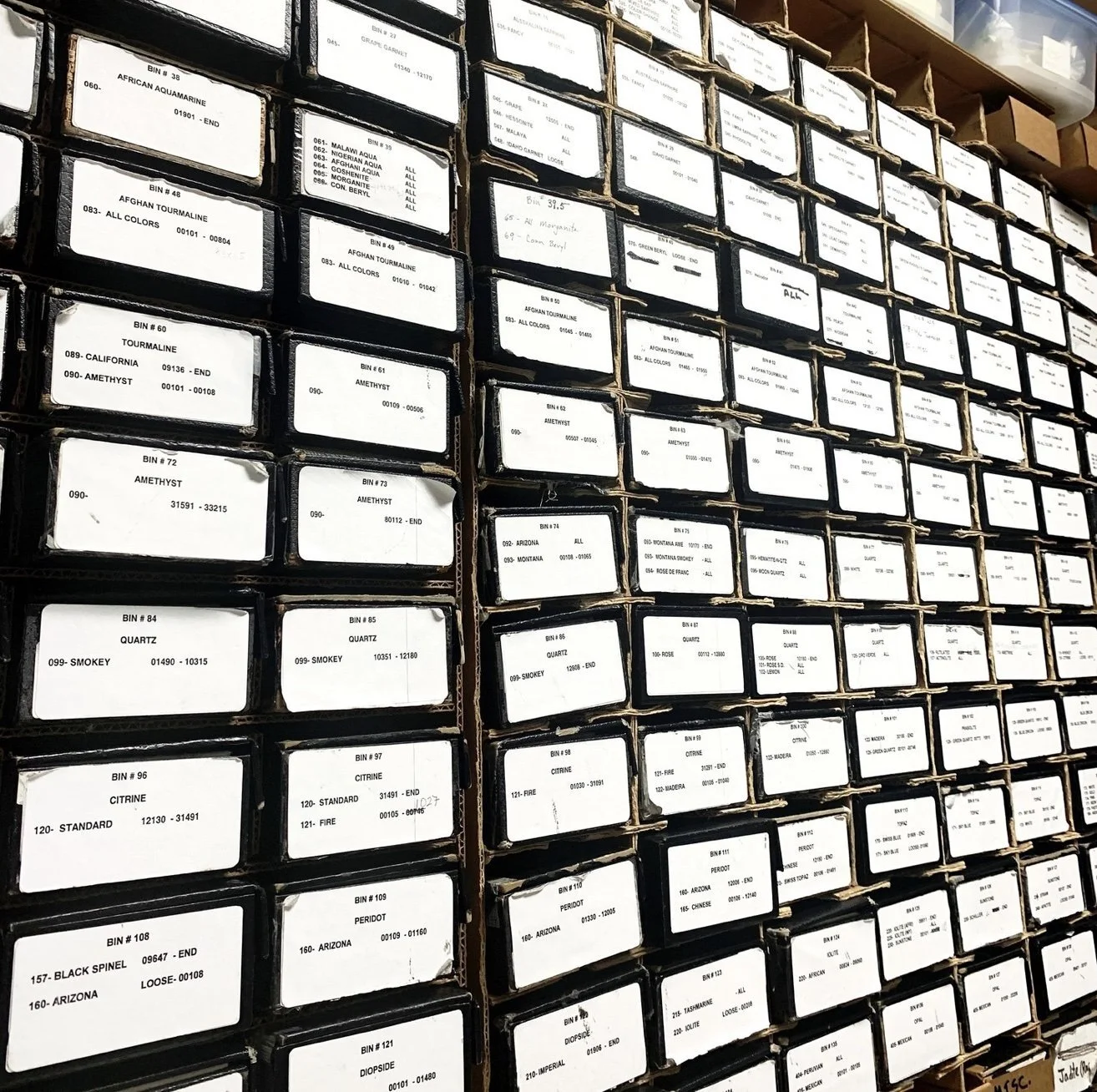
A wall of Columbia Gem House gems. Photo courtesy of Columbia Gem House.
Each of our 1.2 million gemstones has a 1, 2, 3, 4, or 5 next to it. The ones that we have from 20+ years ago before we got into traceable responsible sourcing have an “H,” which stands for Heritage. I figure it’s better for us to sell these stones with complete transparency and provide any details we do have, rather than just keep the stones in the warehouse forever. Most of these stones we actually have cut ourselves, but we weren’t good about tracking it at the time.
If a designer comes to me saying, “I want to know where the stone was cut and that I’m not supporting anything that is giving cutters silicosis” we can direct them towards the category of gemstones where we know the exact cutting conditions.
Now, we might not know how this gemstone was mined, but we do know that the person who cut it is not dying from silicosis. This would fall under level 3.
If a designer only feels comfortable working with stones where we know every last detail of mining and cutting, like our stones that come from the Navajo miners, then we have our Level 1 or 2 category for that.
We’re not perfect, and every stone we sell is not perfect. I’m okay with telling people that. The levels are really designed so that our buyers (mostly designers) can decide for themselves what they are comfortable with and have the details in front of them on our website.
CB: For the stones that get put into a lower level of a 4 or 5—say the stone is a Level 4, and you guys have some sort of relationship with the vendors from that area. Do you as a company try to help them so that their stones can move up to the next best level? Do they want to advance in Level?
EB: Yes and yes! People often say, “We only want to buy a Level 1 stone.” But then I go, okay, but that means we can only work with the very best suppliers and the very best cutters, and we can’t help anyone else. Stones in the Level 5 are stones from years and years ago just as I was beginning my responsible sourcing and tracing journey.
Newly mined stones start at Level 4. With Level 4 vendors, this is our “testing” phase where we go and establish our relationship. We buy a limited amount of stones and we see how they do in the market, and if there is demand for them. If there is, then we circle back and start working with them on how we can get them up to a Level 3 or Level 2.
I absolutely believe our industry needs to engage with all different types of vendors, and not just write them off because they are not perfect.
CB: For sure. I think a lot of the time, it’s hard to compare when we are so lucky to live in a country that cooperates with us and also provides the best safety standards, the best of everything. You look at places like Nigeria and India—they don’t have that government cooperation. With Nigeria, I’ve learned that it is a nightmare to even legally export rough gemstones out of the country.
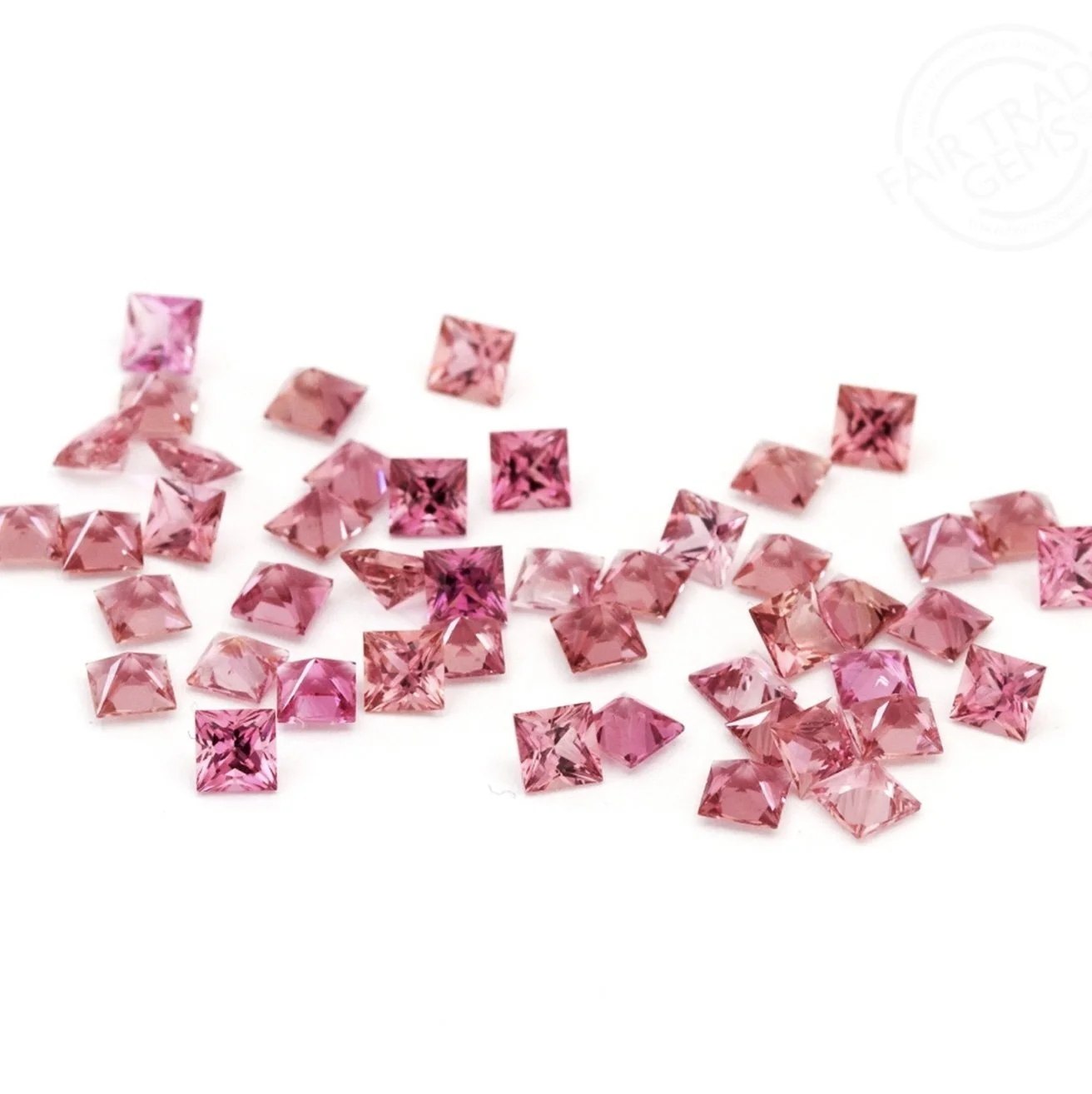
Nigerian Pink Tourmaline from Columbia Gem House. Photo courtesy of Columbia Gem House.
EB: That’s exactly right. Sometimes it’s a bit painful for me when I can just automatically put American or Australian suppliers into Level 1. These suppliers literally have to abide by certain rules and procedures, such as land reclamation after mining. Then I work with some people in Zambia and Malawi that are really struggling to find a way to do better, and their stones still get put into Level 3. It’s hard for us to wrap our heads around.
CB: This is a good conversation to have, and I’m so glad we are talking about this. The jewelry industry can’t simply write off less-than-ideal suppliers of materials, because we’d be writing off a huge percentage of them—and there goes our industry.
EB: I’m concerned that if we don’t engage and help them try to improve, the wealth gaps and health gaps that already exist will just grow bigger. It’s part of our policy to always try and find ways to help. Ten years ago, it was much more difficult. We’d try to convince people that being more responsible was the way to go, but in reality the public demand for that would be seven years from then. A lot of the suppliers didn’t hang in there with us for those seven years. The suppliers now see enough discussion about responsible sourcing that they want in; they also see that it is truly helping their communities.
CB: I wanted to ask you about your cutting facility in China that you mentioned earlier. Have you ever been able to go out to the facility?
EB: Oh, yes. I added it up one time and I realized I’ve been there 55 times, so yes — a lot! When we started in Shenzhen, it’s hard to even believe this, but it was only rice fields. There was nothing else. We filled in part of a rice field to even have land to build our factory on. So far as I know, we were the second company to set up gem faceting in China. Another friend of mine set up his business maybe a year before we did, just when China was starting to open up. For the first two years, I wasn’t allowed into China because I couldn’t get a visa.
CB: Wow. How did you establish that contact, then?
EB: It was a contact of my first partner, who got me in a lot of trouble in China. We managed to get out of that situation thankfully. Mr. Lam had the same experience with my ex-partner, so when we met, we decided to partner together. He and his family are still our partners to this day, and many of our cutters have worked at the cutting facility this whole time. Mr. Lam and his family are Hong Kong natives, so they were able to get into Shenzhen way earlier than I could. So much has changed since then.
CB: One last question: What is your favorite thing about being a part of the responsible jewelry movement, and/or EM?
EB: Well, I never envisioned myself as the guy sitting back in the rocking chair giving all the younger people advice….but I guess that’s probably my favorite part! Somehow helping others get started, and mentoring them, if that’s the right word. I was one of the 32 people that started AGTA (American Gem Trade Association) forty years ago, and so I know all the pains that organization went through, developing a constitution and everything else. When I see EM struggling on some topics, I go, “Well, it’s really not so bad, guys!” Everyone starts somewhere. The biggest challenge is just getting started, and EM is a pioneer. Everything isn’t going to always go perfectly. I really enjoy working with people to help them get involved.
CB: We need that! Thanks so much Eric, for making time ahead of Tucson and for sharing all this with us.


Something we rarely talk about to the extent that it is almost taboo is what happens with a break-in, burglary or even a hold-up: How do we deal with the aftermath?