

Ahlam Qaissi
2024 Emerging Artist Award

The 2024 Emerging Artist was chosen from the applicants of the So Fresh + So Clean 2024 student exhibition, and awarded $1000 + $150 gift certificate to Charon Kransen Arts.
In 2023, Ahlam Qaissi received a Bachelor of Jewelry Design from the Bezalel Academy of Arts and Design

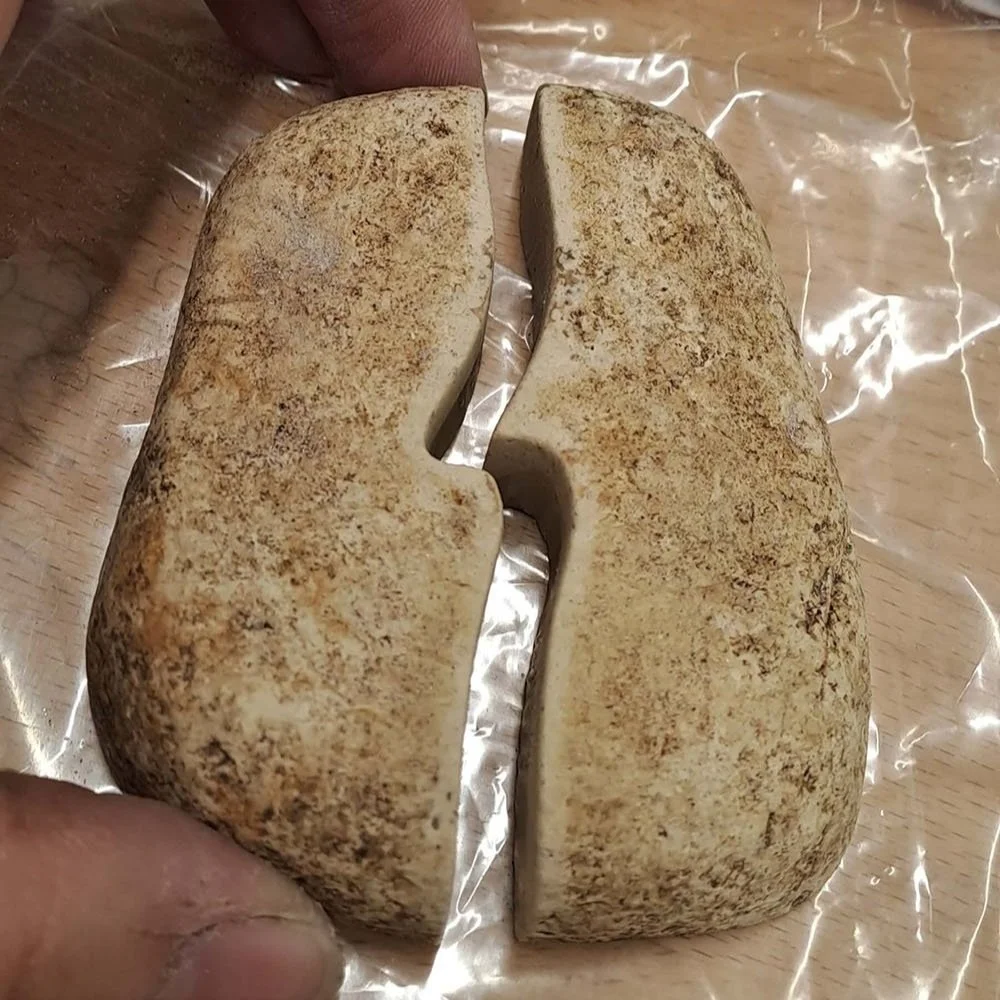
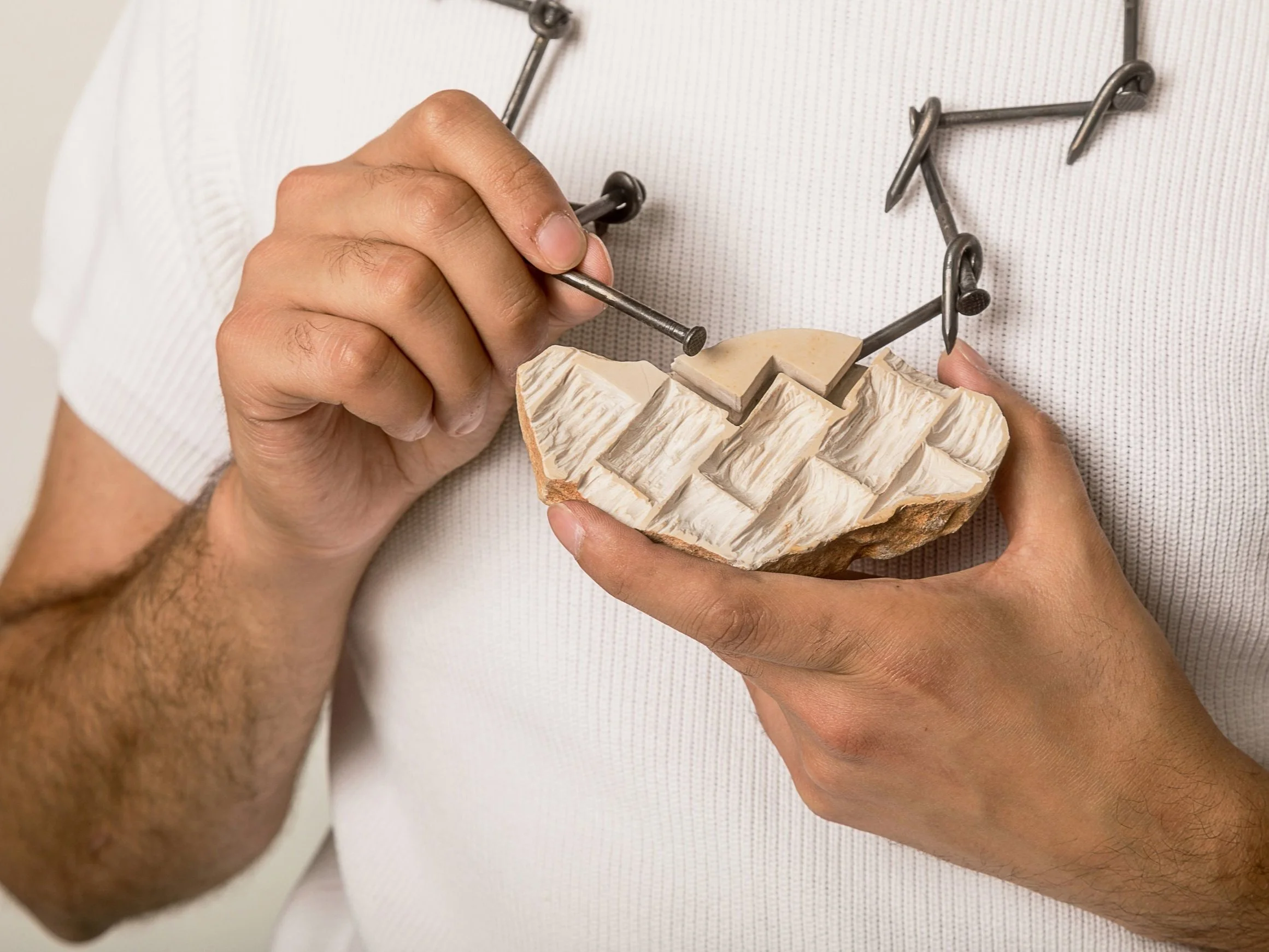
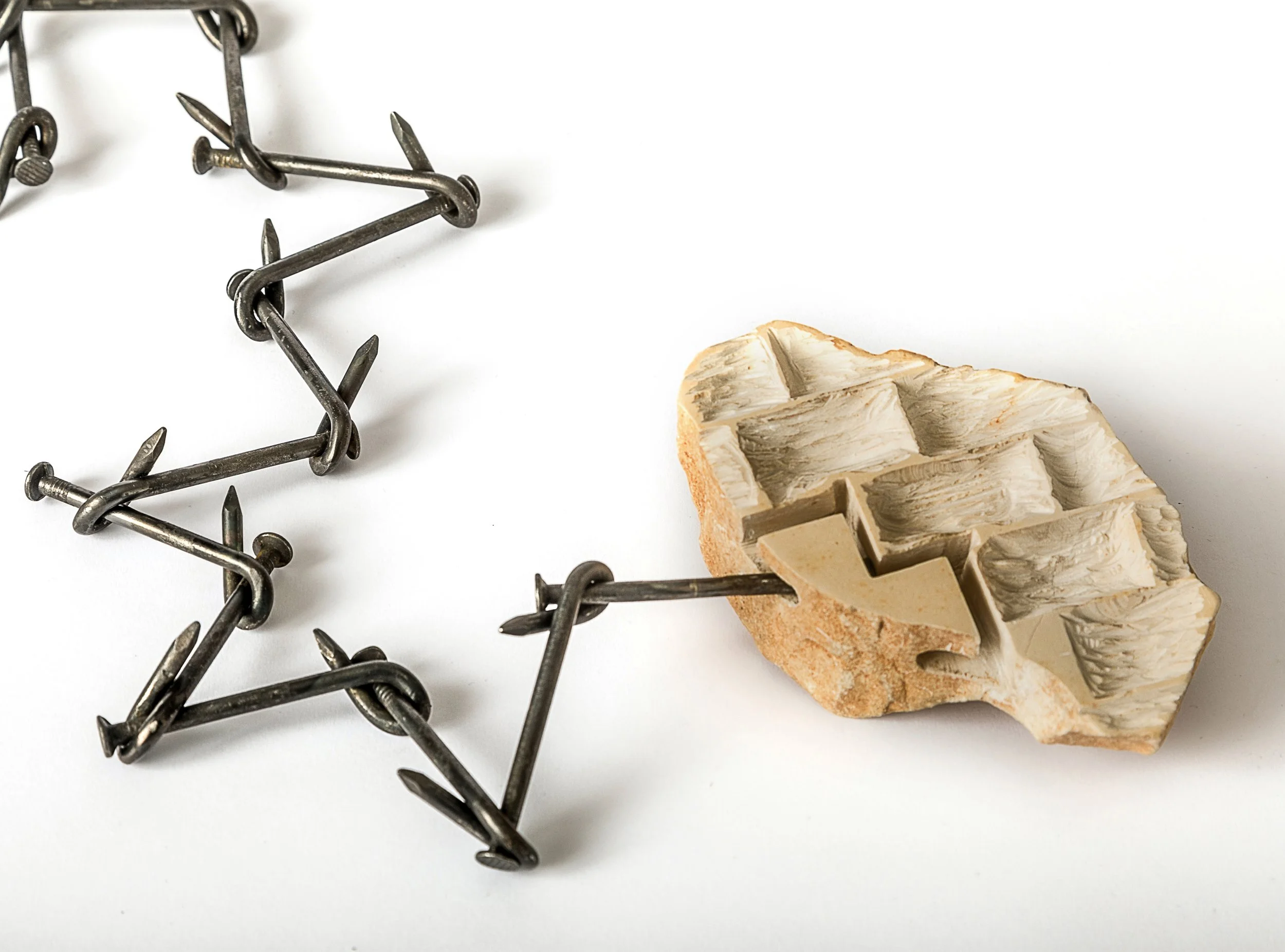
“Even within my own home, I constantly long for the place where I grew up; the profound changes occurring there cause me deep sorrow. The limestone, the fundamental building block , served as the cornerstone for my project. It is strong, and primitive, embodying both home and land. Likewise, I represent the land and the home.
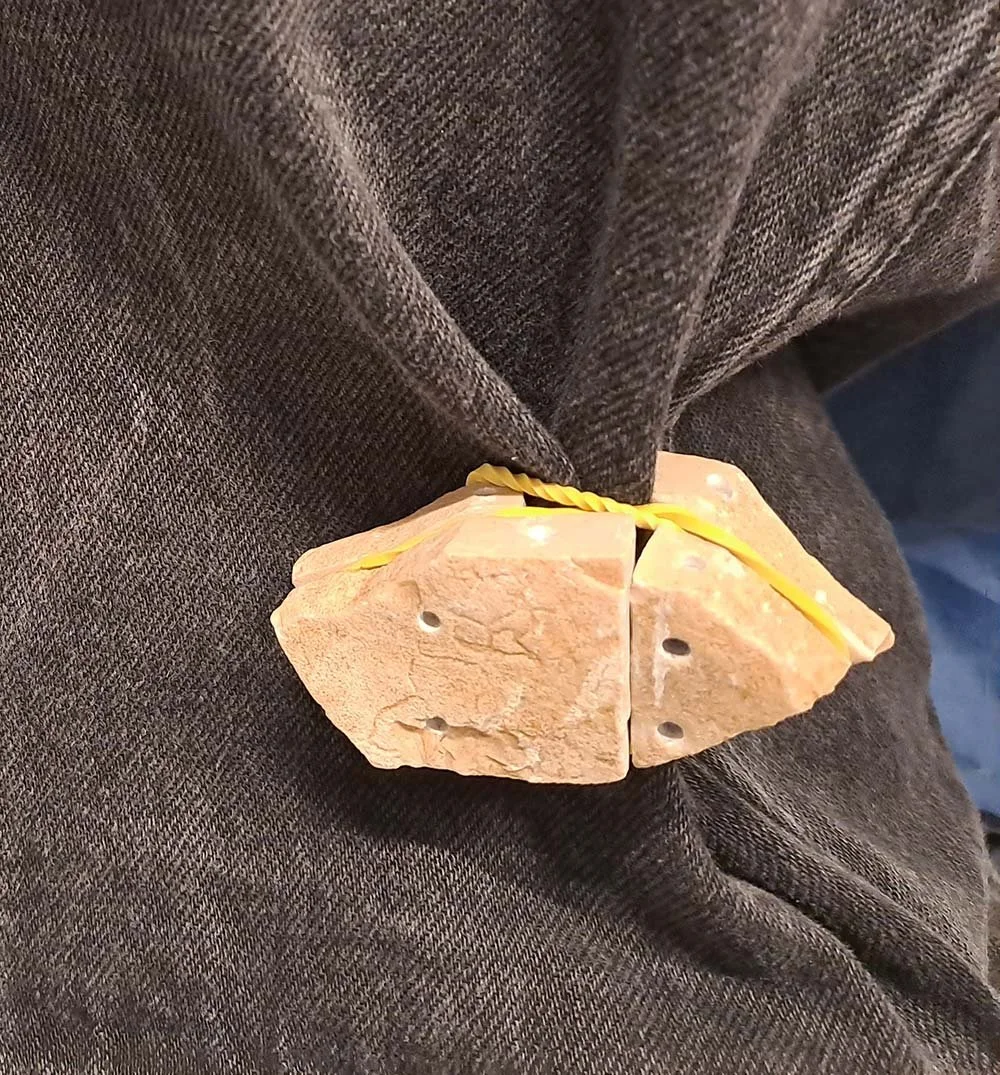
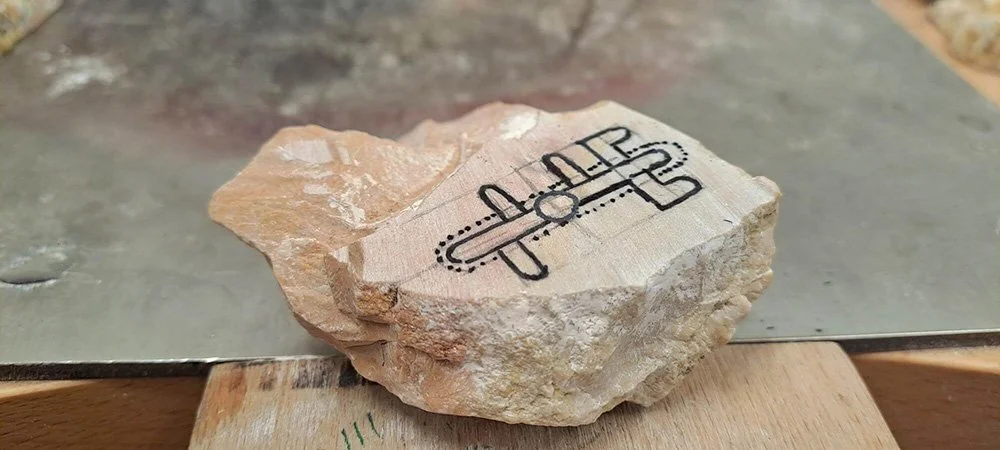
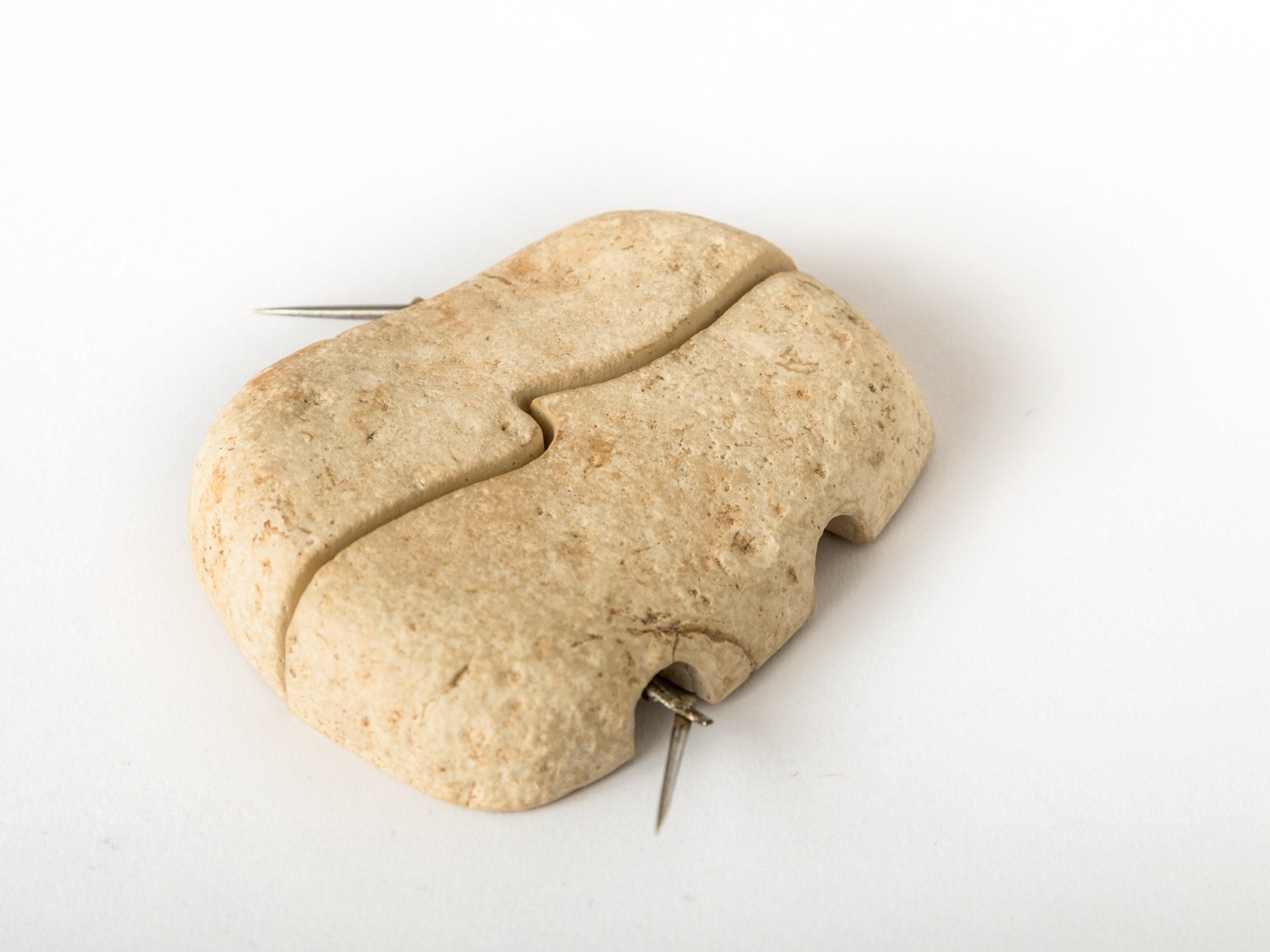
The jewelry features stones and nails, with nails anchoring stones and creating unique folds in the fabric. By carving the stone, an extension and intimately personal space inspired by human anatomy are forged. Within this space, the values of preservation, memory, and the quest for healing from the potential anguish of separation from my cherished land, exacerbated by political and environmental degradation, are profoundly represented.
Committed to sustainability, I repurposed leftover stones and nails from my garden. Both remain separated, adhering to key recycling principles, allowing them to be returned without significant damage to their original location. While engaging with the stone, I preserved its natural facets, meticulously sculpting others to align with its formal and structural attributes, always adhering to organic architecture principles. The jewelry features stones and nails, with nails anchoring stones and creating unique folds in the fabric. By carving the stone, an extension and intimately personal space inspired by human anatomy are forged. Within this space, the values of preservation, memory, and the quest for healing from the potential anguish of separation from my cherished land, exacerbated by political and environmental degradation, are profoundly represented.
Committed to sustainability, I repurposed leftover stones and nails from my garden. Both remain separated, adhering to key recycling principles, allowing them to be returned without significant damage to their original location. While engaging with the stone, I preserved its natural facets, meticulously sculpting others to align with its formal and structural attributes, always adhering to organic architecture principles.”
Answers & Artworks by Ahlam Qaissi
As the 2024 recipient of the EM Emerging Artist Award, how do you consider ethical practice in your work?
For me, being an artist isn’t just about creating beautiful pieces. It’s about responsibility to the environment, to society, to the world. I source my materials with great care, opting for natural, responsibly harvested resources. I steer clear of synthetic or harmful industrial materials because I believe that how we make things should reflect our values. My work often touches on themes of human rights and environmental justice, and I only work with suppliers who share my commitment to sustainability and fairness.
What is the tool you love the most? If you could have one tool that you don’t have already, what would it be?
The tool I cherish most is the hammer it’s simple, yet with each strike, it brings form to life. There’s something about the way it interacts with metal that feels deeply primal and transformative.
If I could add one tool to my collection, it would be a pneumatic hand engraving machine. The precision it offers would allow me to breathe finer details into my designs, giving me the ability to carve delicate, intricate patterns and textures into metal, expanding the narrative I create in each piece.



Who are some of the artists you admire and why?
In the world of jewelry, I admire Vivi Touloumidi for her bold approach to wearable art as a form of social and political discourse. Her work goes beyond adornment it’s a statement, a conversation with the world. Alexander Calder, with his ability to turn simplicity into kinetic elegance, also inspires me. His jewelry feels like it’s alive, constantly moving and evolving. And Ai Weiwei he merges art with activism in a way that speaks to my belief that art can and should challenge the status quo.



What events led to you becoming a metalsmith?
I’ve always been drawn to the way things are built, how forms take shape through material and construction. This fascination initially led me into civil engineering, where I spent several years designing structures. But the pull towards working intimately with materials was irresistible. I yearned for the tactile connection with creation, something smaller, more personal. That's when I found jewelry a medium so small, yet so capable of carrying immense meaning and emotion. Jewelry captivated me with its ability to tell stories through its beauty, so I embraced it as the vessel for my creativity and expression.
What is the significance of wearability in your work?
Wearability is at the heart of my work, but not in the traditional sense of comfort or ease. My pieces often challenge the wearer they’re meant to evoke a physical dialogue with the body, sometimes causing discomfort or unease. I want my work to provoke thought, to stir questions. In my project "A Stone As Life," for instance, I allowed nails to pierce through fabric, creating ruptures that symbolize the pain and challenges I associate with my connection to the land. Wearing these pieces isn’t just an act of adornment it’s an artistic performance that conveys deeper stories.


What do you listen to while you work?
Music plays a big role in my creative process, setting the tone for the energy in my studio. Fairuz’s voice often fills the space with nostalgia and emotion, creating a soulful backdrop for my work. Emel Mathlouthi’s powerful, socially conscious music also inspires me it’s bold, intellectual, and innovative, much like the kind of art I aspire to create.


What are you reading right now?
I often find myself drawn to poetry and philosophy. One of my favorite books is "The Prophet" by Kahlil Gibran, a poetic exploration of life’s core questions. Right now, I’m reading "The Dream of a Ridiculous Man" by Fyodor Dostoevsky, a philosophical tale that delves into despair and moral awakening. Its themes resonate with the questions I grapple with in my own work about meaning, about purpose.
How do you select your materials?
I let the materials guide me. I choose natural elements that resonate with the landscapes around me, with my roots and my relationship to the earth. Oftentimes, the material comes first, speaking to me in a way that shapes the design itself. It’s as though the material chooses me. I immerse myself in its texture, its weight, its response to being worked, and through that dialogue, I discover how best to bring my vision to life.


Dream job?
My dream is to one day establish a jewelry design school in my homeland, where I can pass down the skills and passion I’ve cultivated. I want to foster a new generation of jewelry artists, helping to elevate contemporary jewelry design as a powerful, creative art form within my community.
What’s next for Ahlam Qaissi?
The next step in my journey is to pursue a master’s degree in jewelry design. I’m excited to delve deeper into my craft, exploring new techniques and materials that will push the boundaries of my creativity. I also plan to set up my own studio—a space where I can continue to experiment, evolve, and bring my artistic visions to life on my terms.
So Fresh + So Clean 2024 JURORS

-
Charon Kransen ( born in Holland ), ( resides in New York City since 1988 ) has worked in the field of contemporary jewelry since 1969. He received his training at the Bezalel Academy of Fine Arts Jerusalem Israel, Hochschule fuer Gestaltung Pforzheim Germany and at Juhls Kautokeino Norway.
Professor of Jewelry (and Enamel) Design at the University of Utrecht Holland; Head of Jewelry and Enamel department at the Arts College Amersfoort Holland; President of the VES ( Dutch Jewelry Designers Organization) and lecturer at universities, colleges and art organizations internationally.
Curator, art-dealer and agent for over 150 international contemporary jewelers (mostly non-Americans) in North-America at various galleries and art fairs such as the SOFA Chicago , SOFA NY, International Art + Design Fair in New York, Art Palm Beach Palm Beach, Miami International Art Fair Miami, SOFA West Santa Fe and Art Basel Miami
( Red Dot Fair ) Art Aspen, Art & Jewelry & Antique Fair Palm Beach, LA Art Show etc.
He also distributes books and catalogs in the field of jewelry/metal/design and his array of international titles are considered the most comprehensive in contemporary jewelry.
He has been the official bookseller of the SNAG ( Society of North American Goldsmiths ) for the past 30 years, besides being a juror for many international cont. jewelry competitions
For the past 20 years he has lectured on contemporary jewelry and gives master-classes to students and professionals in the North-America, Europe, Australia and South America and Asia.,
-
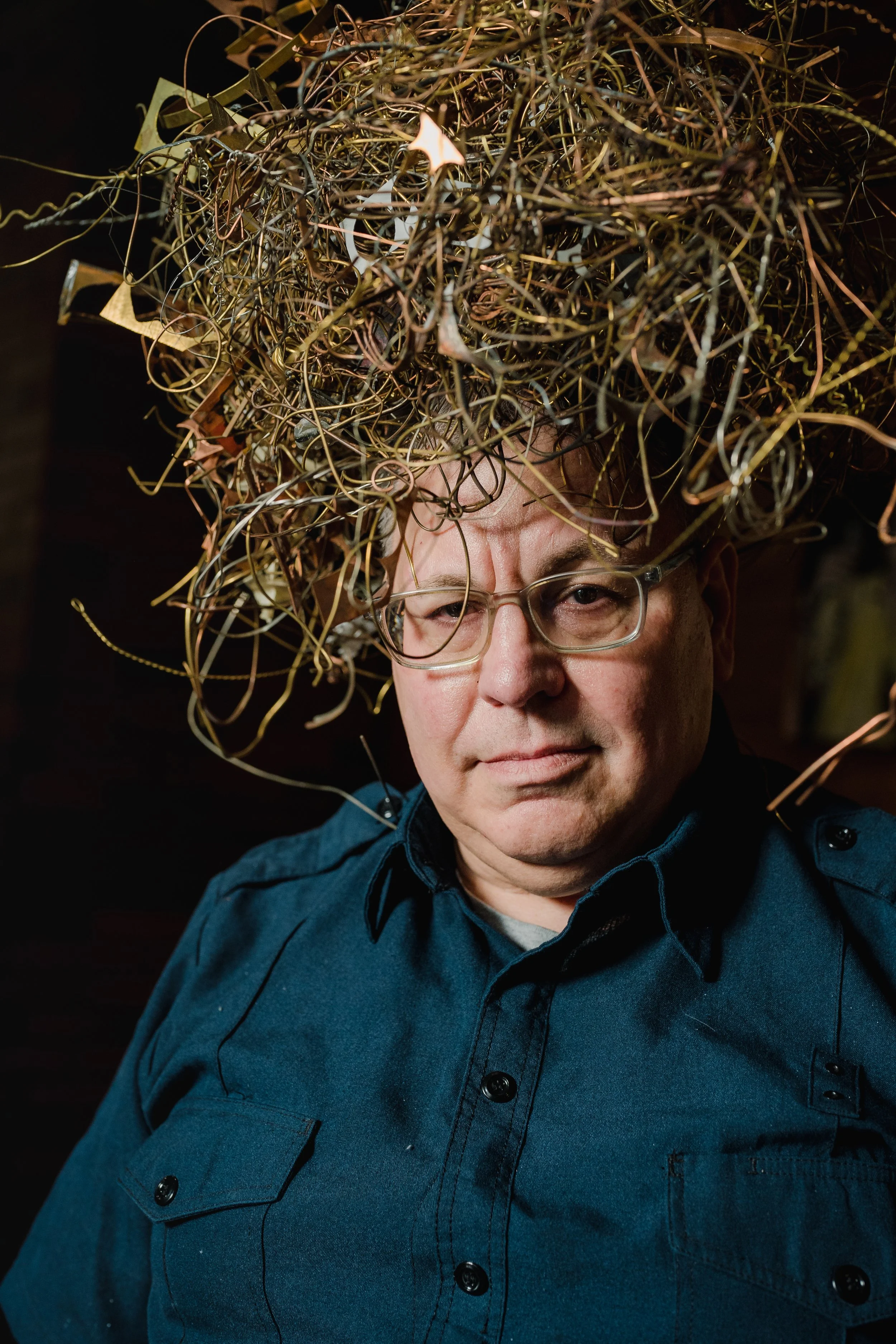
"Keith Lewis received his BS in Chemistry from Dickinson College (Carlisle, PA) in 1981 and his MFA in Jewelry & Metalsmithing from Kent State University (Kent, OH) in 1993. He has been teaching at Central Washington University since 1994, where he is currently CWU Distinguished Professor.
His jewelry deals with issues of sexual identity, memory, loss, and the notion of jewelry as a transportable polemic. It has been widely published and shown both nationally and internationally and is represented in a number of significant public and private collections, including the Tacoma Art Museum, The Houston Museum of Fine Arts, The Rotasa Foundation (CA), The Boardman Family Collection (CA), The Porter/Price Collection (NC), the Susan Beech Collection (CA), The Museum of Arts and Design, The Smithsonian Institution, The Metropolitan Museum of Art and the Victoria and Albert Museum in London.
In addition to his work as an artist and teacher, he has also written for a number of publications including Metalsmith, New Art Examiner and Artweek and has served as a member of the Board of Directors of the Society of North American Goldsmiths (SNAG) and of the Metalsmith magazine Editorial Advisory Board.
He desperately wants to meet a wombat”
photographer as Jovelle Tamayo
Emily is a frequent lecturer and has been invited to present at museums, conferences, and organizations around the globe. The diversity of Emily’s interests in the field are evidenced in her publications and lecture topics, which range from nineteenth century jewelry to works by contemporary makers and designers.
In addition to her work as a curator, Emily has spent more than a decade as an adjunct professor at Boston-area colleges and for four years managed three robust undergraduate programs in fashion design and merchandising. Most recently, Emily developed a History of Jewelry course for the Art History Department at Massachusetts College of Arts & Design (MassArt).
A leader in the field, Emily served as a member of the Board of Directors for the Society of North American Goldsmiths from 2017 until 2020, and is currently the spokesperson of the jewelry vetting committee of all three of The European Fine Art Fairs (TEFAF).
Emily’s academic work has focused on the history of material culture and the philosophy of identity. She is particularly interested in the evolution of taste and her dissertation focused on the influence of the Hollywood red carpet. Emily holds a PhD in Humanities from Salve Regina University, Master of Arts in Fashion & Textile Studies from the Fashion Institute of Technology, and Bachelor of Arts degree in Psychology from the University of Massachusetts, Amherst.

-
Debra Dowden-Crockett (she/her) is a metal and glass artist whose practice explores topics of vanitas, impermanence, alchemy, and femininity. She is a first-year Craft/Material Studies Graduate student at Virginia Commonwealth University. She received a Bachelor of Science degree in Philosophy at Baylor University in Texas. She is a member of Ethical Metalsmiths, Society of North American Goldsmiths (SNAG), and the Virginia Glass Guild, where she has served as President.

-
Yifei Kong is originally from Beijing, China. She is a metalsmith and enamelist. She received her BFA in Metal from SUNY New Paltz, NY. Currently a first year in the Craft/Material Studies MFA program in Virginia Commonwealth University.
-
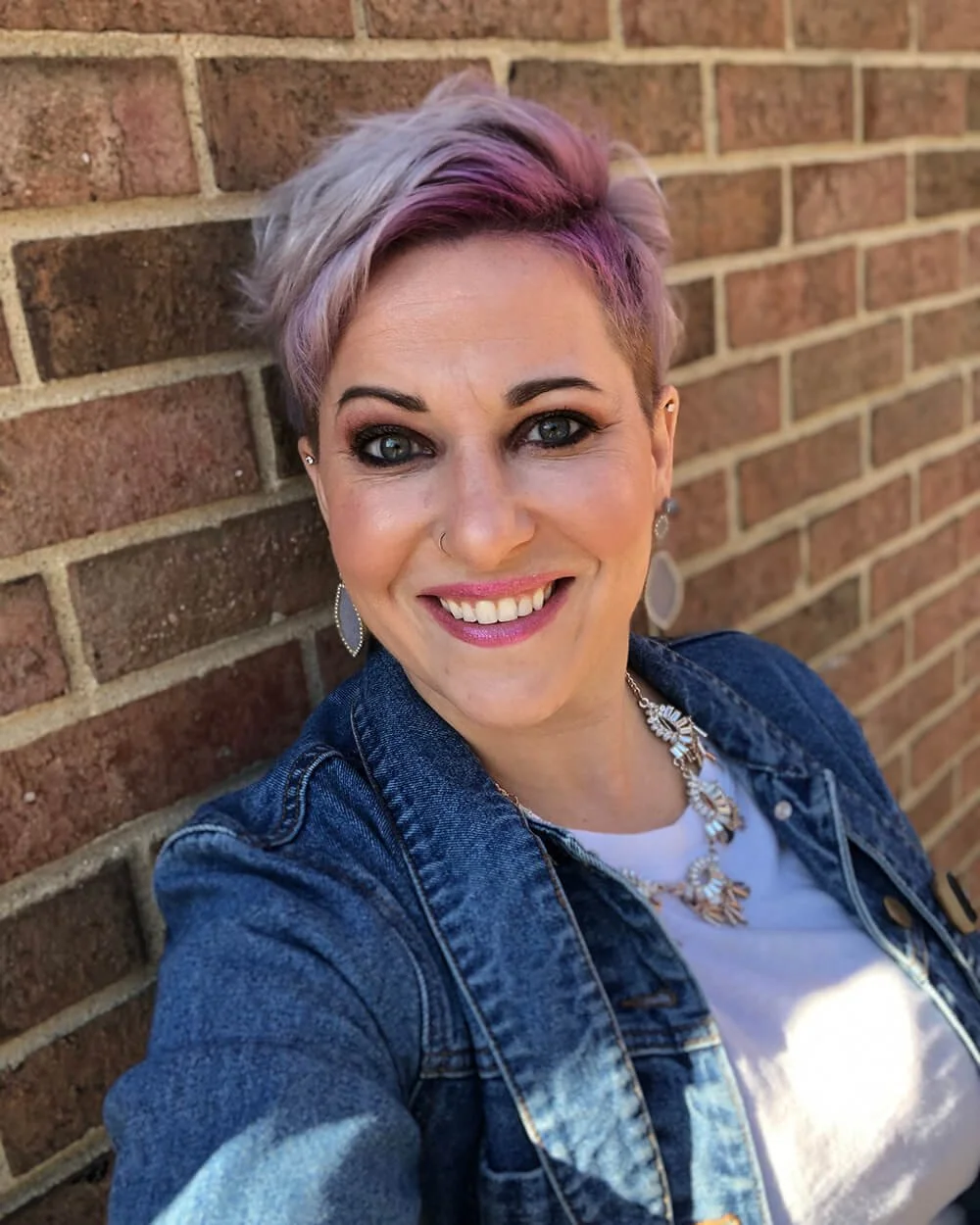
Shannon Kurzyniec (b.1984) is a candidate in the MFA program in the Department of Craft/Material Studies at Virginia Commonwealth University in Richmond,VA. She received her BFA from Wayne State University, Detroit, MI, concentrating in Metalsmithing. Utilizing body adornment, installation, and video, Kurzyniec explores new ways in which to express her opinions about the personal and social impacts of prescription medication on the human condition.
-
Chelsea Nanfelt Rowe (she/her) is an artist and jeweler originally from the Midwest. Currently based in Richmond, Virginia, she is a secondyear Craft/Material Studies Graduate student at Virginia Commonwealth University. Rowe completed her BFA in 2018 at the University of Wisconsin - Milwaukee. She is a member of Ethical Metalsmiths. Participation includes Radical Jewelry Makeover: Artist Project and EM Student VCU Chapter Co-Chair.